Beginner Guide: Buying a St Jude Necklace Gold Pendant
Discover how to choose the perfect St Jude necklace gold pendant. Learn about karats, chain styles, sizing, and care in this beginner-friendly guide.

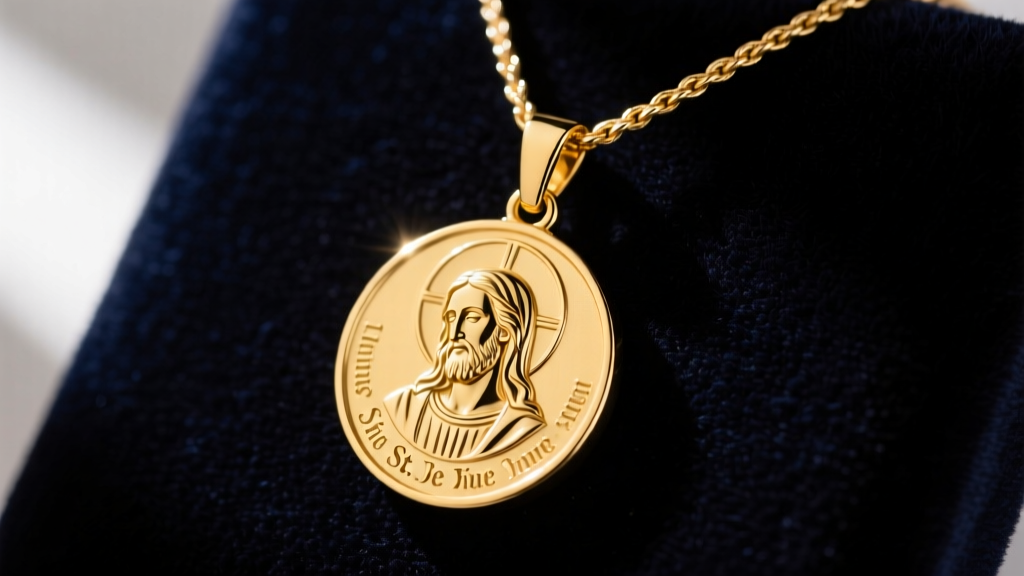
When it comes to religious and sentimental jewelry, few pieces carry as much profound meaning as a St. Jude medal. Known as the patron saint of hope and impossible causes, St. Jude Thaddeus is a beacon of comfort for millions. For beginners navigating the jewelry market, finding the perfect St Jude necklace gold pendant can feel overwhelming. Between varying karat purities, chain gauges, and hallmark stamps, it is easy to make an expensive mistake.
This comprehensive guide breaks down everything you need to know about selecting, sizing, and caring for a solid gold St. Jude necklace. Whether you are purchasing this as a deeply personal talisman for yourself or as a meaningful gift for a loved one facing a difficult journey, understanding the metallurgy and mechanics of your jewelry ensures it will last a lifetime.
The Significance of the St. Jude Medal
Before diving into the metallurgy, it is important to understand the iconography. A traditional St. Jude medal features the saint in profile, often holding a medallion with the face of Christ and a staff. According to Britannica, Jude was one of the original twelve apostles, and his association with 'lost causes' stems from historical devotion to him when all other spiritual avenues seemed exhausted. Because this pendant is often worn daily as a source of comfort, the physical durability of the gold you choose is just as important as its aesthetic appeal.
Understanding Gold Purity for Religious Medals
Gold in its purest form (24 karat) is incredibly soft and malleable. If you were to buy a 24k St. Jude medal, the intricate details of the saint's face would quickly wear down, and the bail (the loop connecting the pendant to the chain) would easily bend or snap. Therefore, gold is alloyed with other metals to increase its tensile strength. According to the Gemological Institute of America (GIA), the karat system dictates the ratio of pure gold to alloy metals.
| Karat | Purity % | Durability | Color Profile | Ideal For |
|---|---|---|---|---|
| 10k (417) | 41.7% | Very High | Pale Yellow | Budget-friendly, high-friction daily wear |
| 14k (585) | 58.5% | High | Warm Yellow | The ultimate sweet spot for daily religious medals |
| 18k (750) | 75.0% | Moderate | Rich, Deep Yellow | Heirloom pieces, occasional wear, high budgets |
| 24k (999) | 99.9% | Very Low | Bright Orange-Yellow | Investment bullion, not recommended for pendants |
Expert Recommendation: For a St. Jude necklace gold pendant that you intend to wear every day, 14k gold is the undisputed champion. It offers the perfect balance of rich color, skin-safe hypoallergenic properties, and the structural integrity required to hold the detailed engraving of the medal over decades of wear.
Selecting the Right Chain Gauge and Style
A common beginner mistake is pairing a heavy, solid gold medal with a weak, lightweight chain. The weight of your St. Jude pendant dictates the chain gauge (thickness) you need. Most medium-sized gold medals weigh between 2.5 and 4.5 grams. To support this weight safely without the chain kinking or snapping, you need a chain gauge between 1.5mm and 2.2mm.
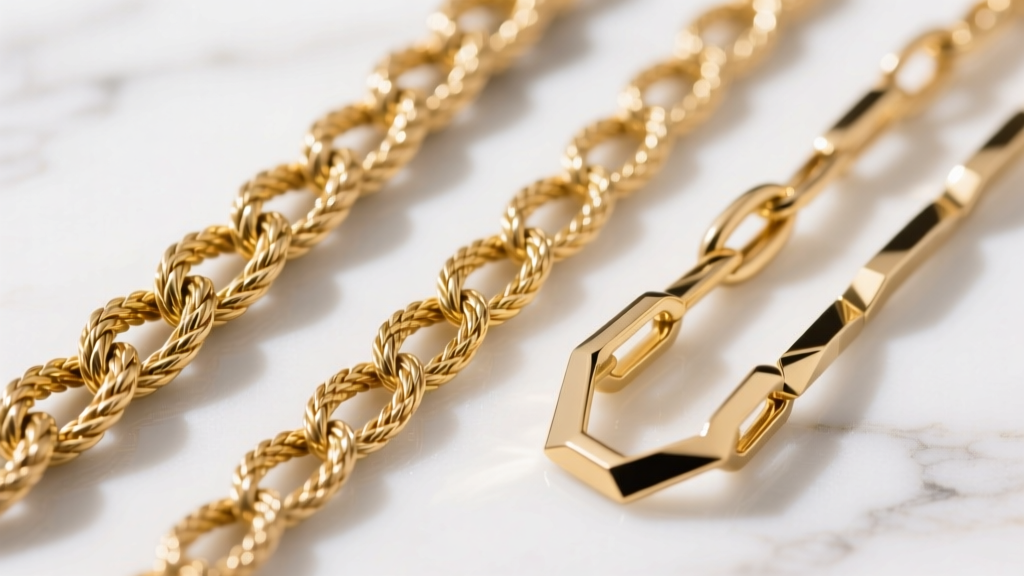
Best Chain Styles for Gold Medals
- Rope Chain: The twisted links distribute weight evenly and are highly resistant to kinking. A 2.0mm rope chain is exceptionally strong and adds a beautiful light-reflecting texture behind the medal.
- Box Chain: Made of square, interlocking links, box chains are incredibly sturdy and lie flat against the collarbone. They provide a modern, clean backdrop for traditional religious iconography.
- Franco Chain: A V-shaped link chain that is virtually indestructible. It is heavier and more expensive but is the safest option for larger, heavier 18k gold St. Jude pendants.
- Chains to Avoid: Delicate cable chains, herringbone chains, and omega chains. Herringbone chains kink permanently if bent, and omega chains can easily snap under the pendulum motion of a heavy medal.
Sizing Your St. Jude Pendant
Gold medals are measured in millimeters (mm), excluding the bail. Choosing the right size depends on your body type, personal style, and whether the necklace will be worn tucked inside a shirt or displayed over clothing.
The Coin Trick: If you are shopping online and cannot visualize the pendant size, use common coins as a reference. A US Dime is roughly 18mm, a Nickel is 21mm, and a Quarter is 24mm. Most men prefer a St. Jude medal sized between 22mm and 30mm, while women often opt for a more delicate 14mm to 18mm profile.
When reviewing product listings, always check the gram weight alongside the millimeter dimensions. A 20mm medal that weighs 1.2 grams is hollowed out or stamped from ultra-thin sheet metal (often called 'die-struck' or 'hollow-back'). These thin medals dent easily. Look for a 20mm medal that weighs at least 2.8 to 3.5 grams to ensure it is a solid, durable casting.
Decoding Hallmarks and Avoiding Fakes
When investing in a solid gold religious piece, verifying the metal content is non-negotiable. Reputable jewelers will stamp the pendant and the chain clasp with a hallmark. Here is what you need to look for:
- 14K or 585: Confirms 14-karat gold.
- 18K or 750: Confirms 18-karat gold.
- Maker's Mark: A high-quality piece will often feature a tiny stamp of the manufacturer's initials alongside the karat mark.
Warning for Beginners: Be highly skeptical of terms like 'Gold Filled,' 'Gold Vermeil,' or 'Heavy Gold Electroplate' (HGE). While these are legitimate jewelry techniques, they are not solid gold. A gold-plated St. Jude medal will eventually wear down to the base metal (usually brass or silver) through friction against the skin and clothing, which can be deeply disappointing for a piece meant to serve as a lifelong spiritual anchor.
The Importance of the Bail
The bail is the small loop at the top of the medal that threads onto the chain. In lower-quality manufacturing, the bail is simply a thin piece of wire soldered onto the back of the medal. Over time, the friction of the chain rubbing against this thin wire will act like a saw, eventually cutting through the gold and causing you to lose your pendant.
When inspecting a St. Jude necklace gold pendant, look for a cast bail (where the loop is part of the original mold and seamlessly integrated into the medal) or a heavily soldered, thick wire bail. If the bail looks pinched or overly thin, factor in the cost of having a local jeweler reinforce it with a new 14k gold jump ring.
Caring for Your Gold Religious Jewelry
Gold is a noble metal, meaning it does not rust or tarnish in the traditional sense. However, the alloy metals mixed with gold (like copper and zinc) can react to environmental chemicals, leading to dullness or structural weakening.
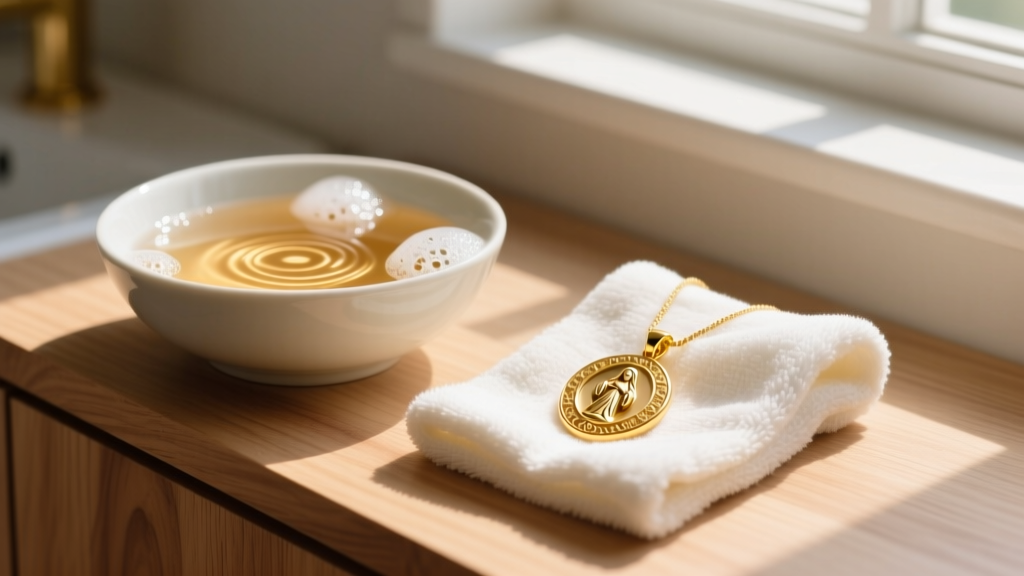
The Golden Rules of Maintenance
- Beware of Chlorine: Never wear your gold St. Jude necklace in a swimming pool or hot tub. Chlorine causes 'stress corrosion cracking' in karat gold alloys, which can literally cause the chain links and bail to crumble and snap.
- Routine Cleaning: Mix a few drops of mild dish soap (free of harsh degreasers) into a bowl of warm water. Let the necklace soak for 15 minutes. Gently brush the crevices of the medal with a brand-new, ultra-soft baby toothbrush to remove skin oils and lotion buildup.
- Drying and Polishing: Rinse thoroughly under lukewarm water and pat dry with a lint-free microfiber cloth. Avoid paper towels, as the wood fibers can leave microscopic scratches on high-polish gold surfaces.
- Storage: When not wearing your pendant, store it in a soft velvet pouch or a dedicated compartment in a jewelry box. Letting it tumble freely with other jewelry will cause the harder gemstones or metals in other pieces to scratch your gold medal.
Final Thoughts on Your Purchase
Choosing a St. Jude necklace gold pendant is an investment in both craftsmanship and personal faith. By prioritizing 14k solid gold, selecting a robust chain style like a 2.0mm rope or box chain, and verifying the gram weight and hallmarks, you ensure that your jewelry will withstand the rigors of daily life. A well-chosen St. Jude medal is more than just an accessory; it is a resilient, enduring symbol of hope that can be passed down through generations as a cherished family heirloom.


