Star Silver Necklace Trends 2026: Celestial Styling Guide
Discover 2026 star silver necklace trends. Learn how to layer celestial motifs, choose Argentium silver, and style star pendants for modern elegance.

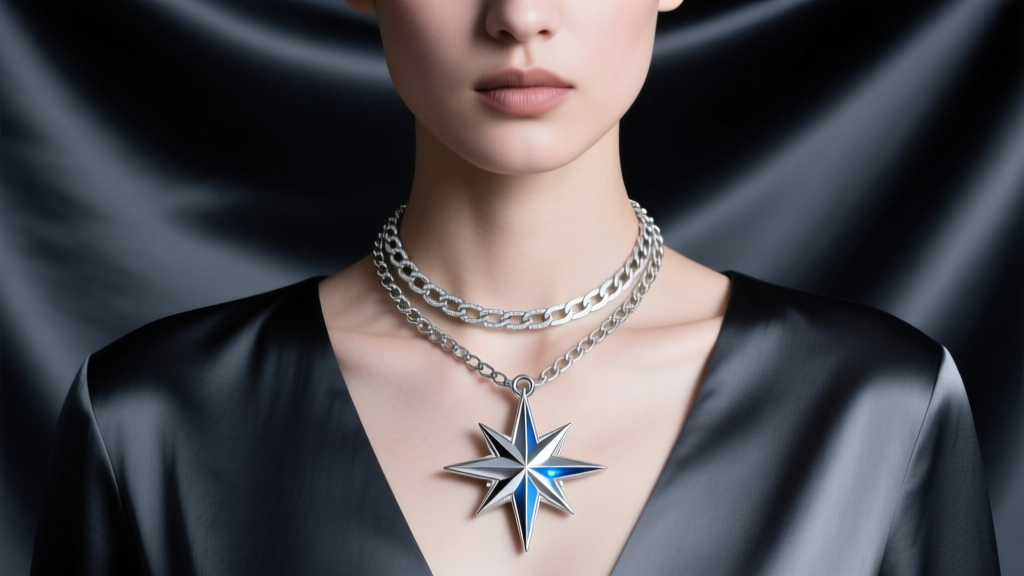
The 2026 Celestial Shift: Beyond Basic Constellations
The celestial jewelry movement has undergone a radical transformation as we navigate 2026. While the previous decade was dominated by dainty, flat 2D constellation maps and minimalist outline stars, the modern star silver necklace has evolved into a bold, sculptural statement piece. Today’s trend analysis reveals a distinct pivot toward three-dimensional compass stars, asymmetric shooting star lariats, and heavily oxidized, textured motifs that mimic raw meteorites.
According to recent industry observations tracked by Vogue's jewelry trend reports, consumers are moving away from uniform, mass-produced celestial charms. Instead, there is a surging demand for artisan-crafted star pendants that feature mixed-metal inlays, pavé diamond accents, and kinetic moving parts. This shift reflects a broader desire for jewelry that feels deeply personal, slightly rugged, and architecturally complex.
Material Deep Dive: Sterling vs. Argentium Silver
When investing in a high-quality star silver necklace, understanding the metallurgy is non-negotiable. Traditional 925 sterling silver is an alloy comprising 92.5% pure silver and 7.5% copper. While copper provides necessary structural hardness, it is also the culprit behind silver sulfide tarnish—the blackening that occurs when copper reacts with sulfur and moisture in the air.
For the 2026 market, the Gemological Institute of America (GIA) and leading metallurgists highlight Argentium silver as the superior alternative for fine everyday jewelry. Argentium replaces the copper with a metalloid called germanium. This creates a transparent, self-healing oxide layer that makes the metal highly tarnish-resistant and significantly brighter than traditional sterling.
| Silver Grade | Composition | Tarnish Resistance | Best Application |
|---|---|---|---|
| 925 Sterling | 92.5% Ag, 7.5% Cu | Low (Requires frequent polishing) | Textured, oxidized, or vintage-style star pendants |
| Argentium 935 | 93.5% Ag, Germanium | High (Slow to tarnish) | Everyday cable chains and medium-weight star charms |
| Argentium 960 | 96.0% Ag, Germanium | Very High (Highly reflective) | High-polish, mirror-finish sculptural star pendants |
| 999 Fine Silver | 99.9% Ag | Moderate (No copper to react) | Delicate bezels or soft wire-wrapping (Too soft for chains) |
Chain Architecture: Matching the Star Pendant
A common failure mode in celestial jewelry is chain breakage caused by a mismatch between the pendant's weight and the chain's gauge. A solid, 15-gram 3D star pendant will quickly snap a delicate 0.7mm thread-like chain due to constant bail friction. The bail—the loop that connects the star to the chain—acts as a saw when the chain is too thin, eventually cutting through the silver links.
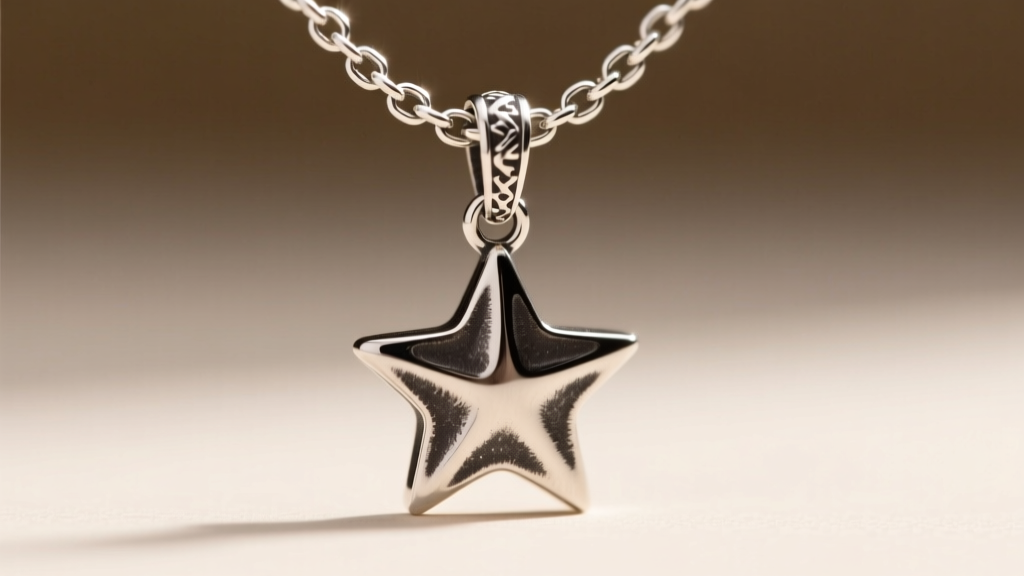
For medium-to-large star pendants (15mm to 25mm in diameter), opt for a chain gauge between 1.0mm and 1.5mm. Box chains and rolo chains are structurally superior to standard cable chains because their interlocking, flat-edged links distribute the weight of the pendant more evenly. Furthermore, always inspect the clasp. Upgrade from standard spring-ring clasps, which are prone to spring failure and difficult to operate, to sturdy lobster clasps or magnetic neodymium clasps for secure, effortless wear.
2026 Styling Frameworks: How to Layer Star Motifs
Layering a star silver necklace requires a strategic approach to proportions and textures. The haphazard stacking of identical chain lengths results in a tangled, visually cluttered neckline. To achieve the coveted 2026 'curated celestial' look, adhere to the following structural frameworks:
- The Base Layer (14-15 inches): Start with a delicate, 1.0mm satellite chain featuring micro-stars (4mm-6mm) interspersed along the links. This sits high on the collarbone and provides a subtle, sparkling foundation.
- The Focal Point (16-18 inches): Anchor the stack with a substantial, singular star pendant (15mm-20mm) on a 1.2mm rolo chain. This draws the eye to the center of the chest and serves as the visual anchor.
- The Elongator (20-24 inches): Finish with an asymmetric shooting star lariat or a long, heavy curb chain featuring a single, off-center star charm. This elongates the torso and adds dynamic movement.
The Asymmetric Celestial Stack
A massive trend for 2026 is the intentional use of asymmetry. Instead of perfectly centered stars, look for pendants where the star is offset to the left or right side of the chain. Mixing your star silver necklace with unexpected materials—such as a strand of irregular baroque freshwater pearls or oxidized onyx beads—breaks up the metallic monotony and adds an organic, avant-garde edge to the celestial theme.
Market Analysis & Price Tiers
Navigating the market for silver celestial jewelry requires an understanding of pricing tiers, which are dictated by material sourcing, manufacturing methods, and brand positioning.
Fast Fashion & Mass Market ($25 - $60): These pieces are typically cast in bulk using traditional 925 sterling silver and feature thin, lightweight chains (0.8mm or less). While affordable, they are prone to rapid tarnishing and chain breakage. They are best suited for occasional wear rather than daily use.
Artisan & Independent Jewelers ($85 - $250): The sweet spot for quality and design. Independent silversmiths often utilize Argentium silver, hand-texture the star motifs using specialized burins, and fit them with durable 1.2mm chains and lobster clasps. You are paying for structural integrity and unique, small-batch designs.
Fine & Designer Jewelry ($300 - $800+): At this tier, the star silver necklace is elevated with precious accents. Expect heavy, solid-cast Argentium 960 stars featuring flush-set white sapphires or ethically sourced diamonds, paired with custom-engineered, seamless box chains.
Tarnish Troubleshooting & Maintenance
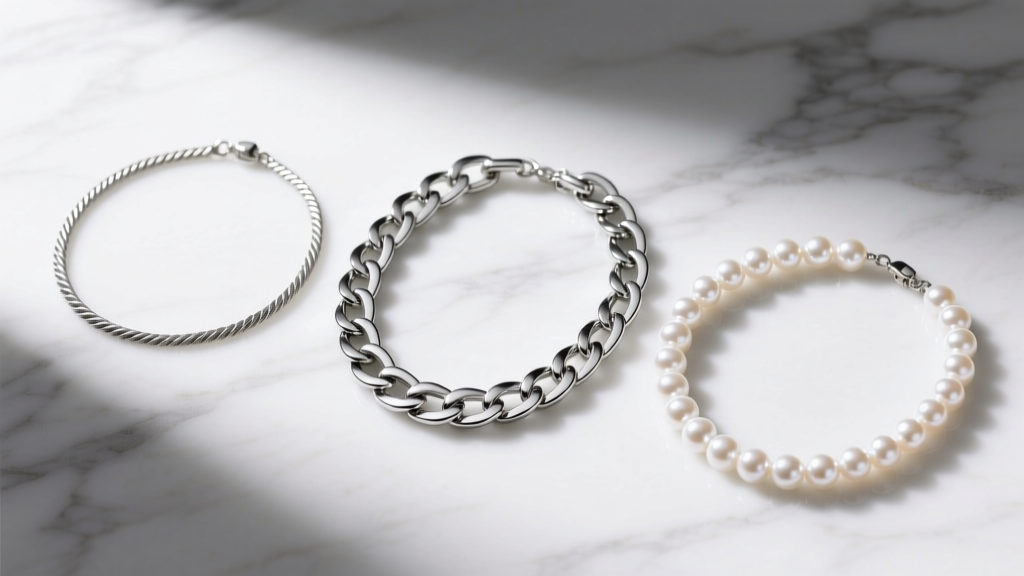
Even the most meticulously crafted 925 sterling star silver necklace will eventually succumb to environmental sulfur. To maintain the brilliant luster of your celestial pieces, implement a proactive maintenance routine. Avoid wearing your silver in chlorinated pools or hot springs, as the chemicals will cause immediate, severe discoloration that often requires professional polishing to reverse.
For routine cleaning, abandon liquid silver dips, which are highly acidic and can strip the oxidized detailing from textured star pendants. Instead, use a high-quality micro-abrasive polishing cloth impregnated with jeweler's rouge. For long-term storage, the industry gold standard is the Pacific Silvercloth. These specialized storage bags are embedded with fine silver particles that capture and neutralize tarnish-causing gases before they can reach your necklace, keeping your star pendants pristine for years without the need for constant polishing.
Expert Stylist Tip: 'When layering a star silver necklace with gold pieces, use a transitional pendant that features both metals—such as a silver star with a gold-plated center—to visually bridge the gap and make the mixed-metal stack look intentional rather than accidental.'


