The Necklace of the Occult: Metals, Symbols, and Sizing
Explore the technical details behind a necklace of the occult. Learn about esoteric metals, precise symbolic geometry, and chain gauge sizing.

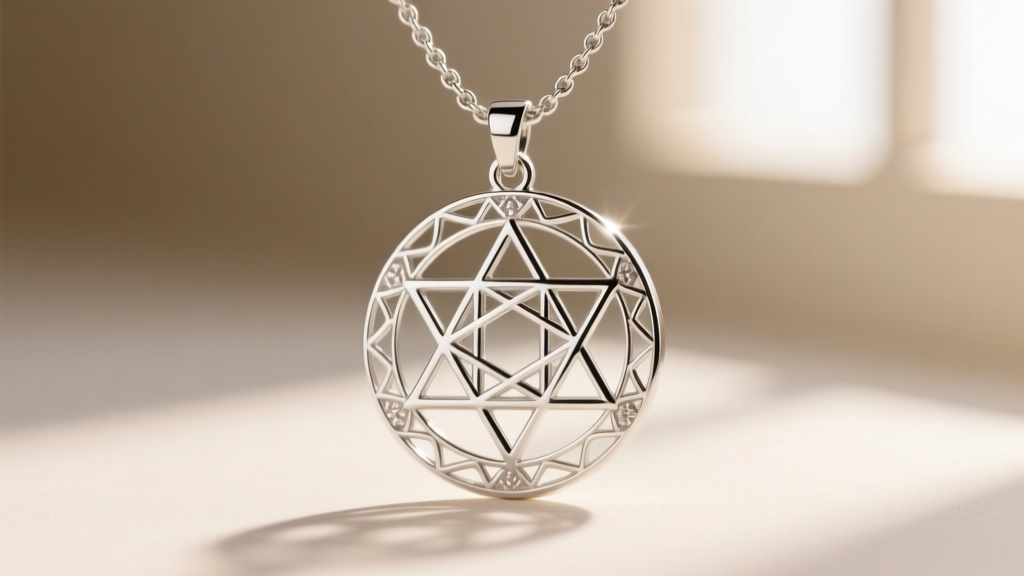
When collectors and practitioners seek a genuine necklace of the occult, they are rarely looking for mass-produced, stamped-alloy novelties. True esoteric jewelry sits at the intersection of historical anthropology, precise metallurgy, and sacred geometry. Whether utilized for ritual work, energetic grounding, or as a marker of philosophical alignment, the physical construction of these pieces demands rigorous technical standards. A pendant representing ancient hermetic principles loses its integrity if cast in porous, unverified pot metal or suspended from a chain incapable of supporting its weight.
This guide bypasses aesthetic generalizations to deliver a deep-dive technical analysis of the materials, geometric tolerances, and structural hardware required to craft, source, and maintain high-tier occult necklaces.
The Metallurgy of Esoteric Adornment
The foundational power of an occult necklace is often attributed to its base metal. However, from a bench-jeweler’s perspective, the choice of metal dictates the piece's longevity, patina development, and skin reactivity.
Fine Silver (.999) vs. Sterling (.925)
While sterling silver (.925) is the industry standard for durability, many traditionalists prefer .999 fine silver for ritual pieces. Fine silver lacks the 7.5% copper alloy found in sterling, meaning it is highly resistant to firescale and copper-oxide tarnish. However, fine silver sits at a mere 2.5 on the Mohs hardness scale. It work-hardens very slowly, making it unsuitable for intricate prong settings or thin, high-stress bail loops. If a necklace of the occult features a heavy .999 silver pendant, the bail must be cast thick (minimum 2mm diameter) or reinforced with a hidden .925 structural core to prevent the bail from warping under the pendant's dynamic weight.
Meteorite and Iron Alloys
Genuine iron meteorite (such as Muonionalusta or Gibeon) is prized for its natural Widmanstätten patterns—interlocking kamacite and taenite crystals formed over millions of years in a vacuum. Because meteorite is primarily iron and nickel, it is highly susceptible to oxidation (rust) when exposed to ambient humidity and skin oils. To stabilize a meteorite pendant, jewelers must etch the piece with ferric chloride to reveal the pattern, neutralize the acid with a baking soda bath, and seal the metal using a microcrystalline wax or a specialized clear nano-ceramic coating. Unsealed meteorite pendants will degrade rapidly against the sternum.
Geometric Precision in Occult Pendants
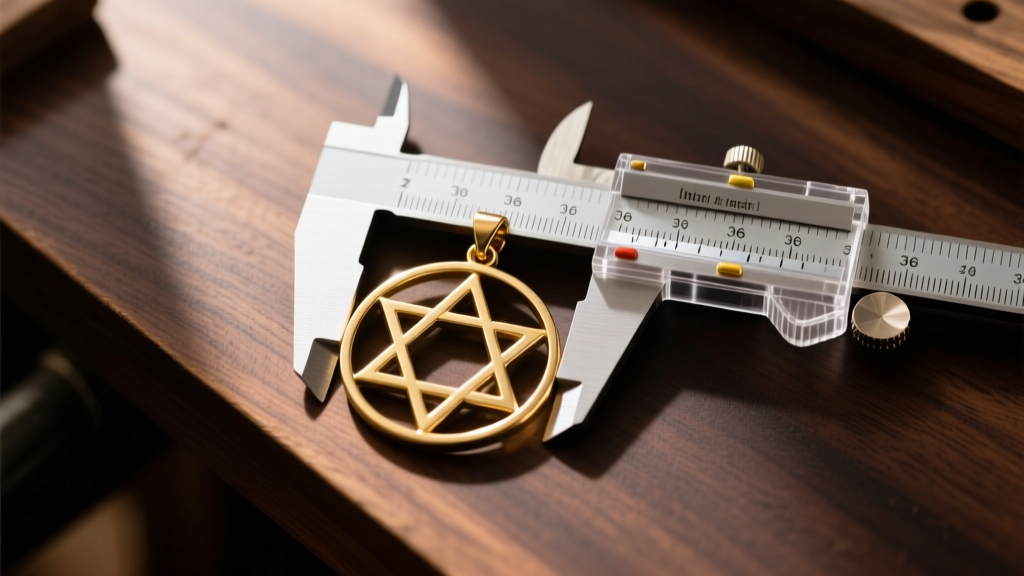
Occult symbolism relies heavily on sacred geometry. A poorly proportioned symbol is not merely an aesthetic failure; in esoteric traditions, it represents a broken circuit. When evaluating or commissioning a necklace of the occult, geometric tolerances must be exact.
The Mathematics of the Pentagram
A true unicursal or standard pentagram is governed by the Golden Ratio (Phi, approximately 1.618). The internal angles of the five points must measure exactly 36 degrees, while the internal angles of the central pentagon must be 108 degrees. Mass-produced pendants often feature distorted, asymmetrical points due to poor CAD modeling or mold degradation during the lost-wax casting process. Always verify the symmetry of the points using digital calipers; a variance greater than 1.5mm across the intersecting lines indicates a flawed casting.
Metatron’s Cube and the Seed of Life
Metatron’s Cube consists of 13 circles of equal diameter, with lines extending from the center of every circle to the centers of the other 12. In precision-milled pendants, these lines should be deeply V-cut (using a 0.5mm or 0.8mm graver) rather than superficially laser-engraved. Deep V-cutting allows for the pooling of intentional patinas (like liver of sulfur), creating high-contrast legibility that shallow laser etching cannot achieve.
Chain Gauges, Clasps, and Weight Distribution
The most common point of catastrophic failure in heavy occult jewelry is the chain and clasp assembly. Esoteric pendants—especially those incorporating dense materials like hematite, obsidian, or solid bronze—frequently exceed 30 grams. Standard jewelry chains will snap under this dynamic load.
| Chain Style | Gauge (mm) | Max Pendant Weight | Structural Notes |
|---|---|---|---|
| Cable / Rolo | 1.5mm - 2.0mm | 15g | High risk of link stretching under torque. |
| Wheat (Spiga) | 2.5mm - 3.5mm | 45g | Excellent tensile strength; woven structure resists kinking. |
| Curb / Cuban | 4.0mm - 6.0mm | 80g+ | Interlocking flat links distribute weight evenly. |
| Box Chain | 2.0mm - 3.0mm | 35g | Prone to snapping at the solder joints if twisted. |
Clasp Mechanics and Torque Resistance
Never pair a 50-gram bronze talisman with a standard lobster or spring-ring clasp. The lateral torque applied when the necklace is pulled slightly off-center will warp the clasp's internal spring mechanism, causing it to fail silently. For heavy occult pendants, utilize a locking carabiner clasp (featuring a threaded barrel lock) or a heavy-duty toggle clasp where the T-bar is at least 30% wider than the receiving ring to prevent slippage.
Material Authenticity and Sourcing Verification
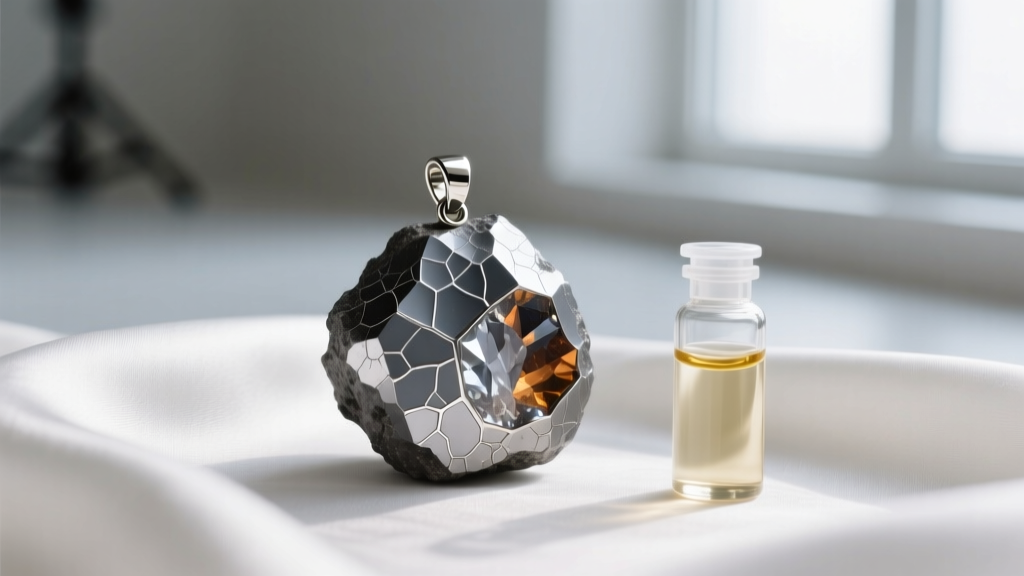
The esoteric market is flooded with synthetic simulants. Verifying the authenticity of your necklace of the occult requires basic bench-testing protocols.
- Silver Verification: Look for the hallmark. According to the Birmingham Assay Office, a legitimate .925 piece will bear a sponsor's mark and a fineness stamp. If unmarked, an X-ray fluorescence (XRF) test or a traditional silver acid test (which turns blood red on genuine .925) is required.
- Meteorite Verification: True iron meteorite is highly magnetic and contains nickel. A simple neodymium magnet test is step one. Step two involves a nickel spot test using dimethylglyoxime; if the solution turns pink, nickel is present, corroborating the meteorite claim. Man-made 'slag' or hematite will fail the nickel test.
- Obsidian vs. Moldavite vs. Glass: Natural obsidian will show flow lines and potential crystallite inclusions under 10x magnification. Slag glass (often sold as 'black tourmaline glass' or fake obsidian) will reveal perfectly round, trapped air bubbles, a definitive sign of a man-made melt.
Conservation and Patina Management
Unlike mainstream fine jewelry, an occult necklace often relies on dark, oxidized recesses to highlight its intricate geometry. Stripping this patina ruins the piece's visual depth.
Intentional Antiquing
If a piece requires darkening, jewelers use Liver of Sulfur (potassium sulfide) dissolved in warm water. The piece is dipped until the desired shade of gunmetal or deep black is achieved. The high-polish surfaces are then gently buffed back using 2000-grit sandpaper or a jeweler's rouge cloth, leaving the recesses black.
Sealing the Finish
To prevent the darkened recesses from rubbing off against clothing or skin, the entire pendant must be sealed. Renaissance Wax, a microcrystalline wax originally developed for the British Museum, is the industry standard. Applied with a soft brush, allowed to dry for ten minutes, and lightly buffed, it creates a moisture-resistant barrier that will not yellow or crack like polyurethane sprays. Reapplication is generally required every 6 to 12 months, depending on the wearer's skin acidity and frequency of use.
By demanding metallurgical integrity, geometric exactness, and structural hardware, collectors ensure their necklace of the occult is not just a symbolic gesture, but a lasting artifact of esoteric engineering.


