Onyx Bead Necklace Value: Pricing & Quality Guide 2026
Discover the true value of an onyx bead necklace in 2026. We break down pricing tiers, bead grading, dye treatments, and hardware to help you buy smart.

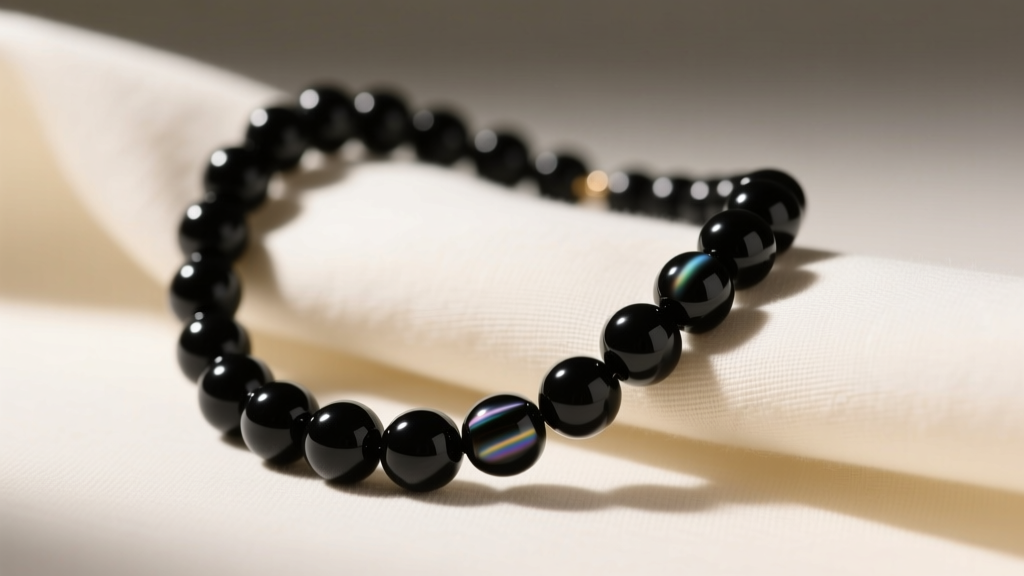
The Real Cost of Onyx: Natural vs. Treated Beads
When shopping for an onyx bead necklace, the most critical factor influencing value is the origin of the stone's color. True, naturally occurring black onyx is exceptionally rare. According to the Gemological Institute of America (GIA), the vast majority of black onyx on the market is actually gray or white agate (a banded form of chalcedony) that has been artificially darkened. This is not inherently a negative—it is an accepted, centuries-old gemological practice—but it drastically impacts the pricing and value assessment of the necklace you are buying.
The most common method is the "sugar treatment." Porous agate beads are soaked in a hot sugar solution, then submerged in sulfuric acid. The acid carbonizes the sugar trapped in the stone's microscopic pores, turning it permanently black. In the 2026 market, naturally black onyx beads command a massive premium, often exceeding $50 per bead for high-quality 10mm rounds, whereas treated agate beads cost mere cents to produce at scale. Understanding this distinction is the first step in accurately assessing the value of any onyx strand.
2026 Pricing Tiers for Onyx Bead Necklaces
To evaluate whether you are getting a fair deal, you must look beyond the stone itself and assess the complete package: bead size, drilling quality, stringing material, and clasp hardware. Below is a comprehensive pricing matrix reflecting current 2026 retail values for standard 18-inch princess-length necklaces.
| Quality Tier | Bead Material & Size | Hardware & Stringing | Estimated Retail Price (2026) |
|---|---|---|---|
| Mass Market | 4mm-6mm Dyed Agate, minor pitting | Base metal clasp, tiger-tail wire | $15 - $35 |
| Mid-Range | 8mm-10mm Dyed Agate, high polish | Sterling silver clasp, nylon cord | $45 - $95 |
| Premium | 12mm+ High-Grade Dyed or Natural, flawless | 14k Gold-filled or Solid Gold, silk-knotted | $150 - $400 |
| Collector / Artisan | Natural Banded Onyx, hand-carved or antique | Custom forged precious metals | $600 - $2,500+ |
If a seller is asking $300 for a strand of 6mm beads with a stainless steel clasp, you are vastly overpaying for treated agate and cheap hardware. Conversely, a $75 price tag for an 8mm strand with a solid sterling silver toggle clasp represents excellent mid-range value.
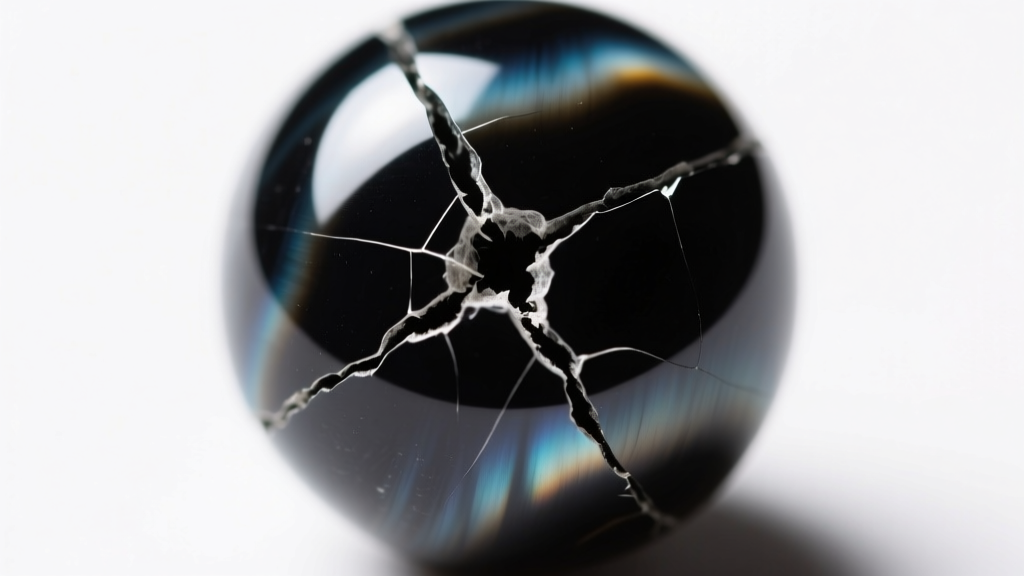
Grading the Beads: What Separates a $20 Strand from a $200 Piece?
Even within the category of treated black agate, there is a massive spectrum of quality. Gemologists and lapidaries evaluate onyx beads based on three primary metrics: surface integrity, luster, and drill geometry.
Surface Integrity and Pitting
Chalcedony has a Mohs hardness of 6.5 to 7, making it durable, but lower-grade rough material often contains microscopic vugs (cavities). When cut and polished into beads, these vugs appear as tiny surface pits. Hold the necklace under a bright LED light and rotate it. Premium beads will have a flawless, glass-like surface. Budget beads will look slightly dimpled or "orange-peeled" under magnification. Mindat.org notes that the cryptocrystalline structure of chalcedony can vary wildly in density, which directly dictates how well it takes a polish.
The Drill Hole Geometry
This is the most overlooked value indicator. Mass-produced onyx bead necklaces are drilled rapidly from both sides using cheap diamond-tipped bits. This results in "cone-shaped" drill holes where the entry point is wider than the center, often leaving a jagged, chipped rim around the hole. Premium onyx beads are drilled slowly with precision lasers or high-grade ultrasonic drills, resulting in perfectly straight, cylindrical holes with clean, sharp edges. If the stringing wire is visible through a wide, jagged hole, the necklace belongs in the lowest pricing tier.
Luster: Vitreous vs. Waxy
High-quality onyx should exhibit a vitreous (glass-like) luster. If the beads appear waxy, dull, or overly matte (unless intentionally sandblasted for a specific design), it indicates either low-grade rough material or a poor polishing compound used during the tumbling process.
The Acetone Test: Spotting Poorly Treated Beads
While the sugar-carbonization treatment is generally permanent, some modern mass-producers use cheap surface dyes or polymer coatings to speed up production. These inferior treatments can bleed onto your skin or clothing when exposed to sweat, perfumes, or lotions.
To test a strand before committing to a high-end purchase, perform the acetone test. Dip a cotton swab in pure nail polish remover (acetone) and rub it vigorously against an inconspicuous bead near the clasp. If the cotton turns black or gray, the beads are surface-dyed and hold virtually no long-term value. A properly carbonized sugar-treated agate bead will not bleed color under this test.
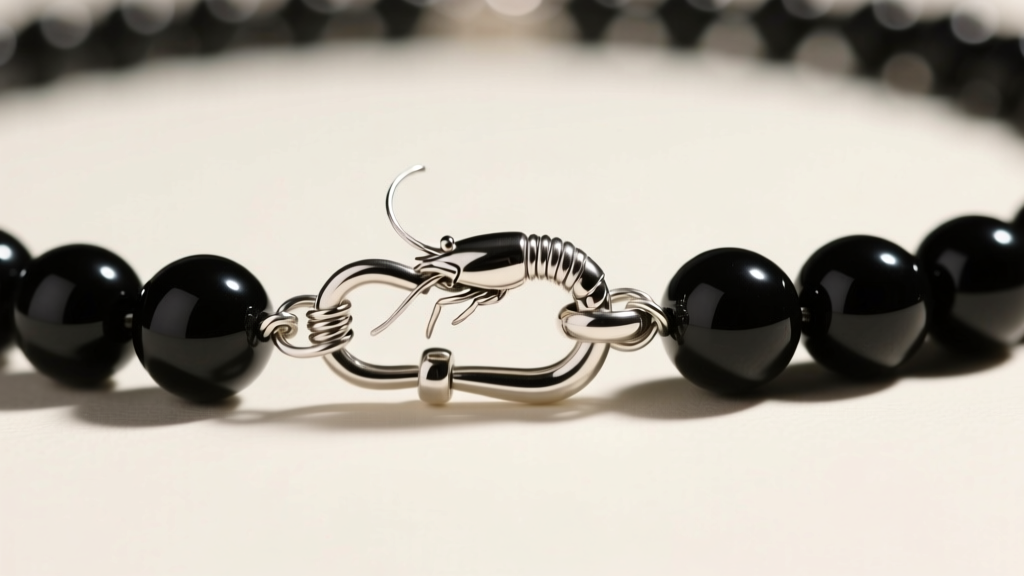
Hardware and Stringing: The Hidden Value Killers
A $500 strand of natural black onyx is rendered worthless if it is strung on degrading elastic and secured with a hollow base-metal clasp. In 2026, discerning buyers must scrutinize the structural engineering of the necklace.
- Stringing Material: Avoid "tiger tail" (a thin, plastic-coated steel wire). It kinks easily and eventually snaps without warning. High-value onyx bead necklaces should be strung on multi-strand braided nylon (like Power Pro) or individually knotted on heavy-duty silk. Knotting between each bead prevents total loss if the strand breaks and stops the heavy onyx beads from grinding against one another.
- Clasp Types: A sterling silver or 14k gold lobster clasp is the baseline for mid-range and premium necklaces. For heavier 12mm+ bead strands, a solid toggle clasp or a magnetic neodymium clasp with a safety chain provides superior security and ease of use.
- French Wire (Gimp): Premium necklaces use a tiny coil of precious metal wire (French wire) where the stringing material loops through the clasp. This prevents the metal clasp from sawing through the nylon or silk cord over time. If the cord loops directly through the metal clasp ring, it is a sign of budget manufacturing.
Maintenance and Long-Term Value Retention
Onyx bead necklaces require specific care to maintain their resale and aesthetic value. Never clean dyed onyx in an ultrasonic jewelry cleaner. The high-frequency vibrations can cause microscopic fractures in the agate to expand, and the heat generated can alter the carbonized sugars, leading to a faded, grayish appearance over time. Instead, wipe the beads with a soft, damp microfiber cloth and dry them immediately. Store the necklace flat or hung; never toss it into a jewelry box where heavier gemstones can scratch the onyx's polished surface.
Final Verdict: Is an Onyx Bead Necklace Worth the Investment?
From a pure financial investment standpoint, an onyx bead necklace is not a liquid asset like gold or diamonds. However, from a style and cost-per-wear perspective, it offers unparalleled value. A well-constructed, mid-range 8mm dyed agate onyx necklace with sterling silver hardware (priced around $65) will easily last a lifetime with proper care, offering a sleek, versatile aesthetic that transitions seamlessly from corporate boardrooms to evening wear. By focusing on drill-hole precision, vitreous luster, and premium stringing hardware rather than the elusive promise of "natural black onyx," you can confidently purchase a piece that delivers true, lasting value.
"The true value of an onyx bead necklace lies not in the rarity of its carbon, but in the precision of its cut, the integrity of its stringing, and the timelessness of its design."


