How to Choose and Style the Perfect Opal Star Necklace
Discover everything you need to know before buying an opal star necklace. Learn about opal types, chain pairings, and care tips in this beginner guide.

What Exactly is an Opal Star Necklace?
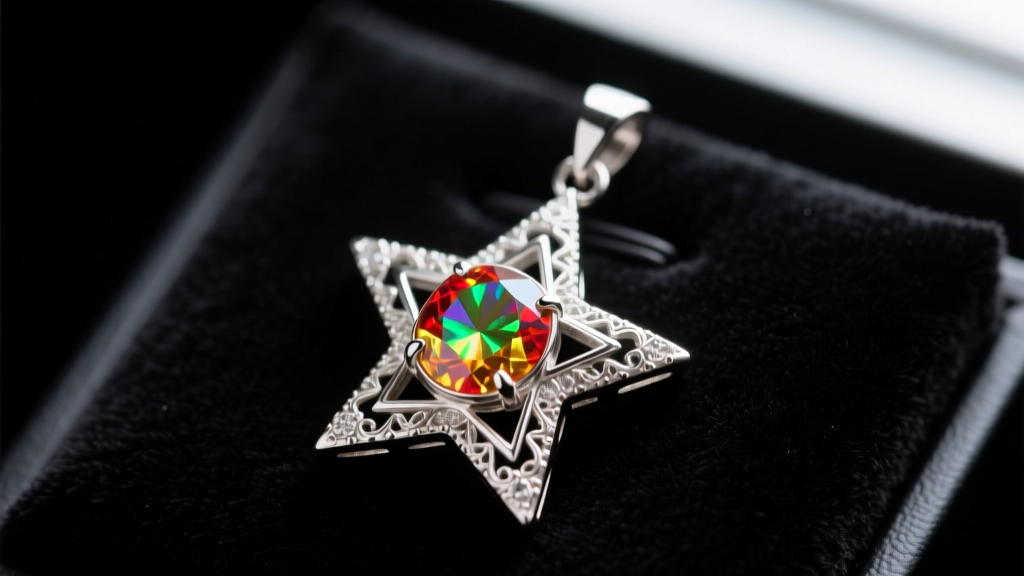
An opal star necklace typically features a central opal gemstone integrated into a star motif. For beginners entering the gemstone jewelry market, it is crucial to understand that the 'star' element usually refers to the metal setting rather than the cut of the stone itself. Cutting a fragile opal into a literal five-pointed star results in massive material waste and creates weak, easily chipped points. Therefore, high-quality opal star necklaces almost always feature a round or oval opal cabochon secured within a star-shaped bezel or halo setting. This design choice not only preserves the structural integrity of the gem but also maximizes the stone's signature 'play-of-color' by maintaining a smooth, domed surface.
Whether you are drawn to the celestial aesthetic or the stone's iridescent fire, buying your first opal pendant requires navigating a landscape of synthetic alternatives, varying chain gauges, and strict care requirements. This guide breaks down the exact specifications you need to make an informed purchase.
The Anatomy of the Star Setting: Bezels vs. Prongs
Opals rank between 5.5 and 6.5 on the Mohs scale of mineral hardness. To put this in perspective, a standard steel pocket knife has a hardness of about 6.5, meaning an opal can be easily scratched by everyday metal objects. Because of this relative softness, the metal setting of your star necklace is your gemstone's first line of defense.
- Bezel Settings (Recommended): A star-shaped bezel wraps a continuous rim of metal entirely around the opal's girdle (edge). This is the gold standard for opal jewelry, protecting the perimeter from lateral impacts and preventing the stone from popping out if the necklace is snagged.
- Prong Settings (Proceed with Caution): While prongs allow more light to enter the stone, they leave the opal's edges exposed. If the star design features prongs at the points of the star, the stone remains highly vulnerable to chipping.
Pro-Tip: Always look for a 'rub-over' or flush bezel setting where the metal is smoothly burnished over the opal's edge, leaving no sharp metal burrs that could scratch your skin or catch on fabrics.
Natural vs. Lab-Created Opals: A Buyer's Breakdown
The most critical decision you will make is choosing between natural and lab-created opals. The price, durability, and maintenance requirements differ drastically between the two.
Natural Opals
Natural opals contain between 3% and 21% water. Ethiopian opals, currently dominating the affordable market, are 'hydrophane,' meaning they are porous and will absorb water, oils, and lotions. This can cause them to temporarily lose their fire or, in extreme cases of rapid moisture loss, develop a network of fine cracks known as 'crazing.' Australian solid opals are more stable but command premium prices. According to the Gemological Institute of America (GIA), natural opals require meticulous environmental control to maintain their structural integrity over decades.
Price Range: $150 to $800+ for a standard 6mm-8mm cabochon in a sterling silver star setting.
Lab-Created (Synthetic) Opals
Lab-created opals (such as those produced by Kyocera or Gilson) share the exact same chemical composition (silica) as natural opals but are grown in controlled environments. They often utilize a polymer or resin binder that eliminates the water-absorption issue entirely. For a beginner looking for an everyday opal star necklace that can survive humidity, sweat, and accidental splashes without cracking, a high-quality synthetic opal is vastly superior.
Price Range: $35 to $120 for a comparable size and setting.

Choosing the Right Chain and Metal Gauge
The chain you pair with your opal star pendant dictates both the longevity of the necklace and its visual balance. Opal pendants are generally lightweight (typically 2 to 4 grams), so heavy chains will overpower the delicate star motif and cause the pendant to flip upside down.
| Chain Style | Recommended Gauge (Thickness) | Durability & Best Use |
|---|---|---|
| Box Chain | 1.0mm - 1.2mm | Highly durable, smooth, prevents hair snagging. Ideal for everyday wear. |
| Cable Chain | 1.2mm - 1.5mm | Classic look, but the open links can occasionally catch on fine hair. |
| Rope Chain | 0.9mm - 1.1mm | Offers high sparkle but can easily tangle and overpower small star pendants. |
Metal Selection: Sterling silver (925) is the most common and affordable pairing, offering a cool-toned contrast that enhances the blue and green flashes in white opals. However, silver tarnishes. If you prefer a low-maintenance metal, opt for 14k solid gold or gold vermeil (a thick layer of gold over sterling silver), which provides a warm backdrop that amplifies the fiery reds and oranges in crystal opals.
Sizing and Neckline Pairing Guide
The visual impact of your opal star necklace depends heavily on chain length and how it interacts with your wardrobe. A pendant that sits awkwardly on a seam or gets lost in a busy pattern will diminish the stone's beauty.
- 16-Inch Choker Length: Sits tightly at the base of the neck. Best paired with scoop necks, off-the-shoulder tops, or deep V-necks. The star pendant will rest directly on the skin, drawing immediate attention to the collarbone.
- 18-Inch Princess Length: The industry standard. Falls just below the collarbone. This length is incredibly versatile and works perfectly over crew neck t-shirts, button-down blouses, and light sweaters.
- 20 to 22-Inch Matinee Length: Drops to the upper chest. Ideal for layering over high-neck garments, turtlenecks, or business attire. When wearing an opal at this length, ensure the star pendant is slightly larger (10mm+) so it remains visible from a distance.
Essential Care and Maintenance for Opals
Opals are notoriously misunderstood when it comes to maintenance. Many beginners ruin their natural opals within the first month of ownership by using standard jewelry cleaning methods. The GIA Opal Care Guide explicitly warns against common cleaning practices that are perfectly safe for diamonds or sapphires but catastrophic for opals.
Never put an opal in an ultrasonic cleaner. The high-frequency vibrations can easily fracture the stone's internal silica spheres, destroying the play-of-color and causing the gem to shatter.
Safe Cleaning Protocol:
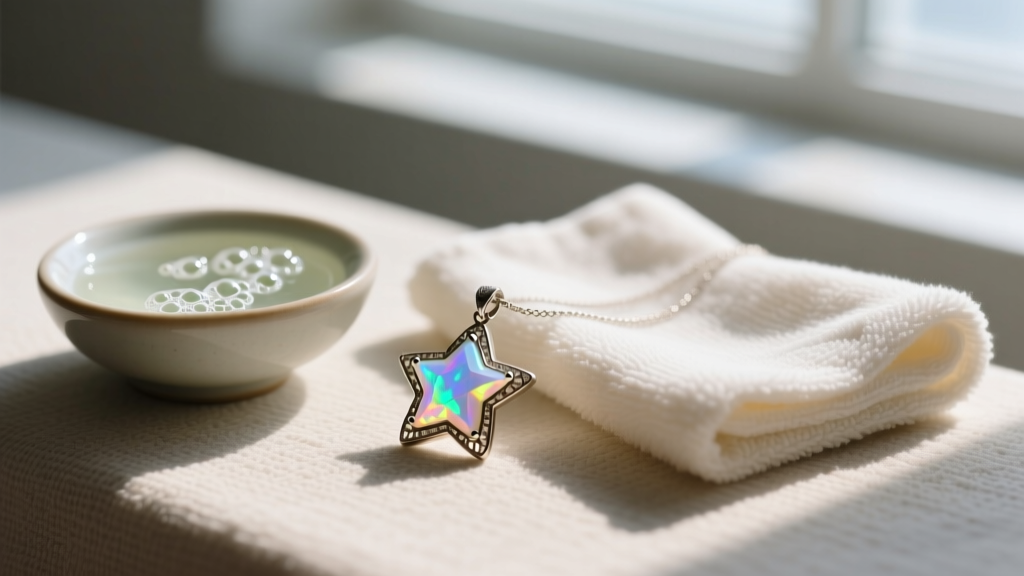
1. Mix a few drops of pH-neutral dish soap into a bowl of lukewarm (never hot) water.
2. Dip a clean, ultra-soft microfiber cloth or a baby-soft toothbrush into the solution.
3. Gently wipe the surface of the opal and the metal star setting.
4. Rinse briefly under a gentle stream of lukewarm water (skip this step entirely if you own a hydrophane Ethiopian opal; just wipe with a damp cloth).
5. Pat dry immediately with a lint-free towel.
Storage: Store your opal star necklace in a soft fabric pouch separate from harder gemstones like diamonds, moissanite, or sapphires. If you live in an extremely arid climate and own a natural hydrophane opal, some gemologists recommend storing the pouch inside a sealed container with a slightly damp cotton ball to prevent the stone from drying out and crazing.
Final Thoughts for First-Time Buyers
An opal star necklace is a stunning, conversation-starting piece of jewelry that bridges the gap between celestial whimsy and fine gemology. By prioritizing a protective bezel setting, understanding the practical benefits of lab-created opals for daily wear, and strictly avoiding ultrasonic cleaners, you can ensure your pendant remains vibrant for years. Start with an 18-inch 1.2mm box chain in your preferred metal, and you will have a versatile, durable foundation for your new favorite accessory.


