Open Clover Necklace Value Guide 2026: Price vs Quality
Is an open clover necklace worth the investment? Our 2026 value guide breaks down pricing tiers, metal weights, and construction quality.

The 2026 Shift: Why Openwork Clovers Dominate the Market
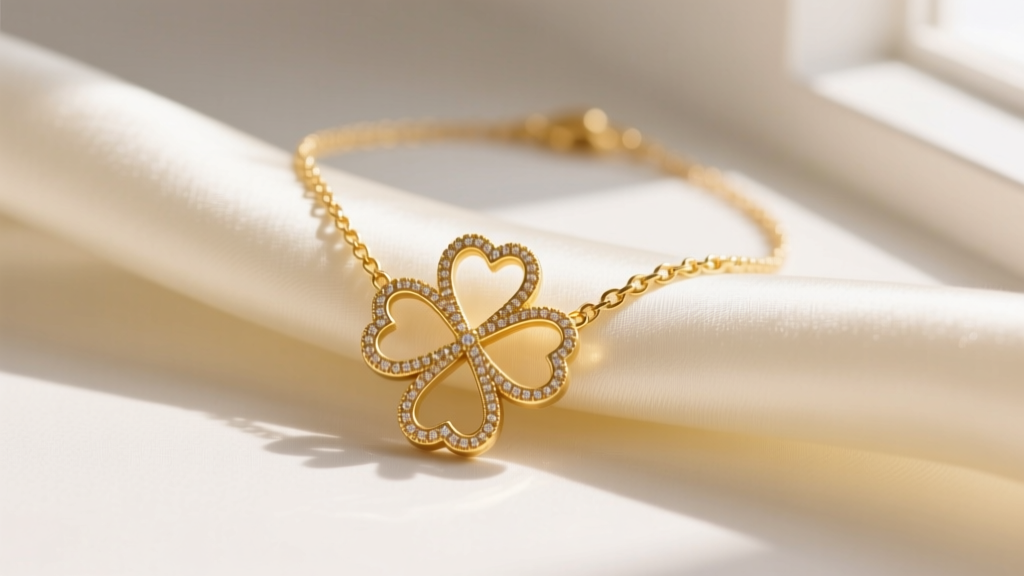
The jewelry landscape in 2026 has seen a massive pivot toward negative-space designs, and the open clover necklace is at the absolute center of this movement. While solid stone-inlay clovers (reminiscent of heritage luxury houses) remain popular, the openwork silhouette—featuring just the metallic outline of the four-leaf motif—has captured the market. It offers a lighter, more breathable aesthetic that layers effortlessly with other chains. However, this surge in demand has flooded the market with everything from $12,000 diamond-paved masterpieces to $35 gold-plated brass knockoffs. For the savvy consumer, the challenge is no longer finding an open clover pendant; it is determining which version actually holds its structural and financial value over time.
Deconstructing the Price Tiers: What Are You Actually Paying For?
To accurately assess the value of an open clover necklace, we must segment the market into three distinct tiers. The price discrepancies are rarely just about brand markup; they are deeply rooted in metallurgy, casting techniques, and component sourcing.
1. The Luxury & Designer Tier ($3,500 – $12,000+)
At the apex, you are paying for heritage, impeccable finishing, and high-purity alloys. Designer open clovers are typically cast in 18k gold (75% pure gold) and feature hand-polished interiors. If diamonds are present along the open border, they are typically VS clarity or higher, set with microscopic precision. The chains in this tier are usually 1.0mm to 1.2mm thick, featuring individually soldered links to prevent stretching.
2. The Mid-Tier Fine Jewelry ($450 – $950)
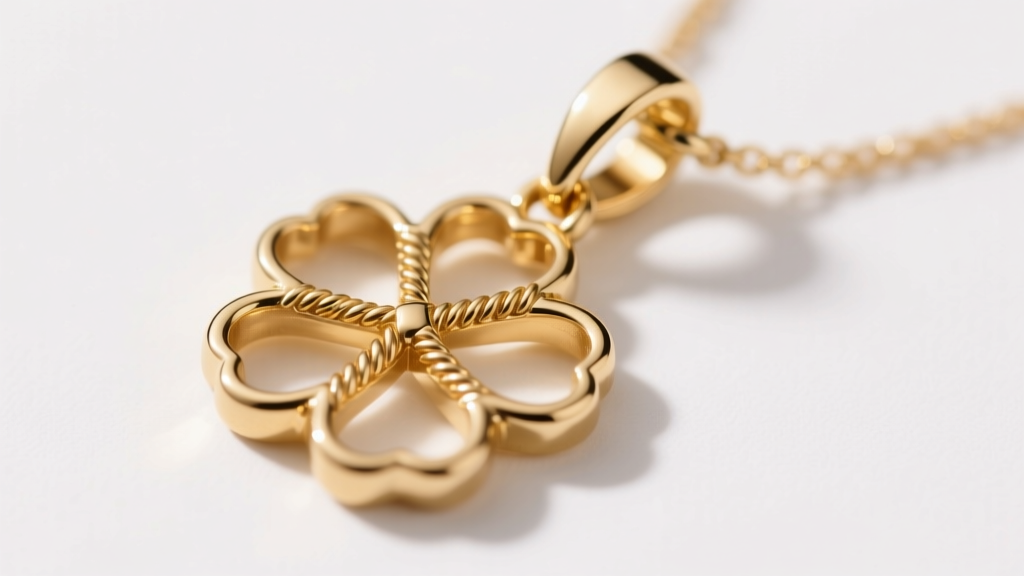
This is the sweet spot for intrinsic value. Independent jewelers and modern fine jewelry brands offer open clover necklaces in solid 14k gold (58.3% pure). According to the Gemological Institute of America (GIA), 14k gold provides the ideal balance of rich color and tensile strength, making it highly resistant to bending. Pendants in this tier typically weigh between 2.5 and 4.0 grams. The edges are machine-polished and often feature subtle milgrain detailing that mimics luxury pieces without the exorbitant labor costs.
3. The Demi-Fine & Budget Tier ($45 – $150)
Budget options rely on a brass or copper core plated with a microscopic layer of gold. While visually identical on a screen, these pieces suffer from severe longevity issues. The plating on the high-friction edges of the clover wears off within months, exposing the base metal which can oxidize and turn the skin green. Furthermore, the Federal Trade Commission (FTC) Jewelry Guides strictly regulate gold plating thickness; many budget brands skirt these rules by using flash plating (less than 0.175 microns) rather than the required 2.5 microns for true gold vermeil.
The Value Matrix: Material & Construction Breakdown
When evaluating an open clover necklace, use this matrix to compare the physical specifications you should expect at each price point. If a piece in the mid-tier lacks these specifications, it is overpriced.
| Specification | Luxury Tier ($3,500+) | Mid-Tier Fine ($450-$950) | Budget Demi-Fine ($45-$150) |
|---|---|---|---|
| Base Metal | 18k Gold (750 Stamp) | 14k Gold (585 Stamp) | Brass / Copper Core |
| Pendant Weight | 4.5g – 8.0g | 2.5g – 4.0g | 1.2g – 2.0g |
| Chain Gauge | 1.0mm – 1.2mm (Soldered) | 0.8mm – 1.0mm (Soldered) | 0.5mm – 0.7mm (Unsoldered) |
| Clasp Type | Custom Lobster / Box Clasp | Standard Lobster Clasp | Spring Ring Clasp |
| Edge Finishing | Hand-Polished, Rounded | Machine-Polished, Slight Bevel | Stamped, Sharp / Flat Edges |
| Expected Lifespan | Generational (50+ Years) | Daily Wear (10-20 Years) | Seasonal (6-18 Months) |
Critical Failure Points in Budget Open Clover Necklaces
If you opt for the budget tier, you must be aware of the specific mechanical failures that plague lightweight, mass-motif jewelry. Understanding these failure modes will help you inspect a piece before purchasing.
- Jump Ring Shear: The jump ring is the tiny loop connecting the clover pendant to the chain. In budget necklaces, these rings are often left unsoldered (just bent shut). Because open clovers have a wide surface area, they catch on clothing easily. This lateral torque pulls the unsoldered jump ring apart, resulting in a lost pendant.
- Casting Porosity: To save on gold weight, budget manufacturers use thin-walled casting molds. This often leads to microscopic air bubbles (porosity) inside the metal. When the clover is bent or dropped, it will snap cleanly at these porous weak points rather than bending.
- High-Spot Plating Loss: The four outer lobes of the clover rest directly against the collarbone. This constant friction acts like fine sandpaper against gold plating. Within 90 days of daily wear, the tips of the clover will reveal the dark brass underneath, ruining the aesthetic.
How to Verify Authenticity and Metal Quality
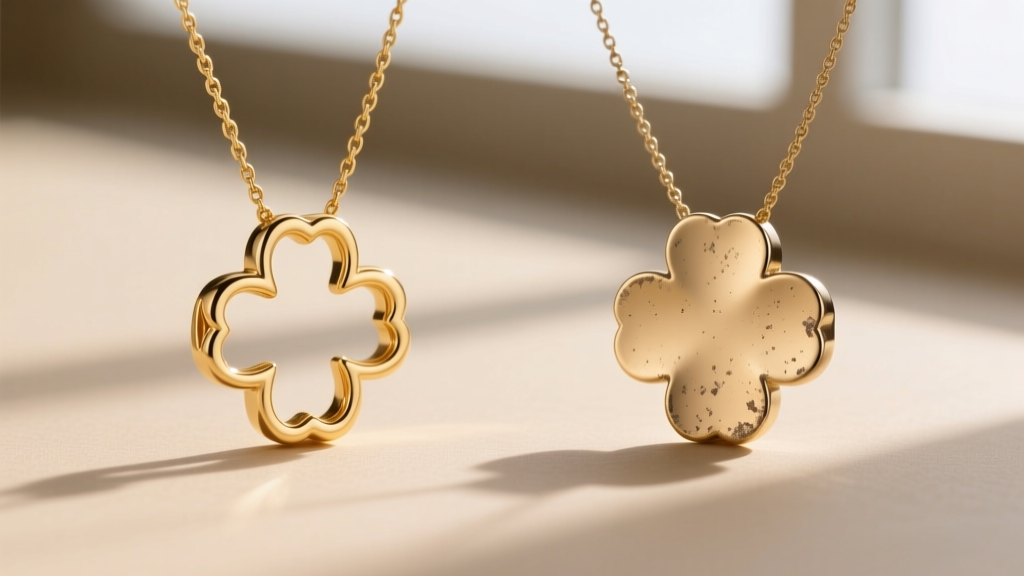
Never rely solely on a product description when assessing the value of an open clover necklace. Always look for the hallmark. A legitimate mid-tier or luxury piece will bear a laser-engraved stamp on the back of the pendant or on the clasp plate. Look for 750 (18k), 585 (14k), or 417 (10k). If the piece is vermeil, it should be stamped 925 to indicate a sterling silver base. If there is no stamp, or if it simply reads "18KGP" (Gold Plated), you are looking at a fashion accessory, not a fine jewelry investment. For a definitive test on vintage or secondhand pieces, a jeweler can perform a non-destructive X-ray fluorescence (XRF) scan to determine the exact elemental breakdown of the alloy.
Cost-Per-Wear (CPW) Analysis: Which Tier Makes Financial Sense?
To truly assess value, we must calculate the Cost-Per-Wear over a five-year period, assuming the necklace is worn 3 days a week (approx. 780 wears).
The Budget CPW: A $60 plated necklace that loses its finish and breaks after 8 months (approx. 100 wears) yields a CPW of $0.60 per wear. You will likely replace it three times in five years, totaling $180 spent on disposable metal.
The Mid-Tier CPW: A $650 solid 14k gold open clover necklace worn 780 times over five years yields a CPW of $0.83 per wear. Furthermore, the scrap gold value of a 3.5g 14k pendant retains roughly 40-50% of its retail purchase price, effectively lowering your net cost.
Final Verdict: Where Should You Invest?
If your goal is pure aesthetic experimentation for a single season or event, a budget demi-fine open clover necklace serves its purpose. However, from a strict value and longevity perspective, the mid-tier solid 14k gold options offer the highest return on investment. They provide the structural integrity, hypoallergenic properties, and permanent luster required for a signature daily piece, without the extreme heritage markups associated with luxury designer houses. When shopping, prioritize soldered jump rings, a minimum chain gauge of 0.8mm, and verifiable hallmark stamps to ensure your open clover necklace stands the test of time.


