OSRS All Necklaces Stats: Real-World Jewelry Guide
Translate OSRS all necklaces stats into real-world jewelry metrics, exploring fantasy amulet equivalents using gem hardness, metal purity, and chain gauge.

Translating Gielinor to Reality: A Gemological Crossover
When you are min-maxing your combat build, reviewing OSRS all necklaces stats is essential for squeezing out every last point of melee, ranged, or magic damage. But what happens when you step away from the screen and into the real world? The intersection of gaming culture and high-end jewelry has created a fascinating niche where fans seek out real-world equivalents of their favorite in-game amulets. As a beginner in the jewelry space, understanding the 'stats' of real-world necklaces—such as Mohs hardness, specific gravity, alloy purity, and tensile strength—is just as crucial as knowing your strength bonus in Gielinor. In this guide, we will translate the most iconic fantasy necklaces into real-world gemological and metallurgical data, giving you a practical framework for buying, wearing, and caring for fine jewelry.
The 'Amulet of Fury' Equivalent: Black Onyx and 18k Gold
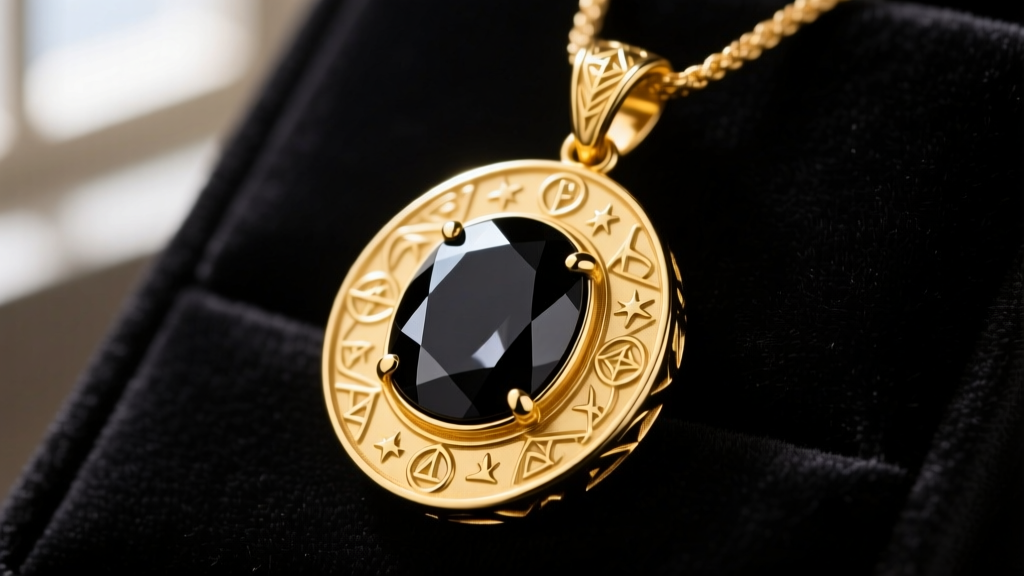
In-game, the Amulet of Fury is a staple for melee combatants, offering a massive boost to attack and strength. Its dark, striking aesthetic translates perfectly to a real-world combination of black onyx set in 18-karat yellow gold.
Black onyx is a banded variety of chalcedony, which is a cryptocrystalline form of silica. On the Mohs scale of mineral hardness, onyx ranks between 6.5 and 7.0. While this makes it reasonably durable for daily wear, it is not impervious to scratches from harder materials like quartz dust (which sits at a 7.0). According to the GIA's gemological breakdown of Onyx, the stone has a specific gravity of roughly 2.60, giving it a satisfying, moderate weight without being overly cumbersome on the neck.
The 'armor' for this gemstone is 18k yellow gold. Pure 24k gold is far too soft for everyday jewelry (ranking only 2.5 on the Mohs scale), so it is alloyed with copper and silver to increase its Vickers hardness. An 18k alloy contains 75% pure gold and 25% alloy metals, raising its Vickers hardness to approximately 125 HV. This provides the perfect balance of rich, warm color and structural integrity, ensuring the prongs holding your onyx pendant will not easily bend or snap under pressure.
The 'Amulet of Glory' Equivalent: Ruby and Platinum
The Amulet of Glory is arguably the most versatile piece of equipment in the game, offering teleportation charges and excellent all-around combat stats. To replicate its iconic red-and-silver aesthetic in the real world, jewelers turn to the undisputed king of red gemstones: the ruby, set in a platinum mounting.
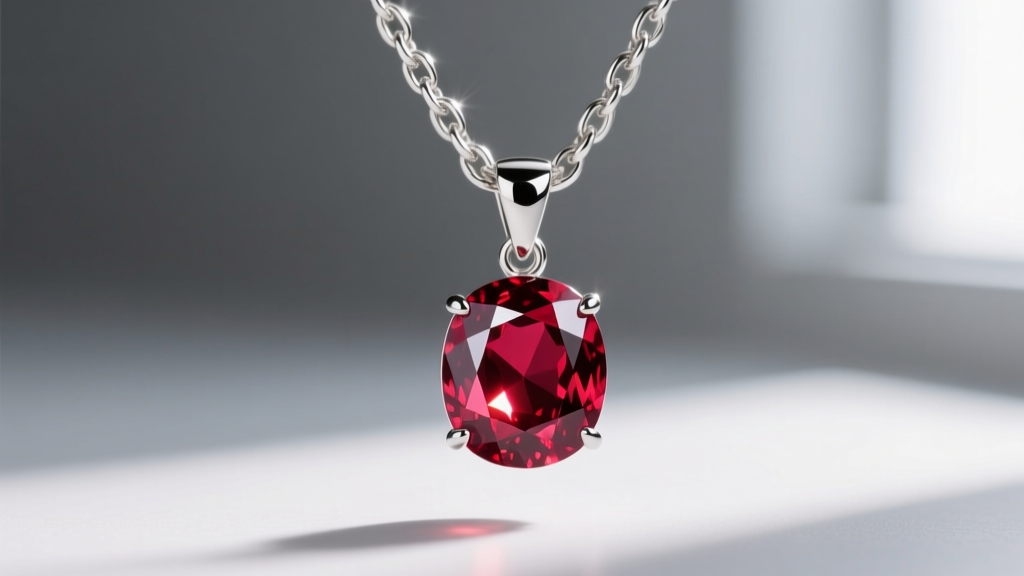
Rubies are the red variety of the mineral corundum. With a Mohs hardness of 9.0, ruby is the second hardest natural gemstone on earth, surpassed only by diamond. This extreme hardness means a ruby pendant will easily survive decades of daily wear without accumulating surface abrasions. However, as noted in the GIA's comprehensive guide to Ruby properties, rubies often contain microscopic inclusions known as 'silk' (rutile needles). While these inclusions can actually enhance the stone's value by creating a soft glow or asterism (a star effect), they can also represent structural cleavage planes if the stone suffers a severe, direct impact.
To secure a high-value ruby, platinum is the ultimate 'high-defense' metal. Platinum 950 (95% platinum, 5% ruthenium or cobalt) is incredibly dense, boasting a specific gravity of 21.45—nearly double that of 18k gold. Unlike gold, which loses mass when scratched, platinum merely displaces, developing a patina that can be easily polished back to a mirror finish. This makes platinum prongs the safest choice for securing expensive, high-hardness gemstones.
The 'Necklace of Passage' Equivalent: Emerald and Sterling Silver
For players focused on agility and travel, the Necklace of Passage is a lifesaver. Its lush green aesthetic mirrors the real-world pairing of a Colombian emerald suspended from a sterling silver chain.
Emeralds belong to the beryl family and possess a Mohs hardness of 7.5 to 8.0. However, hardness is only one part of a gemstone's durability profile; 'toughness' (resistance to breaking) is equally important. Emeralds are notoriously brittle due to their natural inclusions, often referred to in the trade as 'jardin' (French for garden). Because of this internal fracturing, emeralds are almost always treated with cedar oil or synthetic resins to improve their clarity and stability. When wearing an emerald pendant, you must avoid ultrasonic cleaners and extreme temperature changes, which can cause the oil to seep out, leaving the stone looking cloudy and fractured.
Sterling silver (92.5% silver, 7.5% copper) is an accessible, bright white metal that complements the deep green of an emerald. However, the copper content makes it susceptible to tarnishing when exposed to sulfur in the air. As detailed by The Silver Institute's data on sterling silver alloys, regular polishing with a microfiber cloth and storing the necklace in an anti-tarnish bag are mandatory maintenance 'quests' to keep the metal shining. Many modern jewelers apply a thin layer of rhodium plating over the silver to act as a permanent barrier against oxidation.
Chain 'Defence' Stats: Gauge, Tensile Strength, and Link Types
In OSRS, your necklace is only as good as the stats it provides. In reality, a pendant is only as secure as the chain it hangs from. Understanding chain 'stats' requires looking at gauge thickness, link architecture, and tensile strength.
Gauge and Millimeter Sizing
Chain thickness is measured in millimeters (mm) or gauge. For a standard pendant weighing between 5 and 15 grams, a chain thickness of 1.5mm to 2.5mm is ideal. If you are mounting a heavy, solid gold or large gemstone pendant (20g+), you must upgrade to a 3.0mm to 4.0mm chain to prevent the links from stretching or snapping under the dynamic load of daily movement.
Link Architecture and Durability
Not all links are created equal. The structural integrity of a chain depends on how the links interlock and whether they are soldered.
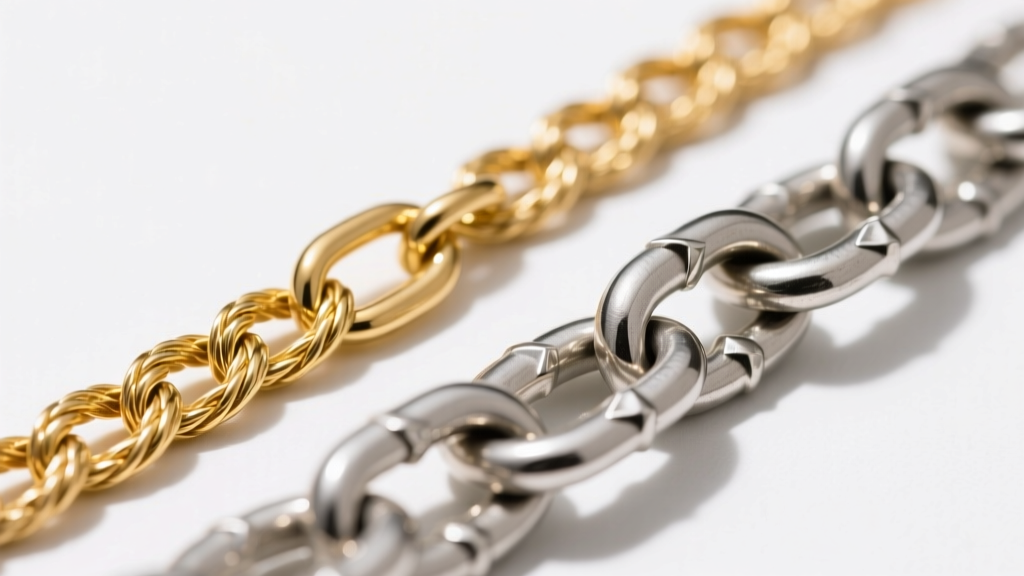
- Rope Chains: Composed of multiple small links twisted into a spiral. They are incredibly strong due to the multi-link interlocking pattern, making them excellent for heavy pendants. However, if a rope chain snaps, it is notoriously difficult to repair seamlessly.
- Cuban Link Chains: Featuring thick, flat, interlocking oval links. A solid 4mm Cuban link offers massive tensile strength and a bold, streetwear-inspired aesthetic. They are highly resistant to kinking and relatively easy for a jeweler to solder if a link fails.
- Figaro Chains: Characterized by a pattern of three short links followed by one long link. While stylish, the elongated links can act as weak points if caught on clothing, making them better suited for lighter pendants.
- Box Chains: Made of square, interlocking links that form a smooth, continuous square column. They are highly resistant to tangling but can stretch over time if subjected to heavy weights, permanently deforming the square links.
Real-World Equivalents to Iconic Fantasy Amulets
| In-Game Inspiration | Real-World Gemstone | Mohs Hardness | Recommended Metal | Maintenance Level |
|---|---|---|---|---|
| Amulet of Fury | Black Onyx | 6.5 - 7.0 | 18k Yellow Gold | Low |
| Amulet of Glory | Pigeon-Blood Ruby | 9.0 | Platinum 950 | Very Low |
| Necklace of Passage | Colombian Emerald | 7.5 - 8.0 | 925 Sterling Silver | High (Avoid Ultrasonic) |
| Amulet of Torture | Red Spinel | 8.0 | 18k Rose Gold | Low |
Equipping Your Real-World Amulet
Whether you are optimizing your melee build by memorizing OSRS all necklaces stats or selecting a fine jewelry piece to wear for a lifetime, the principles of durability, material science, and structural integrity remain the same. By understanding the Mohs hardness of your chosen gemstone, the alloy composition of your precious metals, and the tensile strength of your chain links, you can make informed, confident purchasing decisions. Fine jewelry, much like a high-tier crafting recipe, requires an investment of resources and knowledge—but the resulting 'stat boost' to your personal style is permanent. Treat your real-world amulets with the same care you would your best-in-slot gear, and they will easily outlast any server shutdown.


