Padlock Necklace Meaning: Material Properties & Symbolism Guide
Discover the true padlock necklace meaning and how choosing the right metal—from titanium to 18k gold—impacts its symbolism, durability, and daily wear.

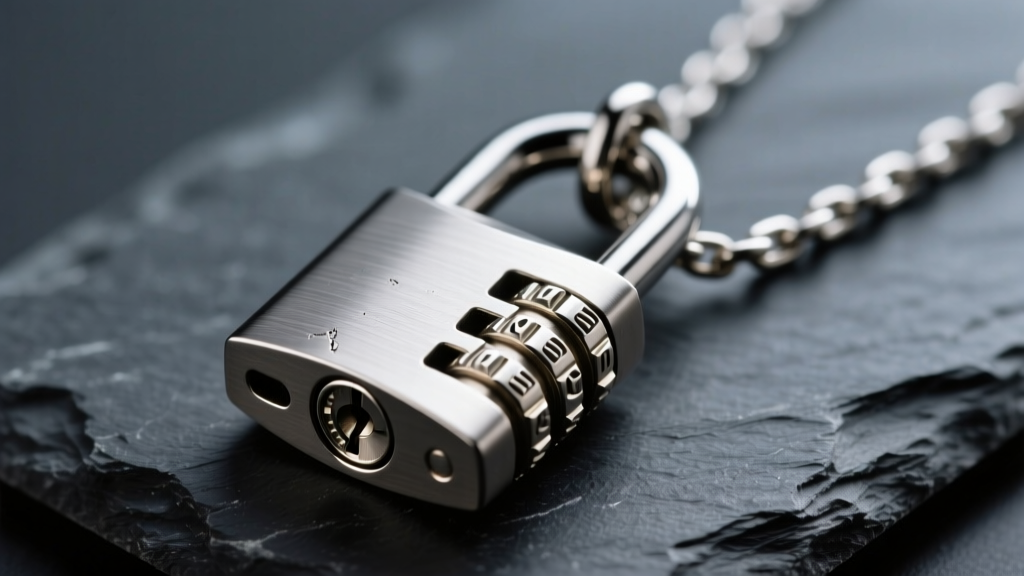
When exploring the padlock necklace meaning, most jewelry guides focus purely on aesthetics or romantic symbolism. However, as any master jeweler or metallurgist will tell you, the true depth of a padlock pendant's symbolism is inextricably linked to its material composition. A padlock represents security, permanence, and an unbreakable bond. Yet, if the metal chosen is prone to severe oxidation, structural fatigue, or clasp failure, the physical reality of the necklace contradicts its metaphorical meaning.
In this comprehensive guide, we bridge the gap between emotional symbolism and hard metallurgy. We will dissect how different metal grades, Vickers hardness ratings, and chain gauges dictate the longevity—and therefore the true meaning—of your padlock necklace.
The Historical & Cultural Padlock Necklace Meaning
The padlock motif in jewelry traces its roots to multiple distinct subcultures and historical movements. In the early 2000s, the "love lock" phenomenon saw couples attaching brass padlocks to bridges (like Paris's Pont des Arts) and throwing away the key to symbolize an unbreakable, permanent bond. Simultaneously, in the 1970s, the punk subculture adopted the padlock necklace as a symbol of rebellion, anti-establishment boundaries, and personal security, popularized by designers like Vivienne Westwood.
Today, the padlock necklace meaning has synthesized these two extremes. It is worn as a symbol of self-love and personal boundaries, or as a devotional token of permanent commitment (often seen in the modern "permanent jewelry" movement where the clasp is welded shut). The material you choose must align with which of these meanings you intend to project.
Material Comparison: Durability, Grade, and Symbolic Weight
To ensure your necklace physically embodies the concept of "permanence," you must select a metal capable of withstanding daily mechanical stress, environmental exposure, and skin acidity. Below is a technical comparison of the most common metals used for padlock pendants and their accompanying chains.
| Material | Standard / Grade | Vickers Hardness (HV) | Tarnish Profile | Metaphorical Meaning |
|---|---|---|---|---|
| Titanium | Grade 5 (Ti-6Al-4V) | ~350 HV | Zero Tarnish | Unbreakable strength, modern utility |
| Stainless Steel | 316L Surgical | ~150-190 HV | Highly Resistant | Industrial resilience, accessibility |
| Sterling Silver | 925 (or Argentium) | ~60-70 HV | High (unless Argentium) | Classic devotion, requires nurturing |
| Yellow Gold | 14k (58.5% Au) | ~130-150 HV | Zero Tarnish | Enduring value, balanced permanence |
| Yellow Gold | 18k (75% Au) | ~110-125 HV | Zero Tarnish | Pure luxury, high-status commitment |
Titanium & Stainless Steel: The Unbreakable Vow
If your padlock necklace meaning centers on invincibility and boundary-setting, titanium is the ultimate metallurgical choice. Specifically, Grade 5 Titanium (Ti-6Al-4V) is an aerospace-grade alloy that is incredibly lightweight but boasts a Vickers Hardness of roughly 350 HV. It is virtually impossible to scratch during daily wear and is 100% hypoallergenic. Unlike steel, titanium does not contain nickel or iron, meaning it will never rust or react with highly acidic skin chemistry.
For a more accessible option, 316L Surgical Stainless Steel offers excellent corrosion resistance due to its molybdenum content. However, steel is heavier and can trigger contact dermatitis in individuals with severe nickel allergies. A titanium padlock requires zero maintenance, perfectly mirroring a bond that is self-sustaining and unbreakable.
Sterling Silver (925): The Classic but High-Maintenance Bond
Sterling silver is the traditional choice for romantic jewelry, but it requires a compromise. Standard 925 silver contains 7.5% copper to provide structural integrity (pure silver is too soft for a functional lock mechanism). This copper is the culprit behind silver sulfide tarnish when exposed to ambient sulfur and humidity.
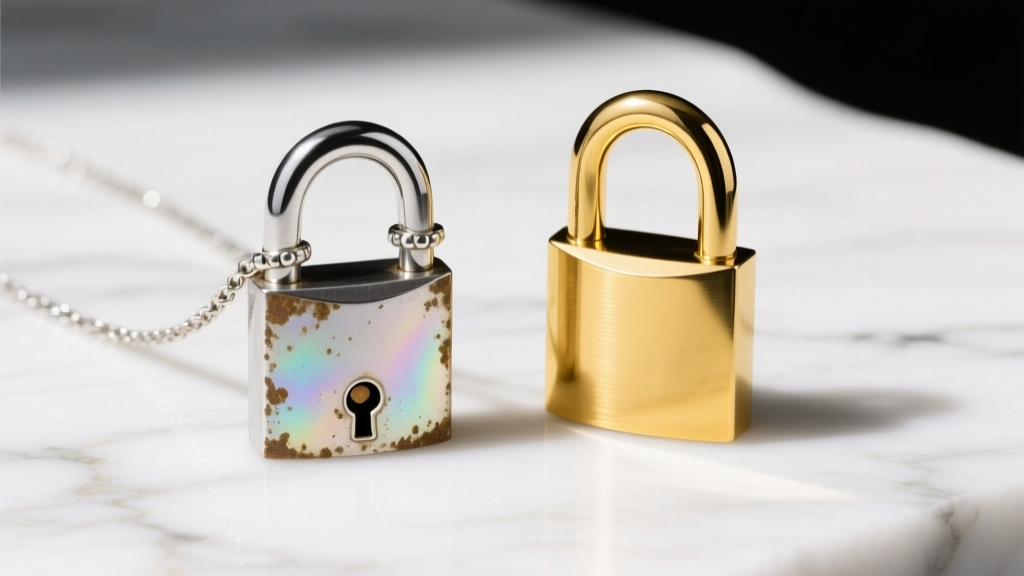
From a symbolic standpoint, a sterling silver padlock represents a relationship or personal journey that requires active nurturing and care. If you prefer the look of silver but despise the maintenance, seek out Argentium Silver. As noted by Rio Grande jewelry supply, Argentium replaces some of the copper with germanium, creating a highly tarnish-resistant alloy that still legally carries the 925 stamp, offering the best of both worlds for a permanent symbol.
14k vs. 18k Gold: Balancing Purity and Permanence
Gold is the universal standard for eternal value, but its karatage drastically alters its mechanical properties. According to the Gemological Institute of America (GIA), pure 24k gold is far too soft (approx. 25-30 HV) for jewelry that experiences mechanical friction, like a padlock's shackle or clasp.
- 18k Gold (75% Pure): Rich in color and highly valuable, but softer (approx. 115 HV). An 18k gold padlock necklace is a luxury piece, best suited for occasional wear or lighter, smaller pendants. The internal tumblers of a functional 18k lock will wear down faster over decades of use.
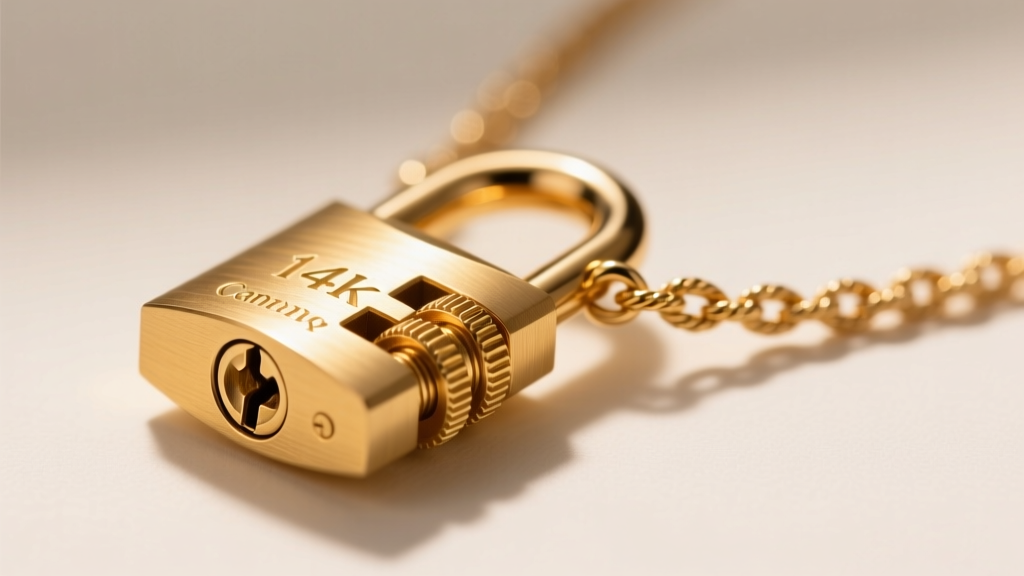
- 14k Gold (58.5% Pure): Alloyed with copper, silver, and zinc, 14k gold achieves an HV of 130-150. This is the ideal metallurgical sweet spot for a daily-wear padlock necklace. It resists deformation, secures the clasp joints, and maintains its structural integrity for a lifetime, aligning perfectly with the meaning of enduring, practical commitment.
Mechanical Integrity: Gauges, Clasps, and Failure Modes
A padlock necklace meaning "security" is deeply ironic if the chain snaps under the pendant's weight. The mechanical integrity of the chain and clasp is just as vital as the pendant itself.
Chain Gauge and Tensile Strength
A solid brass, steel, or gold padlock pendant can easily weigh between 15 and 30 grams. Suspending this weight on a delicate 1.0mm hollow-cable chain is a mechanical failure waiting to happen. The tensile yield point of a 1.0mm chain often maxes out around 3-5 kg before link deformation occurs, but dynamic stress (snagging on clothing) can snap it with far less force. For heavy padlocks, a 2.5mm to 3.5mm solid curb, Figaro, or wheat chain is mandatory to ensure the physical security matches the symbolic one.
Clasp Failure Modes
Standard spring-ring or lobster clasps rely on a tiny internal steel spring. Over time, sweat, lotion, and friction degrade this spring, leading to accidental unclasping. If your padlock necklace is meant to symbolize an unbreakable bond (or if you are investing in heavy precious metals), upgrade to a screw-lock barrel clasp or a box clasp with a figure-8 safety catch. These mechanical closures rely on threading or secondary physical barriers rather than spring tension, drastically reducing the risk of catastrophic failure.
Care and Maintenance for Symbolic Longevity
To ensure your necklace continues to reflect its intended meaning, material-specific care is required:
- Ultrasonic Cleaners: Safe for solid gold, platinum, and titanium. Never use ultrasonic cleaners on oxidized (antiqued) silver padlocks, as the high-frequency vibrations will strip the deliberate dark patina from the lock's engravings.
- Chemical Exposure: While gold and titanium are impervious to chlorinated pool water, the steel springs inside lobster clasps can rust. Always remove your necklace before swimming, or ensure your clasp is entirely crafted from non-ferrous metals.
- Polishing: Use a treated micro-abrasive cloth (like a Sunshine cloth) for silver. Avoid liquid silver dips, which can cause micro-pitting in the metal's surface over repeated use, weakening the structural integrity of the chain links.
"The true weight of a padlock necklace isn't measured in grams, but in the metallurgical foresight of its creation. A symbol of permanence must be forged from materials that refuse to yield to time, friction, and the elements."
Ultimately, the padlock necklace meaning is defined by the wearer, but it is validated by the jeweler. Whether you choose the utilitarian invincibility of Grade 5 Titanium, the nurturing tradition of 925 Silver, or the enduring luxury of 14k Gold, ensuring the material properties align with your symbolic intent guarantees that your necklace will remain a steadfast emblem for decades to come. For further reading on precious metal durability, consult the World Gold Council for comprehensive data on alloy longevity.


