Paper Clip Necklace Meaning: Symbolism and Style Guide
Discover the paper clip necklace meaning, its symbolism of connection, and how to choose the right wire gauge and metal for everyday layering.


If you have browsed any jewelry boutique or scrolled through fashion feeds recently, you have undoubtedly noticed the elongated, rectangular links dominating the neckline scene. But beyond its sleek, industrial-chic aesthetic, what is the actual paper clip necklace meaning? For beginners stepping into the world of fine and fashion jewelry, understanding the symbolism, construction, and styling mechanics of this modern classic is essential before making a purchase.
This comprehensive explainer will decode the history and sentiment behind the design, break down the exact wire gauges you need to know, and provide a foolproof framework for layering your chains without tangling.
The Core Paper Clip Necklace Meaning and Symbolism
At its heart, the paper clip necklace meaning revolves around connection, utility, and resilience. Historically, the paper clip was invented in the late 19th century as a simple, non-destructive way to hold important documents together. When high-fashion houses and independent jewelers began adapting this utilitarian shape into wearable art, they brought that underlying sentiment with it.
Wearing a paper clip chain is often viewed as a subtle nod to keeping things together—both literally and metaphorically. It symbolizes unity, organization, and the invisible bonds that connect us to our goals, our work, and our loved ones. Unlike traditional romantic motifs like hearts or infinity symbols, the paper clip offers a grounded, pragmatic form of symbolism that appeals to modern minimalists and professionals.
'The beauty of the paper clip chain lies in its duality. It takes an object of pure, mundane utility and elevates it into a symbol of strength and interconnectedness.' — Contemporary Jewelry Design Archives
From a stylistic perspective, the meaning also extends to versatility. Just as a physical paper clip adapts to hold a single sheet or a thick stack of documents, the paper clip necklace is celebrated for its ability to adapt to any neckline, occasion, or layering stack.
Anatomy of a Paper Clip Chain: Gauges and Dimensions
To truly understand what you are buying, you must look past the aesthetic and examine the structural engineering of the chain. The 'paper clip' designation refers to the link shape—specifically, an elongated oval with flattened, straight sides. The aspect ratio (the length of the link divided by its width) typically sits between 2.5:1 and 3.5:1. If the ratio is too high, the links become unstable and prone to twisting; if it is too low, it simply looks like a standard cable chain.
However, the most critical factor in durability and drape is the wire gauge. In the American Wire Gauge (AWG) system, a lower number indicates a thicker, heavier wire. Choosing the wrong gauge for your lifestyle is the number one reason chains snap or stretch.
| AWG Size | Wire Thickness | Typical Link Size | Best Use Case |
|---|---|---|---|
| 20 - 18 Gauge | 0.81mm - 1.02mm | 8mm x 3mm | Delicate layering, pendant holding, lightweight everyday wear. |
| 14 - 12 Gauge | 1.63mm - 2.05mm | 15mm x 5mm | Standalone statement pieces, medium-weight layering, high durability. |
| 10 - 8 Gauge | 2.59mm - 3.26mm | 22mm x 8mm | Chunky streetwear styles, heavy pendants, maximum structural integrity. |
The Importance of Soldered Links
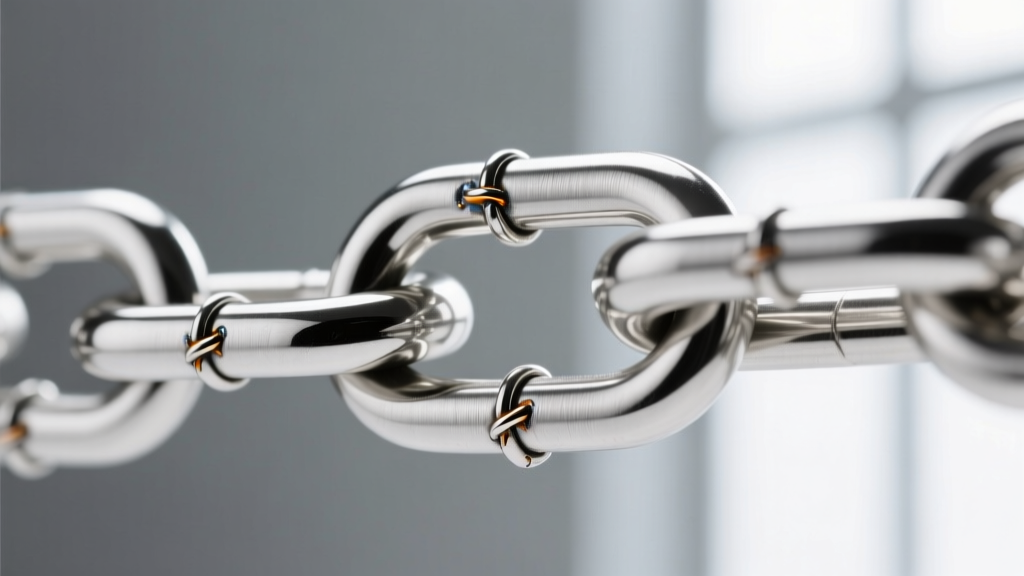
When examining a paper clip chain under a jeweler's loupe, look for the solder mark. High-quality chains feature soldered links, meaning the tiny seam where the wire meets itself is welded shut. Unsoldered paper clip chains, often found in fast-fashion retail, rely purely on the tension of the bent wire. Because of the elongated shape of the links, unsoldered paper clip chains are highly susceptible to pulling apart if snagged on clothing. Always verify that the links are soldered before investing in precious metals.
Metal Matters: Choosing the Right Material Grade
The paper clip necklace meaning of 'resilience' is quickly undermined if you choose the wrong metal. The friction points where the elongated links rub against each other require a metal with adequate tensile strength and wear resistance. According to the Gemological Institute of America (GIA), the purity of gold directly impacts its hardness, making alloy selection crucial for chain longevity.
- 14k Gold (58.5% Pure Gold): The undisputed champion for paper clip chains. The alloy metals (usually copper, silver, and zinc) provide the necessary rigidity to prevent the elongated links from warping or stretching over time. 18k or 24k gold is generally too soft for heavy, interlocking link chains.
- 925 Sterling Silver: A beautiful, budget-friendly option, but it requires maintenance. Silver is naturally soft and prone to tarnishing. Look for sterling silver chains that have been plated with a thin layer of rhodium to delay oxidation and add a scratch-resistant surface.
- 316L Stainless Steel with PVD Coating: For fashion jewelry, surgical-grade 316L steel is hypoallergenic and incredibly strong. If you want a gold look on a budget, ensure the steel is coated using PVD (Physical Vapor Deposition) rather than traditional electroplating. PVD bonds at a molecular level and will not flake off from the friction of the links.
Always check for proper quality stamps. The Federal Trade Commission (FTC) Jewelry Guides mandate that precious metals must be accurately stamped (e.g., '14K', '925') and accompanied by a registered manufacturer's trademark to guarantee the metal's authenticity.
How to Layer Paper Clip Chains Like a Pro
Because of their uniform, geometric links, paper clip chains are the ultimate foundation for layering. However, beginners often make the mistake of pairing chains with similar link sizes, which results in a cluttered look and severe tangling. To master the art of the stack, use the 3-Point Contrast Framework:
- The Base (16-18 inches): Start with a delicate 18-gauge or 20-gauge paper clip chain. This sits close to the collarbone and acts as a subtle textural base.
- The Bridge (20-22 inches): Add a medium 14-gauge chain. The larger links provide visual contrast against the base layer. This is the ideal length to attach a small, meaningful pendant, like a solitaire diamond or a simple gold initial.
- The Anchor (24-28 inches): Finish with a chunky 10-gauge or 8-gauge chain. The heavy, oversized links draw the eye downward, elongating the neck and torso. Leave this chain bare to let the industrial hardware shine.

Common Clasp Types and Failure Points
The clasp is the most common point of failure on any necklace, and the elongated links of a paper clip chain can put unique stress on the closure mechanism.
Lobster Claw vs. Spring Ring
Avoid spring ring clasps on paper clip chains. The tiny internal spring mechanism is notoriously fragile and difficult to operate with one hand. A standard lobster claw clasp is vastly superior, offering a secure lock and easier manipulation. For chains heavier than 12-gauge, ensure the lobster clasp is proportionally sized; a tiny clasp on a heavy chain will bend and fail under the metal's weight.
The Toggle Clasp Advantage
For chunky, heavy-gauge paper clip chains, the toggle clasp is actually the most secure option. The T-bar is pulled through a circular ring, and the natural downward weight of the heavy chain keeps the bar seated horizontally against the ring. Unlike mechanical clasps that rely on tiny springs, a toggle clasp relies on gravity and physics, making it virtually fail-proof for statement pieces.
Final Thoughts on this Modern Classic
Understanding the true paper clip necklace meaning elevates it from a fleeting trend to a meaningful addition to your jewelry wardrobe. It represents a beautiful intersection of industrial utility and refined elegance. By paying close attention to the AWG wire thickness, ensuring your links are properly soldered, and selecting a metal grade that matches your lifestyle, you can invest in a piece that will hold your personal style together for decades to come.


