Troubleshooting Style: How to Match a Necklace for Dress Necklines
Solve neckline clashes and jewelry tangles. Learn how to choose the perfect necklace for dress styles, fabrics, and emergency mid-event fixes.

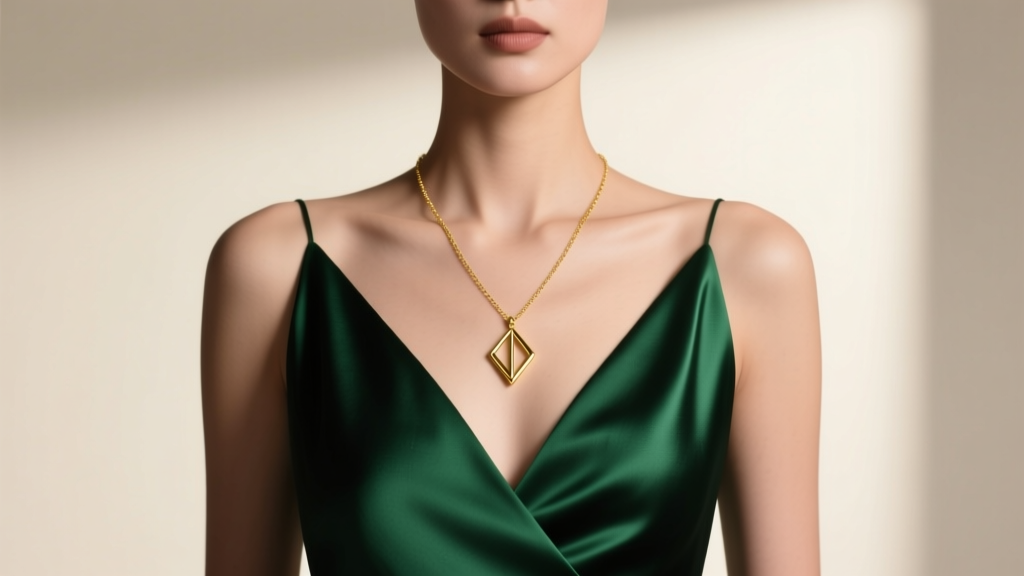
The Neckline Clash: Why Your Necklace Isn't Working
There is a distinct, sinking feeling when you catch your reflection in a mirror at a formal event and realize your jewelry is fighting your outfit. Finding the perfect necklace for dress necklines is rarely as simple as throwing on your favorite everyday chain. The geometry of a dress's bodice, the weight of the fabric, and the visual center of gravity all play critical roles in how a necklace sits and behaves. When a necklace floats awkwardly above a sweetheart neckline, tangles in a lace high-collar, or drags down a delicate silk slip dress, it is almost always a failure of proportion or hardware, not a lack of style. In this troubleshooting guide, we will diagnose the most common necklace-and-dress conflicts and provide precise, actionable solutions to ensure your jewelry enhances rather than disrupts your silhouette.
Neckline Geometry: A Troubleshooting Matrix
The most frequent error when choosing a necklace for dress styles is ignoring the architectural lines of the garment. A necklace should either perfectly parallel the neckline or intentionally contrast it with a structured focal point. According to The Knot's comprehensive neckline guide, bridging the gap between skin and fabric requires exact length calculations. Below is a diagnostic matrix to solve the most common neckline clashes.
| Dress Neckline | Ideal Necklace Length | Pendant / Clasp Type | Common Mistake to Avoid |
|---|---|---|---|
| Deep V-Neck | 20" to 24" (Matinee) | Y-drop or elongated teardrop pendant | Wearing an 18" princess chain that bisects the V and cuts the torso in half visually. |
| Sweetheart | 14" to 16" (Collar/Choker) | Riviere or delicate horizontal bar | Using a long pendant that rests directly on the bodice seam, causing visual clutter. |
| Halter | None or 14" tight choker | Minimalist metal band or pearl collar | Adding any pendant necklace; the halter straps already create a 'V' and compete for collarbone space. |
| High-Neck / Crew | 28"+ (Opera) or Statement | Bold, chunky geometric pendants | Wearing a 16" chain that gets swallowed by the fabric and creates a cramped, choked look. |
| Off-the-Shoulder | 12" to 14" (Choker) | Velvet ribbon with cameo or gemstone | Long chains that drag the eye downward and exaggerate the width of the exposed shoulders. |

Solving Hardware and Material Failures on Delicate Fabrics
Beyond visual proportions, the physical interaction between metal and textile is a major source of wardrobe malfunctions. If you are wearing a dress made of delicate materials like silk charmeuse, chiffon, or intricate Chantilly lace, the chain weave you select is paramount. Standard cable chains and rope chains possess high friction coefficients and microscopic gaps between the links. These gaps act like tiny hooks, catching and pulling delicate threads, leading to irreversible snags. For lace and silk, always opt for box chains or snake chains. A 1.5mm box chain offers a smooth, flush surface that glides over textiles without catching.
Weight distribution is another critical troubleshooting factor. A heavy 15-gram gemstone pendant hanging on a fragile 0.8mm chain will not only risk snapping the links but will also pull the front neckline of a soft dress downward, distorting the tailor's intended drape. If your pendant exceeds 5 grams, you must upgrade to a chain with a minimum width of 2.0mm to 3.0mm to distribute the tension. Alternatively, if the dress fabric is too delicate to support a thicker chain, switch to a lightweight hollow-metal pendant or a bezel-set gemstone that reduces overall mass.
Furthermore, skin irritation and fabric staining are common at summer weddings or humid galas. Cheap alloy jewelry mixed with sweat can leave green or black oxidation marks on both your skin and light-colored dress fabrics. The Gemological Institute of America (GIA) notes that nickel is the primary culprit in contact dermatitis from jewelry. To prevent this, ensure your necklace is crafted from 316L surgical stainless steel, solid 14k/18k gold, or platinum. Avoid rhodium-plated brass for long, hot events, as the plating can wear thin and expose the reactive base metals underneath.
The Layering Dilemma: When More Becomes a Mess
Layering necklaces over a dress is a popular styling technique, but it frequently devolves into a tangled knot within an hour of wear. The friction of your body moving against the dress causes chains of similar lengths to twist around one another. To troubleshoot this, you must enforce a strict minimum 2-inch drop difference between each layer. For example, pair a 14-inch choker, a 16-inch princess chain, and an 18-inch pendant.
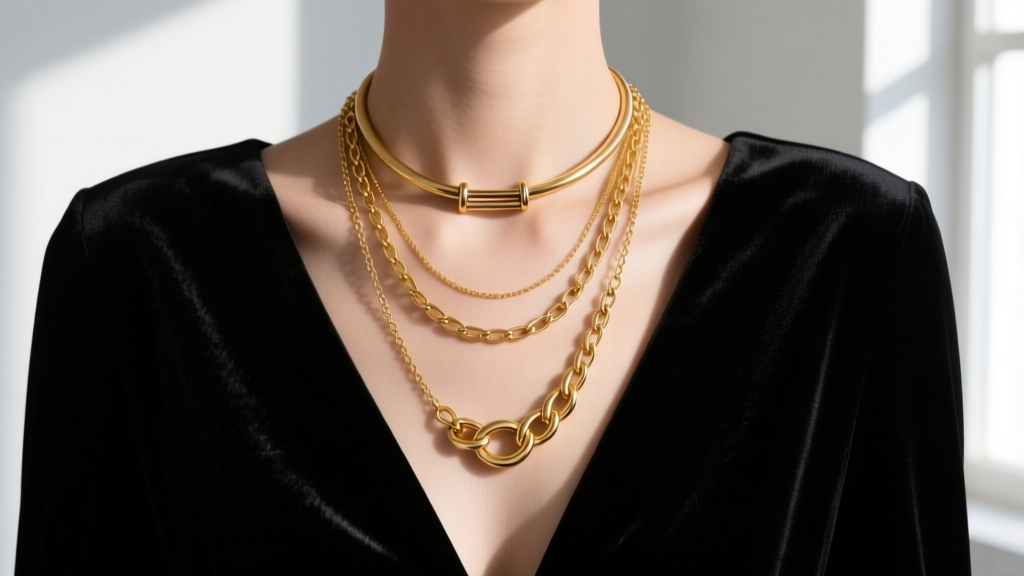
If you prefer a clustered look with less than a 2-inch variance, you must use a hardware intervention. Necklace spacers—small metal bars with multiple clasp rings—lock the chains in place at the nape of the neck, preventing them from crossing over and tangling at the front. Additionally, mixing chain textures prevents the links from interlocking; pair a smooth snake chain with a textured curb chain to reduce physical friction between the metals.
Quick Fixes for Mid-Event Necklace Emergencies
Even with careful planning, mechanical failures happen. Here is how to troubleshoot the most common mid-event necklace emergencies without needing a jeweler's toolkit:
- The Spinning Clasp: If your clasp constantly migrates from the back of your neck to the front of your dress, it is a center-of-gravity issue. The pendant is too heavy relative to the chain. The Fix: Attach a tiny, discreet counterweight (like a small silicone jewelry stopper or a heavy decorative bead) to the chain directly opposite the pendant to balance the tension.
- Chain Catching on Sequins or Beadwork: If your dress features heavy embellishments, a standard chain will snag continuously. The Fix: Swap the chain for a simple silk or velvet ribbon, or apply a microscopic dab of clear nail polish to the sharpest edges of the dress's beadwork near the collarbone to create a smooth barrier.
- The Slipping Sweetheart Bodice: If a heavy necklace is dragging down a strapless or sweetheart dress, causing you to constantly pull the bodice up. The Fix: Remove the heavy pendant and switch to a lightweight, structured collar necklace (like a rigid metal torc or a strand of lightweight freshwater pearls) that rests entirely on the collarbone rather than hanging on the fabric.
Stylist's Rule of Thumb: The necklace should never touch the actual seam or hem of the dress's neckline. Always leave at least a half-inch of negative space between the bottom of your jewelry and the top edge of the fabric to maintain a clean, intentional silhouette.
Ultimately, finding the right necklace for dress ensembles is an exercise in engineering as much as aesthetics. By respecting the geometry of the neckline, matching the chain weave to the textile's fragility, and balancing the physical weight of the hardware, you can eliminate wardrobe friction and ensure your jewelry performs flawlessly from the first toast to the final dance.


