Silver Dragonfly Necklace: Anatomy, Alloys & Styling Guide
Discover the metallurgy, casting techniques, and chain pairings behind the perfect silver dragonfly necklace in our expert technical deep dive.

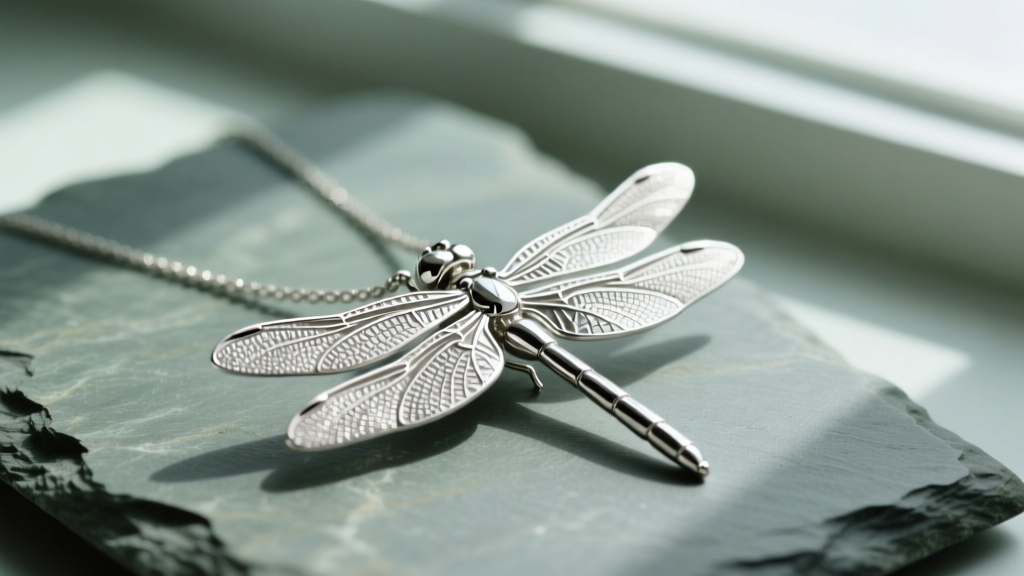
The silver dragonfly necklace is a staple of artisan jewelry, bridging the gap between organic nature-inspired motifs and precise metallurgical craftsmanship. While mass-market options flood the internet, true jewelry connoisseurs and collectors understand that the devil is in the details: the specific silver alloy used, the casting methodology that dictates the structural integrity of ultra-thin wing veins, and the mechanical pairing of chains and clasps. In this expert deep dive, we deconstruct the anatomy of the silver dragonfly pendant, exploring the technical specifications that separate a fragile novelty from an heirloom-grade piece of wearable art.
The Metallurgy of Dragonfly Wings: Sterling vs. Argentium
When evaluating a high-end silver dragonfly necklace, the first technical specification to verify is the silver grade. Standard 925 Sterling Silver consists of 92.5% pure silver and 7.5% copper. While copper provides necessary tensile strength, it introduces a significant vulnerability during the manufacturing process: firescale. When a jeweler solders the delicate bail to the dragonfly’s thorax, the copper reacts with oxygen, creating a stubborn, dark cupric oxide layer that requires aggressive pickling and polishing, which can soften the crisp edges of the wing veins.
For superior artisan pieces, look for Argentium Silver (935 or 960). According to metallurgical data from the Silver Institute, Argentium replaces a portion of the copper alloy with germanium. This addition fundamentally alters the alloy's behavior:
- Firescale Resistance: The germanium forms a transparent oxide layer, eliminating the dark firescale during soldering and preserving the sharp, intricate details of the dragonfly's wings.
- Tarnish Kinetics: Argentium is up to 7 times more resistant to environmental sulfur tarnish than standard sterling, a crucial factor for a piece with deep, hard-to-polish crevices in the wing venation.
- Ductility: It can be fusion-welded without solder, allowing jewelers to attach microscopic wing-tip accents without the risk of melting the adjacent delicate structures.
Lost-Wax Casting vs. Stamping: Manufacturing Deep Dive
The method used to form the pendant dictates its longevity and detail resolution. Cheap silver dragonfly necklaces are typically die-stamped from thin silver sheets. These lack three-dimensional depth, feature flat reverses, and are highly prone to bending along the horizontal wing axis.
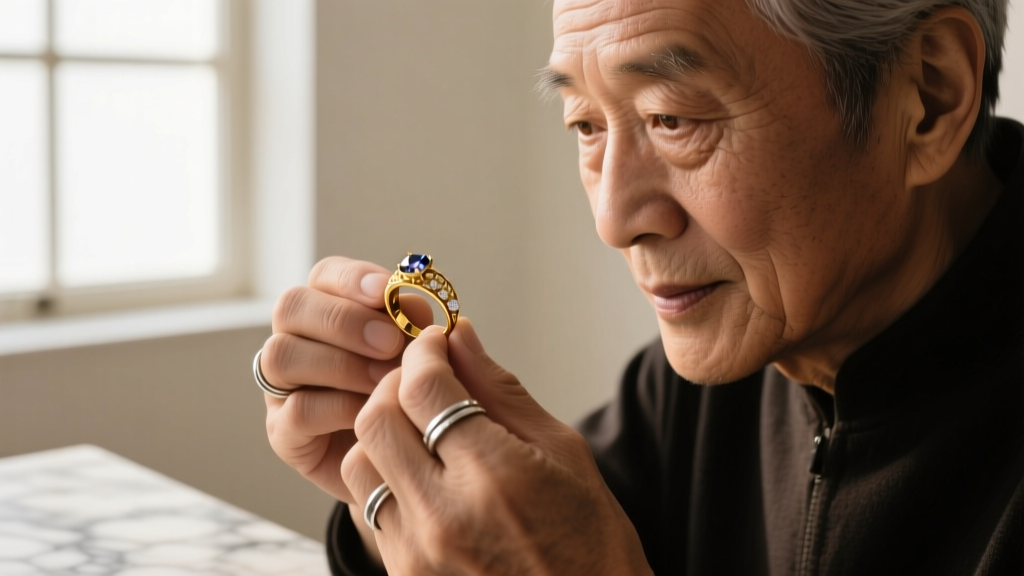
Expert-level pendants utilize investment casting (lost-wax casting). The process begins with a high-resolution 3D-printed resin or hand-carved wax model. The model is encased in a gypsum-based investment powder and burned out in a kiln at approximately 1350°F. Molten silver is then forced into the cavity via centrifugal force or vacuum.
Failure Modes in Cast Dragonfly Wings
The primary technical challenge in casting a dragonfly motif is achieving the ultra-thin cross-sections of the wings (often less than 0.8mm thick) without encountering cold shuts or microporosity. If the silver cools too quickly before filling the microscopic wing-tip veins, a cold shut occurs, leaving a visible seam or structural weak point. Furthermore, gas porosity can create microscopic voids within the thorax, compromising the structural integrity of the bail attachment. Master casters mitigate this by optimizing the sprue tree design, ensuring the thickest parts of the dragonfly (the thorax and abdomen) act as a reservoir to feed molten metal into the thin wings as they shrink during cooling.
Gemstone Inlays and Enamel Techniques
To mimic the iridescence of actual dragonfly wings, artisans employ various coloring techniques. The choice of material drastically affects both the pendant's durability and its valuation. Below is a technical comparison of the most common wing-treatment methodologies.
| Technique | Material Composition | Mohs Hardness / Durability | Estimated Cost Premium |
|---|---|---|---|
| Plique-à-jour | Vitreous enamel fired in open silver cells (no backing) | 5.5 - 6.5 (Highly fragile; prone to shattering on impact) | High ($200 - $500+) |
| Guilloché Enamel | Translucent enamel over engine-turned silver guilloche | 6.0 (Durable, but can crack if the silver base is bent) | Medium-High ($150 - $300) |
| Lab-Grown Opal Inlay | Silica spheres in a polymer resin matrix | 5.5 - 6.0 (Resists chipping better than natural opal) | Medium ($80 - $180) |
| Epoxy Resin / Cold Enamel | Two-part synthetic polymer resin with mica pigments | 2.0 - 3.0 (Prone to scratching and UV yellowing over time) | Low ($10 - $40) |
For collectors seeking museum-quality pieces, plique-à-jour is the gold standard. As noted by the Gemological Institute of America (GIA), working with vitreous enamels requires precise temperature control to match the thermal expansion rate of the glass to the silver substrate, preventing the enamel from popping out of the cells during wear. However, buyers must accept that plique-à-jour wings require meticulous care and should not be worn during high-impact activities.
Chain Pairing: Weight, Gauge, and Clasp Mechanics
A silver dragonfly necklace is uniquely challenging to hang correctly. Unlike a simple teardrop pendant, a dragonfly is horizontally oriented and often top-heavy if the wings are wide and the abdomen is short. Selecting the wrong chain will cause the pendant to flip upside down or slide off-center.
The Bail and Jump Ring Specifications
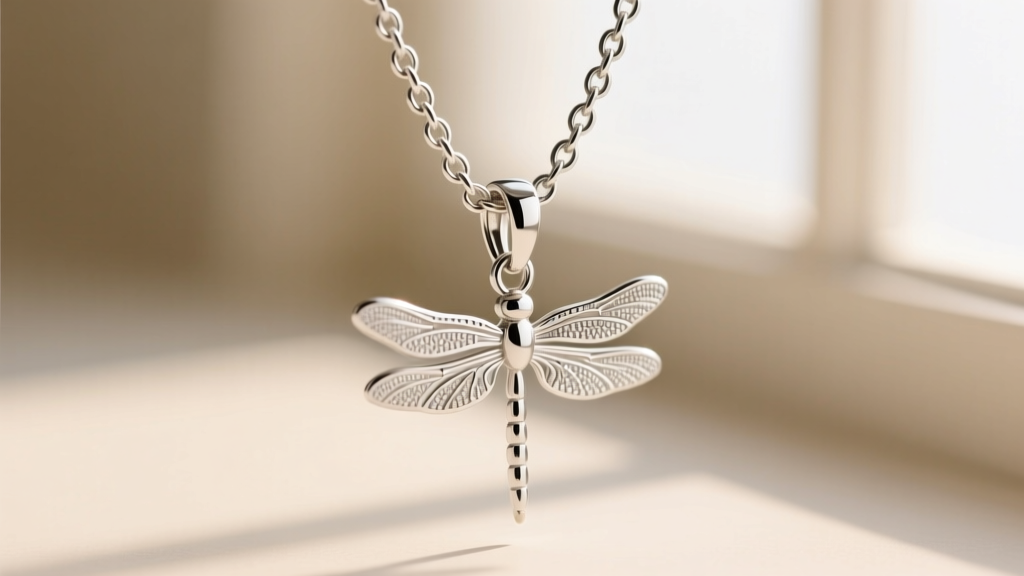
Avoid pendants with microscopic, soldered-shut jump rings. The bail (the loop that connects the pendant to the chain) must accommodate a chain thickness of at least 1.2mm to provide visual balance. Furthermore, the jump ring connecting the bail to the chain should be a minimum of 18-gauge (1.02mm) wire thickness, preferably 16-gauge (1.29mm) for heavier, wide-wingspan pieces. If the jeweler uses a split ring instead of a soldered or heavy-gauge jump ring, it will eventually pull apart under the pendulum stress of daily walking.
Chain Profiles
- Rolo Chains (1.2mm - 1.5mm): The round, uniform links of a rolo chain provide excellent structural support and prevent the horizontal dragonfly from tangling.
- Wheat (Spiga) Chains (1.0mm - 1.5mm): The braided, directional nature of a wheat chain keeps the pendant centered on the chest, resisting the lateral sliding common with smoother chains like box or snake chains.
- Avoid Snake Chains: Snake chains are notoriously prone to kinking and can easily trap the delicate, protruding legs or antennae of a cast dragonfly pendant, bending them permanently.
Maintenance, Patina, and Ultrasonic Warnings
Many artisan silver dragonfly necklaces feature an antiqued patina applied via liver of sulfur (potassium sulfide). This chemical treatment darkens the recessed areas of the wing veins and thorax segments, creating high contrast against the polished high-points.
Critical Warning: Never place an antiqued silver dragonfly necklace, or one featuring enamel or opal inlays, into an ultrasonic cleaner. The high-frequency cavitation bubbles will strip the liver of sulfur patina from the crevices, leaving the piece looking flat and washed out. Furthermore, the microscopic shockwaves can easily shatter plique-à-jour enamel or cause lab-grown opal inlays to delaminate from their silver bezels.
Proper Cleaning Protocol: Use a few drops of mild, phosphate-free dish soap in lukewarm water. Agitate gently with an extra-soft baby toothbrush, working parallel to the wing veins to avoid catching and bending the delicate silver filigree. Dry immediately with a microfiber cloth to prevent water spots in the recessed joints.
Pricing Tiers and Artisan Markers
Understanding the technical realities of production allows you to accurately assess the market value of a silver dragonfly necklace:
- Tier 1: Mass-Market / Stamped ($25 - $60) - Die-struck, hollow-backed, often featuring cold enamel or no color. Prone to bending. Usually strung on flimsy 0.8mm cable chains with weak spring-ring clasps.
- Tier 2: Commercial Cast 925 Sterling ($80 - $180) - Solid lost-wax castings with good detail. May feature simple oxidized patinas or basic CZ accents. Typically paired with adequate 1.0mm chains.
- Tier 3: Artisan / Master Crafted ($250 - $800+) - Hand-finished Argentium silver, featuring advanced techniques like plique-à-jour enamel, guilloché, or precision-set natural gemstones. Bails are heavily reinforced, and the piece is sold on high-quality, kink-resistant wheat or rolo chains with secure lobster clasps.
By scrutinizing the alloy composition, casting quality, and mechanical hardware, you can confidently select a silver dragonfly necklace that is not only visually stunning but engineered to endure as a lasting piece of wearable art.


