How Much Are Pearl Necklaces Worth? A Value Guide
Discover how much pearl necklaces are worth in 2026. We break down pricing by type, luster, size, and origin to help you assess true market value.

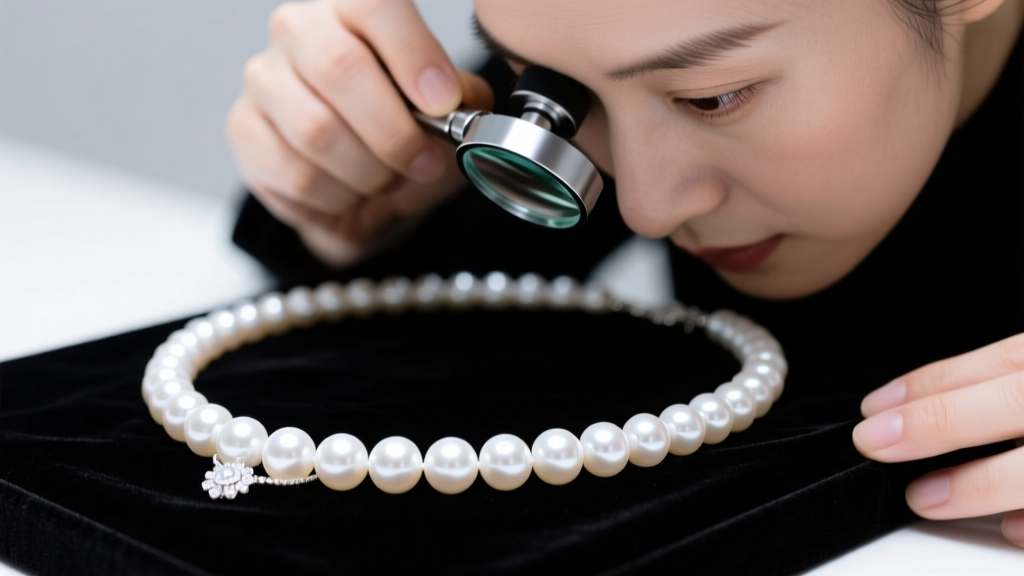
The Real Question: How Much Are Pearl Necklaces Worth?
When evaluating fine jewelry, few items present as wide a valuation gap as the pearl strand. If you are asking how much are pearl necklaces worth, the answer spans from $50 for mass-produced freshwater strands to over $500,000 for auction-grade natural saltwater pearls. Unlike diamonds, which are graded on a rigid, universally standardized 4Cs scale, pearl valuation is highly nuanced. It requires an understanding of organic gemology, culturing techniques, and market premiums. In 2026, the pearl market has seen a surge in demand for baroque and keshi shapes, slightly altering traditional pricing hierarchies, but the fundamental metrics of luster, nacre thickness, and surface cleanliness remain the ultimate arbiters of value.
Wild vs. Cultured: The Baseline of Pearl Value
Before assessing a specific strand, you must determine its origin. Natural (wild) pearls, formed without human intervention, are exceptionally rare. A vintage natural Basra pearl necklace from the Persian Gulf can easily command $100,000 to $1,000,000+ at auction houses like Sotheby's or Christie's. However, 99.9% of the pearl necklaces on the market today are cultured pearls. Cultured pearls are grown in pearl farms where a technician surgically implants a mantle tissue (and often a mother-of-pearl bead nucleus) into an oyster or mussel. When appraising a modern necklace, you are almost certainly evaluating cultured pearls, which are priced based on their specific variety and quality factors.
The GIA Pearl Value Factors: A Deep Dive
The Gemological Institute of America (GIA) outlines seven distinct value factors for pearls. Understanding these is non-negotiable for accurate budget assessment.
1. Luster (The Most Critical Factor)
Luster refers to the sharpness and intensity of reflections on the pearl's surface. High-luster pearls have a mirror-like finish, allowing you to see your own reflection clearly. Low-luster pearls appear chalky or dull. A strand of 7mm Akoya pearls with excellent luster will fetch $1,500, while a strand of identical size with poor luster may sell for under $150.
2. Nacre Thickness
Nacre is the crystalline substance secreted by the mollusk. For bead-nucleated pearls (like Akoya and South Sea), nacre thickness dictates both durability and luster. An Akoya pearl with nacre thinner than 0.4mm is considered commercial grade and risks peeling. Premium Hanadama-certified Akoya strands require a minimum nacre thickness of 0.4mm, though top-tier strands often exceed 0.6mm. Freshwater pearls are typically solid nacre, making them highly durable despite lower price points.
3. Surface Quality
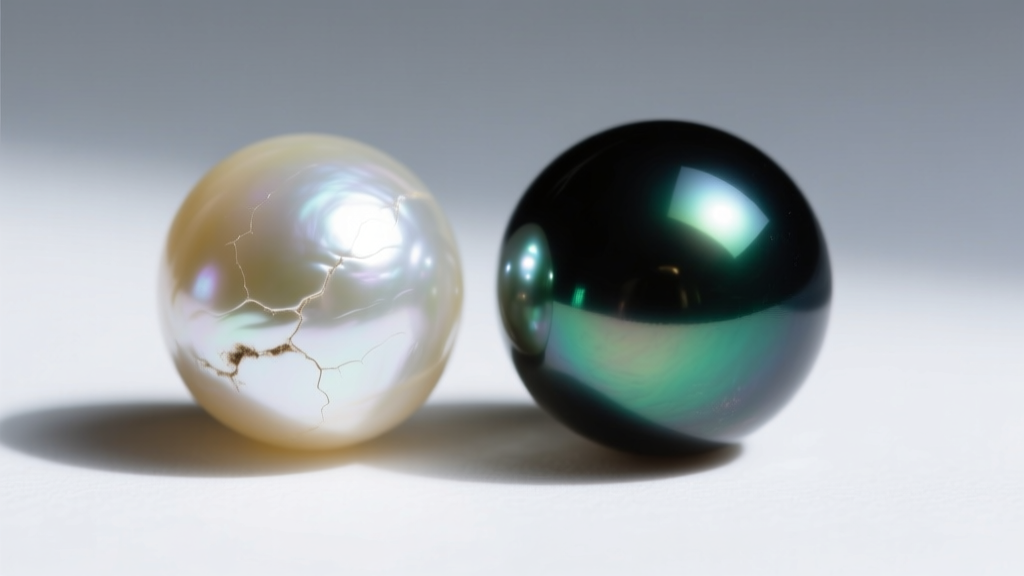
Pearls are organic and rarely flawless. Blemishes include spots, bumps, wrinkles, and abrasions. A strand graded "Clean" (no visible blemishes to the naked eye) commands a massive premium over "Heavily Blemished" strands. However, minor blemishes near the drill holes are acceptable and help verify authenticity.
4. Size, Shape, Color, and Matching
Size is measured in millimeters. Price increases exponentially, not linearly, with size. A 9mm South Sea pearl is vastly more expensive per millimeter than a 7mm one. While perfectly round pearls are traditionally the most valuable, the 2026 market has seen a 25% increase in premium pricing for symmetrical baroque and drop shapes in Tahitian varieties. Color includes bodycolor and overtone; for Tahitian pearls, a dark bodycolor with a "peacock" (green-purple) overtone commands the highest prices. Finally, "matching" evaluates how uniform the pearls are across the entire strand in all the aforementioned factors.
2026 Market Pricing Breakdown by Pearl Type
To give you a concrete framework, the table below outlines the current retail pricing for a standard 16-inch princess-length strand, assuming good to excellent matching and high luster.
| Pearl Type | Typical Size Range | Nacre Structure | Price Range (16" Strand) | Key Value Driver |
|---|---|---|---|---|
| Freshwater | 6mm - 12mm | Solid Nacre | $75 - $800 | Roundness, metallic luster |
| Akoya | 6mm - 9.5mm | Bead-Nucleated | $400 - $4,500 | Mirror luster, rose overtone |
| Tahitian | 8mm - 16mm | Bead-Nucleated | $800 - $15,000+ | Peacock overtone, dark bodycolor |
| White South Sea | 9mm - 20mm | Bead-Nucleated | $1,500 - $50,000+ | Large size, satin luster, thick nacre |
| Golden South Sea | 9mm - 18mm | Bead-Nucleated | $2,000 - $60,000+ | Depth of 24k gold coloration |
Expert Note: Beware of "Tahitian Black Pearls" selling for under $200 for a full strand. True Tahitian pearls, cultivated in the French Polynesian lagoons, have high overhead costs. A strand at that price point is almost certainly dyed freshwater pearls.
Brand Premium vs. Intrinsic Value
When assessing how much pearl necklaces are worth, you must separate intrinsic gemological value from brand equity. Heritage brands like Mikimoto and Tiffany & Co. command a 40% to 70% premium over unbranded strands of identical GIA-graded quality. Mikimoto pioneered the cultured pearl industry, and their proprietary grading system (which includes their coveted "Blue Lagoon" and premium Hanadama lines) guarantees exceptional nacre and luster. However, if your goal is purely investment in the gemstone itself rather than the resale value of the brand name, purchasing from specialized direct-to-consumer pearl importers or reputable online gemologists will yield a significantly higher quality-to-price ratio.
How to Appraise Your Own Pearl Strand at Home
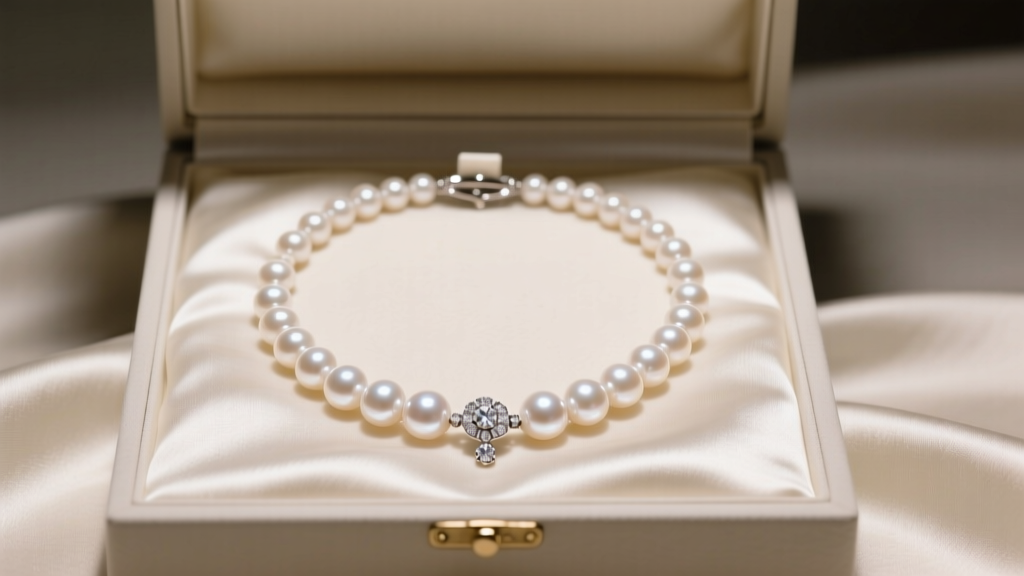
If you have inherited or purchased a pearl necklace and want to assess its baseline value before seeking a formal appraisal, follow these actionable steps:
- The Tooth Test (Authenticity): Gently rub the pearl against the biting edge of your front tooth. Real cultured and natural pearls will feel distinctly gritty or sandy due to the microscopic crystalline structure of the nacre. Imitation pearls (glass or plastic coated in synthetic pearl essence) will feel perfectly smooth.
- Inspect the Drill Holes: Use a 10x jeweler's loupe to examine the holes. In bead-nucleated pearls, you should see a distinct line where the nacre meets the mother-of-pearl bead. If the coating is flaking, peeling, or revealing a chalky white core, the nacre is dangerously thin, drastically reducing the value. Furthermore, real pearls are usually drilled from both sides, leaving a tiny ridge in the center of the hole, whereas fakes are often drilled cleanly in one pass.
- Evaluate the Stringing: High-value pearl strands are individually knotted on silk thread between every single pearl. This prevents pearl-on-pearl abrasion and ensures that if the strand breaks, you only lose one pearl. If your necklace is strung on synthetic wire without knots, or with knots only near the clasp, it is an indicator of commercial, lower-tier value.
- Check the Clasp Hardware: Premium strands utilize 14k or 18k gold clasps, often featuring safety catches and sometimes accented with diamonds. A base metal or brass clasp is a strong indicator that the pearls themselves are of lower commercial grade.
Final Thoughts on Pearl Valuation
Ultimately, determining how much are pearl necklaces worth requires looking past the initial shine. A $3,000 Akoya strand with 0.8mm nacre and pin-prick blemishes is a far better long-term investment than a $3,000 branded strand with thin 0.3mm nacre that will peel within a decade. For high-value purchases exceeding $5,000, always request a laboratory report from a reputable gemological institution, such as the GIA Pearl Classification Report, which provides an objective, third-party assessment of the exact quality factors dictating the necklace's true market worth.


