Pearl Rhinestone Necklace Trends 2026: Style Guide
Discover 2026 pearl rhinestone necklace trends. Learn how to layer, style, and choose premium materials for modern elegance and streetwear edge.

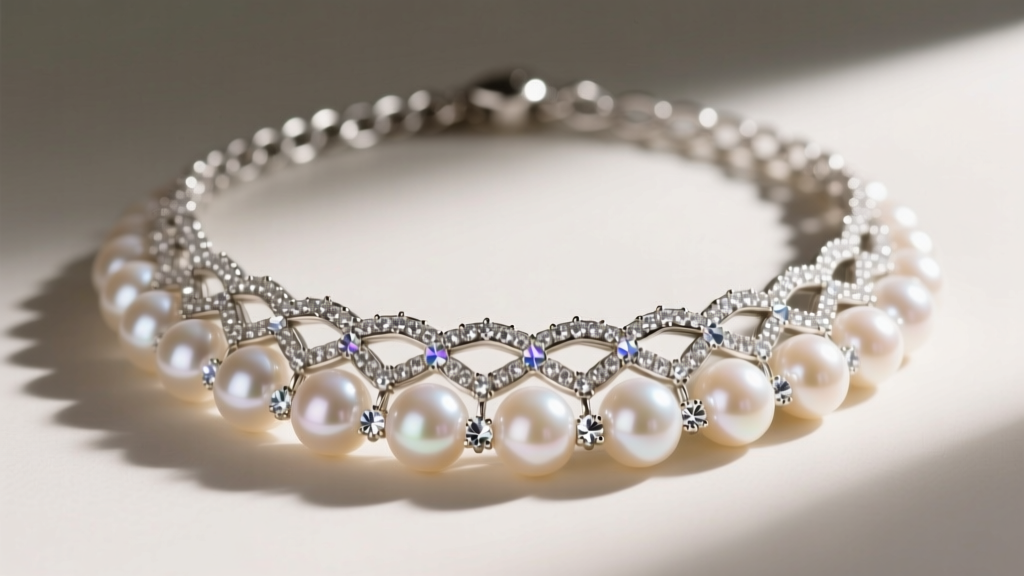
The jewelry landscape in 2026 has decisively moved past the minimalist extremes of the early 2020s, embracing a nuanced maximalism that balances heritage elegance with contemporary edge. At the forefront of this shift is the pearl rhinestone necklace. Once relegated to vintage costume jewelry or overly formal bridal wear, this hybrid silhouette has been reclaimed by modern style icons and avant-garde designers alike. By juxtaposing the soft, organic luster of pearls with the sharp, geometric brilliance of rhinestones, the pearl rhinestone necklace offers a masterclass in textural contrast. This comprehensive style and trend analysis will dissect the material grades, layering frameworks, and styling mechanics that define the pearl rhinestone necklace in 2026, ensuring your collection remains at the cutting edge of contemporary fashion.
The Evolution of the Pearl Rhinestone Necklace in 2026
Historically, combining pearls and rhinestones was a hallmark of mid-century costume jewelry, popularized by houses like Miriam Haskell and Chanel. However, the 2026 iteration of the pearl rhinestone necklace strips away the heavy, gilded artifice of the past. Today's trend relies on negative space, asymmetrical spacing, and mixed-metal hardware. Designers are increasingly utilizing baroque and keshi pearls alongside precision-cut rhinestones to create pieces that feel organic yet meticulously engineered. According to trend forecasts analyzed by Vogue, the modern consumer demands versatility—pieces that can transition from a boardroom presentation to an underground electronic music event without missing a beat. The pearl rhinestone necklace fulfills this mandate by acting as a bridge between classic refinement and subversive streetwear.
Material Grades: What Separates Luxury from Fast Fashion
When investing in a pearl rhinestone necklace, understanding material provenance is non-negotiable. The market is saturated with synthetic imitations that degrade within months. A genuine 2026 investment piece relies on high-grade components. For pearls, the Gemological Institute of America (GIA) emphasizes the importance of nacre thickness and luster. In hybrid necklaces, you should look for AAA-grade freshwater pearls or Hanadama Akoya pearls, which possess a mirror-like luster that can compete with the refraction of adjacent crystals.
On the rhinestone front, the term rhinestone is often used loosely. True luxury pieces utilize lead-free, precision-cut crystal glass (such as Swarovski or Preciosa) featuring specific facet arrangements like the Chaton (pointed back) or Rivoli (faceted front and back). Acrylic rhinestones, while lightweight, suffer from a low refractive index and will appear dull and scratched after minimal wear.
Material Comparison Matrix
| Component | Entry-Level (Fashion) | Mid-Tier (Bridge) | Fine Jewelry (Luxury) |
|---|---|---|---|
| Pearl Type | Coated Glass or Shell | AAA Round Freshwater | Hanadama Akoya / South Sea |
| Crystal Cut | Molded Acrylic Flatback | Preciosa Chaton Glass | Swarovski Rivoli / Diamonds |
| Stringing Base | Nylon Monofilament | 49-Strand Beadalon Wire | Hand-Knotted Silk / Platinum |
| Price Range | $25 - $85 | $150 - $450 | $1,200 - $8,000+ |
Balancing Luster and Brilliance: Visual Weight
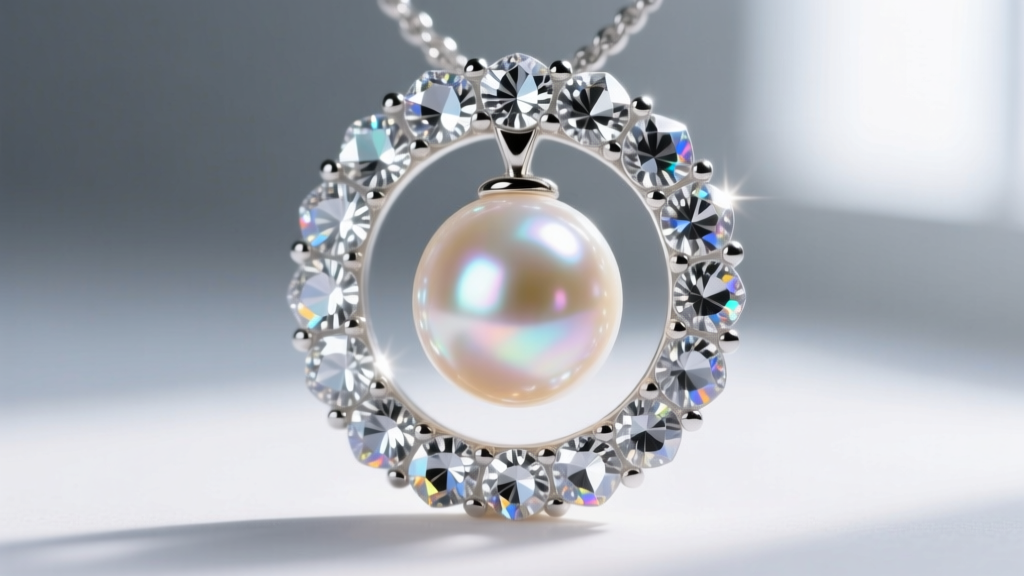
Styling a pearl rhinestone necklace requires an understanding of optical physics. Pearls exhibit luster—the soft reflection of light from the surface and the orient—the iridescent play of colors from within the nacre layers. Rhinestones, conversely, exhibit brilliance and fire—the sharp return of white light and the dispersion of spectral colors. When designing or selecting a pearl rhinestone necklace, the visual weight must be balanced. A strand of massive 12mm South Sea pearls will visually overpower delicate 3mm crystal accents. The golden ratio for 2026 styling suggests a 2:1 size ratio between the pearl and the rhinestone cluster. For example, an 8mm pearl pairs perfectly with a 4mm rhinestone bail or halo, ensuring neither material dominates the other.
Masterclass: Layering Frameworks and Lengths
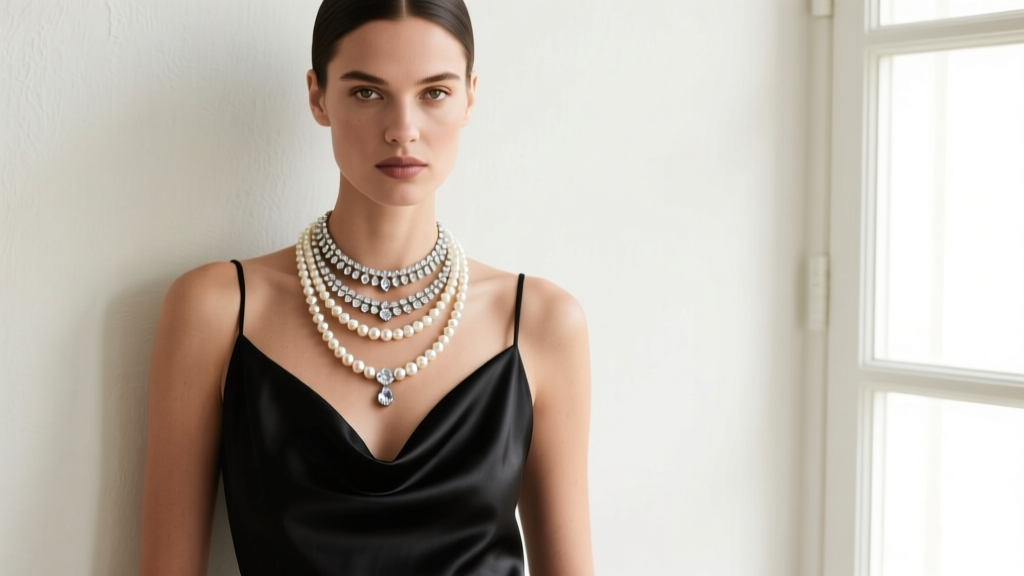
The single-strand pearl rhinestone necklace is a classic, but the 2026 styling ethos demands strategic layering. To avoid a tangled, chaotic look, you must adhere to strict length gradations and chain variations.
- The 14-Inch Choker: Opt for a delicate, 4mm freshwater pearl strand with a single, prominent rhinestone clasp or center drop. This sits flush against the collarbone and anchors the stack.
- The 16-Inch Princess: Introduce a mixed-media piece here. A 14k gold-filled Figaro chain interspersed with baroque pearls and bezel-set rhinestones adds necessary metallic texture and breaks up the spherical repetition.
- The 18-to-20-Inch Matinee: This is your statement layer. A graduated pearl rhinestone necklace where the crystals increase in size toward the center pendant creates a flattering V-shape that elongates the neck.
Crucially, ensure each layer features a different chain or stringing material. Pairing a silk-knotted pearl strand with a rigid, diamond-cut cable chain prevents friction damage and creates a rich, multi-dimensional aesthetic.
Hardware and Clasp Mechanics
The clasp on a pearl rhinestone necklace is no longer just a functional afterthought; it is a focal point. In 2026, the traditional spring-ring clasp has been largely replaced in high-end designs by the jeweled box clasp with a figure-eight safety catch. These clasps are often encrusted with pavé rhinestones, allowing the wearer to position the clasp at the front or side of the neck as an intentional design element. For everyday wear, magnetic clasps encased in rhinestone-studded sleeves offer accessibility without sacrificing security, provided the neodymium magnets are graded N52 or higher to withstand the weight of glass pearls and crystal elements.
Neckline Pairing Strategy
The architectural structure of your clothing dictates the success of your pearl rhinestone necklace. Here is a definitive pairing framework:
- Cowl Necklines: Avoid short chokers that compete with the draped fabric. Opt for an 18-inch Y-drop pearl rhinestone necklace that plunges into the negative space of the cowl.
- Crew Necks: A 14-inch collar-style pearl rhinestone necklace with geometric, Art Deco-inspired crystal links sits perfectly above the hem of a standard cotton or cashmere crew neck.
- Strapless / Sweetheart: This is the canvas for maximalism. Layer a 14-inch choker with a 16-inch princess strand featuring cascading rhinestone fringe to draw the eye upward and highlight the décolletage.
Care and Maintenance for Mixed-Material Pieces
Maintaining a pearl rhinestone necklace requires navigating the conflicting care needs of its components. Pearls are organic, porous, and highly sensitive to acids and chemicals. Rhinestones, particularly those with metallic foil backings to enhance reflectivity, are vulnerable to moisture and ultrasonic vibrations. Never place a pearl rhinestone necklace in an ultrasonic cleaner; the high-frequency waves will shatter the crystals and strip the nacre from the pearls. Instead, use a damp, lint-free microfiber cloth to gently wipe the pearls after each wear to remove sebum and perspiration. For the rhinestones, use a soft-bristled makeup brush dipped in a mild solution of distilled water and ammonia-free glass cleaner to carefully sweep away dust from the facets, ensuring the piece maintains its optical brilliance for decades.


