Peking Glass Necklace Value Guide: Pricing & Authentication
Discover the true market value of a Peking glass necklace. Learn authentication tips, pricing tiers for antique vs. vintage beads, and investment potential.

Understanding Peking Glass: Beyond the Vintage Bin
When evaluating antique and vintage jewelry, few materials present as complex a valuation challenge as a Peking glass necklace. Often misidentified in estate sales or casually dismissed as simple costume jewelry, genuine Peking glass (also known historically as Canton glass) represents a fascinating intersection of Eastern artistry and Western technological influence. Originating during the Qing Dynasty, specifically under the Kangxi and Qianlong emperors, this glassmaking tradition was heavily influenced by European Jesuit missionaries who introduced advanced kiln techniques to Beijing. Today, as the vintage jewelry market matures in 2026, collectors and appraisers are looking past the superficial shine to evaluate the historical provenance, carving quality, and material integrity of these unique pieces.
For buyers and sellers, the term 'Peking glass' is frequently misapplied to any carved, opaque glass bead of Asian origin. However, true value assessment requires distinguishing between 19th-century imperial-overlay masterpieces, early 20th-century hand-carved export pieces, and the mass-produced molded replicas that flooded the market in the mid-century. According to the Corning Museum of Glass, the chemical composition and carving methodologies of Chinese glass evolved drastically over three centuries, making material science and physical wear patterns the most reliable indicators of a necklace's true market tier.
The Anatomy of Value: Overlay and Cased Glass Techniques
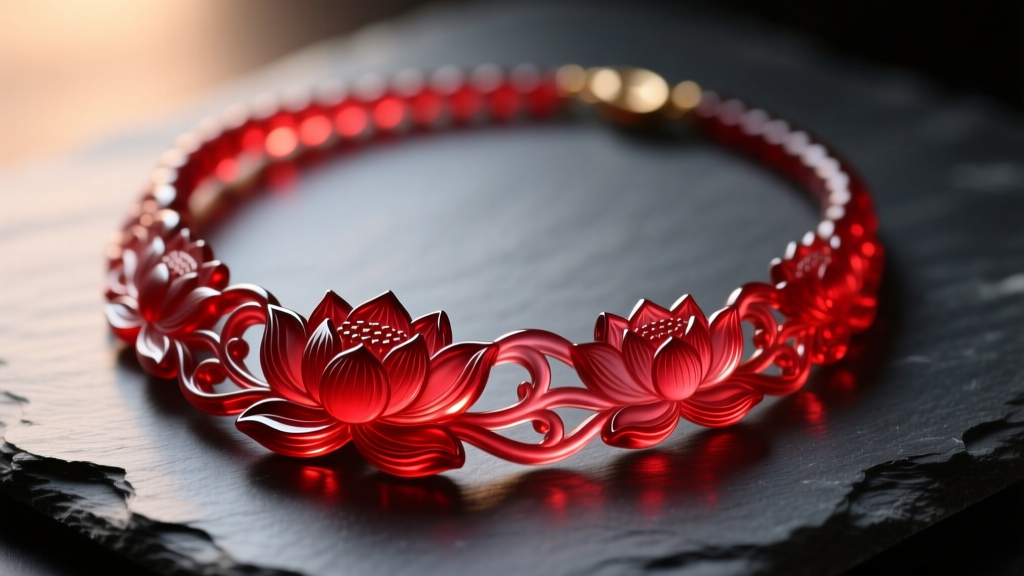
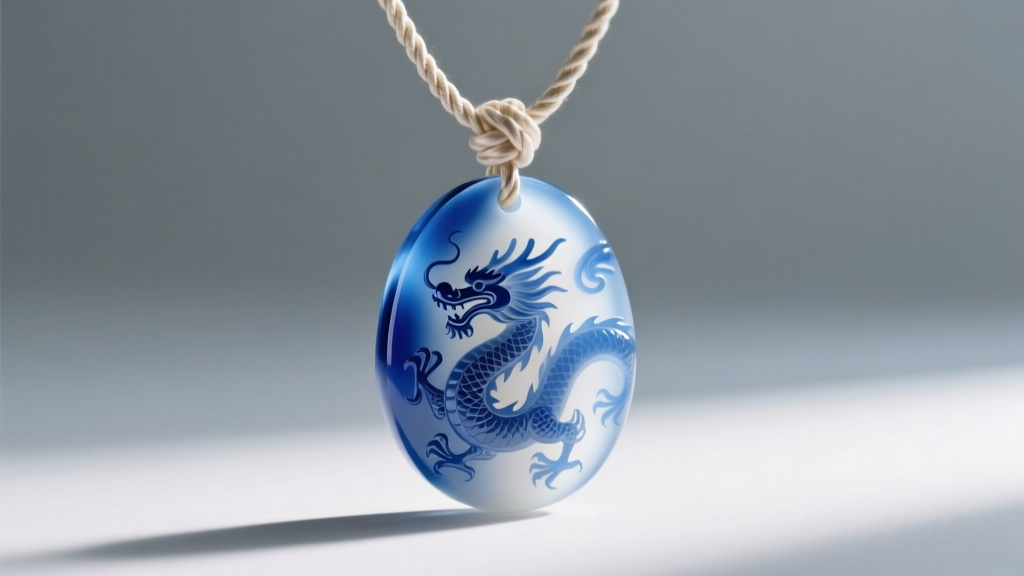
The highest echelon of Peking glass necklaces features 'overlay' or 'cased' glass. This painstaking technique involves gathering a core of one color—often opaque white or pale yellow—and dipping it into a pot of contrasting molten glass, such as cobalt blue or ruby red. Once cooled, a master lapidary uses specialized carving tools to cut away the outer layer, revealing the inner core in high relief. Motifs typically include lotus flowers, dragons, foo dogs, and intricate geometric lattices.
The value of a cased glass pendant or bead is dictated by the depth of the relief and the precision of the undercuts. In premium antique examples, the carving is so deep that the outer color appears almost detached from the core. Conversely, lower-value vintage pieces from the 1940s and 1950s were often molded rather than carved, or featured only shallow, machine-assisted etching. Recognizing the difference between a chisel's organic drag marks and the uniform, lifeless edges of a modern mold is the first step in accurate budget and value assessment.
2026 Pricing Matrix: Budget to Investment Grade
The market for a Peking glass necklace has stratified clearly over the last decade. While basic vintage strands remain accessible to budget-conscious collectors, museum-quality cameo pieces have seen significant appreciation. Below is the current valuation framework based on recent auction data and specialized dealer pricing.
| Era & Classification | Defining Traits | 2026 Market Value Range |
|---|---|---|
| Mid-Century Export (1930s-1960s) | Molded or shallow carved beads, uniform drill holes, often on synthetic wire | $40 - $120 |
| Early 20th Century Hand-Carved | Deep relief carving, organic motifs, traditional silk knotting, minor hole wear | $150 - $450 |
| 19th Century Overlay / Cameo | Cased glass, master-level lapidary work, conical hole wear, rare imperial colors | $600 - $2,500+ |
Color rarity heavily skews these prices. 'Peking Blue' (a deep, vibrant cobalt) and 'Imperial Yellow' are highly sought after. However, the most valuable is 'Pigeon Blood' ruby red. In the 19th century, achieving this opaque red required the suspension of copper or gold chloride in the glass matrix. Modern reproductions often rely on selenium or cadmium, which yields a slightly more orange or flat red hue under natural light.
Authentication Field Guide: 4 Proven Tests
If you are assessing a Peking glass necklace for purchase, rely on physical evidence rather than seller anecdotes. Here are four non-destructive tests used by appraisers to verify age and authenticity.
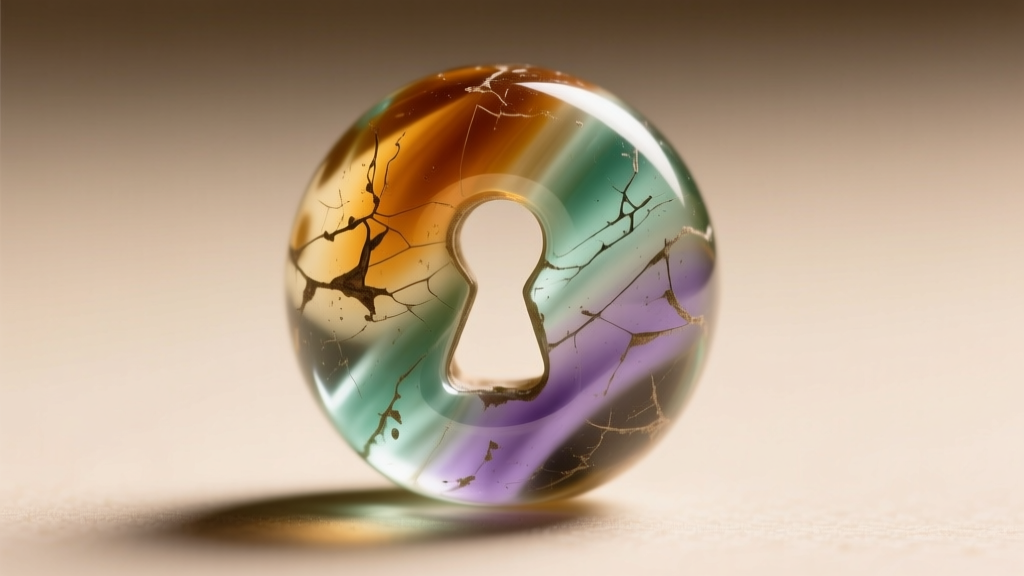
- The Hole Wear Test: This is the most definitive indicator of age. Antique beads strung on silk cords rub against one another over decades, creating asymmetrical, conical, or 'keyhole' wear at the drill site. Modern reproductions feature perfectly cylindrical, laser-straight drill holes with sharp, unworn edges.
- Micro-Bubble Inclusions: Early wood-fired and coal-fired kilns suffered from temperature fluctuations, trapping microscopic air bubbles in the glass matrix. Using a 10x jeweler's loupe, look for random, varied bubble sizes. Modern fakes are either perfectly clear or contain uniform, machine-generated bubbles.
- Tool Mark Analysis: Genuine hand-carved pieces will show microscopic striations and overlapping tool marks, particularly in the deep crevices of a lotus or dragon motif. Molded glass will appear perfectly smooth in the recesses, sometimes with a faint seam line running along the bead's equator.
- Thermal Conductivity: While not definitive on its own, glass feels distinctly cold to the touch and warms slowly compared to modern resin or plastic imitations. However, be careful not to confuse glass with carved jade or quartz, which also feel cold but possess a gritty texture against the teeth, whereas glass is perfectly smooth.
Condition Reports: Failure Modes and Devaluation
When conducting a budget and value assessment, condition is paramount. Glass is inherently fragile, but certain failure modes are specific to antique Peking glass and will drastically reduce a necklace's resale value.
Crizzling (Glass Disease)
Crizzling is a network of fine, internal cracks caused by an unstable chemical composition—specifically, an excess of alkali flux used to lower the melting point of the glass. Over time, moisture in the air reacts with the alkali, causing the glass to weep and eventually fracture from the inside out. While a minor case of crizzling can serve as proof of age, severe crizzling compromises the structural integrity of the bead. A necklace exhibiting active weeping or deep surface crazing should be discounted by 40% to 60% compared to a stable example.
Wire Abrasion Damage
A tragic and common failure mode occurs when well-meaning owners restring antique Peking glass beads on modern 'tiger tail' wire or steel cables. The metal wire acts like a saw against the glass drill hole, eventually cutting through the bead entirely. Always inspect the interior of the hole for metallic streaks or fresh, sharp chipping. Authentic, high-value pieces should be strung on traditional silk cord with hand-tied macramé knots between each bead, which prevents bead-on-bead friction and protects the drill holes.
UV and Heat Fading
While true Peking glass derives its color from metallic oxides that are generally UV-stable, some early 20th-century export pieces utilized surface treatments or less stable manganese compounds that can turn a faint purple or brownish hue when exposed to prolonged sunlight. Always examine the beads in natural daylight to ensure the color remains true to its original profile.
Investment Verdict: Is a Peking Glass Necklace Worth It?
From a pure investment perspective, a Peking glass necklace offers a compelling entry point into the antique Asian art market, often costing a fraction of what comparable jade or hardstone carvings command. The Metropolitan Museum of Art frequently highlights the importance of Chinese glass in the broader context of global trade and material innovation, cementing its historical relevance.
For budget-conscious collectors, mid-century export strands ($40-$120) offer incredible aesthetic value and vibrant styling options for layering with modern gold chains. However, for those seeking true asset appreciation, the focus must remain on 19th-century cased overlay pieces with documented provenance, deep relief carving, and original silk stringing. By mastering the physical markers of age—from conical hole wear to microscopic tool striations—you can confidently navigate the market, separate imperial masterpieces from mid-century souvenirs, and secure a piece of wearable history at its true market value.


