Difference Between a Pendant and a Necklace: Budget & Value Guide
Understand the difference between a pendant and a necklace to maximize your jewelry budget. Learn value allocation, metal grades, and cost-per-wear.

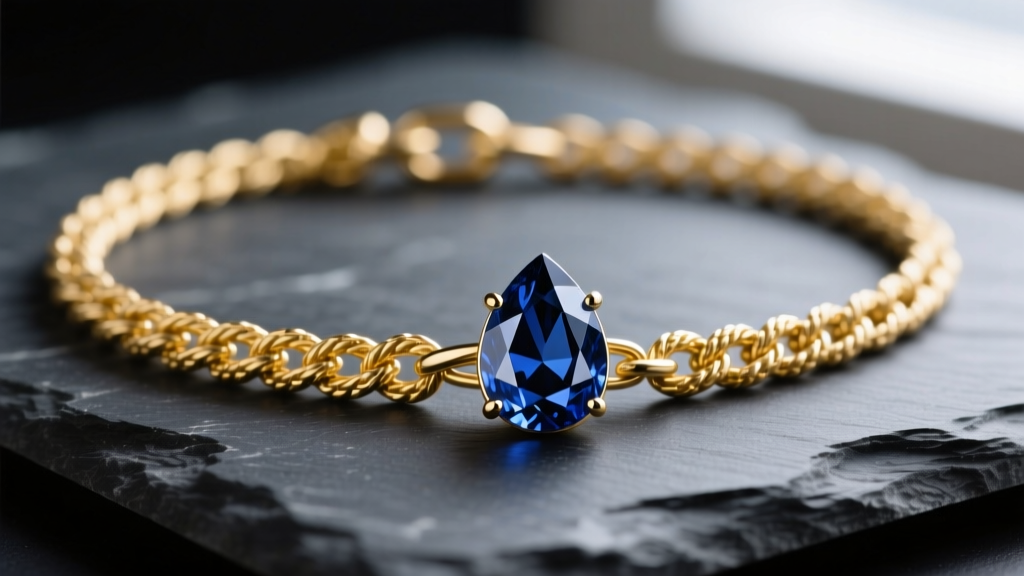
When building a curated jewelry collection, terminology dictates strategy. Most shoppers use the terms interchangeably, but understanding the exact difference between a pendant and a necklace is the foundational step in mastering jewelry budget allocation. A necklace refers to the entire structural piece that wraps around the neck—most commonly the chain, cord, or collar. A pendant, conversely, is the focal ornament, charm, or gemstone setting that suspends from the necklace. Recognizing this distinction shifts your purchasing mindset from buying 'a piece of jewelry' to engineering a modular system of chains and focal points. This guide breaks down how to allocate your budget between chains and pendants, assess material value retention, and calculate the true cost-per-wear of your neckwear.
The Core Distinction: Structural Chain vs. Focal Point
To allocate funds effectively, you must evaluate the mechanical and aesthetic roles each component plays. The necklace chain is the structural workhorse. It bears the tensile load, endures friction against the skin and clothing, and dictates the overall drape and length (e.g., 16-inch choker, 18-inch princess, or 24-inch opera). Chains are categorized by their weave: cable, box, rope, curb, and Figaro. A durable chain requires precise engineering, such as laser-welded links and soldered jump rings, to prevent snapping under the weight of a heavy charm.
The pendant is the aesthetic anchor. It houses the primary value drivers: precious gemstones, diamonds, intricate enamel work, or high-karat gold castings. Pendants connect to the necklace via a bail (a small loop or hidden channel). Because pendants experience significantly less physical friction and structural stress than chains, they are generally safer repositories for high-value, delicate materials like emeralds, opals, or high-purity 22k gold.
Budget Allocation Framework: Where Should Your Money Go?
Deciding where to concentrate your capital depends entirely on your wardrobe strategy and wear-and-tear expectations. Below are the two primary investment frameworks utilized by jewelry collectors.
Scenario A: High-Pendant / Low-Chain Budget
This strategy prioritizes a spectacular focal point while utilizing a cost-effective, highly durable chain. If you are purchasing a 1.5-carat diamond solitaire or a rare Paraíba tourmaline pendant, the pendant will consume 85% of your budget. For the chain, you should avoid delicate, high-karat gold, which is prone to stretching. Instead, opt for a 14k gold or platinum cable chain in a 1.0mm to 1.5mm thickness. These metals offer superior yield strength, ensuring the chain protects your heavy investment without competing with it visually or financially.
Scenario B: High-Chain / Low-Pendant Budget
This modular approach is ideal for minimalists and those who value versatility. By investing heavily in a premium, solid 18k gold rope or box chain (ranging from 2.5mm to 4.0mm), you create a standalone statement piece that holds intrinsic melt value and high resale liquidity. You can then purchase multiple, lower-cost pendants (such as semi-precious stone drops, vintage coins, or simple gold initials) to swap out via a threaded or hidden bail. This maximizes your cost-per-wear and allows you to adapt to different necklines without buying multiple complete necklaces.
| Investment Focus | Ideal Chain Material | Ideal Pendant Material | Best For |
|---|---|---|---|
| High-Pendant | 14k Gold, Platinum (1.2mm) | Diamonds, Sapphires, 18k Gold | Heirloom pieces, engagement gifts |
| High-Chain | 18k Solid Gold (3.0mm+) | Sterling Silver, Enamel, Quartz | Everyday minimalism, modular styling |
| Balanced (50/50) | 14k Gold-Filled (2.0mm) | 14k Gold, Morganite, Aquamarine | Fashion-forward trends, seasonal wear |
Material Grades and Value Retention
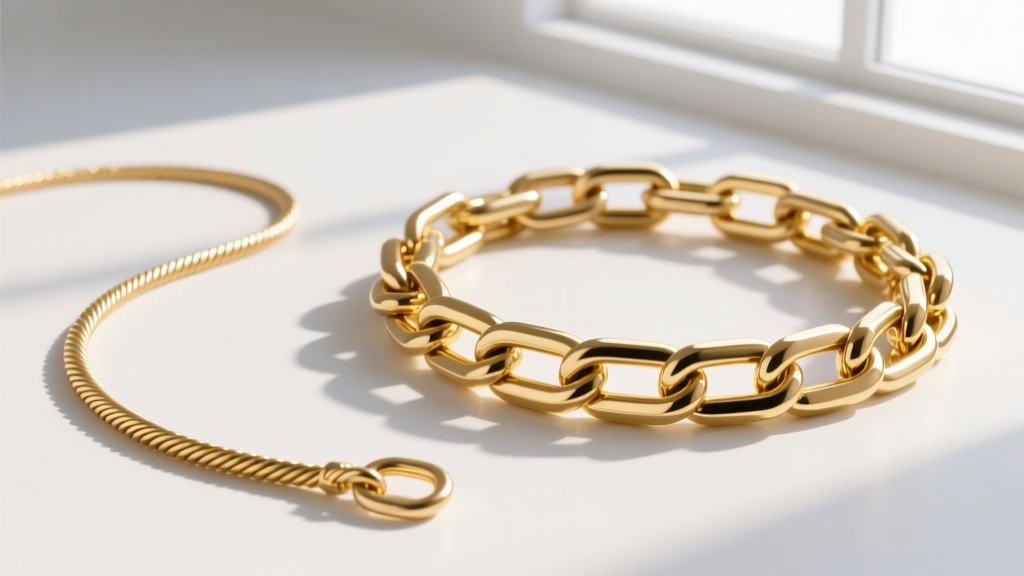
Understanding the difference between a pendant and a necklace also requires analyzing how different metals behave under stress, which directly impacts long-term value retention. According to the Gemological Institute of America (GIA), the karatage of gold dictates both its color and its structural integrity. Pure 24k gold is too soft for chains; it will stretch and snap under the weight of even a modest pendant. Therefore, 18k (75% pure) and 14k (58.5% pure) are the industry standards for fine chains.
When assessing budget alternatives, buyers often confuse gold vermeil with gold-filled. Gold vermeil is a thick layer of gold (minimum 2.5 microns) electroplated over sterling silver. While excellent for pendants that do not endure heavy friction, vermeil chains will eventually wear down to the silver core at the clasp and jump rings due to constant movement. Gold-filled material, regulated by the Federal Trade Commission (FTC), requires a much thicker layer of gold (at least 5% of the total weight) mechanically bonded to a brass core. For budget-conscious buyers needing a durable chain to hold a pendant, 1/20 14k gold-filled chains offer vastly superior longevity and value retention compared to vermeil or standard gold plating.
Cost-Per-Wear (CPW) Analysis
To truly assess the value of your jewelry, apply the Cost-Per-Wear formula: Total Cost divided by Estimated Number of Wears. This metric reveals why understanding the difference between a pendant and a necklace is vital for financial efficiency.
- Outfit 1 (The Fragile Set): A $400 delicate 18k gold chain paired with a $200 diamond pendant. Total: $600. Because the 0.8mm chain is prone to kinking and snapping, you only wear it 20 times a year. Over 3 years, your CPW is $10.00 per wear. Furthermore, the chain eventually breaks, requiring a $75 laser-welding repair.
- Outfit 2 (The Modular Workhorse): A $500 solid 14k gold 2.5mm box chain paired with a $100 interchangeable sapphire pendant. Total: $600. The robust chain can be worn daily in the shower and at the gym, paired with various pendants. Worn 150 times a year over 5 years, your CPW drops to $0.80 per wear, with zero structural repairs needed.
Expert Insight: Never compromise on the clasp. A heavy pendant on a budget chain will quickly destroy a standard spring-ring clasp. Always upgrade budget chains with a solid lobster clasp to ensure the tensile load is properly managed.
Common Purchasing Pitfalls to Avoid
When shopping for necklaces and pendants, consumers frequently fall into traps that destroy the value of their purchase. Avoid these specific failure modes:
1. Buying Hollow Chains for Pendants
Many budget chains are manufactured using electroforming to create a hollow, lightweight tube that looks like a thick chain. While they offer a high-karat look for a low price, hollow chains are notoriously brittle. If you attach a pendant weighing more than 3 grams, the hollow links will dent, kink, and eventually shatter. Always verify that a chain is 'solid' before using it to suspend a pendant.
2. Mismatching Bail and Chain Gauges
The bail is the bridge between the pendant and the necklace. A common mistake is purchasing a thick, statement chain (e.g., 4.0mm Cuban link) and a pendant with a standard, narrow bail designed for a 1.0mm cable chain. Forcing a thick chain through a small bail causes severe friction, wearing away the gold on both components. Always measure the inner diameter of the pendant bail and ensure your chain's width and thickness are at least 15% smaller than the bail opening.
3. Ignoring Unsoldered Jump Rings
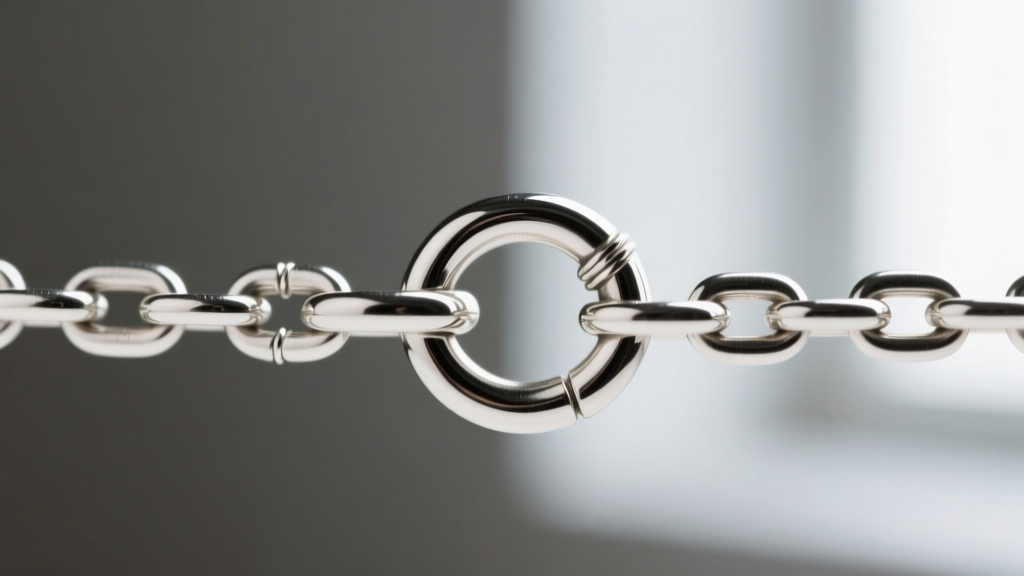
The jump ring is the small circular wire that connects the clasp to the chain, or the pendant to the bail. On mass-produced budget necklaces, these rings are often simply bent shut, not soldered. Under the dynamic weight of a swinging pendant, an unsoldered jump ring will pull apart under as little as 2 to 3 pounds of tension. According to Jewelers of America, having a local jeweler solder your jump rings shut is a minor maintenance step that prevents catastrophic loss of expensive pendants.
Final Verdict on Maximizing Jewelry ROI
Mastering the difference between a pendant and a necklace transforms you from a passive consumer into a strategic collector. By decoupling the chain from the focal point, you gain the freedom to invest heavily in the structural integrity of your daily-wear chains while curating a diverse, lower-cost library of pendants. Prioritize solid metals, respect the mechanical limits of your clasps and bails, and always calculate the long-term cost-per-wear. In the world of fine jewelry, true value is found not just in the materials, but in the intelligent engineering of how those materials are worn.


