Expert Guide: Choosing a Pendant Necklace with Picture
Discover the technical details behind every pendant necklace with picture. Compare laser engraving, resin, and projection methods, plus chain pairings.

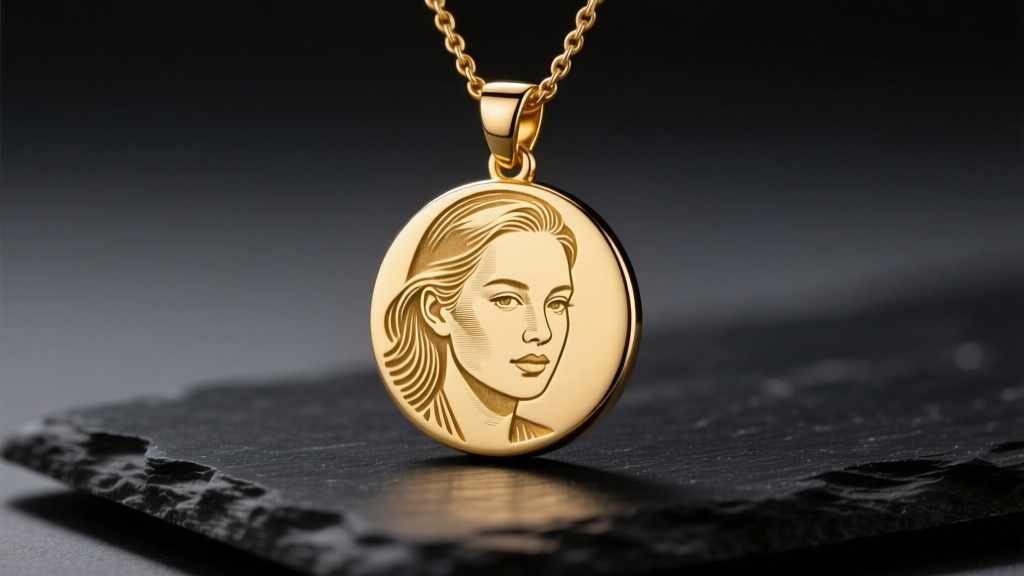
The Anatomy of a Picture Pendant: Three Core Technologies
When selecting a custom pendant necklace with picture integration, the untrained eye sees only the final image. However, as a jewelry metallurgist and design specialist, I evaluate the underlying optical and structural technologies. In 2026, there are three dominant manufacturing methods for photo pendants, each with distinct failure modes, longevity profiles, and material requirements. Understanding these differences is critical to ensuring your piece survives daily wear without degrading.
1064nm MOPA Fiber Laser Engraving
Modern laser-engraved picture pendants utilize MOPA (Master Oscillator Power Amplifier) fiber lasers operating at a 1064nm wavelength. Unlike older CO2 lasers that merely scorch the surface, MOPA lasers can adjust pulse width and frequency to create high-contrast halftone dithering directly into the metal's crystalline structure. For a pendant necklace with picture clarity, the engraving must hit a minimum of 1000 DPI (dots per inch). This density allows for facial recognition in portraits as small as 15mm x 15mm. The primary advantage is permanence; the image is physically etched into the metal and will never peel or fade.
UV-Stabilized Resin Encasement
Resin dome pendants suspend a physical photograph or decal beneath a convex lens of clear polymer. The critical technical detail here is the resin formulation. Standard epoxy resins undergo photo-oxidation when exposed to ultraviolet light, resulting in severe yellowing within 6 to 12 months. A high-quality pendant necklace with picture encasement must use polyurethane-based or UV-stabilized jewelry resins infused with HALS (Hindered Amine Light Stabilizers). These stabilizers absorb free radicals generated by UV exposure, extending the optical clarity of the dome from months to decades.
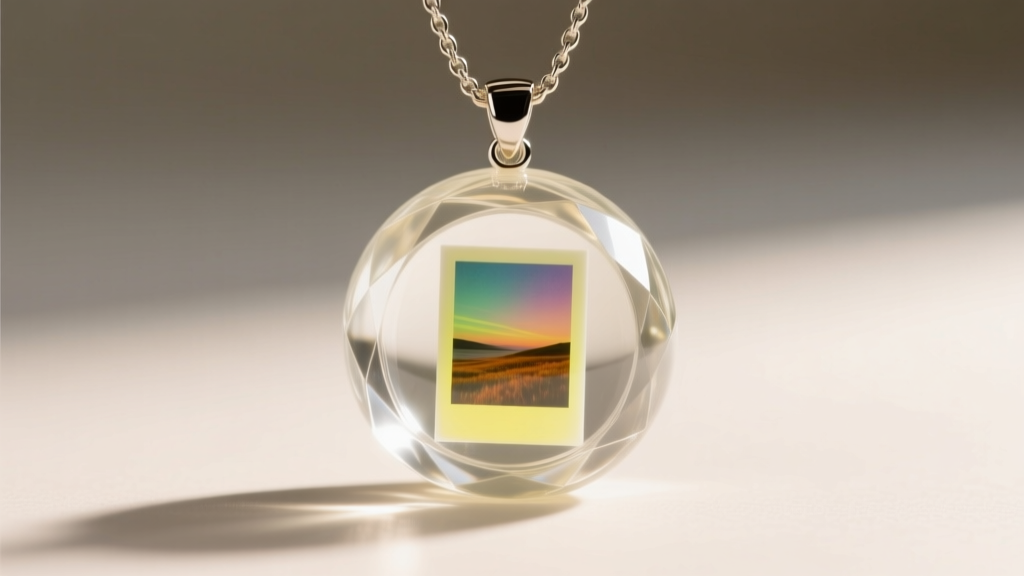
Optical Projection Micro-Lenses
Projection pendants hide a micro-engraved image on a glass bead, viewable only when light passes through it or when held to the eye. The technical bottleneck here is the lens material. Cheap alternatives use injection-molded acrylic, which scratches easily (Mohs hardness of 3) and distorts the image at the edges. Expert-grade projection pendants use borosilicate glass micro-lenses with a precise focal length of 10mm to 12mm, ensuring the projected image remains sharp and undistorted across a 150-degree viewing angle.
Metallurgy and Base Material Grades
The base metal of your pendant necklace with picture dictates both the contrast of laser engravings and the structural integrity of the piece. According to the Gemological Institute of America (GIA), understanding alloy compositions is essential for predicting tarnish and skin reactivity. Below is a technical comparison of the most common base metals used in custom photo pendants.
| Material Grade | Laser Contrast | Tarnish Risk | Tensile Strength | Avg. Price Range |
|---|---|---|---|---|
| 316L Surgical Steel | Exceptional (Deep Black) | Negligible | High (515 MPa) | $35 - $85 |
| 925 Sterling Silver | Moderate (Requires Rhodium) | High (Sulfides) | Low (250 MPa) | $90 - $180 |
| 14k Yellow Gold (585) | Low (Requires Oxidation) | Negligible | Medium (350 MPa) | $350 - $600 |
| Grade 2 Titanium | High (Color Marking) | None | Very High (345 MPa Yield) | $120 - $250 |
For laser-engraved portraits, 316L stainless steel offers the highest native contrast due to its chromium oxide layer reacting to the laser's heat. If you prefer precious metals, 925 sterling silver must be plated with rhodium or e-coated to prevent silver sulfide tarnish from obscuring the engraved halftones over time.
Chain Mechanics: Load-Bearing and Bail Sizing
A frequent failure point in custom jewelry is the mismatch between the pendant's mass and the chain's tensile limit. A standard 25mm resin dome pendant necklace with picture inserts can weigh between 12 and 18 grams. This weight concentration demands specific chain architectures.
Chains to Avoid
- Snake Chains: These consist of tightly wound, smooth metal rings. They have a low tensile limit (often failing under 5 grams of dynamic load) and are prone to kinking, which permanently damages the structural core.
- Herringbone Chains: Flat and fluid, herringbone chains lack the structural rigidity to support heavy pendants. The weight of a picture pendant will cause the links to separate and the chain to stretch irreparably.
Recommended Load-Bearing Chains
- Wheat (Spiga) Chains: Composed of woven, interlocking oval links, wheat chains distribute weight evenly across multiple contact points. A 2.0mm wheat chain can easily support a 25g pendant without deformation.
- Figaro Chains: The alternating pattern of long and short links provides excellent structural redundancy. If one link experiences stress, the adjacent thicker links absorb the kinetic energy.
- Cable Chains (Heavy Gauge): A classic choice, provided the wire gauge is at least 1.5mm and the links are soldered shut.
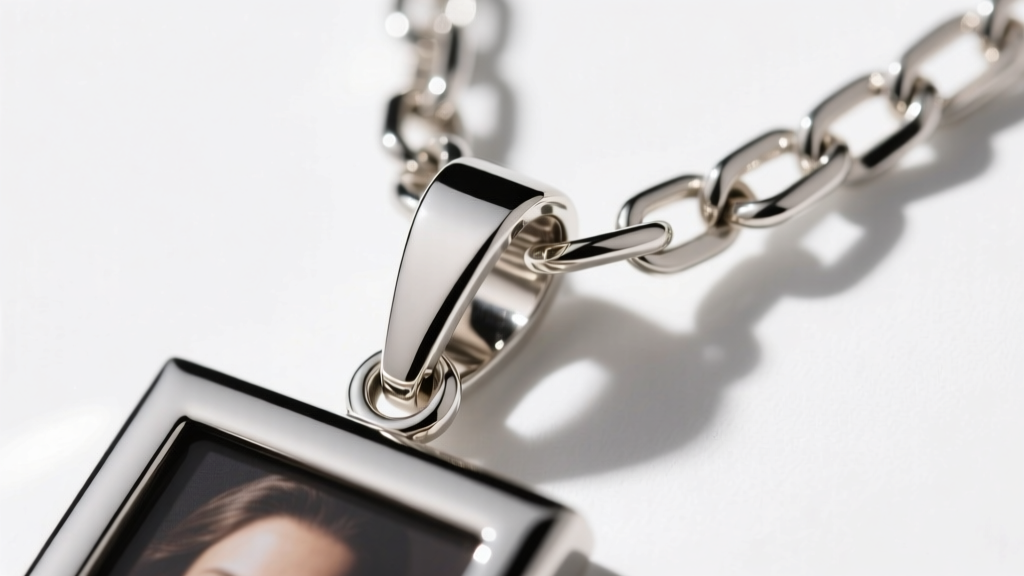
The Bail Ratio Rule: The bail (the loop connecting the pendant to the chain) must have an inner diameter at least 1.5 times larger than the width of the chain. If you are using a 3mm wheat chain, the pendant's bail must have a minimum inner clearance of 4.5mm to prevent friction wear and allow the pendant to lay flat against the sternum.
Image Preparation: The Floyd-Steinberg Dithering Standard
The most common reason a pendant necklace with picture fails to capture a likeness is poor source file preparation. Lasers cannot print continuous grayscale gradients; they must simulate shading using microscopic dots. To achieve a photorealistic engraving, the source image must undergo a specific digital preparation process:
- Contrast Normalization: Increase the image contrast by 30-40% and convert it to pure grayscale. Lasers rely on light reflection; low-contrast images will engrave as a muddy, indistinguishable blur.
- Unsharp Masking: Apply an unsharp mask (Amount: 120%, Radius: 1.5px, Threshold: 2) to artificially enhance edge detection, which is crucial for defining facial features like eyes and jawlines.
- Floyd-Steinberg Dithering: Convert the image to a 1-bit bitmap using the Floyd-Steinberg algorithm. This specific dithering method distributes quantization errors to neighboring pixels, creating a natural, organic dot pattern that translates beautifully to metal etching, avoiding the harsh, mechanical grid lines of standard halftoning.
Long-Term Maintenance and Failure Prevention
Even the most expertly crafted jewelry requires technical maintenance. According to care guidelines from Jewelers of America, environmental factors dictate the lifespan of wearable art. For resin-encased picture pendants, avoid prolonged exposure to chlorinated water or high-heat environments (like saunas), as thermal expansion can cause the resin to delaminate from the metal bezel. For laser-engraved pendants, the buildup of sebum and dead skin cells in the microscopic etched grooves will dull the image contrast over time. Clean engraved pendants bi-weekly using an ultrasonic jewelry cleaner operating at 40 kHz, which is the precise frequency required to cavitate and dislodge debris from microscopic laser pits without damaging the surrounding metal polish.
By prioritizing optical technologies, structural chain mechanics, and precise digital preparation, you ensure your custom piece remains a flawless, enduring representation of your most valued memories.


