Angel Wing Heart Necklace: Troubleshooting & Repair Guide
Is your angel wing heart necklace tarnishing or breaking? Discover expert troubleshooting tips, metal grading advice, and repair solutions.

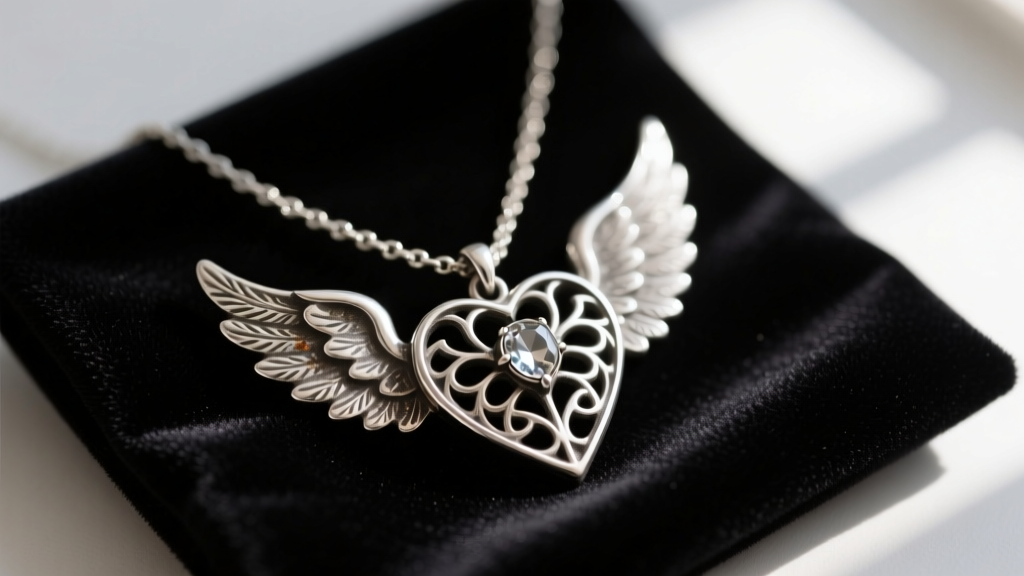
The Anatomy of an Angel Wing Heart Necklace: Where Failures Occur
The angel wing heart necklace is a beloved jewelry motif, symbolizing protection and love. However, from a manufacturing and metallurgical standpoint, it is a notoriously difficult design to execute flawlessly. The pendant merges two complex geometries: the organic, tapering, and incredibly thin lines of feathered wings, and the symmetrical, weight-heavy curve of a heart. This intersection creates inherent structural vulnerabilities.
When troubleshooting a damaged or degraded piece, jewelers look beyond superficial scratches. We examine the casting method, the alloy composition, and the bail friction. Most commercial angel wing heart necklaces are produced using the lost-wax casting method. During this process, the thick body of the heart and the paper-thin tips of the wings cool at drastically different rates. This thermal imbalance frequently leads to shrinkage porosity, making the wing tips brittle and prone to snapping under minor stress. Understanding these structural realities is the first step in diagnosing and repairing your necklace.
Troubleshooting Metal Tarnish and Skin Reactions
One of the most common complaints regarding fashion and demi-fine angel wing heart necklaces is rapid tarnishing or the dreaded green discoloration on the skin. This is rarely an allergic reaction and almost always a chemical reaction between your skin's natural acidity and the base metals used in the alloy.
According to the Gemological Institute of America (GIA), copper and zinc are the primary culprits behind skin discoloration. If your necklace is stamped '925', it is sterling silver, which contains 7.5% copper. While high-quality sterling silver tarnishes slowly, exposure to lotions, perfumes, and sweat accelerates the oxidation of that copper content. If your piece lacks a stamp, it is likely a brass or nickel-silver alloy, which will react aggressively with moisture.
The Quick-Test Matrix for Metal Identification and Repair
| Symptom | Probable Material | Root Cause | Professional Fix (Est. Cost) |
|---|---|---|---|
| Green/black skin stain | Brass, Copper, or low-grade Nickel Silver | Acidic sweat reacting with base metals | Heavy Rhodium Plating ($45 - $75) |
| Uniform dull yellowing | 925 Sterling Silver | Sulfur exposure causing silver sulfide | Ultrasonic & Ionic Cleaning ($20 - $35) |
| Flaking gold revealing silver | Gold Vermeil or Gold Plated | Friction wearing away sub-2.5 micron gold layer | Re-plating to 2.5+ microns ($60 - $120) |
| Red, itchy rash on chest | White Gold alloy or Nickel-containing base | True contact dermatitis (Nickel allergy) | Hypoallergenic Rhodium barrier ($40 - $60) |
If you are dealing with a plated piece, ensure the jeweler applies a minimum of 2.5 microns of gold to qualify as true vermeil, ensuring longevity. For base metals, a thick flash of rhodium will seal the copper away from your skin indefinitely.
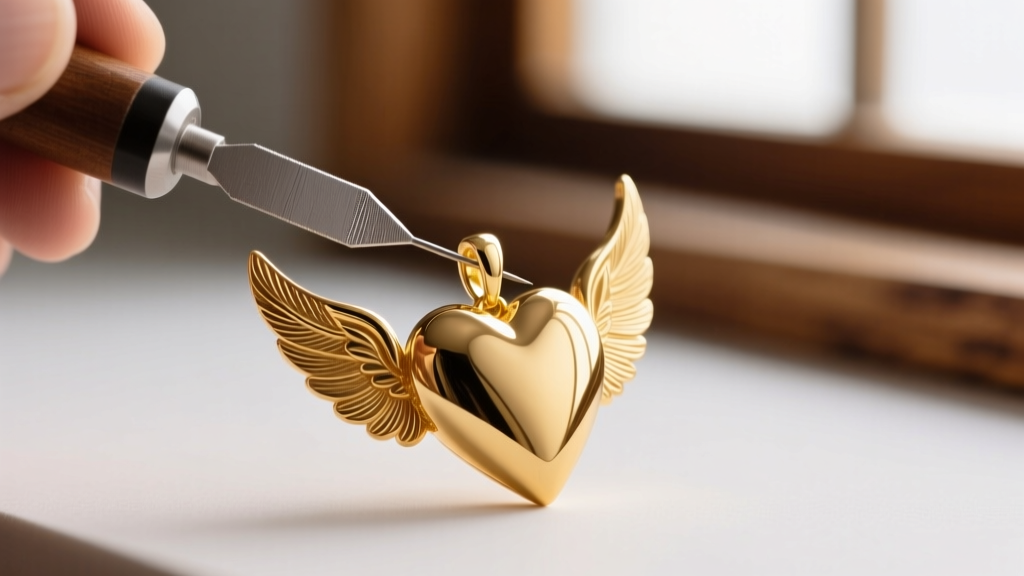
Fixing Snagging Wings and Prong Damage
Angel wings are designed to look soft and feathery, but cast metal often tells a different story. If your pendant constantly snags on knitwear, silk blouses, or even your own hair, you are dealing with micro-burrs and casting flash.
During the tumbling process used to polish jewelry, the steel shot often fails to reach the deep, narrow crevices between individual feather barbs. Furthermore, when the casting sprue is cut off, it can leave a microscopic sharp edge. Over time, these snags will not only ruin your clothing but will also bend the delicate wing tips outward, ruining the symmetry of the heart.
The Agate Burnishing Solution
Do not attempt to file the wings yourself with standard metal files; you will remove the gold plating or polish and leave deep, visible scratches. Instead, take the piece to a bench jeweler and request agate burnishing. The jeweler will use a hardened, polished agate stone to rub the edges of the wings. This process does not remove metal; instead, it compresses the microscopic burrs flat against the surface, work-hardening the thin edges and making them smooth to the touch without sacrificing any of the pendant's weight or plating.
Bail and Chain Detachment: The Center of Gravity Problem
The heart shape is bottom-heavy. When suspended from a delicate cable or box chain, the low center of gravity causes the pendant to swing like a pendulum. This constant kinetic energy creates severe friction at the bail—the loop that connects the pendant to the chain.
If your chain keeps breaking right at the clasp or the bail, or if the bail loop itself is wearing thin, you are experiencing 'chain sawing.' The metal of the chain acts as an abrasive file against the softer metal of the bail. According to care guidelines from Jewelers of America, regular inspection of jump rings and bails is critical for heavy pendants. For an angel wing heart necklace, which can weigh upwards of 8 to 12 grams in solid gold, a standard 4mm jump ring is insufficient.
Expert Tip: Ask your jeweler to upgrade the pendant's bail to a 'V-bail' or a reinforced hidden bail with a Teflon-lined interior. This reduces metal-on-metal friction and allows the heavy heart to glide smoothly along the chain, preventing premature wear.
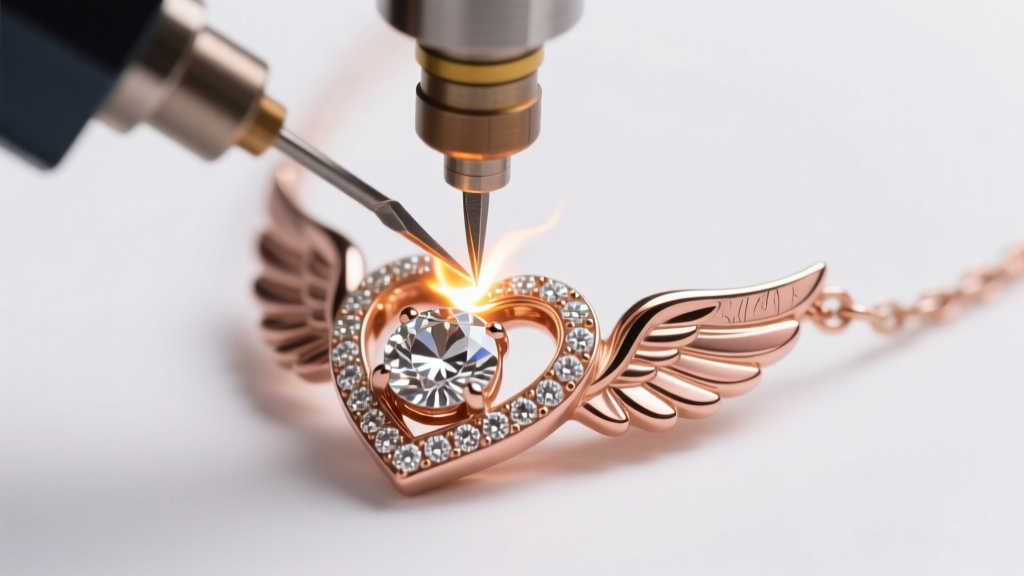
If the bail has already snapped, avoid traditional torch soldering. The high heat required for torch soldering can melt the delicate feather details or cause thermal shock to any gemstones set in the heart. Insist on laser welding, which uses a concentrated beam of light to fuse the metal in a fraction of a second without heating the surrounding areas. Expect to pay between $45 and $85 for a professional laser bail repair.
Restoring Missing Pave Stones in the Heart Center
Many premium angel wing heart necklaces feature a halo or a central heart shape encrusted with pave diamonds or cubic zirconia. Because the heart features a sharp 'cleft' at the top and a pointed 'V' at the bottom, the stones in these areas are subjected to immense mechanical stress when the necklace bends against the collarbone.
The stones are typically held in place by micro-bead prongs—tiny droplets of metal pushed over the girdle of the stone. When the necklace is worn daily, friction from clothing gradually sands these micro-prongs down until they are flush with the stone, resulting in sudden gemstone loss.
Re-Tipping and Stone Replacement
If you notice a stone looking loose or 'wiggling' when you tap it gently with a wooden toothpick, stop wearing the necklace immediately. A jeweler will need to perform a 're-tipping' procedure. Using a laser welder or a micro-torch, they will add a tiny bead of matching gold or platinum to the worn prong and push it back over the stone. Re-tipping typically costs $25 to $40 per prong. If the stone is already lost, replacing a 1.0mm - 1.5mm melee diamond will add $15 to $45 to the repair bill, depending on the clarity and color grade required to match the existing pave.
Preventative Maintenance Routine
To maximize the lifespan of your angel wing heart necklace and avoid costly bench repairs, implement this strict maintenance routine:
- The Baby Toothbrush Method: Once a month, clean the intricate feather crevices using a soft-bristled baby toothbrush, warm water, and a drop of phosphate-free dish soap. Never use hard-bristled brushes, which will scratch high-polish gold and silver.
- Avoid Ultrasonic Cleaners for Pave: If your heart features pave stones, never use an ultrasonic cleaner. The high-frequency vibrations can easily shake loose stones held by fragile micro-prongs.
- The 'Last On, First Off' Rule: Always put your necklace on after applying makeup, perfume, and hairspray. The alcohol and aerosol propellants in cosmetics will rapidly degrade gold vermeil and accelerate the tarnishing of sterling silver wings.
- Flat Storage: Never toss the necklace into a jewelry box where the heavy heart can crush the delicate wing tips. Store it flat in a sealed anti-tarnish ziplock bag with a silica gel packet to control ambient humidity.
By understanding the specific structural and metallurgical challenges of the angel wing heart motif, you can transition from reactive repairs to proactive care, ensuring your necklace remains a flawless symbol of love and protection for decades.


