The Best Gemstone Necklace Men Can Wear: A Material Guide
Discover the best gemstone necklace men can wear daily. Compare Mohs hardness, chain metals, and durability for onyx, spinel, and tiger's eye.

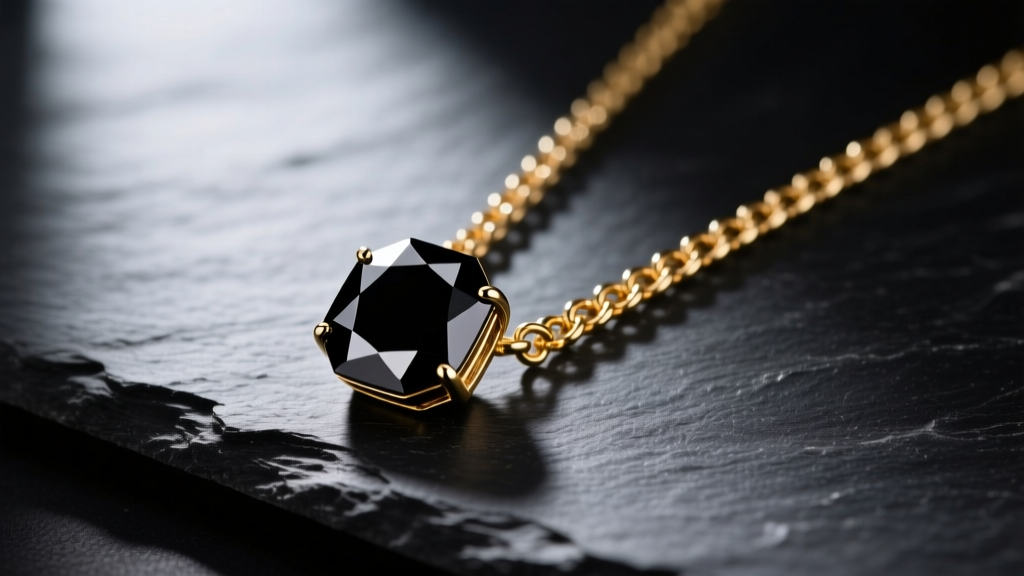
The Evolution of Men's Gemstone Jewelry
The landscape of men's jewelry has shifted dramatically over the last decade. Gone are the days when a simple, unadorned metal chain was the only acceptable option. Today, a well-chosen gemstone necklace men can wear daily offers a sophisticated way to introduce color, texture, and personal symbolism into a wardrobe. However, the transition from plain metal to stone-encrusted pendants introduces a complex web of material science. Men's lifestyles often involve higher impact, exposure to sweat, and less meticulous jewelry care than traditional fine jewelry assumes. Therefore, selecting the ideal piece requires a deep understanding of mineralogy and metallurgy.
When selecting a gemstone necklace men will actually wear through workouts, manual labor, and daily commutes, you cannot rely on aesthetics alone. A stone that looks stunning in a velvet display case might fracture, scratch, or chemically degrade within a month of active wear. This guide bypasses the fluff and dives directly into the material properties, Mohs hardness ratings, and structural failure points you need to consider before investing in men's gemstone jewelry.
The Mohs Scale: Why Hardness Dictates Daily Wear
The foundation of any gemstone purchase is the Mohs scale of mineral hardness. Developed in 1812 by German geologist Friedrich Mohs, this scale ranks minerals from 1 (talc) to 10 (diamond) based on their ability to scratch one another. However, a critical misconception plagues the jewelry industry: the Mohs scale is ordinal, not linear. The jump in absolute hardness between a 9 (corundum/sapphire) and a 10 (diamond) is roughly four times greater than the jump between a 1 and a 9.
For a daily-wear men's pendant, the absolute minimum threshold is a Mohs rating of 7. Anything below 7 will inevitably accumulate micro-scratches from airborne quartz dust, which itself sits at a 7 on the scale.
According to the GIA Gem Encyclopedia, understanding cleavage is just as vital as hardness. Cleavage refers to how a gemstone breaks along structural planes. A stone like topaz (Mohs 8) has perfect cleavage, meaning a single sharp knock against a steering wheel or gym equipment can split the stone cleanly in half. Conversely, jade (Mohs 6.5) has no cleavage and an interlocking crystalline structure, making it incredibly tough despite its lower hardness rating. For men's jewelry, toughness often trumps pure scratch resistance.
Top Gemstones for Men: A Material Breakdown
Not all stones are created equal when subjected to the acidic pH of human sweat (typically 4.5 to 6.0) and the physical rigors of a man's daily routine. Here is how the most popular men's gemstones stack up from a materials perspective.
Black Spinel (Mohs 8): The Ultimate Daily Driver
Often confused with black onyx or black diamond, natural black spinel is an isometric crystal with no cleavage and excellent toughness. It takes a high polish that resists dulling from skin oils and environmental abrasives. Unlike coated stones, its color is inherent, meaning a deep scratch will not reveal a lighter under-layer.
Tiger’s Eye (Mohs 7): The Textured Classic
A member of the quartz family, tiger's eye forms when crocidolite (blue asbestos) is replaced by silica. The resulting fibrous structure creates chatoyancy—the striking "cat's eye" light reflection. While it sits safely at a 7 on the Mohs scale, its fibrous inclusions mean it can be slightly porous. It should be kept away from harsh chemical cleaners, but it handles sweat and water exceptionally well.

Black Onyx (Mohs 7): The Porous Traditionalist
Onyx is a banded variety of chalcedony. While it is a staple in men's signet rings and pendants, buyers must be aware that 95% of the "black onyx" on the market is actually gray or white agate that has been dyed and heated. Over years of exposure to UV light and acidic sweat, poorly dyed onyx can fade or develop a chalky texture. If you choose onyx, verify that it has been properly stabilized.
Lapis Lazuli (Mohs 5-6): The High-Maintenance Statement
Lapis is not a single mineral, but a rock composed primarily of lazurite, calcite, and pyrite. The calcite inclusions drop its overall hardness to a dangerous 5.5, and the pyrite (iron sulfide) can react with moisture and oxygen, leading to localized rust spots. According to the Mindat.org mineral database, lapis is highly sensitive to acids. A lapis lazuli pendant should be reserved for occasional, over-the-shirt wear, never against bare, sweating skin.
Chain Metallurgy: What Holds the Stone?
The gemstone is only half the equation; the chain dictates the necklace's longevity and skin compatibility. Men's body chemistry and activity levels demand specific alloys.
- 316L Surgical Stainless Steel: The workhorse of men's chains. The "L" stands for low carbon, and the addition of 2-3% molybdenum provides exceptional resistance to chlorides and sweat acids. It will not tarnish, though it can develop a patina of micro-scratches over time. The British Stainless Steel Association notes that 316L is highly resistant to pitting corrosion, making it ideal for gym-goers.
- Grade 5 Titanium (Ti-6Al-4V): An aerospace-grade alloy that is 40% lighter than steel and completely hypoallergenic. It is virtually impervious to sweat and saltwater. However, its extreme hardness makes it difficult to resize or repair if a link breaks.
- Sterling Silver (925): Composed of 92.5% silver and 7.5% copper. The copper is the weak link; it oxidizes rapidly when exposed to sulfur and sweat, requiring frequent polishing. Not recommended for men who want a "wear and forget" necklace.
Gemstone Durability & Care Matrix
Use this quick-reference table to match your lifestyle with the appropriate material properties.
| Gemstone | Mohs Hardness | Toughness / Cleavage | Sweat & Acid Resistance | Best Chain Pairing |
|---|---|---|---|---|
| Black Spinel | 8 | Excellent / None | High | 14k Gold or Platinum |
| Tiger's Eye | 7 | Good / Fibrous | High | Grade 5 Titanium |
| Dyed Onyx | 7 | Good / Conchoidal | Medium (Dye may leach) | 316L Steel or Silver |
| Lapis Lazuli | 5 - 6 | Poor / Granular | Very Low (Calcite reacts) | 18k Gold (Over shirt) |
| Black Diamond | 10 | Good / Brittle edges | High | Platinum or White Gold |
Sizing, Bails, and Structural Failure Points
The most common point of failure in a men's gemstone necklace is not the stone shattering, but the bail (the loop connecting the pendant to the chain) snapping or wearing through. Men typically prefer thicker chains—ranging from 3mm to 6mm in width. If you are threading a 5mm Cuban link chain through a pendant, the bail must have an inner diameter of at least 6.5mm to prevent friction and binding.
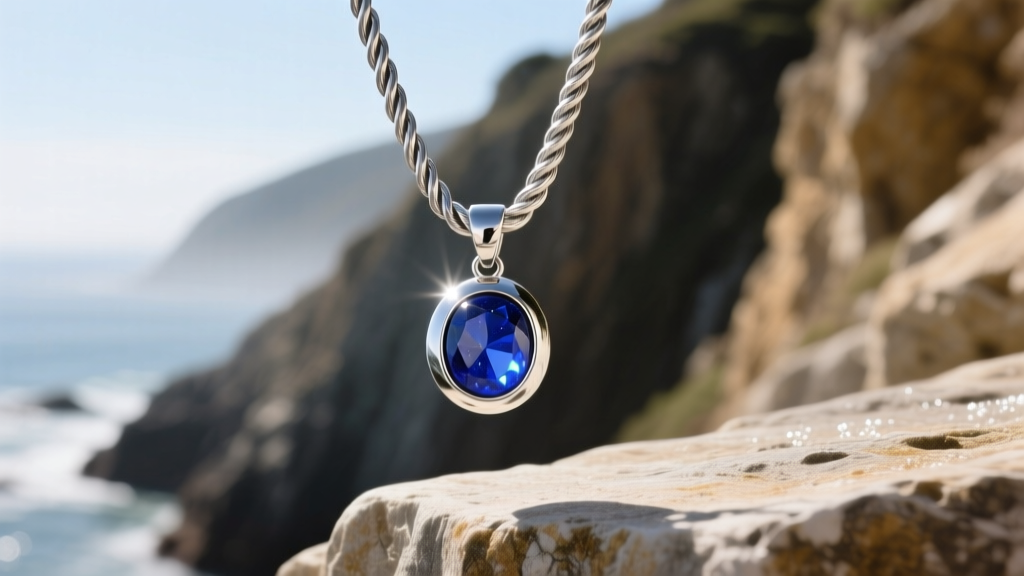
Furthermore, avoid prong settings for active wear. Prongs are designed to maximize light return by exposing the stone's girdle, but they easily snag on cotton t-shirts, gym equipment, and seatbelts. Once a prong lifts, the stone will fall out. For a men's gemstone necklace, always opt for a bezel setting or a channel setting. A bezel setting wraps a continuous collar of metal entirely around the stone's perimeter, protecting the vulnerable edges from direct impact and securing the gem permanently.
Final Verdict
Choosing the right gemstone necklace men will appreciate requires balancing visual weight with material reality. If you demand a stone that can survive the gym, the ocean, and years of neglect, black spinel set in a Grade 5 titanium or 316L steel bezel is mathematically your safest bet. If you prefer the organic, earthy tones of tiger's eye or lapis lazuli, you must accept the maintenance requirements that come with lower Mohs ratings and higher porosity. By respecting the mineralogy and metallurgy behind the jewelry, you ensure the piece outlasts the trends.


