Ultimate Care Guide for Your Gold Flat Necklace Chain
Learn expert cleaning, storage, and repair tips for your gold flat necklace. Prevent kinks, scratches, and tarnish with our 2026 maintenance guide.

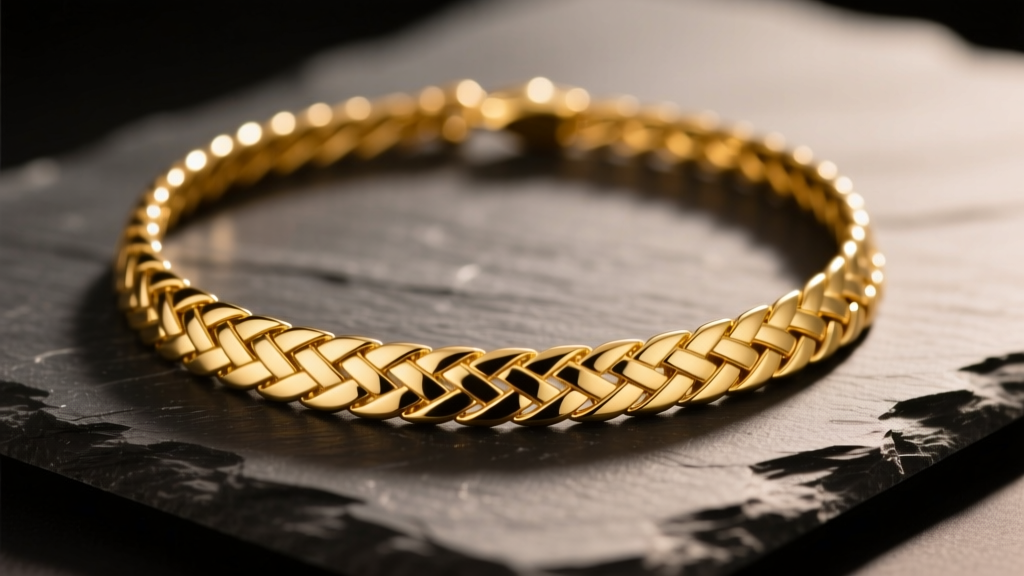
The Anatomy of a Gold Flat Necklace: Why Care Matters
Flat gold necklaces—encompassing herringbone, snake, flat curb chains, and wide geometric plate pendants—offer a sleek, liquid-metal aesthetic that dominates 2026 jewelry trends. However, their unique structural geometry makes them highly susceptible to specific failure modes. Unlike standard cable or rolo chains, flat chains rely on tightly packed, flush-aligned links. This design maximizes light reflection but creates distinct vulnerabilities: herringbone chains are notorious for irreversible kinking, flat plate pendants are magnets for micro-scratches, and the low-profile clasps often suffer from calcification due to lotion buildup.
Understanding your gold's alloy composition is the first step in proper maintenance. According to the Gemological Institute of America (GIA), pure 24k gold is too soft for flat chain weaving. Most flat necklaces are crafted in 14k (58.5% gold) or 18k (75% gold). While 18k gold offers a richer, warmer hue, its higher gold content makes the flat links significantly softer and more prone to warping under pressure. Conversely, 14k gold contains higher levels of copper and silver, making it more durable but slightly more reactive to harsh chemicals.
Daily Wear Rules: Preventing Kinks and Micro-Scratches
The longevity of a gold flat necklace is largely determined by how it is worn. The golden rule of jewelry care—"Last On, First Off"—is non-negotiable for flat chains. Cosmetics, perfumes, and hairsprays contain volatile organic compounds and alcohols that can strip the natural luster from gold alloys and leave a dull, cloudy film on flat surfaces.
- Avoid Friction Heavy Fabrics: Coarse wools and heavily textured synthetics can act like mild sandpaper against flat gold plates, causing micro-scratches that accumulate over time and dull the mirror finish.
- The Sleep Rule: Never sleep in a herringbone or snake chain. The tossing and turning of sleep applies uneven torsional stress to the flat links, almost guaranteeing a kink or a snapped joint.
- Chlorine Exposure: Never wear your flat gold necklace in a swimming pool or hot tub. Chlorine reacts aggressively with the copper and silver alloys in 14k and 18k gold, leading to a phenomenon known as stress corrosion cracking, which weakens the link joints until they snap.
The 15-Minute Deep Cleaning Protocol
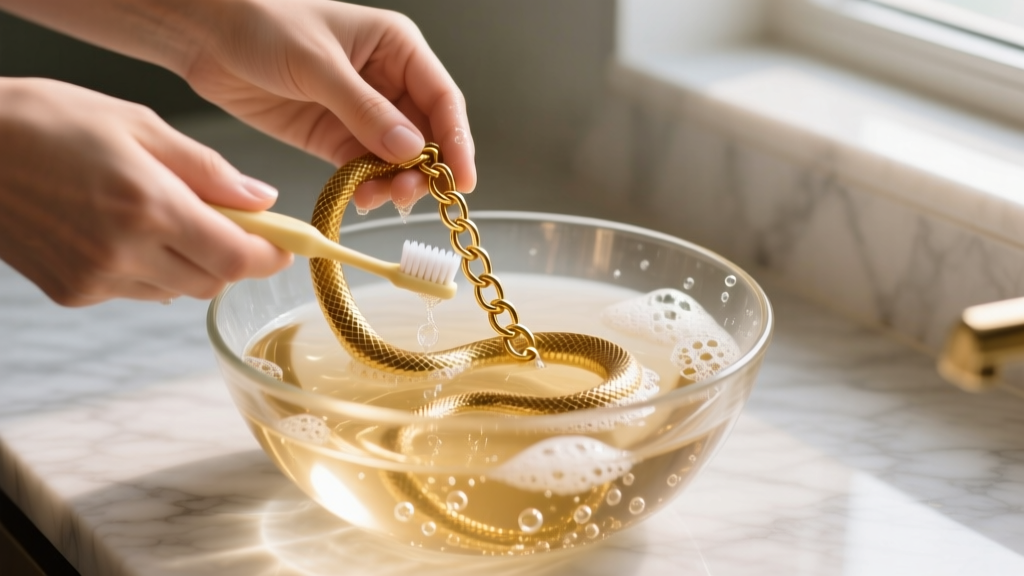
When your flat necklace loses its reflective shine, it is usually due to a microscopic layer of sebum (body oils) and dead skin cells trapped between the flush links. Follow this expert-approved protocol to restore its brilliance without damaging the delicate weave.
- Prepare the Solution: Fill a glass bowl with warm (not hot) distilled water. Tap water contains trace minerals and chlorine that can leave hard water spots on flat gold surfaces. Add exactly two drops of a mild, phosphate-free dish soap (like Dawn).
- Soak: Submerge the necklace and let it soak for 5 to 10 minutes. This loosens the calcified oils trapped in the clasp mechanism and between the chain links.
- Gentle Agitation: Use an extra-soft baby toothbrush. Brush the chain using light, sweeping motions parallel to the link direction. Never scrub aggressively against the grain of a herringbone weave.
- Rinse and Dry: Rinse thoroughly under a gentle stream of distilled water. Pat dry with a clean, lint-free microfiber cloth. Avoid paper towels, as their wood pulp fibers can inflict micro-scratches on high-polish flat gold surfaces.
Cleaning Agents: What to Use and What to Avoid
Not all jewelry cleaners are safe for flat gold chains. The tight tolerances of snake and herringbone weaves require specific chemical considerations. Jewelers of America strongly advises against using abrasive pastes on high-polish gold.
| Cleaning Agent | Verdict | Scientific Reason / Risk Factor |
|---|---|---|
| Mild Dish Soap & Distilled Water | Highly Recommended | Neutral pH safely lifts oils without reacting with copper/silver alloys. |
| Baking Soda Paste | Avoid | Highly abrasive. Will permanently scratch the mirror finish of flat gold plates. |
| Ultrasonic Cleaners | Avoid for Flat Chains | High-frequency vibrations can shift flush links, trapping moisture and causing internal warping. |
| Ammonia-Based Cleaners | Use with Extreme Caution | Can cause stress corrosion in lower-karat gold alloys if left to soak. |
| Commercial Gold Dip | Avoid | Often contains thiourea, which can leave a stubborn, dulling residue in tight chain weaves. |
Proper Storage: Preserving the Flat Lay
How you store your gold flat necklace is just as critical as how you clean it. The most common mistake jewelry owners make is hanging herringbone or snake chains on standard jewelry hooks. Gravity pulls the chain taut, while the natural curve of the hook introduces a permanent bend memory into the metal.
"Always store flat weave chains completely horizontal. If a herringbone chain is stored hanging, the gravitational pull combined with the weight of the clasp will eventually stretch the interlocking flat links, causing irreversible structural sagging." — Master Bench Jeweler
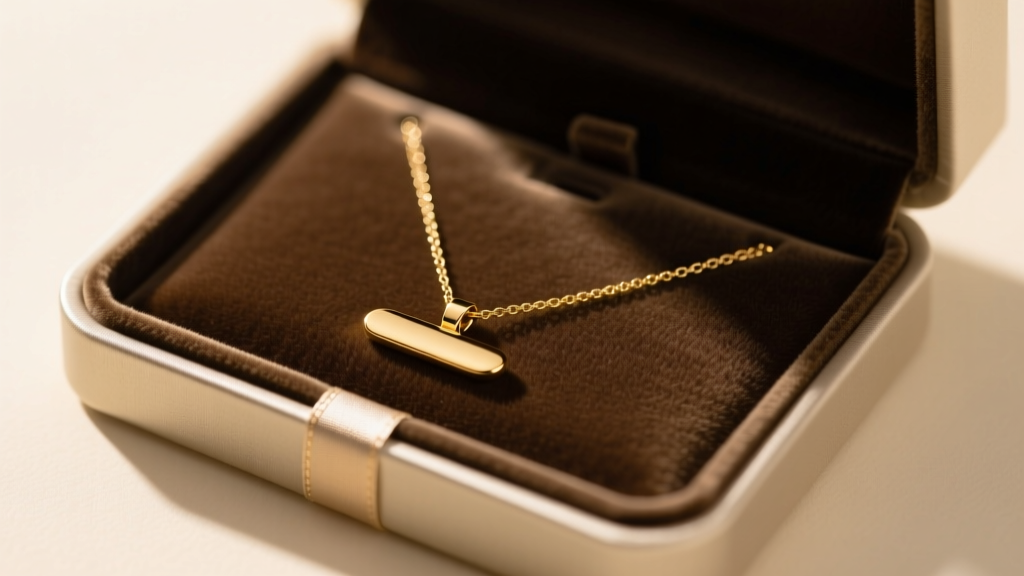
For optimal storage, lay the necklace perfectly straight in a shallow, velvet-lined drawer or a dedicated jewelry tray. Place an anti-tarnish strip (such as Pacific Silvercloth or 3M Anti-Tarnish tabs) in the same compartment. These strips absorb hydrogen sulfide and sulfur dioxide from the ambient air, preventing the silver and copper alloys in your 14k or 18k gold from oxidizing and turning dull.
Troubleshooting Common Flat Necklace Disasters
Even with meticulous care, accidents happen. Here is how to address the two most common issues specific to gold flat necklaces.
Fixing a Kinked Herringbone Chain
If your herringbone chain develops a sharp kink, do not attempt to pull it apart with your fingers or tweezers; this will break the delicate interlocking links. Instead, lay the necklace on a perfectly flat, hard surface like a glass table or a marble countertop. Take a smooth, clean glass bottle (like a wine bottle) and gently roll it back and forth over the kinked area. The even, distributed pressure of the glass will slowly coax the bent links back into their flush alignment without snapping the joints.
Removing Stubborn Lotion Buildup from Clasps
Flat necklaces often utilize low-profile lobster or spring-ring clasps to maintain the seamless look of the chain. Over time, thick body lotions and sunscreen calcify inside the tiny spring mechanism, causing the clasp to stick or fail to close. To fix this, dip a wooden toothpick (never metal, which will scratch the gold) into a drop of rubbing alcohol. Gently work the toothpick into the clasp mechanism while repeatedly opening and closing it to dislodge the hardened lotion. Wipe away the residue with a microfiber swab.
Conclusion
A gold flat necklace is an investment in timeless, liquid-metal elegance. By understanding the specific vulnerabilities of flat weaves, avoiding harsh chemicals, and adhering to a strict horizontal storage protocol, you can ensure your piece retains its mirror-like brilliance for decades. Treat your flat chain with the precision it demands, and it will remain a flawless staple in your jewelry rotation for years to come.


