How to Choose a Gold Necklace: A Beginner's Guide
Learn how to choose a gold necklace with our beginner's guide. We break down karats, chain styles, clasps, and 2026 pricing to help you buy smart.

Understanding Gold Purity: Karats Explained
Buying a gold necklace is a major milestone, whether you are treating yourself or shopping for a gift. However, the jewelry market is flooded with confusing terminology that can easily trap beginners into overpaying for subpar metals. The most critical concept to master before you pull out your wallet is the karat system. According to the Gemological Institute of America (GIA), the karat (k) scale measures the proportion of pure gold in an alloy out of 24 parts.
Pure 24k gold is exceptionally soft, ranking at just 2.5 on the Mohs hardness scale—roughly the same hardness as a fingernail. If you were to wear a 24k gold chain daily, it would stretch, dent, and eventually snap under its own weight. Therefore, jewelers alloy pure gold with stronger metals like copper, zinc, and silver to create durable jewelry.
| Karat | Gold Purity | Alloy Content | Mohs Hardness | Best Use Case |
|---|---|---|---|---|
| 24k | 99.9% | 0.1% | ~2.5 | Investment pieces, ceremonial jewelry |
| 18k | 75.0% | 25.0% | ~2.8 | High-end luxury, occasional wear, engagement rings |
| 14k | 58.3% | 41.7% | ~3.5 | Everyday wear, durable chains, active lifestyles |
| 10k | 41.7% | 58.3% | ~4.0 | Budget-friendly, highly durable, prone to tarnishing |
Yellow, White, and Rose: It is All About the Alloy
The color of your gold necklace is entirely determined by the 25% to 58% of non-gold metals mixed in. Yellow gold relies on a balanced mix of silver and copper. Rose gold gets its pinkish hue from a higher concentration of copper. White gold is alloyed with nickel, palladium, or manganese, and is almost always plated with rhodium to achieve a bright, silvery finish. For a beginner seeking a classic, low-maintenance piece, 14k yellow gold remains the undisputed champion of durability and timeless style.
Choosing the Right Chain Style and Thickness
Once you have settled on 14k or 18k gold, you must select a chain link style. The structural integrity of the chain dictates how well it will hold a pendant and how it drapes across your collarbone.
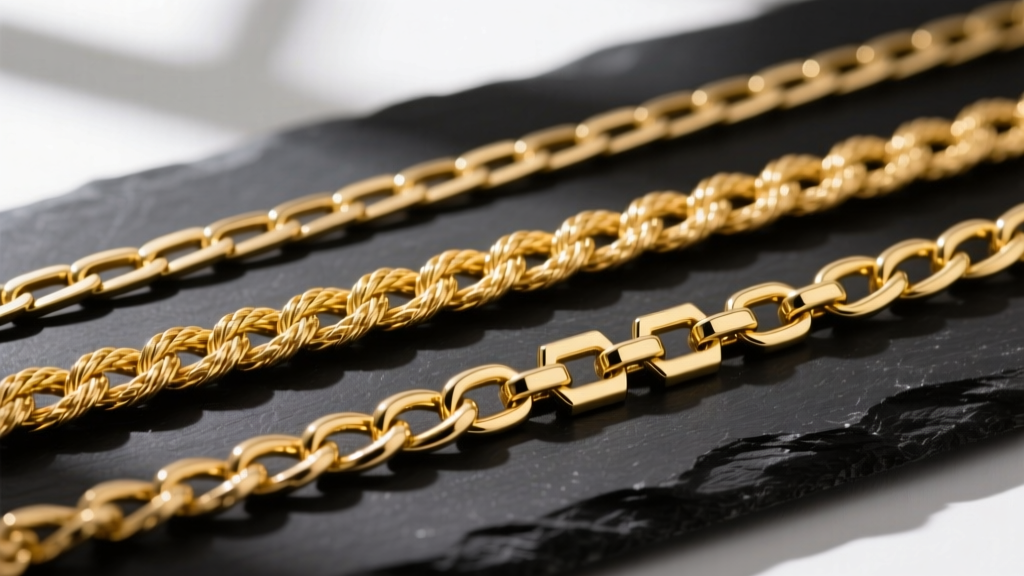
- Cable Chain: The most traditional and recognizable style, featuring uniform oval or round links. It is lightweight, affordable, and perfect for holding small to medium pendants.
- Curb Chain: Features flattened, interlocking links that lay flush against the skin. Curb chains are incredibly strong, resist kinking, and offer a modern, streetwear-inspired aesthetic.
- Figaro Chain: An Italian design that alternates between two or three short circular links and one elongated oval link. It offers visual interest without being overly flashy.
- Rope Chain: Composed of small metal links twisted together to mimic a woven rope. This style catches the light brilliantly, making it highly reflective and perfect for solo wear.
- Box Chain: Made of square, interlocking links that form a smooth, geometric tube. Box chains are exceptionally sturdy and rarely tangle, making them ideal for heavier pendants.
The Golden Rule of Chain Thickness
Thickness is measured in millimeters (mm) and directly correlates to the chain's tensile strength. A 1.0mm to 1.5mm chain is delicate; it will sparkle beautifully but can easily snap if snagged on clothing. A 2.0mm to 3.0mm chain is the versatile sweet spot—thick enough to withstand daily wear and strong enough to support a 5-gram pendant. Anything 4.0mm and above is a statement piece designed to be worn solo, as the links are too bulky to slide through standard pendant bails.
Decoding Clasps: The Weakest Link
Beginners often obsess over the chain links but completely ignore the clasp. A weak clasp will result in a lost necklace, regardless of how thick the chain is.
Spring Ring Clasps are the small, perfectly circular clasps commonly found on cheap or lightweight chains. They are notoriously difficult to operate with one hand and feature a tiny internal spring that frequently fails. Avoid these if possible.
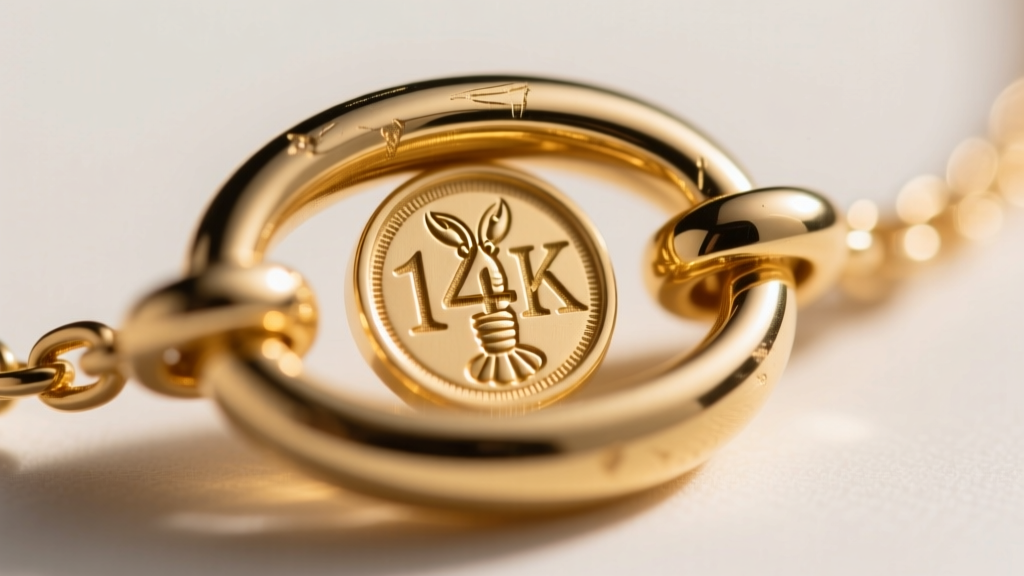
Lobster Claw Clasps are the industry standard for fine jewelry. Shaped like a lobster's claw, they feature a robust internal spring mechanism and a wider grip, making them secure and relatively easy to fasten. Always ensure the lobster clasp is stamped with the same karat hallmark as the chain itself.
Box Clasps with Safety Latches are reserved for heavy, high-value chains (typically 5mm and thicker). They feature a folding mechanism that locks into a square housing, accompanied by a secondary wire safety latch to prevent accidental opening.
Solid vs. Plated vs. Filled: Avoiding Beginner Mistakes
Retailers use clever marketing language to disguise base metals. Understanding the Jewelers of America guidelines on metal marking will save you from buyer's remorse.
Gold Plated (GP): A microscopic layer of gold (usually less than 0.05% of the total weight) electroplated onto a base metal like brass or copper. The gold layer will inevitably rub off within months of daily wear, leaving your skin green and the chain tarnished.
Gold Filled (GF): A much thicker layer of gold mechanically bonded to a base metal core. By law, gold-filled items must contain at least 5% gold by weight. While highly durable and a great budget alternative, it is not solid gold and cannot be easily resized or repaired by a jeweler if it breaks.
Solid Gold: The gold alloy is consistent all the way through the wire. It will never flake, tarnish, or turn your skin green. It can be polished, soldered, and passed down as an heirloom. When investing in fine jewelry, always insist on solid gold.
Real-World Pricing: What Should You Pay in 2026?
Pricing a solid gold necklace requires a basic understanding of melt value versus retail markup. Gold is a globally traded commodity, and its price fluctuates daily. In early 2026, with gold spot prices remaining historically high, the raw material cost of a chain is significant.
To calculate a fair price, you need to know the chain's weight in grams. For example, a standard 18-inch, 14k yellow gold cable chain at 2.0mm thickness typically weighs around 3.5 to 4.5 grams. Since 14k gold is 58.3% pure, a 4-gram chain contains roughly 2.3 grams of pure gold. If the spot price of pure gold is $70 per gram, the raw 'melt' value of the gold in that chain is about $161.
Jewelers apply a markup to cover manufacturing, labor, shipping, and retail overhead. A standard retail markup for basic gold chains ranges from 2x to 3.5x the melt value. Therefore, a fair retail price for that 4-gram 14k chain should fall between $320 and $560. If a boutique is charging $1,200 for a simple, lightweight chain, you are paying an excessive brand tax. Conversely, if a website offers a 'solid 14k' chain for $80, it is almost certainly a scam or heavily plated misrepresentation.
Your Final Pre-Purchase Checklist
Before you finalize your purchase, run through this quick diagnostic checklist to ensure you are getting exactly what you pay for:
- Check the Stamp: Look for a tiny hallmark on the clasp or the link immediately adjacent to the clasp. It should read 14K, 14KT, 585 (the European decimal for 14k), 18K, or 750.
- Verify the Weight: Ask the jeweler for the exact gram weight of the piece. If they cannot or will not provide it, walk away.
- Inspect the Links: Run your fingers along the chain. It should feel smooth, with no catching, sharp edges, or flattened links.
- Test the Clasp: Open and close the clasp several times. It should have a firm, snappy resistance and close completely flush.
Choosing your first fine jewelry piece does not have to be intimidating. By focusing on 14k or 18k solid gold, selecting a chain thickness that matches your lifestyle, and understanding the math behind the price tag, you will secure a timeless accessory that will easily last a lifetime.


