Can You Sleep With a Necklace On? The Ultimate Safety Guide
Wondering if you can sleep with a necklace on? Discover the risks to your chains, skin, and safety, plus expert tips for overnight wear.

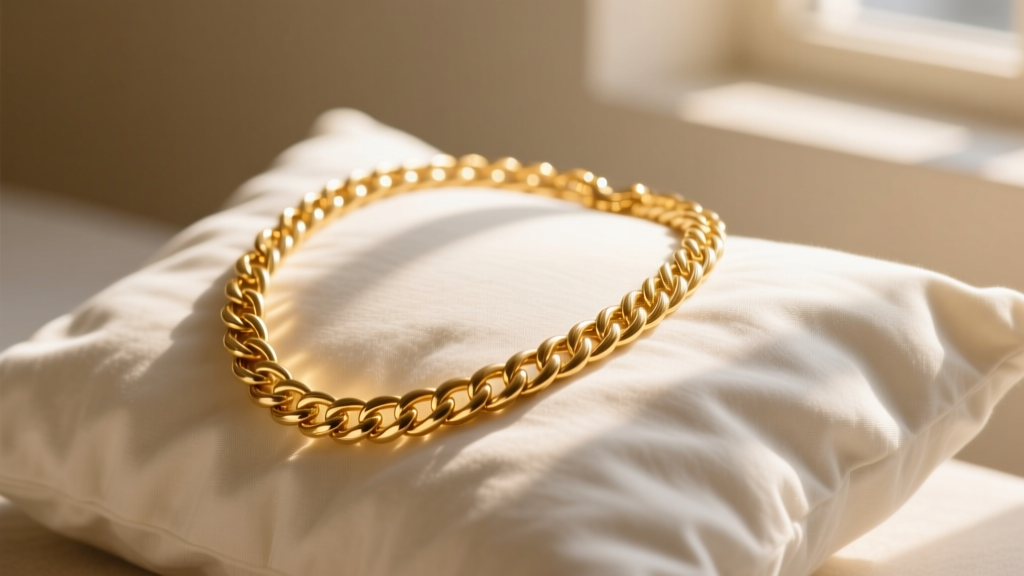
For many jewelry lovers, a favorite pendant or chain feels like a second skin. Taking it off every night can feel like a chore, leading to one of the most common questions in jewelry care: can you sleep with a necklace on? While the short answer is that you physically can, master jewelers and dermatologists overwhelmingly advise against making it a nightly habit. Sleeping in your jewelry exposes delicate metals to mechanical stress, chemical degradation, and potential physical hazards.
In this beginner-friendly explainer, we will break down the exact science of what happens to your necklaces overnight, which chain weaves survive the toss-and-turn of sleep, and how to protect both your jewelry and your skin.
The Short Answer: Risks vs. Rewards
If you are asking, "can you sleep with a necklace on without it breaking immediately?" the answer is usually yes. However, cumulative damage is the real enemy. When you sleep, your body shifts, generating friction against bedding and applying uneven pressure to the metal. Furthermore, the human body produces nocturnal perspiration—a mix of water, salts, urea, and lactic acid. Over time, this combination of mechanical torque and chemical exposure weakens clasps, thins chain links, and degrades alloyed metals.
How Sleeping Damages Different Chain Weaves
Not all chains are created equal. The structural integrity of a necklace overnight depends heavily on its weave. Some chains are engineered for fluid drape, while others are built for tensile strength. Here is how popular chain styles handle the pressure of being slept in.
| Chain Style | Flexibility Profile | Overnight Risk Factor |
|---|---|---|
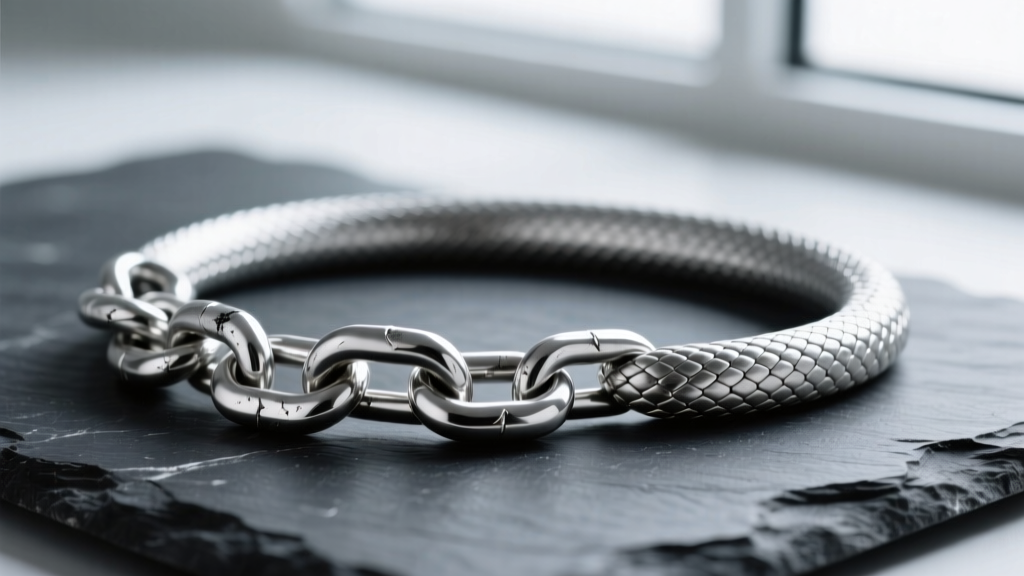
| Snake Chain | Highly rigid laterally | Extreme: Smooth, tightly joined plates kink and snap easily when bent under body weight. |
| Box Chain | Moderate, multi-directional | High: Square links can fold inward on themselves, causing permanent creases and weak points. |
| Cable Chain | High, uniform | Moderate: Classic oval links handle pressure well, but thin gauges (under 1.0mm) can stretch. |
| Rope Chain | Very high, fluid | Low: Twisted links distribute tension evenly, making it one of the safest chains for sleep. |
| Figaro Chain | High, flat profile | Low: Flat, alternating links lay flush against the skin, reducing snagging and crushing risks. |
Material Science: Night Sweat and Metal Degradation
Your skin's chemistry changes at night. According to the American Academy of Dermatology, sweat and sebum production can trap bacteria and chemicals against the skin, leading to contact dermatitis. But what does this do to the metal?
Sterling Silver (925) and Copper Alloys
Sterling silver is 92.5% pure silver and 7.5% copper. The copper is added for strength, but it is highly reactive to sulfur and chlorides found in human sweat. If you sleep in a silver necklace, the prolonged contact with night sweat accelerates oxidation, leading to a dull, blackened tarnish that requires frequent polishing with abrasive compounds, slowly wearing away the metal over the years.
14k and 18k Gold
Pure 24k gold is entirely hypoallergenic and untarnishable, but it is too soft for jewelry. 14k and 18k gold are alloyed with metals like zinc, nickel, and copper. As the Gemological Institute of America (GIA) notes, these alloyed metals can react to environmental chemicals. While sleeping in gold won't ruin it quickly, the friction from cotton sheets can cause microscopic scratches, dulling the high-polish finish over a few years.
Titanium and 316L Surgical Steel
If you absolutely must sleep in a necklace, upgrade to Grade 23 Titanium or 316L Surgical Stainless Steel. These metals possess a passive chromium-oxide layer that makes them virtually impervious to sweat, sebum, and friction. They will not tarnish, rust, or cause nickel-related allergic reactions overnight.
The Mechanics of Snagging and Clasp Failure
The weakest point of any necklace is the clasp. When you toss and turn, chains wrap around bedding threads, hair, or even your own fingers. This creates sudden, sharp tensile spikes.

- Spring Ring Clasps: These rely on a tiny internal steel spring. If snagged, the thin outer gold ring can warp, or the spring can snap, rendering the clasp useless.
- Lobster Clasps: Much more secure due to their solid cast body and heavier spring tension. However, if caught on a heavy knit blanket, the leverage can bend the tiny lever arm.
- Barrel / Screw Clasps: Common on pearl necklaces. Sleeping in these is highly discouraged, as lateral torque can strip the delicate internal threading, permanently ruining the clasp.
Length Matters: Choking and Tangling Hazards
Beyond jewelry damage, personal safety is a primary concern when asking if you can sleep with a necklace on. The length of the chain dictates the risk profile.
- Chokers (14 - 16 inches): These sit tightly against the trachea. Swelling in the neck during sleep or sudden movements can cause the chain to restrict airflow or dig painfully into the skin.
- Princess (18 inches): The safest length if you must sleep in jewelry. It rests on the collarbone, minimizing both choking risks and extreme tangling.
- Matinee & Opera (20 - 36 inches): Highly dangerous for sleep. Long chains easily loop around the neck, arms, or bedposts, creating severe strangulation and joint-torque hazards.
Best Practices if You Refuse to Take It Off
If you wear a necklace for sentimental reasons, sensory grounding, or as a medical alert piece, follow these strict guidelines to minimize damage and risk:
- Choose the Right Gauge: Never sleep in a chain thinner than 1.2mm. Opt for a 1.5mm to 2.0mm rope or curb chain that can withstand your body weight.
- Upgrade the Clasp: Replace standard spring rings with a heavy-duty lobster clasp or a magnetic safety clasp with a breakaway feature.
- Remove Pendants: Take off heavy or prong-set gemstone pendants before bed. The prongs can snag on sheets and bend, causing you to lose a diamond or gemstone in your mattress.
- Wash Weekly: Use a soft toothbrush and mild dish soap to remove the buildup of dead skin cells and night sweat from the chain links, preventing bacterial growth and metal degradation.
Frequently Asked Questions
Can I sleep with a gold chain on?
Yes, solid gold (14k or 18k) is highly resistant to sweat and tarnish. However, thin gold chains can stretch or snap if caught on bedding, so opt for a sturdy weave like a rope chain.
Will sleeping in silver ruin it?
It won't ruin it permanently, but the sulfur in your night sweat will cause sterling silver to tarnish much faster, requiring frequent polishing that slowly wears down the metal.
Is it safe to sleep with a diamond pendant?
No. The metal prongs holding the diamond are prone to snagging on fabric. Repeated snagging can bend the prongs, eventually leading to the loss of the stone.


