How to Fix and Prevent a Tangled Gold Necklace Layered Stack
Learn how to detangle, style, and maintain your gold necklace layered stack. Expert tips on chain weaves, spacer clasps, and preventing breakage.

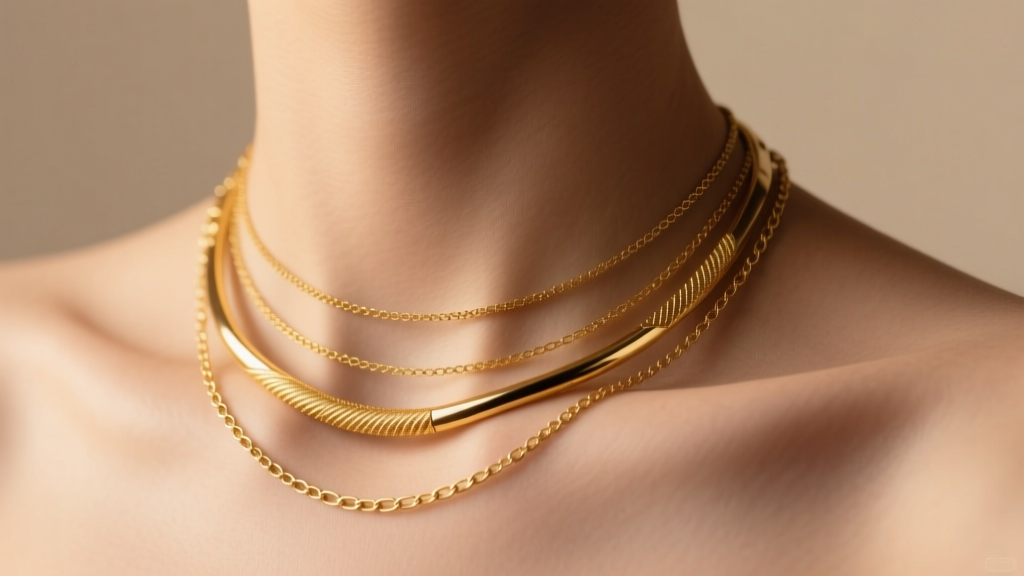
The Physics of Necklace Tangling: Why Your Stack Fails
The aesthetic of a perfectly curated stack is undeniable, but the reality of wearing multiple chains often results in a frustrating, knotted mess. To troubleshoot a tangled gold necklace layered configuration, we must first understand the physics of chain interaction. Tangling is not random; it is a direct result of link geometry, gauge disparity, and friction coefficients. When you layer chains with similar link sizes and weaves, the open loops of one chain act as hooks that catch the micro-crevices of another.
For example, pairing a 1.5mm cable chain with a 1.5mm rope chain is a recipe for disaster. The protruding edges of the rope weave will constantly snag the open oval links of the cable chain. Furthermore, if the length difference between your layers is less than two inches, the chains will occupy the same focal plane on your chest, increasing their physical overlap and subsequent friction. According to the Jewelers of America, continuous micro-friction between poorly matched chains is the leading cause of premature jump ring failure and clasp degradation in layered setups.
Chain Weave Compatibility Matrix
Use this troubleshooting matrix to identify which chain weaves can be safely layered together without causing severe tangling or abrasive wear.
| Primary Chain (Base Layer) | Secondary Chain (Middle Layer) | Tangle Risk | Abrasion Risk | Troubleshooting Solution |
|---|---|---|---|---|
| Cable (1mm) | Cable (1.5mm) | High | Medium | Increase length gap to 3+ inches |
| Box (1.2mm) | Snake (1.5mm) | Low | Low | Ideal pairing; smooth surfaces |
| Rope (2mm) | Cuban (3mm) | Medium | High | Use a multi-strand spacer clasp |
| Figaro (2.5mm) | Bead (1.5mm) | High | Low | Avoid; beads catch in Figaro links |
Step-by-Step Detangling Protocol for Fine Gold
When your gold necklace layered stack inevitably turns into a bird's nest, brute force is your worst enemy. Pulling on fine gold (especially 18k or 22k, which are highly malleable) will stretch the links, permanently weakening the structural integrity of the chain. Instead, employ a systematic detangling protocol using friction-reducing agents and precision tools.
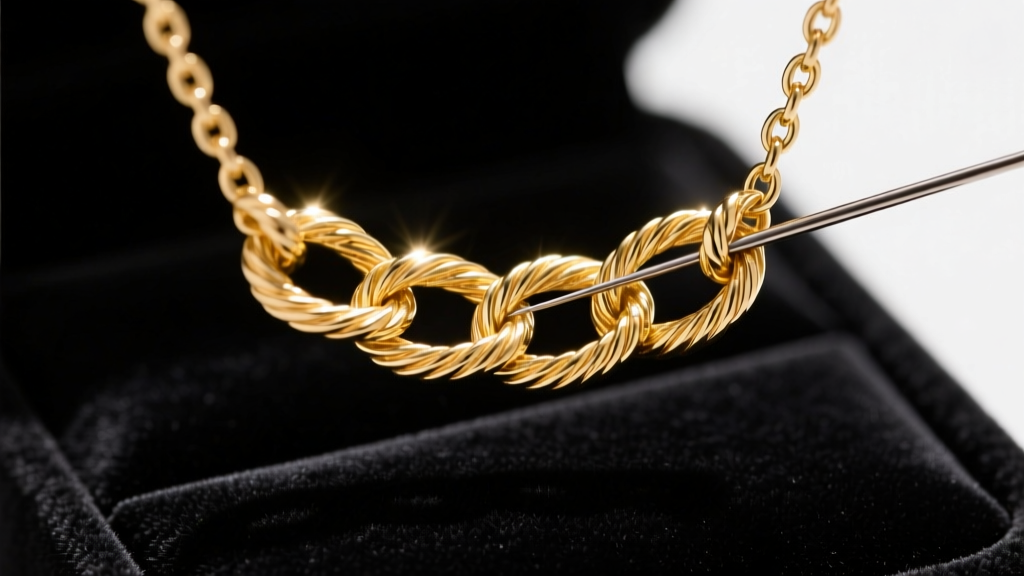
- Preparation: Lay the tangled mass flat on a non-slip, dark surface (like a microfiber cloth or velvet pad). The dark background provides high contrast, making it easier to see the exact intersection of the knots.
- Friction Reduction: Liberally apply a dry lubricant to the knot. Talcum powder, baby powder, or cornstarch are ideal. Avoid liquid oils (like baby oil or olive oil), as they can trap dust and require a harsh chemical degreasing process later, which may damage any attached porous gemstones.
- Tool Selection: Do not use standard sewing pins, which are typically 0.6mm to 0.8mm thick and can warp fine jump rings. Instead, use two 0.4mm beading needles or specialized jewelry knot-picking tools.
- The Loosening Technique: Insert the needles into the absolute center of the tightest part of the knot. Gently wiggle them in opposite directions to create a microscopic gap. Never pull the ends of the chains; this only tightens the central node.
- Working Outward: Once the center is loosened, use the needles to push the outer links back through the gaps. Work systematically from the inside out until the chains separate.
Hardware Solutions: Spacers, Clasps, and Bail Stops
If you have optimized your chain weaves and lengths but still experience issues with chains sliding behind your neck or pendants migrating off-center, the problem lies in your hardware. A common complaint with a gold necklace layered look is the "pendant slide," where the center of gravity shifts, causing the focal pendant to slip behind the collarbone.
"Soldering a micro-jump ring directly onto the chain to act as a physical stopper for the pendant bail is a permanent, elegant solution that avoids the aesthetic compromise of visible silicone O-rings." — Master Bench Jeweler
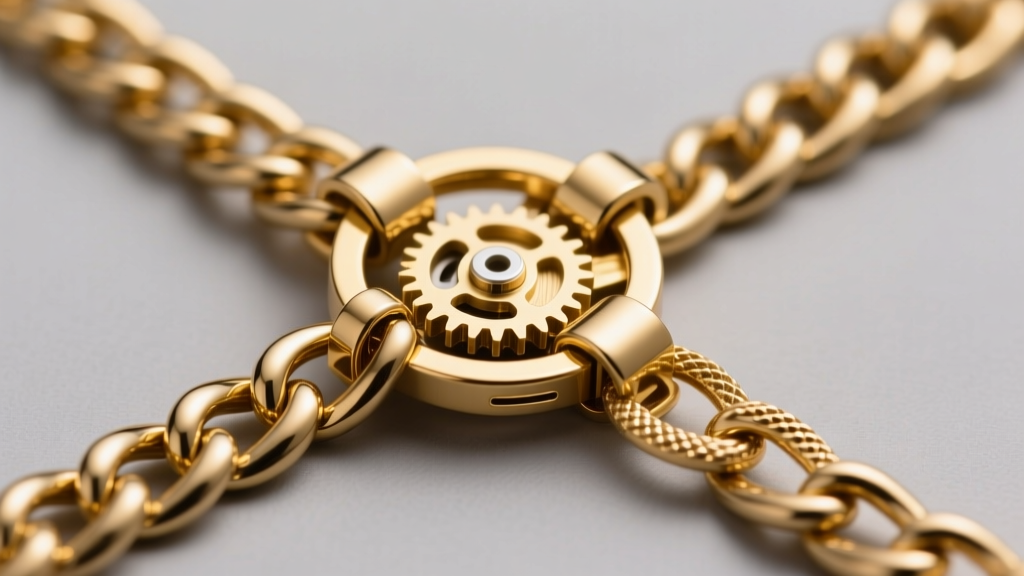
For those who prefer non-destructive troubleshooting, silicone necklace stoppers (typically 2mm inner diameter) can be threaded onto the chain to lock the bail in place. However, silicone degrades over time, absorbing skin oils and becoming brittle after 12 to 18 months of daily wear. A superior hardware upgrade is the multi-strand tube clasp. These clasps feature a magnetic or bayonet locking mechanism that secures up to five individual chains at the nape of the neck, ensuring they remain perfectly spaced and completely eliminating back-of-neck tangling.
Metallurgical Mismatches: Karat Friction and Wear
A frequently overlooked troubleshooting factor in layered stacks is the metallurgical compatibility of the chains. Many consumers mix 14k and 18k gold chains in the same stack, unaware that this creates a severe galvanic and abrasive mismatch. The Gemological Institute of America (GIA) notes that the alloy composition drastically alters the hardness of the metal.
14k vs. 18k Gold Wear Patterns
14k gold contains 58.5% pure gold and 41.5% alloy metals (usually copper, silver, and zinc). This high alloy content makes 14k gold significantly harder and more resistant to scratching. 18k gold, containing 75% pure gold, is noticeably softer and more malleable. When a 14k chain is layered directly against an 18k chain, the harder 14k links act like a micro-file against the softer 18k links. Over six to twelve months of daily wear, this continuous friction will literally shave away the gold from the 18k chain, leading to thinning at the contact points and eventual snapping.
Troubleshooting Rule: Always match the karat weight of your layered chains. If you must mix them, ensure the softer, higher-karat chain is significantly thicker (e.g., a 3mm 18k Cuban) than the harder, lower-karat chain (e.g., a 1mm 14k cable) to minimize the surface area of direct friction.
Preventative Maintenance for Daily Layering
To maintain the structural integrity and visual brilliance of your gold necklace layered stack, implement a strict maintenance routine. At the end of each day, wipe the chains down with a lint-free microfiber cloth to remove sebum, sweat, and environmental pollutants. The acidic nature of human sweat can accelerate the oxidation of the copper alloys present in both 14k and 18k gold, leading to a dull, brassy appearance over time.
Once a month, wash the stack in a solution of warm distilled water and a few drops of pH-neutral dish soap. Use a soft-bristled baby toothbrush to gently agitate the links, paying special attention to the crevices of rope and Cuban weaves where dead skin cells accumulate. Rinse thoroughly and dry completely with a hair dryer on a cool setting to prevent water spots. Finally, inspect the jump rings and spring-ring clasps with a 10x jeweler's loupe. If you notice any gap in the jump ring seam or a weakened spring mechanism, take the piece to a professional bench jeweler for immediate soldering or replacement before the chain fails and is lost.


