Square Jade Necklace Buying Guide: Grading & Styles
Discover how to choose an authentic square jade necklace. Learn about Type A jadeite grading, bezel settings, chain pairings, and pricing tiers.

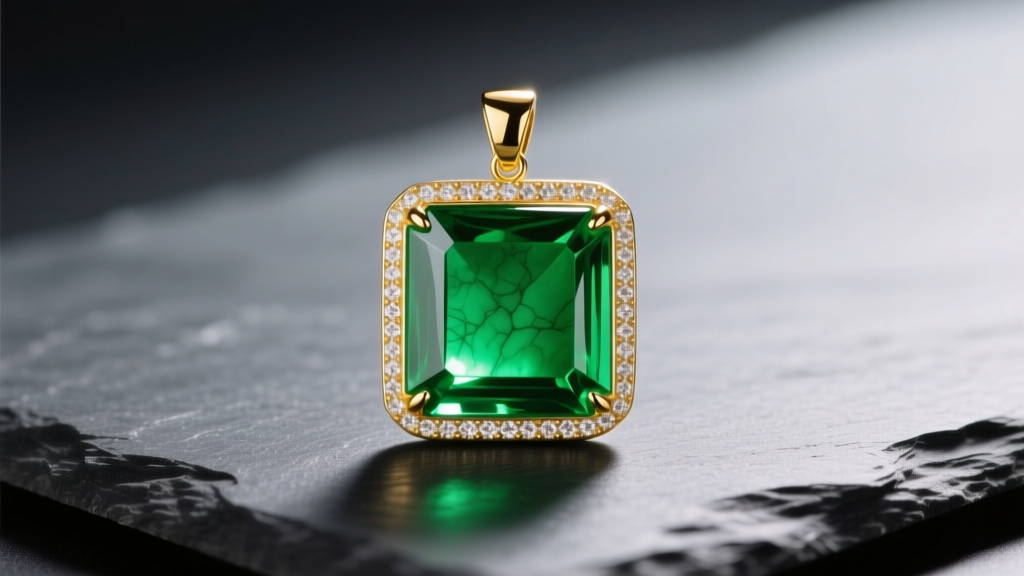
In the 2026 luxury jewelry market, the shift toward architectural, minimalist designs has propelled the square jade necklace to the forefront of high-end collections. Historically, jade is cut en cabochon (smooth and domed) to preserve carat weight and mask internal inclusions. A square or geometric cut is a bold departure that requires exceptionally clean rough material. Because sharp planes and 90-degree angles expose structural vulnerabilities and internal flaws, buying a square jade pendant requires a rigorous understanding of gemology, lapidary engineering, and market grading.
This comprehensive buying guide will walk you through the exact specifications, treatment red flags, and structural requirements you must evaluate before investing in a square jade necklace.
The Rarity of the Square Cut in Jade
Unlike faceted gemstones such as diamonds or sapphires, jade is a polycrystalline aggregate. It does not possess true cleavage planes, but it does have directional toughness. Cutting jade into a sharp square or princess cut generates immense stress at the corners, making them highly susceptible to chipping from minor impacts.
Therefore, when evaluating a square jade necklace, you will rarely see a true 90-degree princess cut. Instead, master lapidaries utilize two primary geometric variations:
- The Square Emerald Cut: Features truncated, chamfered corners that protect the stone while maintaining a geometric silhouette.
- The Beveled Plaque: A flat, square tablet with heavily rounded or beveled edges, usually set flush within a thick metal bezel.
Because squaring off a piece of rough jade wastes up to 40% more material than a traditional oval cabochon, a high-quality square jade pendant inherently commands a premium price per carat. You are paying for the rarity of the clean rough required to execute the cut.
Jadeite vs. Nephrite: Which Suits a Square Cut?
Jade is an umbrella term for two distinct minerals: Jadeite (sodium aluminum silicate) and Nephrite (calcium magnesium iron silicate). Understanding the difference is critical when selecting a geometric pendant.
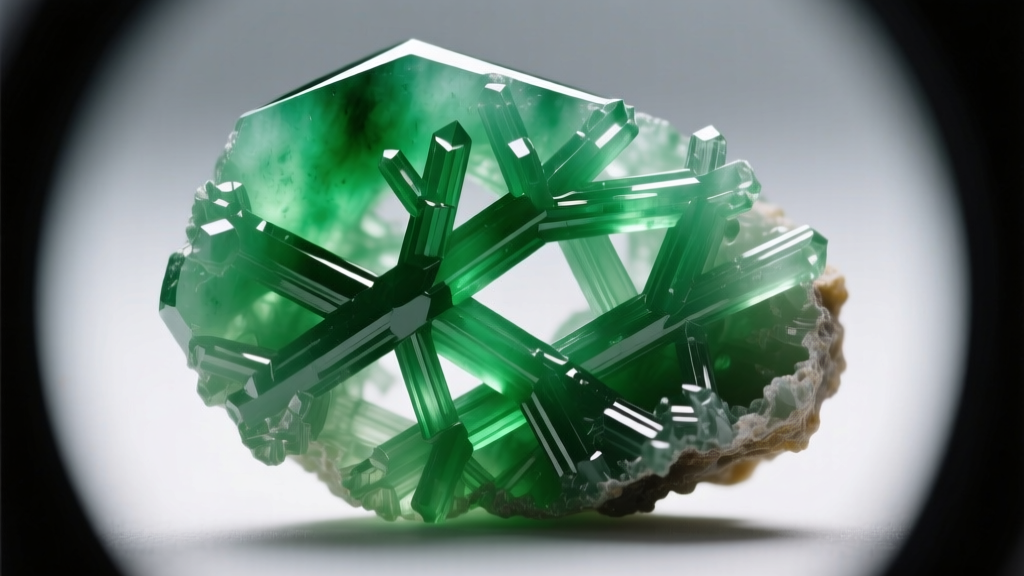
Jadeite (The Premium Choice)
Jadeite is harder (Mohs 6.5-7) and possesses a vitreous (glassy) luster that takes a mirror-like polish. It is the source of the highly coveted 'Imperial Green' and 'Lavender' hues. For a square cut, jadeite's optical clarity and sharp light return make it the superior choice for architectural designs. According to the Gemological Institute of America (GIA), top-tier Burmese jadeite remains the benchmark for fine jewelry investment.
Nephrite (The Tough Alternative)
Nephrite is slightly softer (Mohs 6-6.5) but significantly tougher due to its interlocking fibrous crystal structure. While it lacks the brilliant translucency of fine jadeite, black nephrite or deep spinach-green Hetian jade can be carved into striking, matte-finished square plaques that appeal to avant-garde, contemporary aesthetics.
The ABCs of Jade Treatments: What You Must Know
The most critical aspect of buying any jade necklace is verifying its treatment status. The market is saturated with chemically altered stones that lack long-term durability and value. The International Gem Society (IGS) categorizes jade into three distinct grades:
- Type A (Natural): Completely untreated, aside from a traditional, harmless surface waxing to enhance luster. This is the only grade worth buying for an investment piece.
- Type B (Bleached & Polymer-Impregnated): Acid-washed to remove brown impurities, then injected with epoxy resin. Over time, the resin yellows and degrades. Warning: Type B jade is extremely brittle at the corners of a square cut and will chip easily.
- Type C (Dyed): Artificially colored. The dye concentrates in the fractures and fades under UV light and body heat.
Always demand a lab report from a reputable gemological laboratory (such as GIA, NGTC, or Gubelin) that explicitly states 'Natural Jadeite' or 'No indications of treatment.' FTIR (Fourier Transform Infrared Spectroscopy) testing is the gold standard for detecting hidden polymer resins.
Bezel Engineering and Corner Protection
Never purchase a square jade pendant held by prongs. Prong settings leave the vulnerable corners of the jade exposed to daily wear and tear. The only acceptable setting for a square jade necklace is a custom-fitted bezel.
When inspecting the setting, look for the following engineering markers:
- The Lip: The gold or platinum bezel must have a slight overlapping 'lip' (at least 0.8mm) that covers the very tip of the stone's corners.
- The Backplate: High-end jade pendants feature an open back or a mesh backplate to allow light to pass through the stone, enhancing its translucency (the 'water head' or 'shui tou').
- Metal Purity: 18k gold (75% pure) is the industry standard. It provides the necessary tensile strength to hold the bezel tight against the jade without bending, unlike softer 24k gold or 14k gold which may not offer the right color warmth for green jade.
Chain Selection: Weight and Tensile Strength
Jade is a remarkably dense material, with a specific gravity of approximately 3.30 to 3.38. A modest 20mm x 20mm square jadeite plaque can easily weigh between 12 and 18 grams. Pairing this weight with an inadequate chain is a common failure point that results in lost pendants.
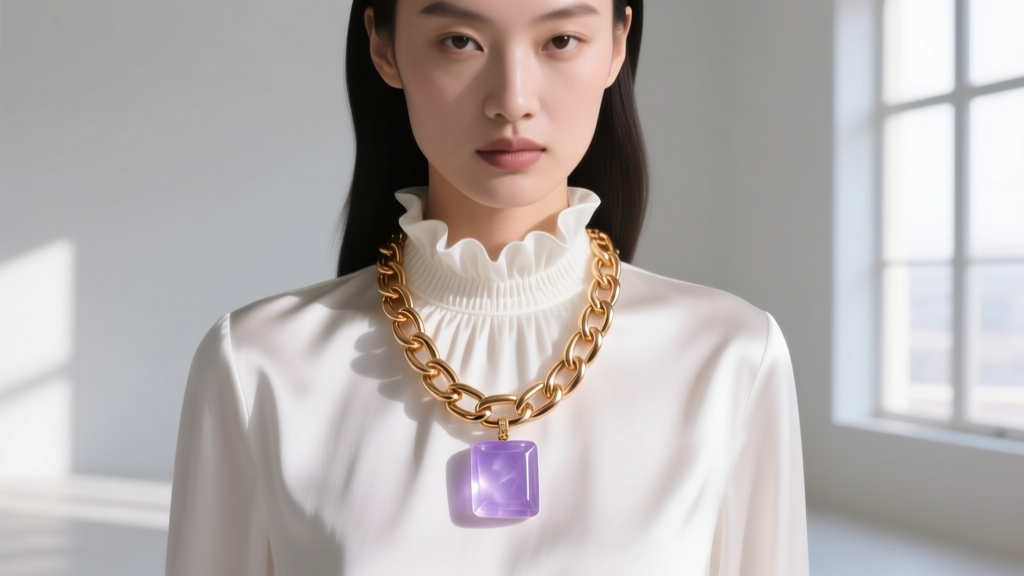
For a square jade necklace, avoid delicate cable chains, snake chains, or hollow rope chains. Instead, opt for solid, structural chains that complement the geometric nature of the pendant:
- Solid Box Chains (1.8mm - 2.5mm): The square links of a box chain visually echo the geometry of the pendant while providing excellent tensile strength.
- Wheat (Spiga) Chains (2.0mm+): Woven in a continuous, multi-directional pattern, wheat chains are virtually kink-proof and can support heavy jade plaques comfortably.
- Clasp Mechanics: Ensure the chain utilizes a heavy-duty lobster clasp or a fold-over safety clasp. Standard spring-ring clasps will fail under the dynamic weight of a swinging jade pendant.
2026 Pricing Tiers and Market Valuation
Pricing for a square jade necklace varies wildly based on the 'water head' (translucency), color saturation, and origin. Below is a realistic breakdown of current market pricing for a standard 18mm x 18mm square pendant in an 18k gold bezel.
| Jade Grade & Color | Translucency (Water Head) | Estimated 2026 Market Price | Investment Viability |
|---|---|---|---|
| Type A Imperial Green | High (Glassy) | $15,000 - $60,000+ | Exceptional (Museum Grade) |
| Type A Apple Green | Medium-High (Icy) | $2,500 - $8,000 | High (Strong Retail Demand) |
| Type A Lavender | Medium (Glutinous) | $1,200 - $4,500 | Moderate (Niche Collector) |
| Type A Spinach Nephrite | Opaque | $300 - $900 | Low (Wearable Art) |
| Type B+C Treated Jade | Artificial | $50 - $150 | None (Costume Jewelry) |
Final Checklist Before You Buy
Before finalizing your purchase of a square jade necklace, run through this expert checklist to ensure you are acquiring a piece that will last a lifetime:
- Verify the Lab Report: Confirm the certificate number matches the stone and explicitly rules out polymer or dye treatments.
- Inspect the Corners: Use a 10x jeweler's loupe to check the truncated corners for micro-chips or stress fractures.
- Check the Bezel Fit: Ensure there is no light gap between the gold bezel and the jade; a loose bezel will lead to rattling and eventual stone fracture.
- Evaluate the Light Test: Shine a penlight through the back of the pendant. Natural Type A jade will show a soft, fibrous glow, whereas Type B jade often exhibits a cloudy, spiderweb-like internal scattering due to acid etching.
By prioritizing structural integrity, verified authenticity, and appropriate chain engineering, your square jade necklace will serve as a striking, modern heirloom that bridges ancient gemological tradition with contemporary 2026 design sensibilities.


