Santo Domingo Necklace Guide: 2026 Trends & Styling
Explore 2026 trends for the authentic Santo Domingo necklace. Learn to identify genuine Kewa Pueblo heishi, style squash blossoms, and invest wisely.

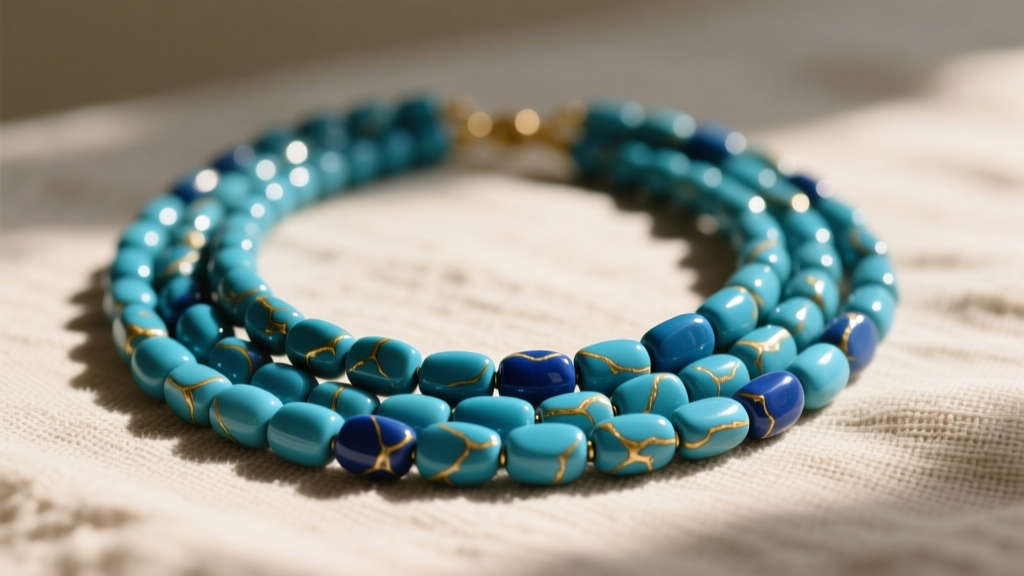
The 2026 Renaissance of the Santo Domingo Necklace
In the evolving landscape of 2026 fashion, the pendulum has swung decisively away from fleeting micro-trends toward archival, heritage-driven jewelry. At the forefront of this 'quiet luxury' movement is the Santo Domingo necklace. Crafted by the artisans of the Kewa Pueblo (historically known as the Santo Domingo Pueblo) in New Mexico, these pieces are no longer relegated to seasonal bohemian wardrobes. Today, they are being embraced by high-fashion stylists and serious collectors alike for their architectural geometry, rich cultural provenance, and unparalleled craftsmanship. Understanding the nuances of these necklaces requires a deep dive into indigenous material science, authenticating hallmarks, and modern styling frameworks.
Decoding Authenticity: The Science of Heishi Beads
The foundation of any genuine Santo Domingo necklace is the heishi (pronounced hee-shee) bead. In the Keresan language, the term translates literally to 'shell,' though it now encompasses meticulously crafted stone beads as well. True heishi is not merely cut; it is a labor-intensive process of drilling raw materials, stringing them on a wire, and grinding them against sandstone to achieve a fluid, snake-like drape. In 2026, the market is unfortunately saturated with imported, machine-cut imitations. Distinguishing between a master-crafted Kewa piece and a mass-produced factory strand requires examining the bead morphology and material origins.
Material Grades and Organic Gemstones
Authentic artisans prioritize high-grade, naturally occurring materials. For turquoise, the most prized varieties include Kingman (known for its deep blue with black or brown pyrite matrix), Sleeping Beauty (valued for its clear, matrix-free robin's egg blue), and Number 8 (famous for its intricate golden-brown webbing). It is crucial to note that natural turquoise is porous, registering between 5 and 6 on the Mohs hardness scale. Artisans may use stabilized turquoise to prevent fracturing during the grinding process, but they strictly avoid the dyed howlite or reconstituted turquoise dust commonly found in counterfeit pieces.
Shell varieties are equally specific. Spiny oyster shell, harvested from the Sea of Cortez, provides vibrant strikes of orange, red, and purple. Its calcium carbonate composition makes it relatively soft (Mohs 3.5-4), meaning authentic spiny oyster heishi will exhibit a subtle, organic luster rather than the glassy, hyper-reflective shine of dyed plastic or resin substitutes. Pen shell and mother-of-pearl are also utilized for striking black and white contrast beads.
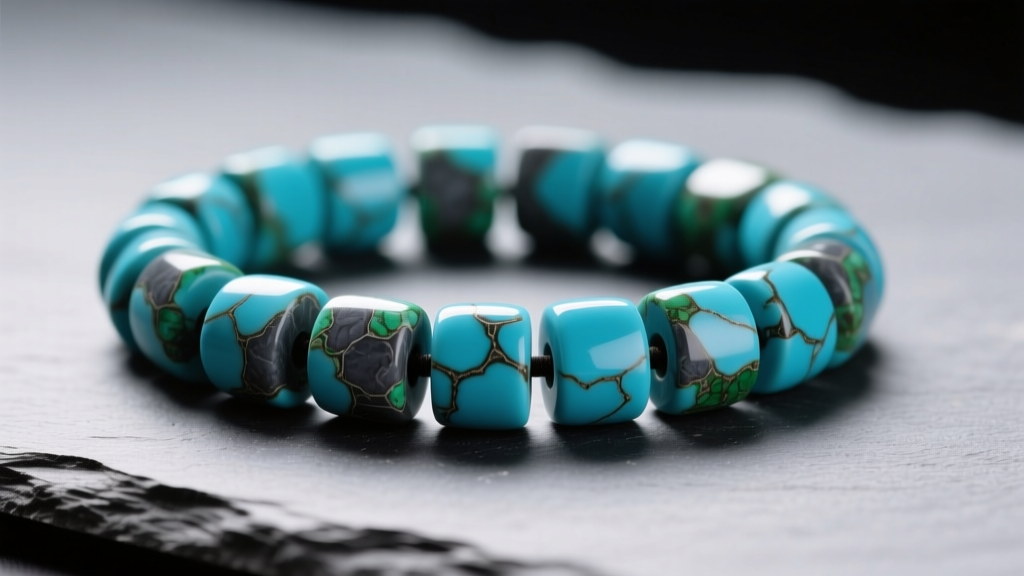
Authenticity Comparison Chart
When evaluating a potential acquisition, use this framework to assess the physical properties of the necklace. The Indian Arts and Crafts Board strictly enforces the Indian Arts and Crafts Act, making it illegal to sell counterfeit Native American jewelry, yet online marketplaces remain rife with mislabeled goods.
| Feature | Authentic Kewa Pueblo Heishi | Mass-Produced Imitations |
|---|---|---|
| Bead Uniformity | Slight organic variations; fluid drape | Machine-perfect symmetry; stiff drape |
| Material Origin | Natural Kingman, Spiny Oyster, Pen Shell | Dyed howlite, glass, plastic, resin |
| Stringing Core | Heavy-duty nylon, sinew, or steel wire | Cheap cotton thread or elastic cord |
| Findings & Clasps | Sterling silver (.925), hand-stamped | Nickel silver, brass, or base metal |
| Price Range (18-inch) | $250 - $1,500+ | $15 - $60 |
The Squash Blossom and Naja Pendant
Beyond the continuous heishi strands, the most iconic iteration of the Santo Domingo necklace is the Squash Blossom, featuring the crescent-shaped Naja pendant. The Naja's origins trace back to Moorish Spain, where it was used as a talisman to ward off the evil eye, eventually making its way to the Americas via Spanish conquistadors and their horse bridles. Kewa and Navajo silversmiths adapted this motif in the late 19th and early 20th centuries.
In 2026, vintage and contemporary squash blossom necklaces are highly sought after. When evaluating the silverwork, look for the '.925' stamp or the artisan's specific hallmark. Traditional pieces utilize 'liquid silver' (a technique of stringing dozens of tiny, faceted sterling silver tubes) or hand-stamped sterling silver beads flanking the turquoise blossoms. Beware of 'German silver' or 'nickel silver'—these are copper-nickel-zinc alloys that contain no actual silver and can cause severe contact dermatitis.
2026 Styling Framework: Necklines and Layering
Styling a Santo Domingo necklace in a contemporary wardrobe requires balancing its bold, geometric weight against modern silhouettes. The days of reserving these pieces for denim and suede are over. Today's style radar points toward tonal layering and high-contrast tailoring.
- The Crisp Button-Down: A 24-inch multi-strand turquoise heishi necklace worn over an unbuttoned white poplin shirt creates a striking visual anchor. The organic matrix of the turquoise breaks up the rigid structure of the collar.
- The Tonal Knit: Pair a vibrant orange spiny oyster choker (16 to 18 inches) with a camel or cream cashmere turtleneck. The warm undertones of the shell harmonize perfectly with autumnal knitwear.
- Asymmetrical Layering: Combine a delicate, 2mm pen shell heishi strand with a chunky, modernist sterling silver chain. This bridges the gap between indigenous heritage and avant-garde 2026 metalwork.
- The Evening Naja: Treat a vintage, heavy-gauge squash blossom necklace as you would a diamond rivière. Wear it solo against a minimalist black silk slip dress, allowing the Naja pendant to rest precisely at the sternum.

Investment Tiers and Market Pricing
As collectors increasingly view indigenous jewelry as an alternative asset class, the pricing hierarchy for Santo Domingo necklaces has become highly stratified. According to data tracked by indigenous art appraisers and institutions like the Smithsonian National Museum of the American Indian, provenance and material scarcity dictate value.
Entry-Level ($150 - $400): Single-strand necklaces featuring smaller (2mm-4mm) shell heishi, such as olive shell or freshwater clam, often accented with silver beads or small turquoise spacers. These are excellent entry points for daily wear.
Mid-Tier ($500 - $1,800): Multi-strand turquoise heishi necklaces (typically 3 to 6 strands) featuring high-grade, stabilized Kingman or Sleeping Beauty stones. These pieces require hundreds of hours of labor to grind and match for color consistency.
Archival & Vintage ($2,500 - $8,000+): Heavy, multi-strand squash blossom necklaces from the mid-20th century, featuring natural, untreated turquoise (such as the now-closed Bisbee or Lander Blue mines) and hand-forged ingot silver. These are museum-quality investments that consistently appreciate.
Archival Care and Preservation
The failure mode for many vintage Santo Domingo necklaces lies in improper maintenance. Because turquoise is highly porous and spiny oyster is an organic calcium carbonate, both materials are exceptionally vulnerable to chemicals. Never use ultrasonic cleaners, steamers, or commercial silver dips on these pieces. The harsh acids will strip the polish from the shell and permanently alter the color matrix of the turquoise.
Instead, clean the silver findings with a dry, untreated microfiber polishing cloth. If the beads become dull from skin oils, wipe them gently with a barely damp cloth and dry them immediately. Always store heishi necklaces flat or draped over a wide, padded jewelry bust; hanging them on narrow hooks for prolonged periods can stretch the internal nylon or sinew stringing, leading to catastrophic structural failure and bead loss.
Ethical Sourcing and Final Thoughts
The true value of a Santo Domingo necklace extends far beyond its material components; it is a wearable archive of Kewa Pueblo history. As demand surges in 2026, the responsibility falls on the consumer to ensure ethical sourcing. Always purchase directly from recognized Native American artisans, reputable tribal cooperatives, or established galleries that provide documented provenance and adhere to the Indian Arts and Crafts Act. By prioritizing authenticity over convenience, collectors not only secure a masterfully crafted adornment but also actively support the continuation of one of North America's most vital indigenous art forms.


