How to Style a Necklace Affair Marie Antoinette Look: Step-by-Step
Learn how to recreate the iconic Necklace Affair Marie Antoinette aesthetic. A step-by-step guide to sourcing, layering, and styling Rococo diamond necklaces.

The History Behind the Necklace Affair Marie Antoinette Scandal
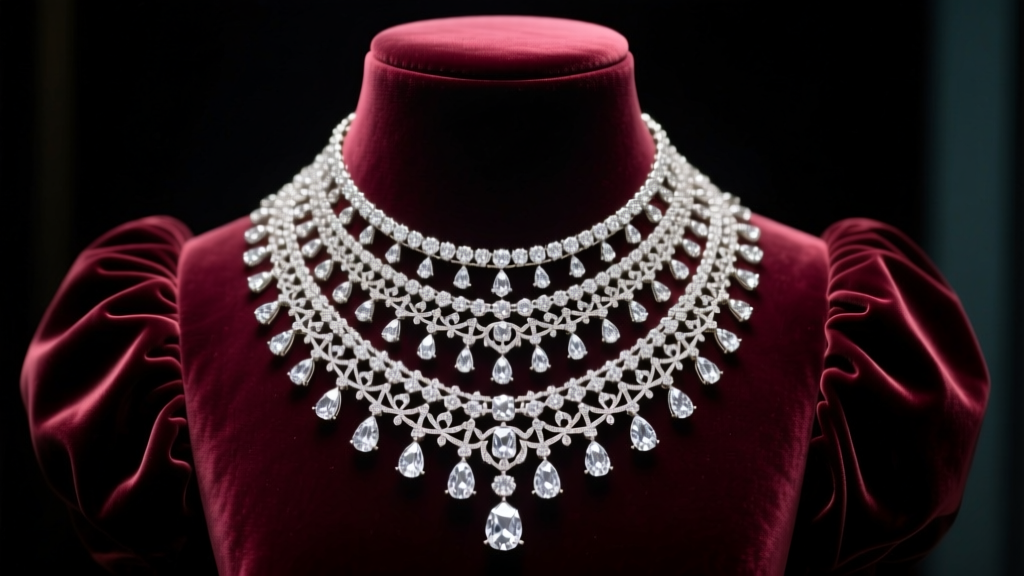
The infamous 'Affair of the Diamond Necklace' (1785) remains one of history's most spectacular jewelry scandals. Originally commissioned by Louis XV for his mistress Madame du Barry, the piece was a staggering 2,800-carat diamond masterpiece featuring a rivière choker, elaborate festoons, and cascading tassels. Though Marie Antoinette famously refused the necklace, the scandal irrevocably damaged her reputation. Today, the necklace affair marie antoinette aesthetic represents the pinnacle of Rococo opulence: multi-tiered, light-catching, and unapologetically grand. Recreating this look for modern wear requires moving past costume jewelry and understanding the structural engineering of high-carat layering. This step-by-step guide will show you how to commission, source, and style a historically inspired, wearable multi-tier diamond necklace.
Step 1: Sourcing the Base Rivière Choker
The foundation of the original Boehmer and Bassange design was a tight-fitting rivière choker. To replicate this without the $14 million historical price tag, modern collectors turn to lab-grown diamonds. According to the Gemological Institute of America (GIA), lab-grown diamonds possess the exact same optical and physical properties as mined stones, making them ideal for high-carat historical replicas.
Specifications for the Base Layer
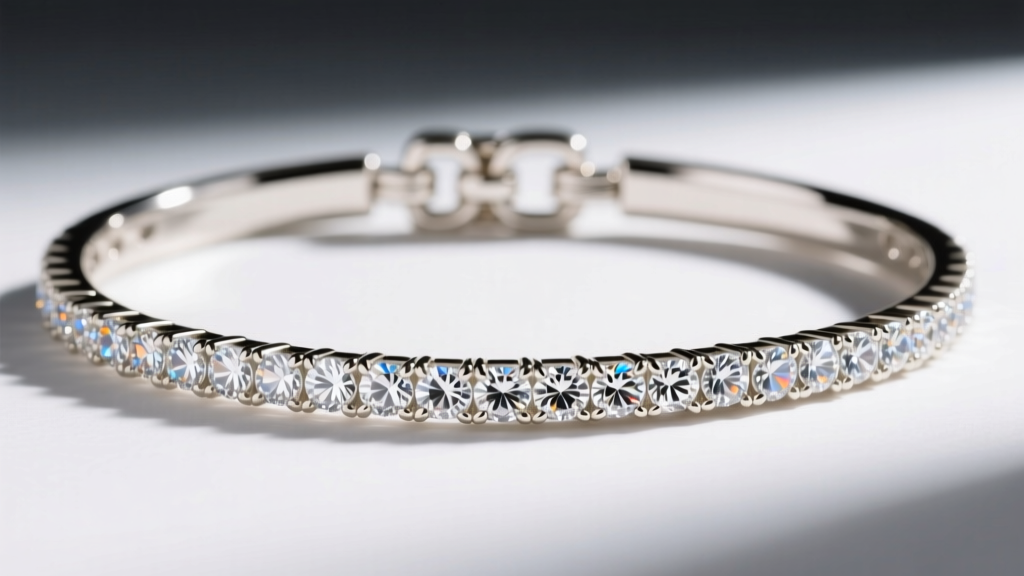
- Length: 14.5 to 15 inches (must sit flush against the collarbone).
- Stone Size: 4.0mm to 4.5mm round brilliant or old-mine cut equivalents.
- Total Carat Weight (CTW): Approximately 18 to 22 CTW.
- Metal: 18k palladium white gold. Unlike standard white gold, palladium alloys do not require rhodium plating, ensuring the metal won't turn yellow against your skin over time.
- Clasp Engineering: A heavy 20-CTW choker will snap a standard lobster clasp. You must use a tongue-and-groove box clasp equipped with dual figure-8 safety catches on the hinges.
Step 2: Layering the Festoon and Tassel Drops
The defining feature of the Marie Antoinette aesthetic is the 'festoon'—draped chains or gemstone strands that swoop between fixed points on the base necklace. The original piece featured three distinct diamond bows that anchored the draped swags.
Constructing the Festoon Architecture
To achieve this look without the necklace tangling or pulling uncomfortably on the neck, the secondary layers must be integrated into the primary choker's structure, rather than simply worn as separate necklaces.
- The First Drop (16 inches): Attach a delicate 1.5mm diamond-tennis chain to the lateral anchor points of the choker (roughly at the 4 o'clock and 8 o'clock positions). This creates a subtle swoop that frames the décolletage.
- The Second Drop (18 inches): This layer should feature the 'girandole' motif—a central pear-shaped briolette flanked by two smaller drops. Use 2.00 CTW pear-shaped lab diamonds (DEF color, VVS1 clarity) to mimic the antique rose cuts seen in 18th-century French court jewelry.
- The Tassels: The original necklace featured diamond tassels that moved fluidly with the wearer. Modern articulation requires micro-hinges set in platinum to allow the diamond drops to swing independently without kinking the metal.
Material Comparison: Achieving the 2800-Carat Illusion
When commissioning a piece of this magnitude, material selection dictates both the visual impact and the structural integrity. The Victoria and Albert Museum notes that 18th-century jewelry relied heavily on foil-backed closed-back settings to maximize candlelight reflection. Today, we rely on high-refractive-index stones and open-back galleries.
| Material | Refractive Index | Mohs Hardness | Est. Price (20 CTW) | Best For |
|---|---|---|---|---|
| Lab-Grown Diamond | 2.42 | 10 | $12,000 - $18,000 | Heirloom quality, daily wear, maximum brilliance |
| Moissanite | 2.65 | 9.25 | $2,500 - $4,000 | Budget-friendly, high dispersion (rainbow fire) |
| High-Grade CZ (5A) | 2.15 | 8.5 | $400 - $800 | Occasional costume wear, editorial shoots |
Expert Tip: If using Moissanite for a historical replica, request 'Antique Cut' moissanite (such as the Old European Cut). Standard brilliant-cut moissanite exhibits a 'disco ball' effect that looks distinctly modern and breaks the 18th-century illusion.
Step 3: Pairing with the Correct Neckline
A multi-tiered festoon necklace of this scale requires a specific canvas. The Marie Antoinette aesthetic was designed to be worn with the 'grand habit de cour' or the wide, off-the-shoulder necklines of the 1780s.
'The jewelry must not compete with the textile; it must float upon it. A high collar or intricate lace will entirely destroy the visual architecture of a festoon necklace.'
Modern Neckline Pairings
- The Square Neck Corset Top: Provides a structured, geometric frame that allows the sweeping curves of the festoon to stand out. Ensure the top edge of the corset sits at least 2 inches below the bottom tassel of the necklace.
- The Off-The-Shoulder Silk Gown: A minimalist, matte silk fabric (like crepe de chine or heavy duchess satin) in deep jewel tones (emerald, sapphire, or onyx black) provides the highest contrast for DEF-color diamonds.
- What to Avoid: Never pair this necklace with V-necks or halter tops. The intersecting angles will create visual clutter and cause the heavy diamond drops to catch on the fabric seams.
Maintenance and Care for Multi-Tiered Antiques
Heavy, multi-layered necklaces are prone to micro-abrasions where the chains and diamond galleries rub against one another. To maintain the integrity of your necklace affair marie antoinette reproduction:
- Storage: Never hang a multi-tier festoon necklace. The gravitational pull will stretch the metal links over time. Lay it flat in a velvet-lined box with individual padded dividers for each tassel.
- Cleaning: Avoid ultrasonic cleaners. The high-frequency vibrations can loosen the micro-prongs holding the briolette drops. Instead, soak the piece in a solution of warm water and a few drops of ammonia-free dish soap for 10 minutes, then gently agitate with a soft horsehair detailing brush.
- Annual Inspection: Have a master jeweler inspect the tongue-and-groove clasp and the articulated hinges of the tassels every 12 months to prevent catastrophic metal fatigue.
By respecting the historical architecture of the original piece while utilizing modern metallurgical and gemological advancements, you can successfully translate the most famous necklace in French history into a wearable, breathtaking reality.


