Thick Gold Choker Necklace: 2026 Value & Budget Guide
Discover how to evaluate a thick gold choker necklace in 2026. Compare solid, hollow, and vermeil options with our expert pricing and weight guide.

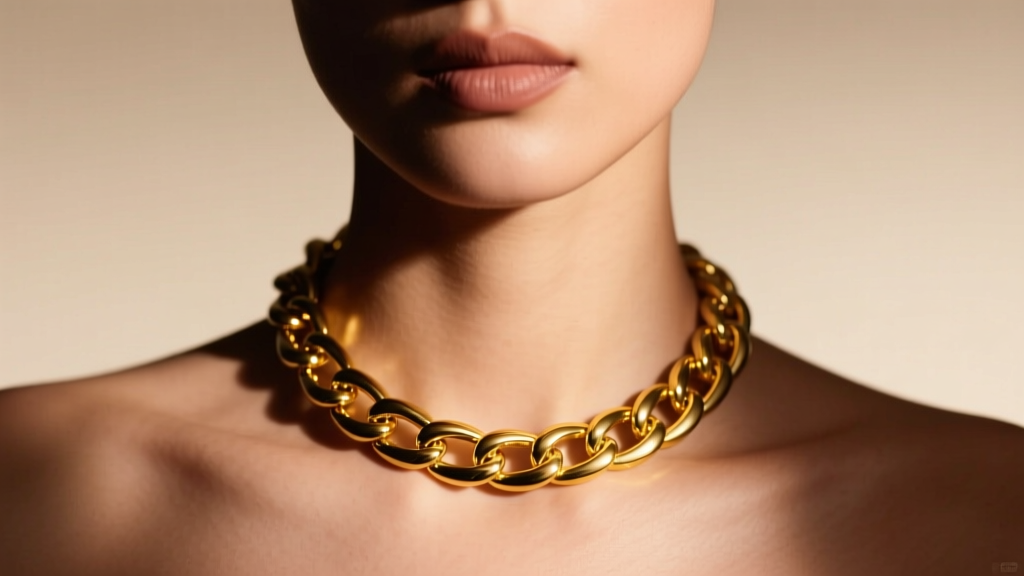
The Anatomy of a Thick Gold Choker
The thick gold choker necklace has transcended fleeting trends to become a permanent staple of modern jewelry wardrobes. However, as demand surges in 2026, the market is saturated with deceptive pricing models, hollow constructions disguised as solid, and inflated retail premiums. For the discerning buyer, understanding the intersection of metallurgy, weight, and craftsmanship is no longer optional—it is essential for protecting your investment.
What defines 'thick'? In the context of a choker (typically 14 to 16 inches in length), a chain is considered thick when it exceeds 7mm in width, with statement pieces ranging from 10mm to 14mm. At these dimensions, the physical weight of the gold becomes a primary factor in both comfort and cost. A genuine solid 14k gold 10mm Cuban link choker will weigh between 45 and 65 grams. If you are handed a 12mm choker that feels suspiciously light—weighing under 20 grams—you are immediately dealing with either a hollow electroformed chain or a base metal core with gold plating.
Solid vs. Hollow vs. Plated: Where Your Budget Goes
To accurately assess the value of a thick gold choker necklace, you must first identify its internal construction. The price disparity between these three categories is massive, and unscrupulous sellers often blur the lines in product descriptions.
- Solid Gold (10k, 14k, 18k): The gold standard for value retention. 14k gold (58.3% pure gold alloyed with silver, copper, and zinc) offers the optimal balance of rich color and Vickers hardness required to withstand the daily friction of a choker resting against the collarbone. Solid chains can be polished, repaired, and will always retain intrinsic melt value.
- Hollow Electroformed Gold: Manufacturers use a resin or wax core that is dissolved after gold is electrodeposited, creating a massive-looking chain that weighs a fraction of its solid counterpart. While budget-friendly upfront, hollow chains are prone to catastrophic crushing if squeezed. Once dented, they are virtually unrepairable, and their resale value is effectively zero because the labor to extract the microscopic gold layer exceeds the gold's worth.
- Gold Vermeil & Heavy Plated: A sterling silver or brass base coated with a layer of gold (vermeil requires a minimum of 2.5 microns of gold over sterling silver). For a thick choker that experiences high friction against the neck and clothing, even heavy plating will eventually wear through to the base metal within 12 to 24 months of daily wear.
According to the Gemological Institute of America (GIA), understanding karat stamps and alloy compositions is critical, as the structural integrity of a heavy choker relies heavily on the specific metals used in the alloy mix. 18k gold, while more valuable, is significantly softer than 14k and more prone to scratching and link deformation in thick, heavy chains.
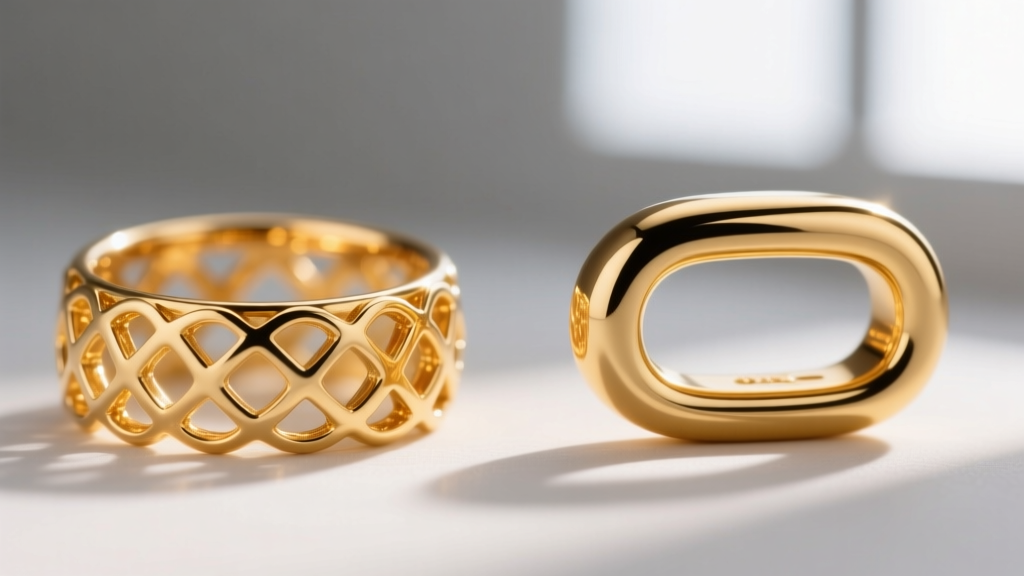
2026 Pricing Matrix: What Should You Actually Pay?
Calculating the fair market value of a solid thick gold choker necklace requires a basic understanding of the 'melt value' plus the 'manufacturing premium.' With 2026 gold spot prices hovering around $2,450 per troy ounce (approximately $78.77 per gram for pure 24k gold), we can calculate the baseline material cost for 14k gold at roughly $45.92 per gram.
However, you are not just buying raw gold; you are paying for the labor of drawing the wire, forming the links, soldering, filing, and diamond-cutting the chain. A high-quality, hand-soldered Cuban link commands a 2.0x to 2.8x multiplier over melt value due to this intensive labor. Below is a realistic 2026 pricing matrix for a standard 16-inch solid 14k gold choker.
| Chain Style | Width | Avg Weight (16in) | Est. Melt Value (14k) | Fair Retail Range (2026) |
|---|---|---|---|---|
| Cuban Link (Flat) | 10mm | 55g | $2,525 | $5,000 - $6,500 |
| Rope Chain (Twisted) | 8mm | 42g | $1,928 | $3,800 - $4,800 |
| Figaro (Patterned) | 9mm | 38g | $1,745 | $3,200 - $4,000 |
| Curb Link (Classic) | 12mm | 68g | $3,122 | $6,200 - $7,800 |
Expert Warning: If you find a 10mm solid 14k Cuban link choker selling for $1,800 in 2026, it is mathematically impossible for it to be solid gold. The seller is either misrepresenting the karat purity, selling a hollow chain, or running a scam. Always cross-reference the gram weight with the current spot price.
Critical Value Indicators Beyond Gold Weight
While gram weight dictates the baseline price, the true longevity and functional value of a thick gold choker necklace are determined by its hardware and structural engineering. A heavy chain is only as secure as its weakest point.
The Clasp Conundrum
A 55-gram gold choker exerts significant kinetic force on the clasp when the wearer turns their head quickly or if the chain is snagged. A standard 12mm lobster clasp has a tensile failure point that can easily be compromised by lateral torque. For any solid gold choker exceeding 35 grams, a lobster clasp is a liability.
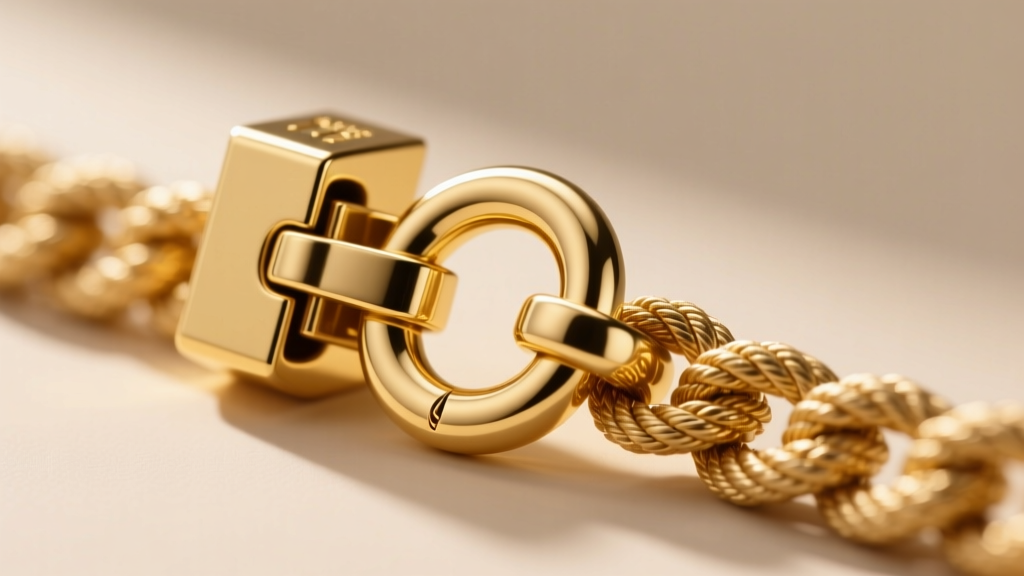
You must look for a box clasp with a tongue-and-groove mechanism, reinforced by dual figure-8 safety wires. The tongue should click audibly into the groove, and the safety wires should wrap securely around the link adjacent to the clasp. Furthermore, inspect the soldering where the end-links meet the clasp. Laser-welded joints offer superior precision and strength compared to traditional torch soldering, which can sometimes leave porous, brittle spots if not executed by a master jeweler.
Link Integrity and Soldering
In chains like the Rope or Figaro, the links are often twisted or patterned, which can hide weak solder joints. Hold the choker up to a light source and examine the seams of the individual links. On a premium thick gold choker necklace, the solder seams should be virtually invisible, with no gaps or discoloration. According to market analysis by the World Gold Council, manufacturing standards for premium gold jewelry have tightened significantly, with top-tier manufacturers utilizing automated laser welding to ensure uniform link integrity across heavy chains.
Verdict: Maximizing ROI on Your Choker
When budgeting for a thick gold choker necklace, prioritize 14k solid gold construction over 18k for superior durability, and completely avoid hollow alternatives if you view the piece as a long-term investment. Calculate the melt value based on the exact gram weight, and be prepared to pay a 2x to 2.5x premium for high-quality craftsmanship, diamond-cut faceting, and heavy-duty box clasps. By focusing on metallurgical facts and structural engineering rather than brand markups, you can secure a stunning, heirloom-quality choker that retains its financial and aesthetic value for decades.


