2026 Polish Eagle Necklace Trends: Heritage Meets Modern Style
Discover how the Polish eagle necklace is evolving in 2026. Explore styling tips, material grades, and historical details of the Orzeł Biały motif.

The intersection of cultural heritage and contemporary jewelry design has reached a fascinating inflection point in 2026. No longer confined to tourist kiosks in Kraków or Warsaw, the Polish eagle necklace has transcended its traditional boundaries to become a staple in the "heritage-core" and "quiet luxury" movements. Today’s wearers are not merely displaying national pride; they are curating deeply personal narratives through historically accurate, meticulously crafted pendants that bridge centuries of history with modern streetwear and minimalist aesthetics.
As a senior trend analyst for Jewel Style Radar, I have tracked the evolution of cultural motifs in fine jewelry. The Orzeł Biały (White Eagle) is currently experiencing a renaissance, driven by a demand for authentic craftsmanship, precise historical proportions, and versatile layering techniques. This comprehensive guide breaks down the anatomy, materials, and styling frameworks defining the Polish eagle necklace market this year.
The Evolution of the Orzeł Biały in Modern Jewelry
Historically, Polish eagle jewelry was largely relegated to two categories: mass-produced souvenir trinkets and heavy, ceremonial pieces worn by older generations. However, the 2026 landscape looks radically different. Driven by a global resurgence in "ancestry styling"—where Gen Z and Millennial consumers wear their heritage as a form of quiet rebellion against fast fashion—the Polish eagle pendant has been reimagined.
Contemporary jewelers are stripping away the bulky, overly ornate filigree of the early 2000s, opting instead for die-struck minimalism and oxidized finishes. The modern Polish eagle necklace is designed to sit flush against the collarbone, serving as an anchor piece in a curated layering stack rather than a standalone statement. This shift requires a deep understanding of both metallurgy and historical accuracy, as today’s consumers are highly educated on the nuances of the crest.
Decoding the Motif: Crown, Shield, and Proportions
To evaluate the quality of a Polish eagle necklace, one must first understand the heraldic rules governing the Orzeł Biały. According to Culture.pl's historical breakdown of the White Eagle, the legend traces back to the mythical founder Lech, who saw a white eagle nesting against the red hues of a setting sun. This birthed the iconic red shield and white eagle motif.
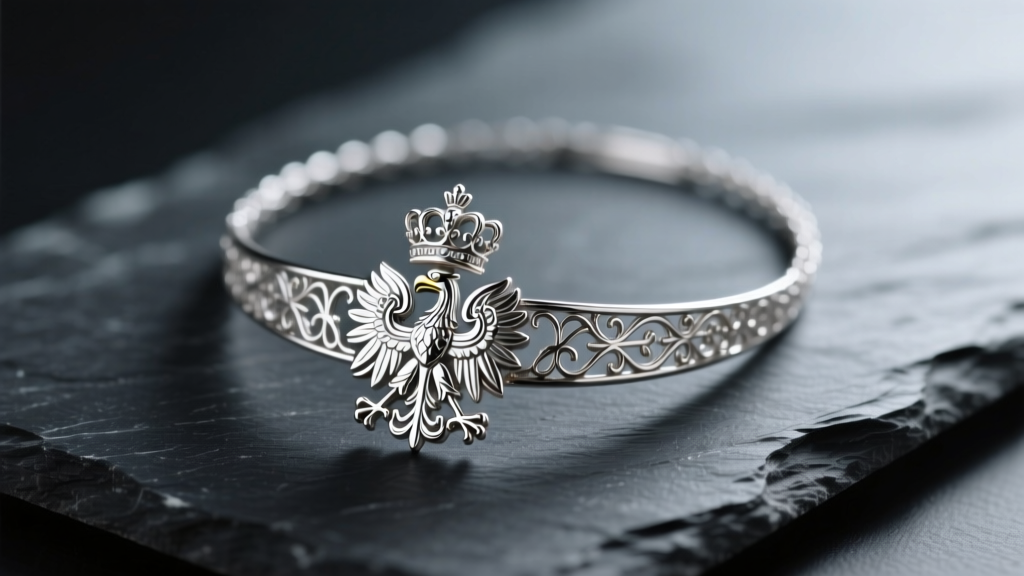
However, the most critical E-E-A-T detail for jewelry authentication is the crown. During the communist era of the Polish People's Republic (1944–1989), the crown was stripped from the eagle’s head by the state. It was not officially restored to the national coat of arms until 1990. Therefore, a high-end, historically respectful Polish eagle necklace crafted today will always feature the golden crown. Pendants lacking the crown are either vintage communist-era artifacts or inaccurate mass-productions. Furthermore, Wikipedia's comprehensive guide to the Coat of Arms of Poland notes that the eagle's head must face to its right (the viewer's left), and its wings should be raised with tips curving upward. Master jewelers in 2026 are utilizing 3D CAD modeling to ensure these micro-proportions are flawless, even on pendants as small as 12mm.
Material Grades and Finishes Dominating 2026
The tactile experience of a heritage pendant relies heavily on its material composition and surface treatment. Here is what is dominating the premium market this year:
- Oxidized 925 Sterling Silver: The undisputed leader in streetwear and heritage-core styling. By intentionally darkening the recessed areas of the eagle’s feathers and the shield’s border, artisans create a high-contrast, vintage aesthetic that requires zero maintenance to keep its "lived-in" appeal.
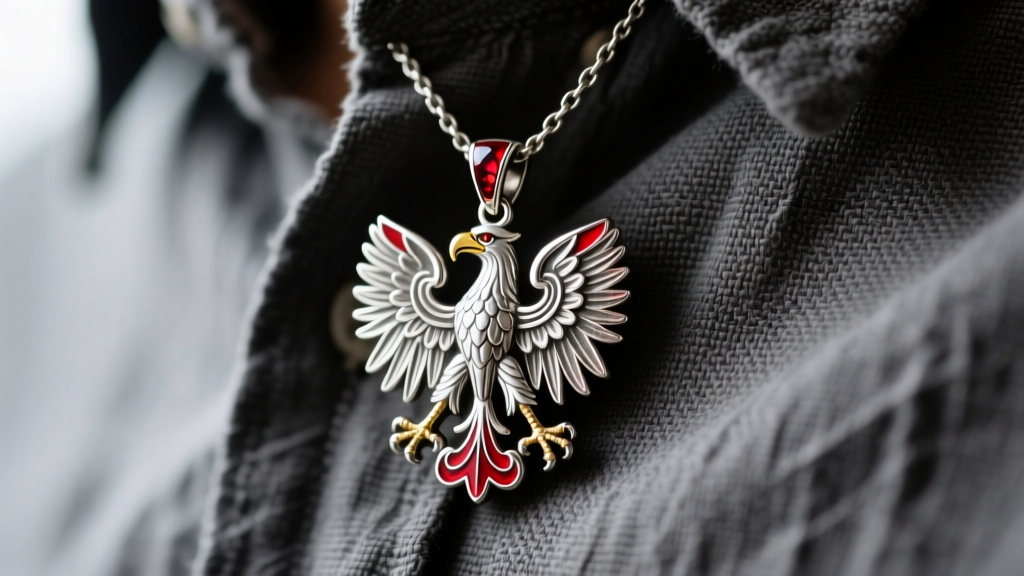
- Rhodium-Plated White Gold/Silver: For those leaning into the "quiet luxury" trend, high-polish rhodium plating offers a brilliant, tarnish-resistant finish that mimics platinum. This is typically paired with cold-enameled red shields for a striking, glossy contrast.
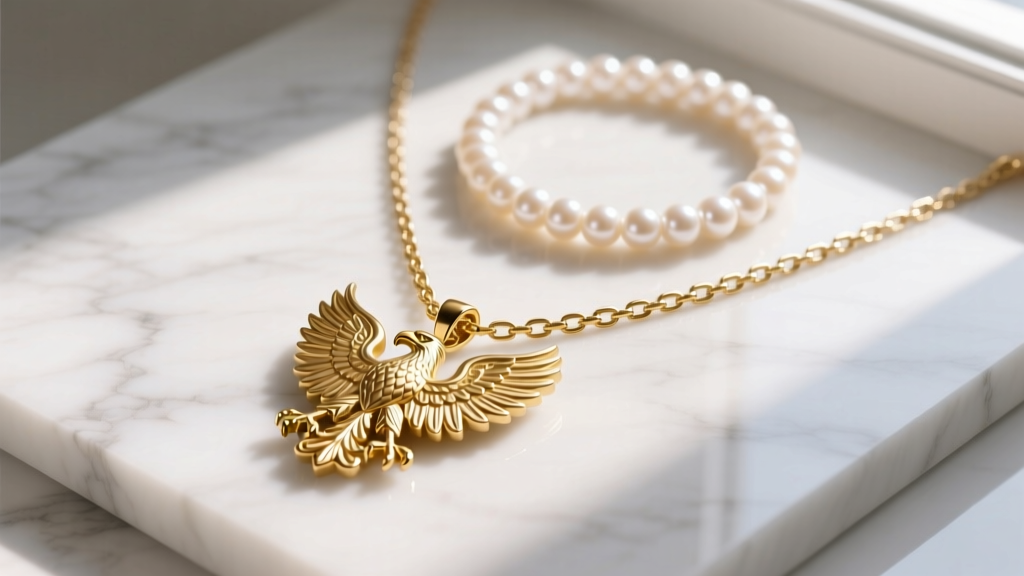
- Solid 14k (585) and 18k (750) Yellow Gold: Reserved for fine jewelry tiers. Yellow gold inherently warms the piece and pays homage to the golden crown and talons of the traditional heraldic crest. In 2026, brushed or satin-finished gold is preferred over high-polish to reduce glare and emphasize the engraving details.
- Guilloché Enamel: Moving away from cheap epoxy resins, luxury artisans are returning to guilloché—a technique where the silver shield base is engine-turned with geometric patterns before being coated in translucent red vitreous enamel, giving the shield a mesmerizing, multi-dimensional depth.
Sizing, Chain Pairings, and Layering Frameworks
A common failure mode when styling cultural pendants is pairing a heavy, oversized medallion with an inadequate chain, leading to bail wear and structural failure. The 2026 styling framework emphasizes proportional harmony. Below is a data-driven matrix for pairing your Polish eagle pendant with the correct chain gauge and length.
| Pendant Height | Weight Class | Recommended Chain Style | Chain Width (Gauge) | Optimal Length |
|---|---|---|---|---|
| 12mm - 18mm | Light (2-4g) | Cable or Snake Chain | 1.0mm - 1.5mm (16-14g) | 16" - 18" (Collarbone) |
| 20mm - 28mm | Medium (5-10g) | Box or Figaro Chain | 1.8mm - 2.5mm (12-10g) | 18" - 20" (Chest) |
| 30mm - 45mm | Heavy (12g+) | Curb or Rope Chain | 3.0mm - 5.0mm (8-4g) | 22" - 24" (Sternum) |
Layering Insight: The 15mm oxidized silver eagle pendant is currently the ultimate anchor piece for multi-chain stacks. Pair it with a 20" 1.2mm box chain, and layer it above a simple 14k gold pearl choker and below a 24" minimalist compass pendant. The juxtaposition of the matte, dark silver eagle against bright gold and organic pearls creates a visually dynamic, globally-minded aesthetic.
Price Tiers and Market Positioning
Understanding the pricing architecture of the Polish eagle necklace market is crucial for identifying true value versus inflated souvenir markup.
Tier 1: Mass-Market & Souvenir ($20 - $50)
Typically cast from low-grade silver alloys or base metals with epoxy resin enamel. These pieces often suffer from poor mold definition (blurred feathers) and lack the post-1990 crown detail. The bails are often soldered weakly, leading to snapping within months of daily wear.
Tier 2: Artisan & Heritage Brands ($80 - $250)
The sweet spot for 2026 consumers. These pieces are die-struck or cast using the lost-wax method in solid 925 sterling silver. They feature precise heraldic accuracy, hand-applied oxidation, and secure, laser-welded bails. Brands in this tier often source their enamel from specialized European workshops.
Tier 3: Fine Jewelry & Bespoke ($400 - $1,500+)
Crafted in solid 14k or 18k gold, often incorporating pavé diamond accents on the crown or talons. These are investment-grade heirlooms, hallmarked by certified European assay offices, and feature advanced techniques like guilloché or plique-à-jour enameling.
How to Spot Authentic Craftsmanship
When investing in a premium Polish eagle necklace, flip the pendant over. High-end artisans will often engrave the year of the crest's historical iteration, the maker's mark, and the precise metal purity (e.g., Ag 925 or Au 585). Furthermore, examine the eagle's talons. In poorly cast pieces, the talons merge into a solid blob of metal. In master-crafted pieces, you can clearly see the separation of the talons gripping the heraldic elements.
"True heritage jewelry does not shout; it whispers. A meticulously crafted Polish eagle pendant should feel like a secret handshake with history—weighty, precise, and deeply personal." — Studio Notes, Warsaw Atelier Collective, 2025
As we move through 2026, the Polish eagle necklace stands as a testament to the power of cultural jewelry done right. By prioritizing historical accuracy, premium metallurgy, and modern proportional styling, wearers can transform a centuries-old symbol into a cornerstone of their contemporary wardrobe.


