Polished Rock Necklace Trends: 2026 Style & Pairing Guide
Discover how the polished rock necklace is redefining 2026 jewelry trends. Explore styling tips, stone grades, and modern setting techniques.

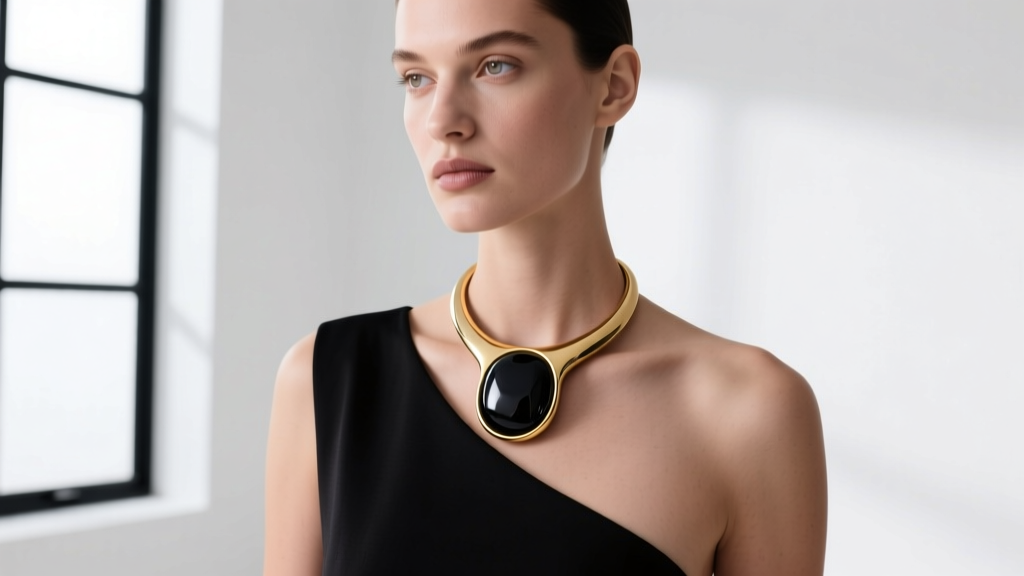
The jewelry landscape of 2026 has decisively moved past the chaotic, wire-wrapped 'healing crystal' boom of the late 2010s. Today, the polished rock necklace represents a masterclass in architectural minimalism and intentional lapidary art. Designers are no longer hiding raw, uncut stones in messy metal cages; instead, they are elevating freeform, high-gloss tumbled stones through precision metallurgy, asymmetrical geometry, and advanced polishing techniques. Whether you are investing in a single statement piece or curating a graduated layering stack, understanding the material integrity and styling frameworks of modern polished stones is essential for the contemporary collector.
The Anatomy of a Modern Polished Rock Necklace
To the untrained eye, a polished rock might simply look like a smooth, tumbled pebble. However, the 2026 standard for high-end polished rock necklaces relies on 'freeform lapidary.' Unlike traditional rotary tumbling—which yields uniform, rounded, and often uninspired shapes—freeform polishing involves hand-carving the rough stone to retain its organic, asymmetrical geometry before polishing it to a mirror finish.
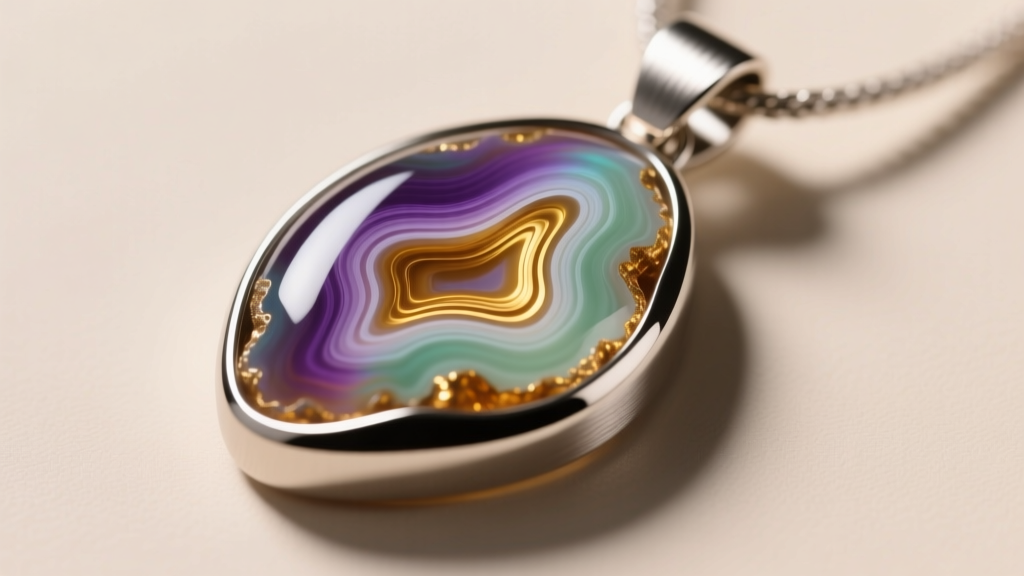
The polishing process itself is a multi-stage progression. Artisans begin with coarse 220-grit silicon carbide to shape the stone, gradually moving through 600, 1200, and 3000-grit diamond compounds. The final polish is achieved using 14,000-grit diamond paste or cerium oxide, which seals the microscopic pores of the stone and creates a glass-like luster without the need for synthetic resin coatings. This high-gloss finish is then paired with custom-fitted, 3D-printed wax-cast bezels that hug the stone's unique contours, utilizing metals like recycled 14k gold, brushed titanium, or matte platinum.
2026 Trend Forecast: Top Stone Varieties & Material Matrix
Not all stones are created equal when subjected to high-grit polishing. The Mohs Hardness Scale dictates how well a stone will hold a mirror finish and resist micro-scratching from daily wear. According to the Gemological Institute of America (GIA), understanding a stone's cleavage and hardness is critical for jewelry designers. Below is the 2026 material matrix for the most sought-after polished rock necklaces.
| Stone Variety | Mohs Hardness | Polish Retention | Avg. Market Price (Pendant) | Ideal 2026 Metal Pairing |
|---|---|---|---|---|
| Botswana Agate | 6.5 - 7 | Exceptional | $85 - $150 | Brushed Titanium |
| Golden Obsidian | 5 - 5.5 | Moderate (Prone to scratching) | $60 - $120 | 18k Yellow Gold Bezel |
| Lapis Lazuli (Chilean) | 5.5 - 6 | Good (Requires careful wear) | $150 - $350 | Matte Platinum |
| Clear Quartz (Herkimer) | 7 | Exceptional | $120 - $250 | Recycled 14k White Gold |
Styling Frameworks: Necklines and Layering Techniques
The shift toward 'quiet luxury' and avant-garde minimalism means the polished rock necklace is now styled with deliberate precision. The days of throwing a dozen mismatched crystals over a graphic tee are over. Here is how to style polished stones in 2026.
The Single Statement: Asymmetrical Freeforms
A single, large-scale freeform polished rock (typically between 40mm and 60mm in length) demands space to breathe. This style is best paired with structured, architectural necklines. A deep V-neck blazer, a sharp cowl-neck silk blouse, or a minimalist mock-neck sweater provides the perfect canvas. The key is contrast: the organic, fluid lines of the polished stone should juxtapose against the rigid, tailored lines of the garment. Hang the pendant on a heavy, 2.5mm to 3mm rolo or wheat chain to balance the visual weight of the stone.
The Graduated Tumble: Choker to Opera Lengths
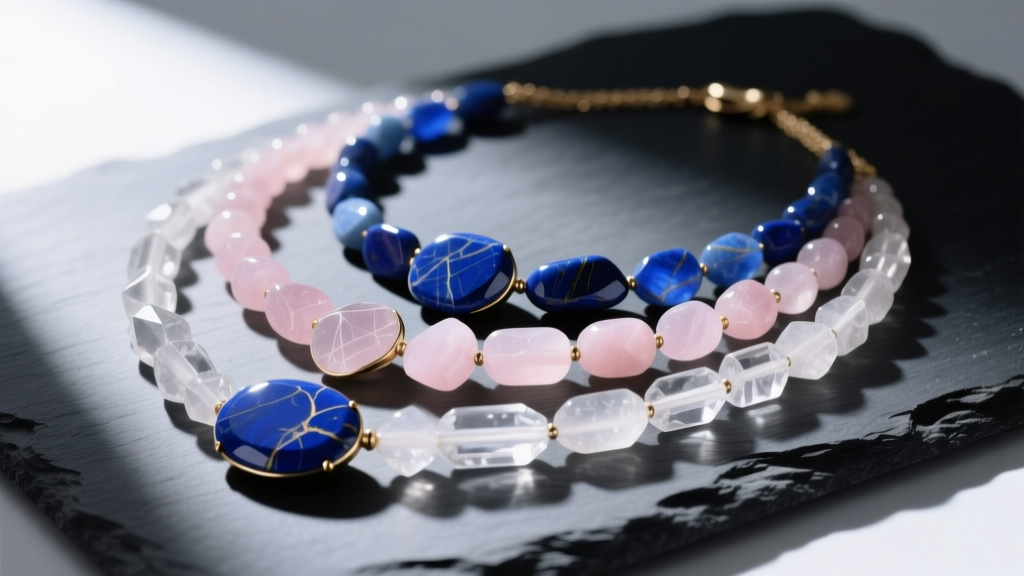
For those who prefer layering, the 2026 approach relies on a 'graduated tumble' technique. Instead of layering different types of stones, select a single stone variety (e.g., polished moss agate) in three distinct sizes.
- Layer 1 (14-16 inches): A delicate 10mm polished stone on a 1mm cable chain.
- Layer 2 (18-20 inches): A medium 25mm freeform stone on a 1.5mm box chain.
- Layer 3 (24-28 inches): A large 45mm statement stone on a 2.5mm rope chain.
This monochromatic, single-mineral approach creates a cohesive, high-fashion look that reads as intentional rather than cluttered.
Material Integrity & Sourcing Standards
As the demand for polished rock necklaces has surged, so has the market for treated and synthetic alternatives. Industry watchdogs and JCK Online industry reports frequently highlight the prevalence of dyed howlite being sold as polished turquoise, or resin-stabilized low-grade agate marketed as high-end chalcedony.
'A true high-gloss polish on a 7-Mohs stone like agate or quartz should feel like glass to the touch and reflect light without a cloudy, plastic-like depth. If a polished stone feels warm, slightly tacky, or shows a waxy luster under magnification, it has likely been coated in a synthetic polymer to hide poor lapidary work.'
When purchasing a polished rock necklace, always ask the jeweler about enhancements. For example, high-grade Lapis Lazuli should be naturally vibrant; if it is overly uniform and lacks the characteristic pyrite (gold) or calcite (white) inclusions, it may be dyed. Similarly, genuine polished turquoise will often feature a 'Zachery enhancement' disclosure if it has been treated with a non-toxic, non-dyeing stabilization process to improve its polish retention.
Care and Maintenance for High-Gloss Tumbled Stones
Maintaining the mirror finish of a polished rock necklace requires specific protocols based on the stone's chemical composition and hardness. The most common mistake consumers make is using ultrasonic jewelry cleaners, which can shatter stones with internal fractures or strip away natural waxes used in lower-Mohs stones.
- For Quartz and Agate (Mohs 7): These can be safely cleaned with warm water, a drop of mild dish soap, and a soft-bristled baby toothbrush. They are highly resistant to chemical damage.
- For Obsidian and Lapis Lazuli (Mohs 5-6): Avoid all ultrasonic cleaners and harsh chemicals. Wipe gently with a damp microfiber cloth. Store these necklaces in individual soft pouches, as they will easily scratch if they rub against harder gemstones or metal chains in a jewelry box.
- Hardware Maintenance: The bezel settings on freeform stones can accumulate skin oils and lotion at the seam where the metal meets the stone. Use a wooden toothpick or a soft interdental brush to gently clear debris from the bezel lip without scratching the stone's surface.
By understanding the lapidary craftsmanship, material science, and modern styling frameworks behind the polished rock necklace, you can invest in pieces that transcend fleeting fads and serve as enduring, sculptural additions to your 2026 wardrobe.


