Prada Necklace Gold: Material Properties & Authenticity Guide
Discover the metallurgy behind a Prada necklace gold piece. Compare gold-plated brass, PVD coatings, and solid gold alloys for wear and care.

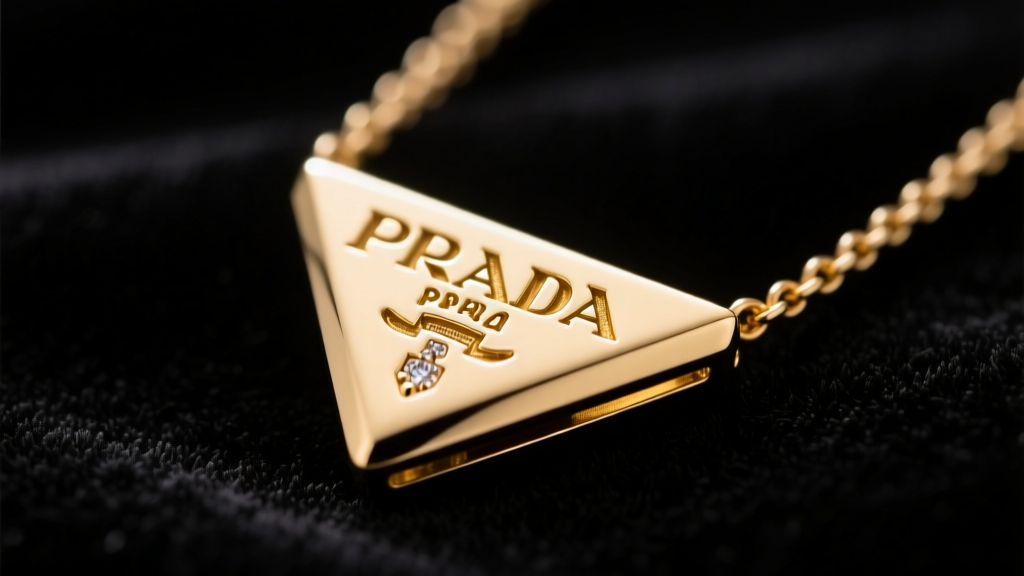
When luxury fashion enthusiasts search for a prada necklace gold design, they are typically drawn to the iconic triangle logo, the industrial-chic chain links, or the minimalist enamel pendants that define the brand's contemporary aesthetic. However, from a metallurgical and material science perspective, navigating the secondary market or evaluating the longevity of these pieces requires a deep understanding of what "gold" actually means in the context of high-end fashion jewelry. Unlike fine jewelry houses that deal exclusively in solid 14k or 18k gold alloys, Prada’s gold-toned necklaces primarily rely on advanced surface engineering and base metal alloys. This guide deconstructs the material properties, failure modes, and authentication metrics of Prada's gold jewelry, offering actionable insights for collectors and daily wearers alike.
The Metallurgy of Prada's Gold-Tone Alloys
To understand the wear characteristics of a Prada gold necklace, we must first examine the substrate. The vast majority of Prada’s gold-toned hardware and chain necklaces are not solid gold. Instead, they are crafted from jeweler's brass (typically a CuZn37 alloy, consisting of 63% copper and 37% zinc) or occasionally a zinc-aluminum alloy (Zamak) for heavier, cast pendants. Brass is chosen for its excellent machinability, high tensile strength, and ability to take a mirror polish before coating.
The "gold" color is achieved through one of two primary surface treatment methods:
1. Electroplating (Gold Overlay)
Traditional electroplating involves submerging the polished brass base into an electrolyte solution containing gold cyanide salts. An electrical current deposits a microscopically thin layer of gold onto the surface. For fashion jewelry, this layer typically ranges from 0.5 to 2.5 microns in thickness. While this provides the authentic luster and elemental composition of real gold, the ultra-thin profile makes it susceptible to friction wear.
2. PVD (Physical Vapor Deposition)
For hardware that requires extreme scratch resistance—such as the iconic enameled triangle pendants with gold-toned borders or heavy chain clasps—Prada often utilizes PVD coating. In a vacuum chamber, titanium nitride (TiN) or zirconium nitride is vaporized and bonded to the brass at a molecular level. PVD creates a gold-like hue that is exponentially harder than electroplated gold, boasting a Mohs hardness of 8-9 compared to pure gold's 2.5-3. However, PVD is a ceramic coating, not actual gold, meaning it lacks the specific gravity and elemental signature of precious metals.
Material Comparison: Prada Gold-Tone vs. Solid Gold
How does a Prada gold-plated necklace compare to traditional fine jewelry alternatives? The table below breaks down the critical material properties that dictate price, longevity, and skin compatibility.
| Property | Prada Gold-Tone (Brass Base) | Heavy Gold Vermeil (Sterling Base) | 14k Solid Gold Alloy |
|---|---|---|---|
| Base Metal | CuZn37 Brass or Zamak | 925 Sterling Silver | 58.5% Gold, Copper/Silver/Zinc |
| Surface Thickness | 0.5 - 2.5 microns (or PVD) | 2.5 - 5.0+ microns | Solid throughout (Infinite) |
| Mohs Hardness (Surface) | 2.5 (Electroplated) / 8.5 (PVD) | 2.5 - 3.0 | 3.5 - 4.0 |
| Density (Specific Gravity) | ~8.45 g/cm³ | ~10.36 g/cm³ | ~13.50 g/cm³ |
| Tarnish & Corrosion | High risk if plating breaches | Moderate (Silver sulfide tarnish) | Extremely Low |
| Avg. Market Price Range | $350 - $850 USD | $150 - $400 USD | $800 - $2,500+ USD |
As noted by the Federal Trade Commission (FTC) Jewelry Guides, terms like "gold plated" and "gold overlay" have strict legal definitions regarding micron thickness. Prada's pieces easily meet the visual standards of luxury, but buyers must recognize they are paying for the brand's design IP and manufacturing precision, not the intrinsic melt value of the gold.
Failure Modes: Galvanic Corrosion and Tarnish Mechanics
The most common complaint with any gold-plated brass jewelry, including Prada necklaces, is the dreaded "green skin" effect or localized pitting. This is not an allergic reaction to gold, but rather a predictable electrochemical failure mode.
Human sweat is a complex electrolyte containing sodium chloride (salt), lactic acid, and urea, typically resting at a pH between 4.5 and 7.0. When the microscopic gold plating on a Prada necklace wears thin at high-friction nodes (such as the clasp spring ring or the bail connecting the pendant), the underlying copper in the brass is exposed to this acidic electrolyte. This triggers galvanic corrosion. The copper oxidizes, forming copper chloride and copper carbonate, which manifest as a green or black residue that transfers to the skin.
Furthermore, environmental sulfur compounds in urban pollution can cause the zinc in the brass substrate to degrade, leading to micro-pitting beneath the gold layer. This phenomenon, known as dezincification, causes the gold plating to flake off prematurely, even if the surface hasn't been subjected to heavy physical abrasion.
Authentication Through Material Weight and Hallmarks
The secondary market for luxury fashion jewelry is saturated with high-quality counterfeits. Authenticating a Prada gold necklace requires looking beyond the logo and examining the material evidence.
The Specific Gravity (Weight) Test
Because brass (8.45 g/cm³) is significantly less dense than solid gold (13.5+ g/cm³), a counterfeit necklace cast from cheaper, lighter alloys like aluminum or hollow-base pot metal will feel noticeably "off" in the hand. Conversely, if a seller claims a Prada chain is "solid 18k gold" but it lacks the heavy, fluid drape characteristic of high-density precious metals, it is likely a standard gold-plated brass piece being misrepresented.
Hallmarking and Laser Engraving
Authentic Prada necklaces feature highly specific hallmarks. According to data cross-referenced with the Gemological Institute of America (GIA) standards for jewelry marking, you should look for:
- The Brand Stamp: "PRADA" in a clean, sans-serif font, usually laser-engraved on the flat back of the pendant or stamped onto a small metal tag near the clasp.
- Origin Mark: "MADE IN ITALY" is standard, though some hardware components may be sourced globally and assembled in Italy.
- Material Codes: Prada rarely stamps "14k" or "18k" on their fashion lines. Instead, you may find internal factory batch codes or the "CE" mark indicating compliance with European nickel-release directives (EN 1811:2011).
Care Protocols for Plated Fashion Jewelry
Preserving the PVD or electroplated finish on a Prada gold necklace requires abandoning traditional fine jewelry cleaning methods. The goal is to remove sebum and environmental dust without stripping the micron-thin surface layer.
Expert Warning: Never place gold-plated or PVD-coated fashion jewelry in an ultrasonic cleaner. The high-frequency cavitation bubbles will literally blast the microscopic gold layer off the brass substrate, ruining the piece in minutes.
The Safe Cleaning Matrix
- Solution: Mix 3 drops of phosphate-free, pH-neutral dish soap (like Dawn Professional) into a bowl of distilled water. Tap water contains chlorine and fluoride, which can accelerate brass oxidation if it seeps into micro-fissures in the plating.
- Agitation: Use an ultra-soft, synthetic makeup brush (not a toothbrush, which causes micro-scratches) to gently agitate the solution over the chain links and pendant bail.
- Drying: Pat dry with a lint-free microfiber cloth. Do not air dry, as water spots will leave mineral deposits that are difficult to remove without abrasive polishing.
Polishing Cloth Restrictions
Never use chemically treated jeweler's cloths (such as those containing thiourea or mild abrasives) on a Prada gold-plated necklace. Thiourea is designed to strip silver sulfide tarnish, but it will aggressively dissolve the thin gold overlay, leaving you with a dull, brassy chain. Stick to dry, untreated microfiber for routine buffing.
Conclusion: Valuing Design Over Melt Value
A prada necklace gold piece is a triumph of industrial design, surface engineering, and brand heritage, rather than a store of precious metal wealth. By understanding the brass substrates, the realities of micron-thick plating, and the electrochemistry of wear, collectors can make informed purchasing decisions. Whether you are investing in a PVD-coated triangle pendant for its scratch-resistant durability or a delicate electroplated chain for evening wear, treating the piece with the respect its specific material properties demand will ensure it remains a staple in your wardrobe for years to come.


