Multi Necklace Layering Trends 2026: The Ultimate Style Guide
Master the multi necklace stack with our 2026 trend analysis. Learn layering mechanics, length differentials, and anti-tangle hardware for flawless styling.

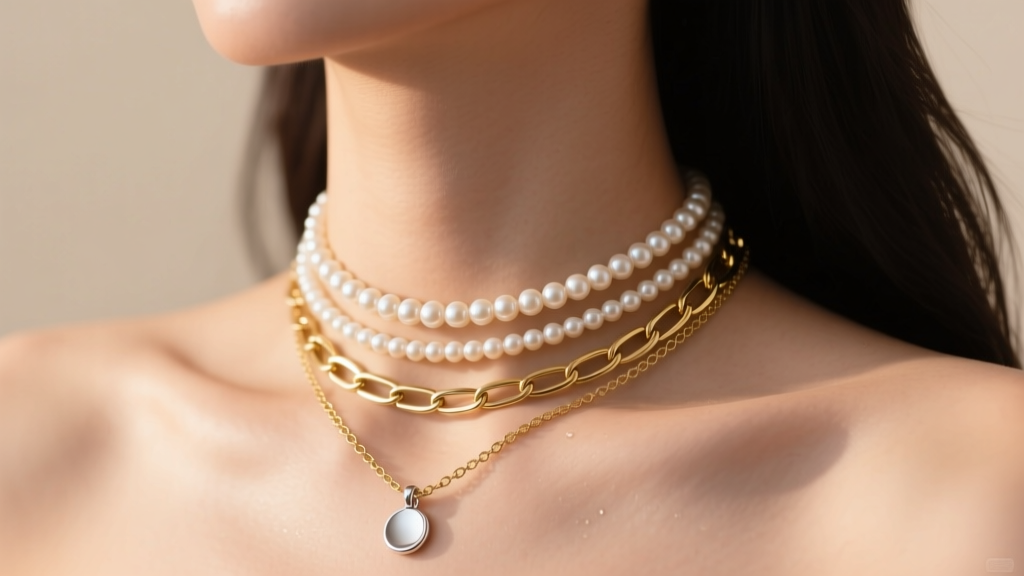
The Evolution of the Multi Necklace Stack (2024-2026)
The art of the multi necklace stack has undergone a radical transformation. Gone are the days of the mid-2010s "neckmess," where a chaotic jumble of identical, ultra-delicate chains was the norm. As we move through 2026, the trend has shifted decisively toward architectural layering. Today’s most sophisticated stacks rely on intentional contrast, varied chain weaves, and mixed metal finishes to create a curated, almost sculptural effect around the neckline.
According to trend forecasts from Vogue's jewelry archives, the modern multi necklace aesthetic is defined by its structural integrity. It is no longer just about wearing three necklaces; it is about engineering a cohesive visual hierarchy that complements the wearer's anatomy and wardrobe. This requires a deep understanding of metallurgy, chain gauge, and spatial distribution.
The Mathematics of Layering: Length & Weight Distribution
A flawless multi necklace stack is built on strict mathematical differentials. The most common failure in layering is the "choke effect," where chains of similar lengths tangle and ride up the neck. To prevent this, master jewelers employ the 2-Inch Differential Rule.
- The Anchor (Base Layer): 14 to 15 inches. This sits snugly on the lower neck. Ideal gauge: 1.2mm to 1.5mm (e.g., a delicate cable chain or pearl choker).
- The Bridge (Mid Layer): 16 to 17 inches. This rests on the upper chest. Ideal gauge: 2.0mm to 3.0mm (e.g., a rolo or paperclip chain).
- The Statement (Bottom Layer): 18 to 22 inches. This anchors the entire stack visually and physically. Ideal gauge: 3.5mm to 5.0mm, often featuring a heavy pendant or station gemstones.
Weight distribution is equally critical. The bottom layer must always be the heaviest. If your mid-layer chain is thicker or features a heavier pendant than your bottom layer, the kinetic movement of walking will cause the lighter bottom chain to flip upward, resulting in an immediate tangle.
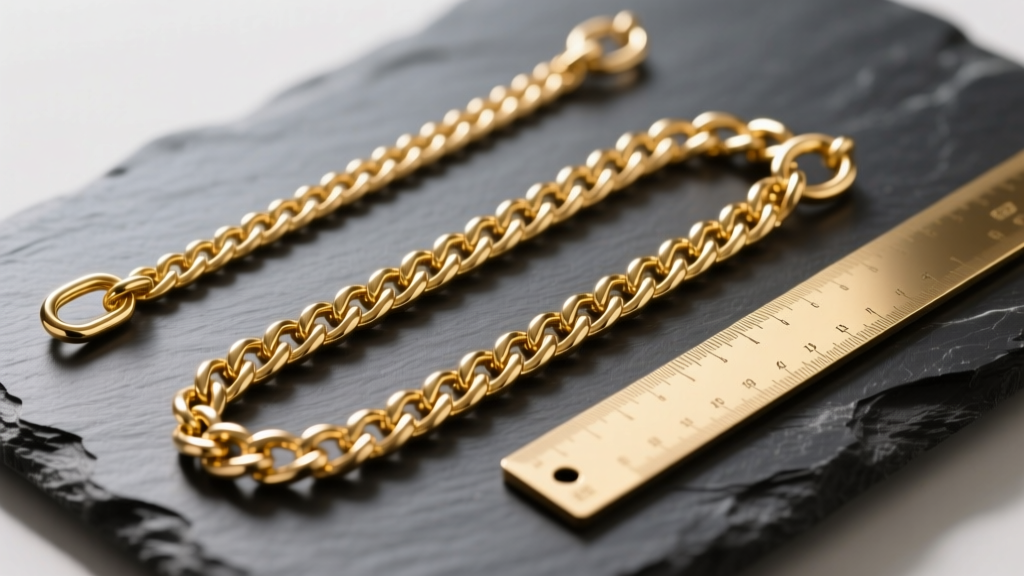
Chain Weave & Tangle Matrix
Not all chains play well together. The friction coefficient between different metal weaves dictates how easily your multi necklace stack will knot. Below is a structural matrix to help you select compatible chains.
| Chain Weave | Tangle Risk | Durability | Best Stack Position |
|---|---|---|---|
| Cable (Soldered) | Low | High | Base / Anchor Layer |
| Paperclip | Medium | Medium | Bridge / Mid Layer |
| Snake | High | Low (Prone to kinking) | Solo wear only (Avoid in stacks) |
| Figaro | Low | Very High | Statement / Bottom Layer |
| Box | Medium | High | Bridge / Mid Layer |
Expert Note: Never mix a Snake chain with a Cable chain in a multi necklace stack. The smooth, continuous surface of the Snake chain acts as a spool, causing the individual links of the Cable chain to wrap tightly around it, creating nearly impossible micro-knots.
Hardware & Anti-Tangle Mechanics
The hardware you choose can make or break the functionality of your stack. In 2026, the jewelry industry has introduced specialized findings designed specifically for the multi necklace enthusiast.
Multi-Strand Spacer Clasps
Instead of managing three separate lobster clasps at the nape of your neck—which frequently migrate to the front of your collarbone—invest in a barrel spacer clasp. This single, unified clasp features two to three integrated jump rings. You permanently attach your layered chains to the rings, allowing you to put on and take off your entire multi necklace stack as a single, unified piece. This eliminates clasp migration entirely.
Silicone Friction Grips
If you prefer traditional individual clasps, use microscopic silicone O-rings (often sold as "necklace stay grips"). By threading the chain through the silicone grip just below the clasp, you create a high-friction barrier that prevents the clasp from sliding forward over the curve of your neck.
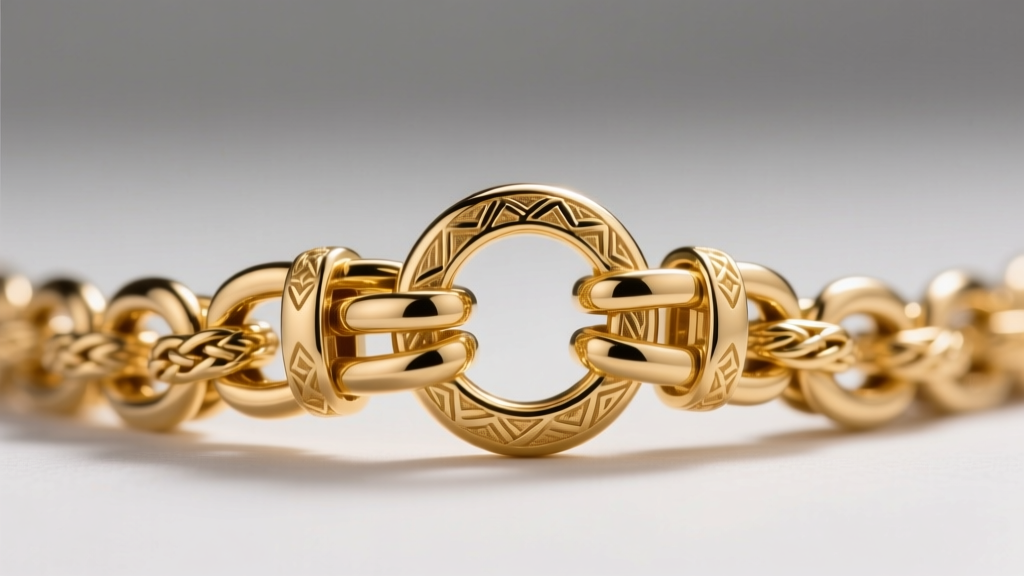
2026 Material & Aesthetic Trends
The visual language of the multi necklace has expanded beyond monochromatic gold or silver. This year's trend reports, echoed by market analysts at Forbes Jewelry, highlight a massive consumer shift toward intentional material dissonance.
- Mixed Metal Stacking: Pairing a rhodium-plated sterling silver choker with an 18k yellow gold vermeil mid-chain and an oxidized silver bottom pendant. The key to making this work is ensuring the undertones match (e.g., keeping all pieces either high-polish or entirely matte).
- Lab-Grown Diamond Stations: Instead of a single heavy pendant, the bottom layer of the multi necklace is increasingly featuring bezel-set lab-grown diamonds spaced every two inches. This provides the necessary weight to anchor the stack while catching the light dynamically.
- PVD-Coated Stainless Steel: For the mid-layer chain, which experiences the highest degree of inter-chain friction, traditional gold vermeil (2.5 microns of gold over silver) will wear off within months. The 2026 solution is PVD (Physical Vapor Deposition) coated stainless steel, which offers identical color matching to 14k gold but is virtually impervious to friction wear.
Neckline Pairing Framework
A multi necklace stack must be tailored to the garment it rests upon. Here is a quick decision framework for styling:
- The Crewneck T-Shirt: Requires a high-contrast stack. Start with a 14-inch pearl or bead choker, followed by a 16-inch chain, and finish with an 18-inch chain featuring a dark, oxidized pendant to break up the solid fabric block.
- The Deep V-Neck: Follow the geometry of the garment. Use a 16-inch, 18-inch, and 20-inch cascade of delicate chains that mimic the V-shape, ending in a single, sharp geometric pendant (like a marquise-cut gemstone) that points downward.
- The Off-Shoulder / Boat Neck: Opt for a shorter, tighter multi necklace stack (13", 15", 17") that stays entirely on the skin of the neck and upper chest, avoiding the fabric line completely.
Troubleshooting Common Multi Necklace Failures
Even the most carefully curated stacks can encounter mechanical issues. Here is how to troubleshoot the most common problems reported by collectors and stylists.
Problem: Micro-Abrasions on Gold Vermeil
The Cause: When two gold vermeil chains rub together continuously, the friction strips the gold layer, exposing the sterling silver core. According to metallurgical data from the Gemological Institute of America (GIA), silver is significantly softer than gold alloys, leading to rapid degradation.
The Fix: Never use two vermeil chains in the same multi necklace stack. Alternate materials: use a solid 14k gold chain for the mid-layer, or separate the two vermeil chains with a leather or silk cord layer to eliminate metal-on-metal friction.
Problem: Unsoldered Links Pulling Apart
The Cause: Many affordable chains feature unsoldered (open) jump rings. The combined kinetic weight of a three-strand stack will eventually pull these links open, resulting in a broken chain and lost pendants.
The Fix: Inspect your anchor and bridge chains with a jeweler's loupe. If the links are not laser-soldered shut, take them to a local bench jeweler to have the critical stress points (near the clasp and pendant bails) soldered. This minor repair costs less than $20 and guarantees the structural integrity of your multi necklace stack.
"A successful multi necklace stack is an exercise in tension and release. You need the tension of a snug choker to frame the face, and the release of a long, heavy chain to draw the eye downward and elongate the silhouette."
— Master Bench Jeweler & Appraiser
Final Thoughts on the 2026 Stack
The multi necklace is no longer a fleeting trend; it has cemented itself as a fundamental pillar of modern personal style. By treating your stack as an engineered system—respecting the 2-inch differential, selecting compatible weaves, and investing in anti-tangle hardware—you elevate your jewelry from a chaotic accessory to a masterclass in curated design. Whether you are mixing oxidized silver with high-karat gold or anchoring a delicate pearl strand with a heavy figaro chain, the rules of structural layering will ensure your stack remains flawless from morning to midnight.


