Material Guide to Choosing a Pretty Cross Necklace
Discover how to choose a pretty cross necklace by comparing metals. Learn about silver, gold, platinum, and titanium properties, durability, and care.

The Anatomy of a Durable Cross Pendant
When selecting a pretty cross necklace, most buyers focus entirely on the silhouette, the gemstone accents, or the chain length. However, the longevity and daily wearability of the piece are dictated by its metallurgical properties. A cross pendant is a high-friction item; it rests against the skin, catches on clothing, and endures constant kinetic stress at the bail (the loop connecting the pendant to the chain). Understanding the material composition is the only way to ensure your necklace survives years of daily wear without structural failure.
Before diving into specific alloys, it is crucial to understand the stress points of a cross pendant. The bail takes approximately 80% of the mechanical wear. If the metal is too soft, the chain will eventually saw through it. If the metal is prone to oxidation, the crevices of the cross design will trap tarnish and skin oils, leading to localized corrosion. Let us break down the most common metals used in cross necklaces and evaluate their real-world performance.
Metal Comparison Chart: Silver vs. Gold vs. Platinum vs. Titanium
| Metal / Alloy | Purity / Composition | Vickers Hardness (HV) | Tarnish Resistance | Estimated Price Range (Pendant Only) |
|---|---|---|---|---|
| Sterling Silver (925) | 92.5% Ag, 7.5% Cu | 65 - 75 HV | Low (Requires Rhodium) | $40 - $150 |
| 14K Yellow Gold | 58.3% Au, 41.7% Alloy | 135 - 145 HV | High | $250 - $600 |
| 18K Yellow Gold | 75% Au, 25% Alloy | 120 - 130 HV | High | $400 - $1,200 |
| Platinum (950) | 95% Pt, 5% Ru/Ir | 110 - 135 HV | Very High | $600 - $2,500+ |
| Grade 5 Titanium | Ti-6Al-4V Alloy | 330 - 350 HV | Excellent | $80 - $250 |
Sterling Silver (925): The Classic but High-Maintenance Choice
Sterling silver remains the most popular entry-point for a pretty cross necklace due to its affordability and bright luster. However, pure silver is too soft for jewelry, so it is alloyed with 7.5% copper. This copper content is the metal's Achilles heel; it reacts with hydrogen sulfide and moisture in the air, causing the silver to tarnish and turn black over time.
To combat this, most high-quality silver crosses are plated with a microscopic layer of rhodium (typically 0.1 to 0.5 microns thick). While this provides a brilliant, tarnish-resistant white finish, the plating will inevitably wear off at the bail and the high-contact edges of the cross within 6 to 12 months of daily wear. Once the rhodium is gone, the underlying silver will require regular polishing with a treated jeweler's cloth. According to the Gemological Institute of America (GIA), storing silver in anti-tarnish bags with 3M anti-tarnish strips is essential when the necklace is not being worn to halt the oxidation process.
Solid Gold (14K vs. 18K): Balancing Purity and Hardness
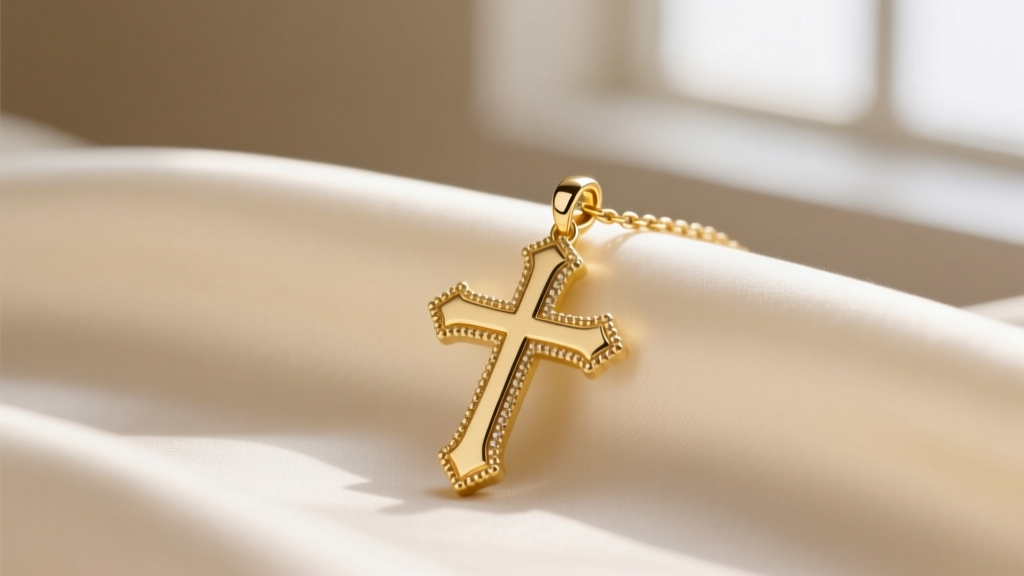
Gold is the premier choice for fine jewelry, but the karat weight drastically alters how the metal behaves on your neck. The difference between 14K and 18K gold is not just color and price; it is a matter of structural integrity.
- 14K Gold (58.3% Pure Gold): Because it contains a higher percentage of alloy metals (like copper, zinc, and silver), 14K gold is significantly harder. It boasts a Vickers hardness of around 140 HV, making it highly resistant to scratching and ideal for intricate cross designs with delicate prongs holding small diamonds.
- 18K Gold (75% Pure Gold): This alloy offers a richer, deeper yellow hue and is less likely to cause allergic reactions since it contains fewer base metals. However, it is softer (around 125 HV). An 18K gold bail will wear down faster if paired with a harsh chain.
A note on White Gold: If you prefer a silver-colored pretty cross necklace but want the prestige of gold, white gold is an option. Be aware that white gold is naturally a pale, slightly yellowish-grey. It requires rhodium plating to achieve a bright white look, meaning it shares the same long-term maintenance drawbacks as rhodium-plated sterling silver.
Platinum and Titanium: The Heavy-Duty Alternatives
For those seeking extreme durability or hypoallergenic properties, platinum and titanium offer distinct advantages, though they come with unique manufacturing caveats.
Platinum (950) is incredibly dense and heavy, giving a cross pendant a luxurious, substantial feel. Unlike other metals that lose mass when scratched, platinum simply displaces the metal, developing a soft, matte "patina" over time. This patina can be polished out, but no actual metal is lost. Furthermore, platinum is naturally white and will never require rhodium plating. It is the ultimate heirloom metal, though its high density makes it the most expensive option.
Titanium (Grade 5) is a modern alternative. Grade 5 (Ti-6Al-4V) is an aerospace-grade alloy that is incredibly lightweight and entirely hypoallergenic. It will never tarnish, rust, or react with skin acids. However, titanium has a critical failure mode: it cannot be soldered with standard jewelry torches. If the bail of a titanium cross pendant snaps or wears through, a traditional jeweler cannot easily weld it back together; it usually requires laser welding or complete replacement of the pendant head.
Chain Pairing and Bail Friction Mechanics
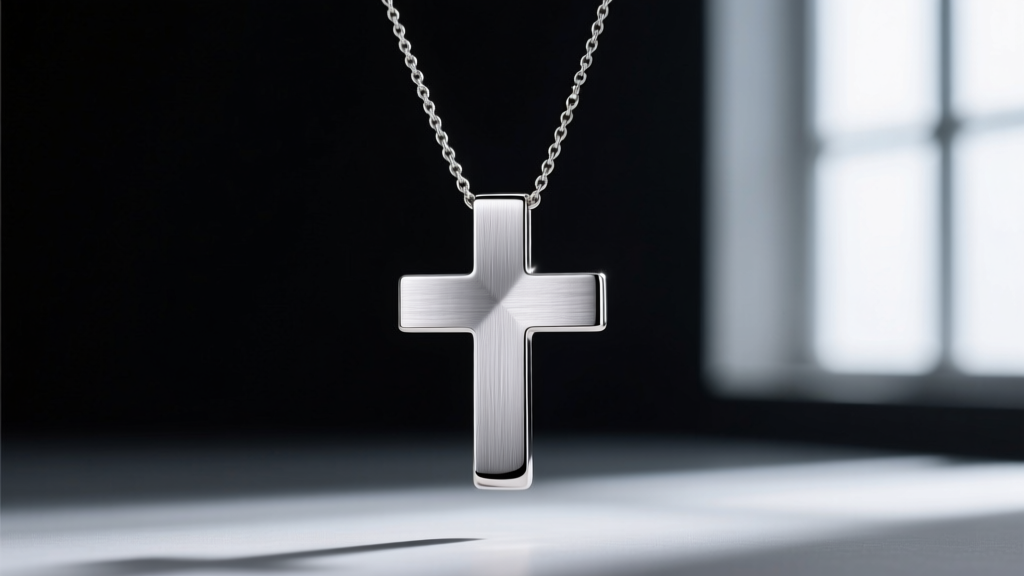
One of the most overlooked aspects of buying a pretty cross necklace is the interaction between the chain and the pendant bail. This is a zone of intense friction. A common mistake is pairing a soft pendant with a hard chain, which leads to catastrophic wear.
The Hardness Rule: Never pair an 18K gold or sterling silver bail with a stainless steel, tungsten, or titanium chain. The harder chain will act like a microscopic saw, cutting through the softer bail in a matter of months.
To ensure longevity, the chain should be made of the exact same metal and karat weight as the pendant, or a slightly softer material. If you have an 18K gold cross, pair it with an 18K or 14K gold chain. If you must use a steel chain, ensure the pendant bail is reinforced with a steel or titanium insert sleeve, a feature often found in high-end men's jewelry.
Gemstone Settings in Cross Pendants
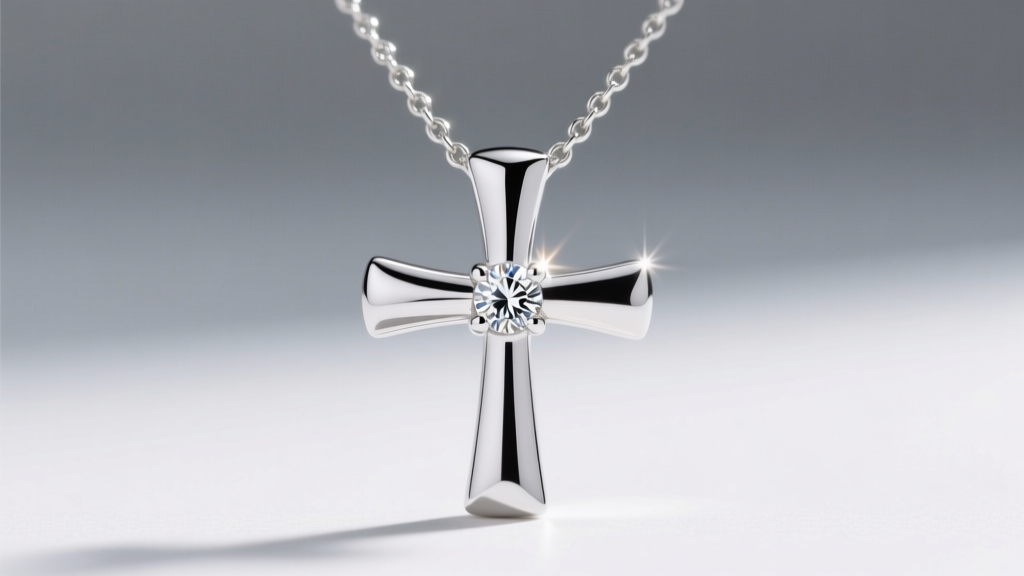
Many cross necklaces feature a center gemstone, such as a birthstone or a small diamond. The material of the cross dictates the type of setting the jeweler can use. According to manufacturing guidelines from Rio Grande, prong settings require metal that can be bent and burnished tightly over the stone's girdle.
- Bezel Settings: Best for sterling silver and titanium. A rim of metal surrounds the stone, offering maximum protection against impact and preventing the stone from catching on knitwear.
- Prong Settings: Best for 14K gold and platinum. These metals have the necessary "memory" and tensile strength to hold prongs securely in place. Prongs on pure silver or 22K gold are highly likely to bend open upon impact, resulting in lost stones.
Maintenance and Real-World Troubleshooting
Proper care extends the life of your necklace, but improper cleaning can destroy it. If your pretty cross necklace features porous gemstones like pearls, opals, or turquoise, never use an ultrasonic cleaner. The high-frequency vibrations can shatter these stones or detach the adhesive used in some modern settings.
For plain metal crosses or those set exclusively with diamonds, sapphires, or rubies, an ultrasonic cleaner combined with a mild ammonia-free jewelry solution is highly effective at removing the sebum and dead skin cells that accumulate in the crevices of the cross design. For daily maintenance, simply wipe the pendant with a clean, lint-free microfiber cloth after wearing it to remove skin oils before they have a chance to degrade the metal's polish. By understanding these material properties, you can select a cross necklace that remains beautiful, structurally sound, and meaningful for a lifetime.


