The Pretty Woman Necklace: A Material & Gemstone Guide
Discover the exact materials of the iconic Pretty Woman necklace and compare modern ruby and diamond alternatives for your own statement piece.

The Legacy of the Original Fred Joaillier Masterpiece
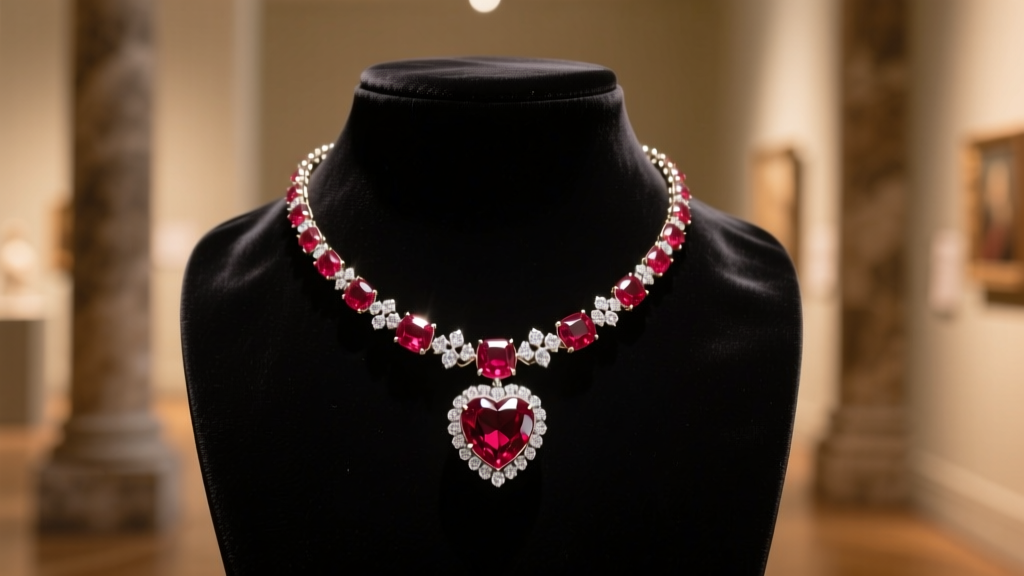
When Julia Roberts attended the opera in the 1990 cinematic classic Pretty Woman, the ruby and diamond heart necklace she wore became an instant cultural touchstone. Designed by the prestigious Parisian jewelry house Fred Joaillier, the original piece was a masterclass in high jewelry engineering and material selection. Valued at approximately $1.35 million at the time of filming, the necklace featured a staggering 23.5 carats of diamonds and custom-cut rubies, all meticulously set in 18k white gold.
For jewelry enthusiasts and collectors looking to acquire a replica, commission a custom homage, or simply understand the mechanics of such a dramatic statement piece, analyzing the material properties is essential. A necklace of this scale and visual weight requires precise metallurgical choices and gemological grading to ensure both brilliance and structural longevity. As of 2026, advancements in lab-grown corundum and alternative precious metal alloys have made the 'Pretty Woman' aesthetic more accessible, but choosing the right materials requires a deep understanding of their physical properties.
Gemstone Comparison: Natural vs. Lab-Grown vs. Simulated Rubies
The defining feature of the Pretty Woman necklace is its vivid red center stones. Natural rubies are a variety of the mineral corundum (aluminum oxide, Al2O3), with their signature red hue derived from trace amounts of chromium. According to the Gemological Institute of America (GIA), ruby is a 9 on the Mohs hardness scale, making it exceptionally durable for everyday wear, second only to diamond.
When sourcing stones for a multi-carat heart motif, the lapidary must cut various shapes—typically pear, marquise, and round brilliants—to interlock seamlessly. Here is how the material options compare in the modern market:
Natural Rubies
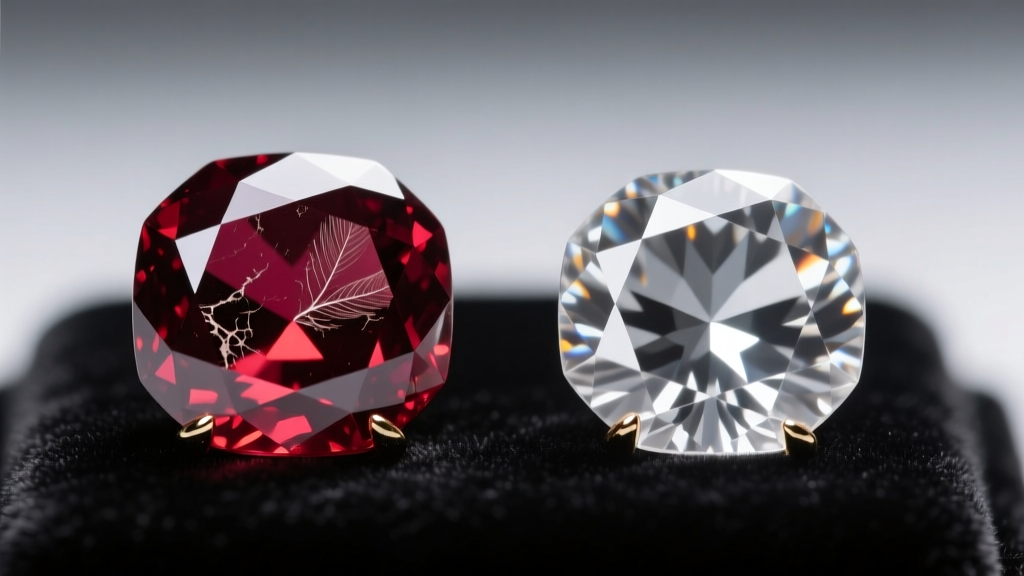
Natural Burmese rubies exhibiting the highly coveted 'pigeon blood' hue (a term the GIA now classifies under the broader 'vivid red to deep red' spectrum) command premium prices, often exceeding $10,000 to $50,000 per carat for clean stones. However, natural rubies frequently contain rutile silk inclusions and surface-reaching fractures that may be treated with lead glass or flux healing. These fracture-filled stones are highly vulnerable to ultrasonic cleaners and mild acids like lemon juice.
Lab-Grown Corundum
For a visually identical but more ethical and budget-friendly alternative, lab-grown rubies are the superior choice. Created via the Czochralski (pulling) method or flame fusion (Verneuil process), these stones share the exact chemical and crystallographic structure of natural corundum. Czochralski-grown rubies offer exceptional clarity and deep color saturation without the microscopic curved striae found in cheaper flame-fusion stones. Pricing typically ranges from $150 to $500 per carat, allowing for the creation of a massive 20-carat heart pendant without the six-figure price tag.
Simulants: Cubic Zirconia and Glass
Red cubic zirconia (CZ) and red glass are common in fast-fashion replicas. While CZ boasts a high refractive index (2.15) giving it intense sparkle, it lacks the dichroism (showing different colors from different angles) inherent to natural corundum. Furthermore, CZ (Mohs 8-8.5) is prone to micro-abrasions along the facet junctions over time, leading to a cloudy appearance. Glass (Mohs 5-6) is entirely unsuitable for a high-wear statement necklace, as it scratches easily and lacks internal brilliance.
Metal Settings: Platinum, 18k White Gold, and Sterling Silver
The original Fred Joaillier piece utilized 18k white gold, a standard choice for high jewelry in the late 20th century. However, the structural demands of a heavy, multi-stone pendant dictate specific metallurgical considerations. The GIA's material guidelines and modern bench jewelers emphasize the importance of matching the metal's Vickers hardness and ductility to the weight of the gemstones.
18k White Gold (75% Au, 25% Pd/Ni)
White gold is an alloy of yellow gold mixed with white metals like palladium or nickel to bleach the color. However, 18k white gold still retains a faint yellowish-gray undertone. To achieve the bright, reflective white finish seen in the movie, the piece must be electroplated with rhodium (typically 0.75 to 1.5 microns thick). While beautiful, rhodium plating wears off over time, especially on the back of the pendant where it rubs against the skin and clothing, requiring periodic re-plating by a jeweler.
Platinum 950 (95% Pt, 5% Ru)
For a heavy statement necklace, Platinum 950 is the ultimate engineering choice. Unlike gold, which loses microscopic particles when scratched, platinum is highly ductile; scratches merely displace the metal. More importantly, platinum prongs do not thin out and snap under the stress of heavy stones. A 25-carat ruby and diamond heart pendant can easily weigh 20 to 35 grams. Platinum's high density and tensile strength ensure that the intricate micro-pavé diamond halos and structural prongs remain secure for decades without the need for rhodium plating.
Sterling Silver (92.5% Ag, 7.5% Cu)
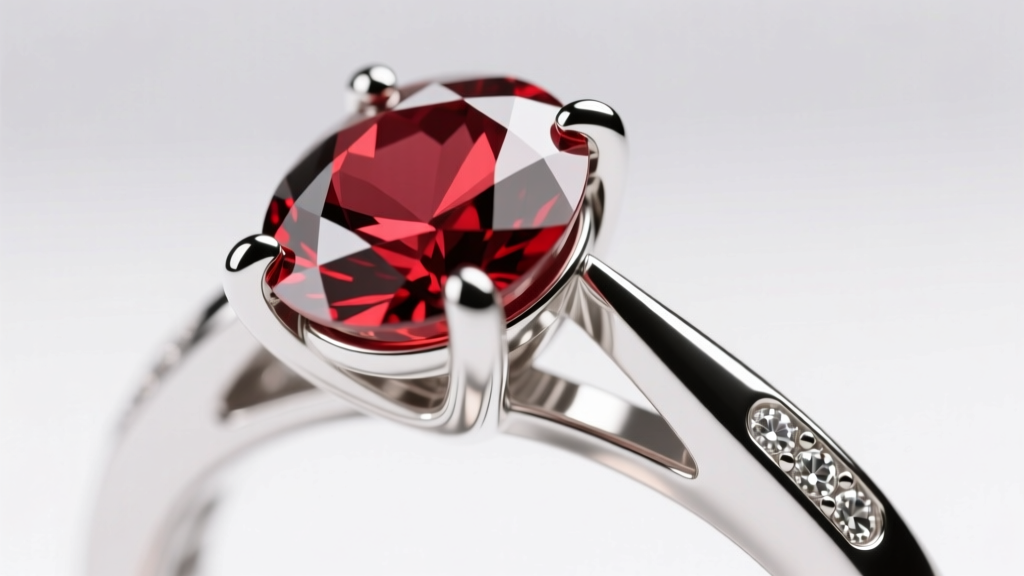
Sterling silver is an excellent choice for budget-conscious buyers, but it presents structural risks for heavy pendants. Silver is relatively soft and highly susceptible to tarnishing due to the copper alloy reacting with sulfur in the air and skin acids. If commissioning a silver replica, insist on a thicker gauge and reinforced prongs, and consider an e-coating or heavy rhodium flash to prevent oxidation.
Material Comparison Chart
To help you make an informed decision when purchasing or commissioning a Pretty Woman-inspired necklace, consult the data table below detailing the physical properties of common materials.
| Material | Composition | Mohs Hardness | Vickers Hardness (HV) | Maintenance Level |
|---|---|---|---|---|
| Natural Ruby | Al2O3 + Cr | 9.0 | 1,800 - 2,000 | Low (avoid ultrasonics if filled) |
| Lab-Grown Ruby | Al2O3 + Cr | 9.0 | 1,800 - 2,000 | Very Low |
| Red Cubic Zirconia | ZrO2 | 8.0 - 8.5 | 1,300 - 1,350 | Medium (prone to clouding) |
| Platinum 950 | 95% Pt, 5% Ru | N/A (Metal) | 135 - 165 | Low (develops patina) |
| 18k White Gold | 75% Au, 25% Pd | N/A (Metal) | 125 - 170 | High (requires rhodium plating) |
| Sterling Silver | 92.5% Ag, 7.5% Cu | N/A (Metal) | 60 - 90 | High (requires polishing) |
Structural Integrity: Bails, Chains, and Clasps
A common failure point in statement necklaces is the connection between the heavy pendant and the chain. The 'Pretty Woman' heart is a substantial piece of jewelry, and treating it like a delicate charm will result in catastrophic loss.
The Pendant Bail
The bail is the loop that connects the pendant to the chain. For a heavy, multi-stone heart, a standard soldered loop bail is insufficient. Jewelers recommend a hidden 'invisible' bail that is cast directly into the back of the pendant's metal framework, or a heavy-duty double-loop bale soldered with laser welding to distribute the weight evenly across the top of the heart.
Chain Gauge and Tensile Strength
A 30-gram pendant will easily snap a standard 1.0mm or 1.5mm chain. For optimal safety and visual balance, the chain should be a solid wheat, box, or Cuban link style with a minimum width of 2.5mm to 3.5mm. These chains offer superior tensile strength, often supporting over 15 to 20 pounds of dead weight before stretching or breaking.
Clasp Mechanics
Never rely on a standard spring-ring clasp for a heavy necklace. The piece must feature a robust lobster clasp or, ideally, a fold-over clasp equipped with a figure-8 safety catch. The Jewelers of America strongly advises utilizing secondary safety mechanisms on high-value, heavy pendants to prevent the necklace from sliding off if the primary clasp snags on clothing.
Long-Term Care and Maintenance Protocols
Maintaining the brilliance of a ruby and diamond statement piece requires specific cleaning protocols based on the materials chosen. If your piece features natural rubies, you must first verify with a gemologist whether the stones have undergone fracture filling. If they have, ultrasonic cleaners and steamers are strictly prohibited, as the high-frequency vibrations and heat can melt the filler and shatter the stone.
For lab-grown rubies set in platinum or white gold, a weekly soak in a solution of warm distilled water and a few drops of ammonia-free dish soap, followed by gentle agitation with a soft-bristled baby toothbrush, will remove skin oils and cosmetic residue that dull the diamonds' refractive index. Always dry the piece with a lint-free microfiber cloth to prevent water spots on the metal. By understanding the exact material properties and structural requirements of the Pretty Woman necklace, you can ensure your homage piece remains as breathtaking and secure as the cinematic original.


