How to Perfectly Layer and Style a Lavender Necklace
Learn how to layer, style, and care for a lavender necklace. Discover gemstone hardness, neckline pairings, and expert cleaning tips.

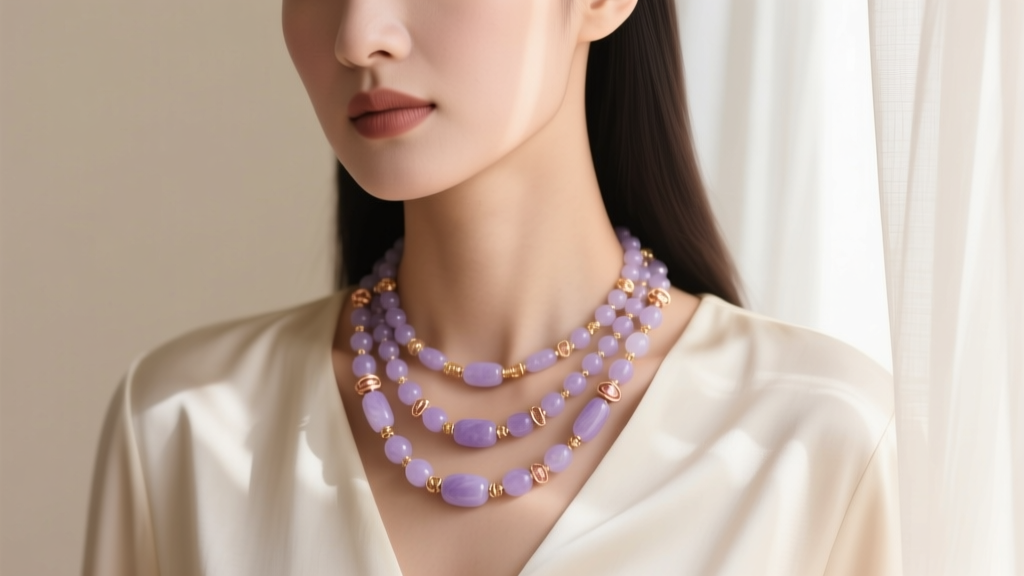
Understanding Your Lavender Gemstone
Before you begin styling, it is crucial to identify the exact material of your lavender necklace. The term 'lavender' in jewelry typically refers to three distinct gemstones, each with unique structural properties that dictate how they should be worn and cared for. According to the Gemological Institute of America (GIA), understanding these mineral differences is the first step in preserving your jewelry's integrity.
Material Hardness & Durability Chart
| Gemstone | Mohs Hardness | Toughness | Ultrasonic Safe? | Typical Price Range |
|---|---|---|---|---|
| Lavender Jadeite (Type A) | 6.5 - 7.0 | Exceptional | Yes (if unfractured) | $500 - $5,000+ |
| Lavender Quartz | 7.0 | Good | Yes | $40 - $150 |
| Sugilite | 5.5 - 6.5 | Poor | No | $80 - $400 |
If you own a jadeite piece, ensure it is certified as Type A (untreated). Type B and C jadeites are polymer-impregnated or dyed, making them highly susceptible to heat and chemical damage during daily wear. Sugilite, while stunning, possesses distinct cleavage planes and a lower hardness, meaning it should be your top layer to avoid friction against harder gems.
Step 1: Matching Lengths to Necklines
A lavender necklace can easily clash with your wardrobe if the drop length competes with your garment's hemline. The goal is to create a parallel or complementary geometric line. Here is the exact framework for pairing chain lengths with common necklines.
The Neckline Matrix
- V-Neck (Plunge): Pair with an 18-inch princess length or a 20-inch matinee length. The pendant should sit exactly one inch above the apex of the V-neck to frame the face without looking tangled in the fabric.
- Crew Neck: Opt for a 14 to 16-inch choker or collar. A lavender jadeite beaded collar sitting flush against the collarbone provides a striking contrast to the high, rounded hem of a crew neck sweater.
- Scoop Neck: A 22 to 24-inch opera length works beautifully here. The deep curve of the scoop neck leaves ample bare skin, allowing a longer lavender quartz pendant to act as a vertical focal point.
- Off-the-Shoulder: Use a multi-strand 15-inch bib necklace. The horizontal spread of the lavender beads complements the horizontal line of the exposed shoulders.
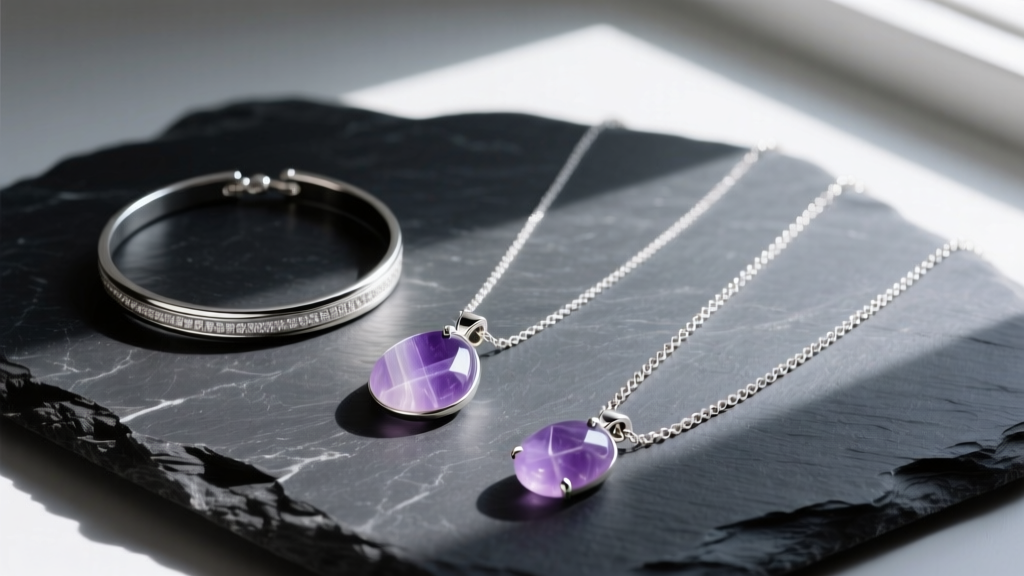
Step 2: The 3-Piece Layering Formula
Layering a lavender necklace requires balancing color temperature and metal alloys. Lavender is a complex secondary color with both warm (red) and cool (blue) undertones. To make the purple hues pop, you must strategically select your chain metals.
Metal Pairing Guidelines
Rose gold (typically 14k or 18k) contains a higher copper content, which pulls out the warm, pinkish undertones in lavender jade and sugilite. This creates a romantic, cohesive look. Conversely, sterling silver or 18k white gold provides a high-contrast, icy backdrop that emphasizes the cool, blueish undertones of lavender quartz. Avoid yellow gold, as it can sometimes muddy the delicate pastel tones of the gemstone.
The Layering Sequence
- The Anchor (14-15 inches): Start with a delicate 1.0mm to 1.2mm cable chain featuring a small, bezel-set lavender sapphire or quartz stud. This sits high on the clavicle and catches the light.
- The Core (17-18 inches): This is your primary lavender necklace. Use a slightly heavier chain (1.5mm to 2.0mm rolo or box chain) with a substantial centerpiece, such as a carved lavender jadeite disc or a raw sugilite geode slice.
- The Elongator (22-24 inches): Finish with a long, minimalist chain (1.0mm) featuring a simple geometric bar or a single, small faceted drop. This draws the eye downward and elongates the torso.
Pro Tip: Always use a necklace spacer clasp if you are layering more than two chains of similar lengths. This prevents the lavender pendants from tangling and scratching one another, which is especially critical if you are mixing harder quartz with softer sugilite.
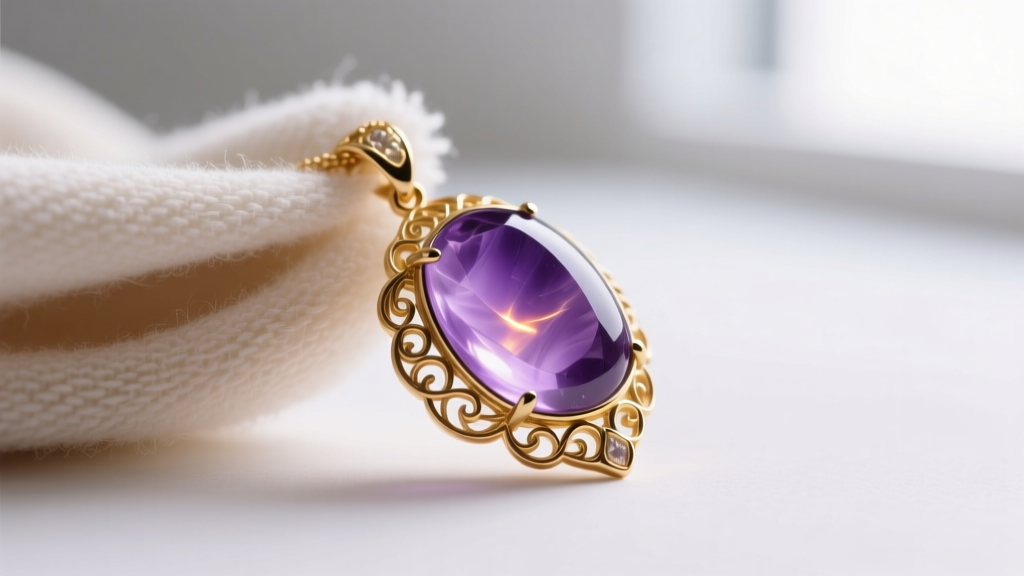
Step 3: Cleaning and Maintenance Protocols
Because lavender necklaces often feature porous or treated materials, standard jewelry cleaning methods can cause catastrophic failure. Never use steam cleaners on sugilite or dyed jade, as the sudden thermal shock will cause micro-fractures and strip the color.
The Safe Cleaning Method
- Mix a solution of lukewarm distilled water and two drops of pH-neutral, phosphate-free dish soap.
- Submerge only the metal chain for 3 to 5 minutes to loosen body oils and lotions.
- For the gemstone pendant, do not soak. Instead, dip a soft, lint-free microfiber cloth into the solution and gently wipe the surface of the lavender stone.
- Use a soft-bristled baby toothbrush to gently clean the prongs or bezel settings where dirt accumulates.
- Rinse the metal chain under a gentle stream of lukewarm water, ensuring the drain is plugged.
- Pat the entire piece completely dry with a clean towel before storing.
What to Avoid
Never expose your lavender necklace to chlorine, bleach, or hairspray. Chlorine can permanently pit and weaken the copper alloys in rose gold settings, while the alcohol in hairspray can degrade the polymer resins used in Type B jadeite treatments. Furthermore, always put your lavender necklace on after applying cosmetics, perfumes, and lotions to prevent chemical buildup on the porous surface of stones like sugilite.
Long-Term Storage Best Practices
When not being worn, your lavender necklace must be stored in a controlled environment. Keep it in an individual anti-tarnish flannel pouch to prevent the metal chain from scratching the gemstone. If your piece features sterling silver, include a silica gel packet and a 3M anti-tarnish strip in the storage box to absorb ambient moisture and sulfur compounds. By following these precise styling and care protocols, your lavender necklace will maintain its ethereal color and structural integrity for decades.


