The Elegant Gold Necklace Guide: Karats, Alloys & Durability
Discover how to choose an elegant gold necklace. Compare 14k vs 18k gold, alloy properties, chain durability, and hallmarks for lasting quality.

The Metallurgy of Elegance: Why Purity Dictates Performance
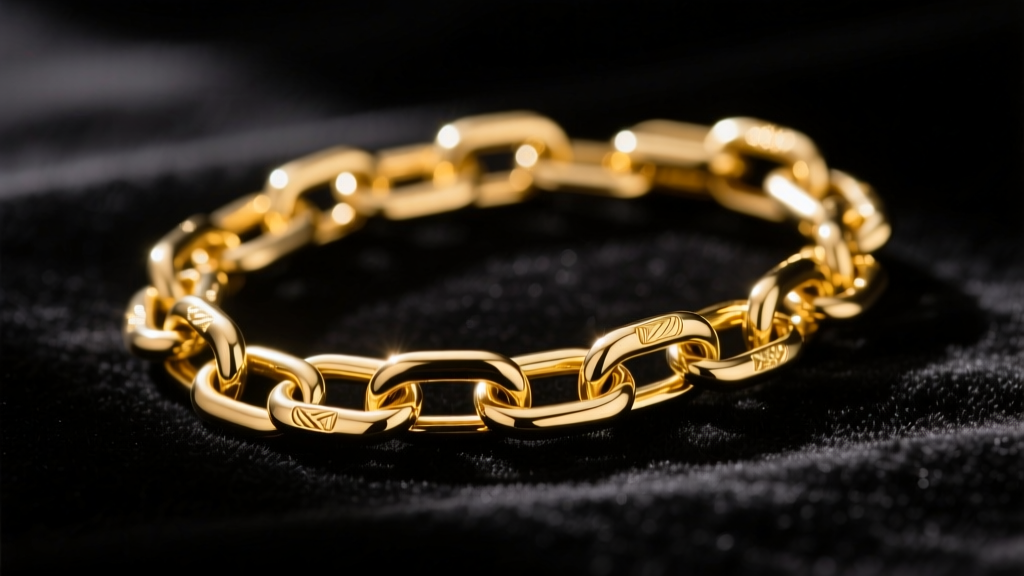
When investing in an elegant gold necklace, the visual design is only half the equation. The true longevity, drape, and color temperature of the piece are dictated by its metallurgical composition. In 2026, with gold spot prices hovering near historic highs, understanding the difference between a delicate 18-karat pendant chain and a robust 14-karat everyday layering piece is crucial for both your budget and your jewelry box. Pure gold (24k) is a remarkably dense, malleable metal with a Vickers Hardness (HV) of roughly 25. To put that in perspective, it is softer than a human fingernail. Therefore, an elegant gold necklace meant for regular wear must be alloyed with other metals to increase its tensile strength and prevent the links from stretching or snapping under the weight of a pendant.
Karat Breakdown: Finding the Sweet Spot
The karat system measures the proportion of pure gold in an alloy, with 24 parts being the maximum. Choosing the right karat depends entirely on the necklace's intended function. A heavy cast pendant might benefit from the rich, buttery hue of 18k gold, while a fine, high-tension cable chain requires the structural integrity of 14k.
| Karat | Purity | Vickers Hardness (HV) | Color Profile | Best Application |
|---|---|---|---|---|
| 24k | 99.9% | ~25 HV | Deep Orange-Yellow | Investment beads, soft silk-threaded necklaces |
| 18k | 75.0% | ~135 HV | Rich, Warm Yellow | Elegant pendants, luxury chains, special occasion wear |
| 14k | 58.3% | ~190 HV | Pale, Neutral Yellow | Everyday layering chains, durable clasps, active wear |
| 10k | 41.7% | ~230 HV | Dull, Greenish-Yellow | Budget-friendly fashion jewelry, high-impact rings |
For most buyers seeking an elegant gold necklace that balances luxurious color with wearable durability, 18k is the premium choice for pendants and thicker chains, while 14k is the undisputed champion for fine, lightweight chains that endure daily friction. According to the Gemological Institute of America (GIA), the specific alloy metals mixed with these karats will drastically alter not just the hardness, but the skin-reactivity and oxidation potential of the necklace.
Alloy Chemistry: Yellow, Rose, and White Gold
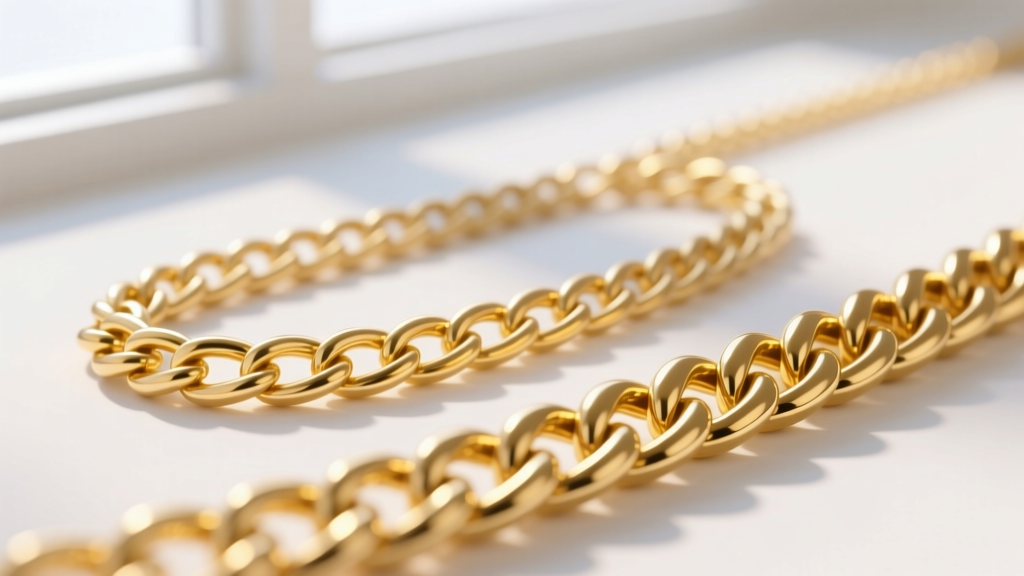
The term "gold" encompasses a spectrum of colors achieved through precise metallurgical recipes. The remaining 25% (in 18k) or 41.7% (in 14k) of the metal matrix is where jewelers manipulate the physical properties.
Yellow Gold
Traditional yellow gold is alloyed with a roughly 50/50 split of copper and silver. The copper adds tensile strength, while the silver tempers the reddish tint of the copper, preserving the warm yellow hue. Higher silver content results in a slightly greener, more subdued yellow, common in vintage European pieces.
Rose Gold
Rose gold achieves its romantic pinkish hue through a heavy copper concentration. An 18k rose gold alloy typically contains 75% gold, 22.25% copper, and just 2.75% silver. While undeniably elegant, the high copper content makes rose gold necklaces more susceptible to surface oxidation (patina) over time, especially when exposed to lotions, perfumes, and environmental humidity.
White Gold and the Rhodium Reality
White gold is created by alloying pure gold with bleaching metals like nickel, palladium, or manganese. However, the resulting metal is never truly white; it retains a faint yellowish-gray tint. To achieve the brilliant, mirror-like finish associated with elegant white gold necklaces, the piece is electroplated with rhodium, a platinum-group metal. The critical failure mode here is that rhodium plating on necklaces—especially at the nape of the neck where friction and sweat are highest—will wear away within 12 to 24 months, requiring professional replating. For a maintenance-free alternative, seek out palladium-white gold alloys, which are naturally whiter and hypoallergenic, bypassing the need for nickel and heavy rhodium plating.
Solid, Filled, Vermeil, or Plated?
The jewelry market is saturated with misleading terminology. If you are purchasing an elegant gold necklace meant to last decades, you must understand the manufacturing methods and legal definitions governing gold surface layers.
- Solid Gold: The entire piece is forged from a single karat alloy. It can be polished, soldered, and repaired indefinitely.
- Gold Vermeil: By Federal Trade Commission (FTC) guidelines, vermeil must consist of a sterling silver (.925) base coated with gold that is at least 10k purity and a minimum of 2.5 microns thick. It is an excellent, hypoallergenic alternative to solid gold for statement pendants.
- Gold Filled: Created by mechanically bonding a thick layer of gold (legally required to be at least 1/20th of the total weight) to a brass core. It is highly durable but cannot be easily cast into complex, elegant 3D pendant shapes.
- Gold Plated: A "flash" plating of less than 0.5 microns over a base metal like brass or copper. It will inevitably tarnish, flake, and cause skin discoloration within months.
Expert Insight: When evaluating vermeil necklaces, look for brands that specify "heavy vermeil" or "3-micron plating." The standard 2.5-micron minimum is often too thin to withstand the friction of a daily-wear chain rubbing against a collarbone or pendant bail.
Chain Construction and Hidden Failure Modes
An elegant gold necklace is only as strong as its weakest link—literally. The construction method of the chain dictates its lifespan and repairability.
Hollow vs. Solid Wire
Many budget-friendly, thick-looking chains (like large Cuban links or puffed mariners) are manufactured using electroforming, a process that creates hollow gold links. While they offer maximum visual impact for minimal gold weight, hollow chains are notoriously fragile. A single accidental snag can crush a hollow link, and because there is no solid wire to solder, they are virtually impossible for a bench jeweler to repair. Always opt for solid wire chains for everyday elegance.
Clasp Mechanics
The lobster clasp is the industry standard, but its internal spring mechanism is a frequent point of failure. In lower-karat or poorly manufactured necklaces, the tiny internal steel spring can rust or snap. When investing in a high-end 18k elegant gold necklace, ensure the clasp is solid cast and features a high-tension spring. Alternatively, a spring ring clasp is entirely round and less prone to snagging on hair, though it can be more difficult to operate with one hand.
Authentication: Reading the Hallmarks
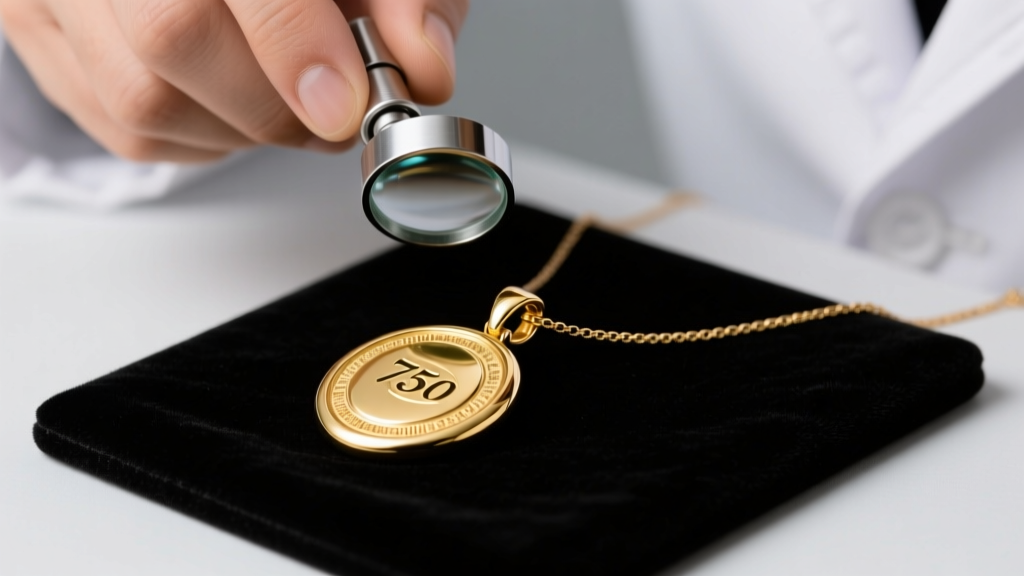
A genuine elegant gold necklace will always bear hallmarks, usually stamped on the flat surface of the clasp or a small metal tag near the closure. In the United States, you will typically see 14k or 18k. In Europe and many international markets, you will see millesimal fineness marks: 750 (18k), 585 (14k), or 417 (10k). Additionally, look for a maker's mark—a unique symbol or initials registered by the manufacturing jeweler. The presence of both a purity mark and a maker's mark is the strongest indicator of a responsibly sourced, high-quality piece of fine jewelry.
Final Verdict: Choosing Your Piece
Selecting the perfect elegant gold necklace requires aligning your aesthetic preferences with metallurgical realities. If you desire a rich, warm heirloom piece to wear on special occasions, an 18k solid yellow gold chain with a cast pendant is unmatched in luxury. If you require a resilient, low-maintenance layering chain to wear in the shower, at the gym, and at the office, a 14k solid gold cable or box chain will provide decades of reliable service. By prioritizing solid construction, understanding alloy behaviors, and verifying hallmarks, you ensure your investment remains as elegant on day ten thousand as it was on day one.


