Is a Barbed Wire Chain Necklace Worth It? 2026 Value Guide
Assess the true value of a barbed wire chain necklace in 2026. We break down materials, pricing tiers, and durability to help you buy smart.

The Anatomy of a Barbed Wire Chain: What Are You Paying For?
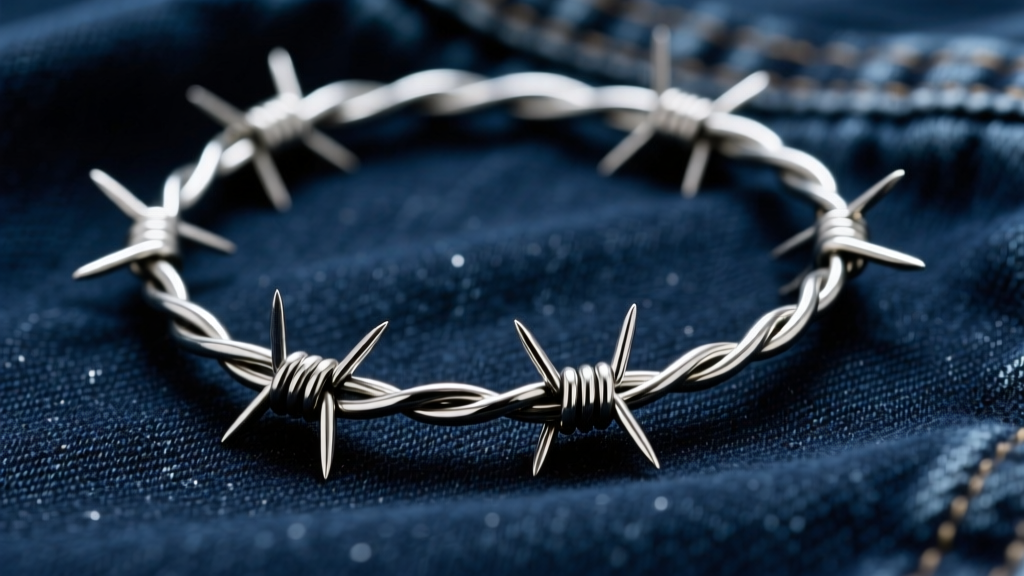
The barbed wire chain necklace operates at the intersection of Y2K revival, goth subculture, and industrial streetwear. However, beneath the edgy aesthetic lies a complex structural challenge for jewelers. Unlike standard cable or curb chains, a barbed wire chain features protruding elements that mimic agricultural fencing. In the 2026 market, these chains are manufactured using two primary methods: cast-link construction and soldered-wrap construction.
Cast-link chains are poured into molds as single, continuous units. While this method is cheaper and allows for intricate, uniform barbs, it creates microscopic porosity in the metal, reducing overall tensile strength. Soldered-wrap chains, on the other hand, feature a traditional base chain (usually a curb or rope style) with individual wire wraps or cast barbs soldered onto every third or fourth link. This method is significantly more labor-intensive, resulting in a higher price point, but it offers vastly superior drape, flexibility, and structural integrity. When assessing the budget and value of a barbed wire chain necklace, understanding which manufacturing method was used is the first step in determining if the price tag is justified.
Material Grades and 2026 Pricing Tiers
The base metal dictates not only the upfront cost but the longevity, weight, and skin-safety of the piece. Below is a breakdown of the materials currently dominating the market, alongside their realistic 2026 pricing tiers for a standard 20-inch, 4mm chain.
| Material Grade | 2026 Price Range | Tarnish & Corrosion Resistance | Weight and Drape Quality |
|---|---|---|---|
| Zinc Alloy / Brass | $15 - $35 | Poor (turns skin green via copper oxidation) | Lightweight, stiff, prone to snapping |
| 316L Stainless Steel | $45 - $120 | Excellent (molybdenum prevents sweat corrosion) | Medium-heavy, durable, semi-flexible |
| Oxidized 925 Sterling Silver | $150 - $350 | High (intentional patina adds aesthetic value) | Heavy, premium drape, softens over time |
| 14k White / Yellow Gold | $800 - $2,500+ | Flawless (requires minimal maintenance) | Very heavy, luxury articulation |
For daily wear, 316L stainless steel offers the highest return on investment. It provides the necessary weight to lay flat against the chest without the vulnerability to lactic acid and moisture that plagues cheaper zinc alloys.
Durability and Failure Modes: Where Cheap Chains Break
The most critical factor in the value assessment of a barbed wire chain necklace is its gauge thickness and clasp engineering. The protruding barbs act as leverage points; if the chain catches on an object, the force is multiplied against the base links. A base chain gauge of 2.5mm or thinner is a structural liability. For a barbed wire chain to survive daily wear, the base wire must be at least 3.5mm to 4mm thick (approximately 10 to 8 gauge wire).

The Clasp Bottleneck
A heavy 5mm stainless steel barbed wire chain can easily weigh between 90 and 130 grams. Standard 12mm spring-ring clasps or lightweight lobster clasps are not engineered to support this static load, let alone the dynamic shock of the chain being tugged. When evaluating a piece, inspect the clasp hardware. High-value barbed wire chains utilize reinforced box clasps with a secondary figure-8 safety latch, or heavy-duty 18mm+ lobster clasps with thick, soldered jump rings. If a $100 steel chain features a flimsy, hollow-cast spring ring, the manufacturer has severely compromised the chain's functional value to cut production costs.
- Link Distortion: Cheap cast links will warp and pull apart at the soldering seams under 15-20 lbs of tension.
- Barb Blunting: On lower-quality brass chains, the sharp tips of the barbs will file down or snap off after months of friction against clothing.
- Jump Ring Failure: The connection point between the chain and the clasp is the most common failure point. Always ensure the jump rings are soldered shut, not merely pressed together.
The Snag Factor: Practical Wearability and Fabric Pairing
From a practical standpoint, the 'snag factor' heavily influences the cost-per-wear (CPW) of a barbed wire chain necklace. By design, these chains are engineered to catch. Wearing a barbed wire chain over loose knits, silk, or thin synthetic activewear will result in ruined garments and a warped chain.
To maximize the value of your purchase, you must pair the necklace with compatible textiles. Heavyweight cotton t-shirts, denim jackets, leather outerwear, and bare skin are the ideal environments for this specific chain profile. If your wardrobe consists primarily of delicate fabrics or professional knitwear, the functional value of a barbed wire chain drops significantly, as it will spend most of its life in a jewelry box to prevent collateral damage to your clothing.
Verifying Authenticity: Stamps and FTC Guidelines
When moving into the mid-tier and fine jewelry pricing brackets, verifying the metal composition is non-negotiable. The secondary market and fast-fashion platforms are saturated with rhodium-plated brass masquerading as white gold or sterling silver. According to the Federal Trade Commission's Jewelry Guides, precious metal markings must be accurate and accompanied by a registered trademark or hallmark if stamped.
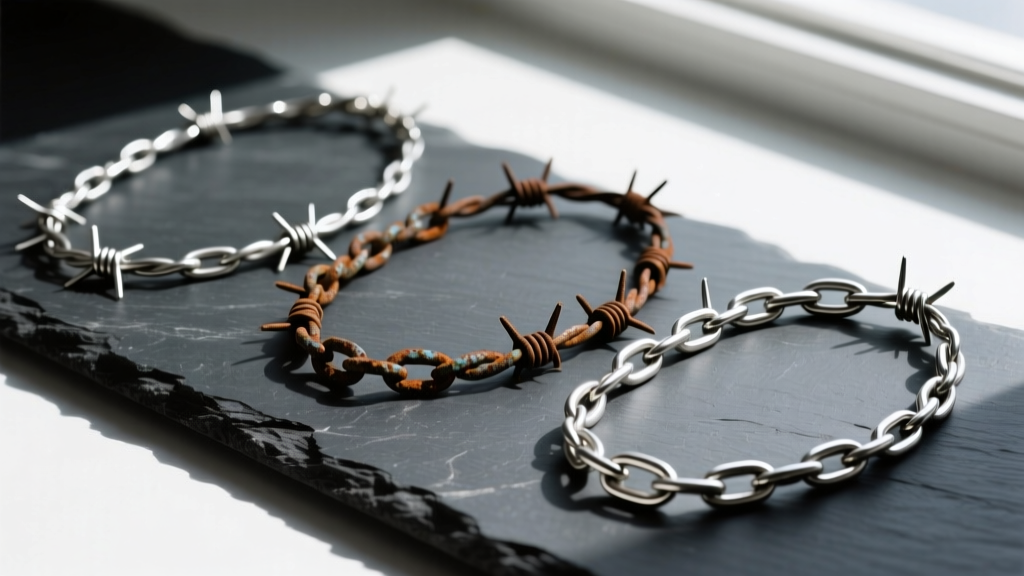
If you are purchasing a sterling silver barbed wire chain necklace, look for the '925' stamp on the clasp tag or the final jump ring. The Silver Institute notes that true sterling silver contains exactly 92.5% pure silver and 7.5% alloying metals (usually copper) for structural rigidity. In barbed wire designs, jewelers often apply an oxidized finish—using liver of sulfur to darken the crevices around the barbs while polishing the tips to a high shine. This not only enhances the aggressive, industrial aesthetic but also acts as a protective layer against rapid environmental tarnishing.
The Cost-Per-Wear (CPW) Framework for Edgy Jewelry
To objectively assess whether a specific barbed wire chain necklace is worth your budget, apply the Cost-Per-Wear framework. Divide the total purchase price by the estimated number of times you will wear it in a year.
A $25 zinc alloy chain from a mall kiosk might seem like a bargain, but if it turns your neck green and breaks at the clasp after 10 wears, your CPW is $2.50, and the chain ends up in a landfill. Conversely, a $220 solid 925 sterling silver barbed wire chain with a reinforced box clasp, worn twice a week for five years (520 wears), yields a CPW of just $0.42. Furthermore, precious metals retain intrinsic scrap value and can be repaired by a professional bench jeweler if a link distorts, whereas plated base metals are generally considered disposable and unrepairable once the plating wears through.
Final Verdict: Budgeting for Your Barbed Wire Chain
The barbed wire chain necklace is a bold, statement-making piece that demands a higher baseline of metallurgical quality than standard chain styles due to its inherent snag risks and structural leverage points. For buyers on a strict budget under $50, 316L surgical stainless steel is the only acceptable material; avoid zinc alloys entirely. For those willing to invest between $150 and $350, oxidized sterling silver offers the best combination of heirloom durability, repairability, and aesthetic depth. Ultimately, the true value of the chain lies not just in the raw metal weight, but in the precision of the soldering, the thickness of the base gauge, and the engineering of the clasp.


