How to Authenticate and Value an Antique Aquamarine Necklace
Learn how to authenticate, evaluate, and care for an antique aquamarine necklace with our step-by-step gemological and historical appraisal guide.

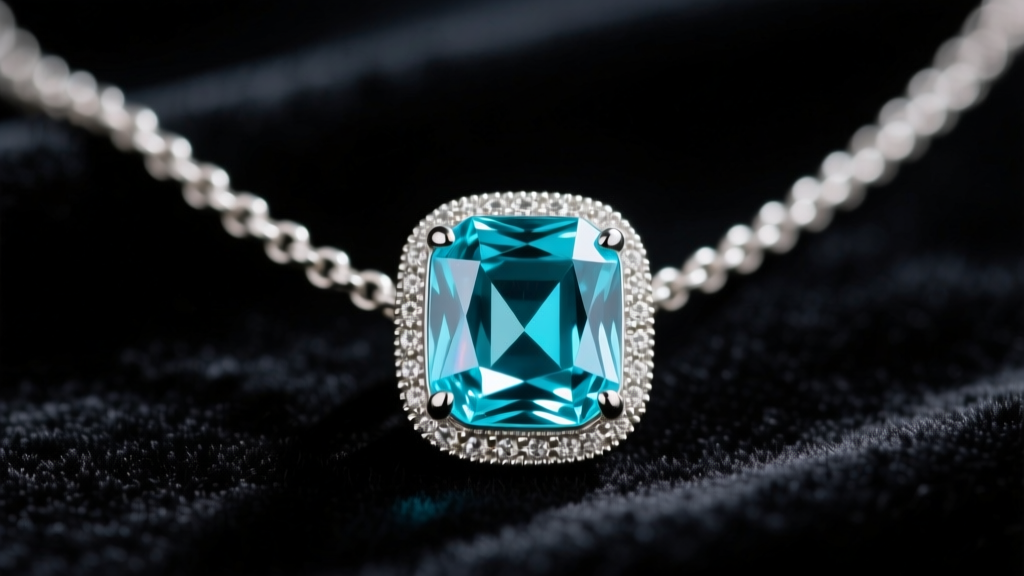
The market for vintage and estate jewelry has seen a massive resurgence, but few pieces capture the ethereal elegance of the early 20th century quite like an antique aquamarine necklace. Whether you are inheriting a family heirloom, browsing estate sales, or looking to invest in a piece of wearable history, distinguishing a genuine antique from a modern reproduction or a misidentified gemstone requires a systematic approach. Aquamarine, a stunning blue-to-green variety of the mineral beryl, was highly favored during the Edwardian and Art Deco eras. However, its popularity also makes it a prime target for synthetic substitutions and historical misrepresentations.
This step-by-step guide will walk you through the gemological, metallurgical, and structural evaluations necessary to properly authenticate and value an antique aquamarine necklace.
Understanding the Historical Eras of Aquamarine Jewelry
Before examining the stone itself, you must contextualize the necklace within its historical era. The design motifs and metal choices are your first clues to authenticity.
The Edwardian Era (1901–1915)
Edwardian jewelry is characterized by its light, lace-like aesthetics. Platinum became the metal of choice due to its strength, allowing jewelers to create intricate millegrain edges and delicate garland motifs. An Edwardian antique aquamarine necklace will typically feature a pale, step-cut (emerald cut) aquamarine surrounded by old European cut diamonds, all set in platinum or a platinum-topped gold mount.
The Art Deco Era (1920–1935)
Art Deco designs embraced bold geometry and high contrast. Aquamarines from this period were often cut into custom geometric shapes—such as hexagons, trapezoids, or baguettes—and paired with onyx, black enamel, or calibré-cut rubies and sapphires. White gold (often 14k or 18k) was heavily utilized alongside platinum to achieve the era's signature monochromatic metallic look.
Step 1: Gemological Authentication of the Aquamarine
The most common substitutes for antique aquamarine are heat-treated blue topaz and synthetic blue spinel. To verify the gemstone, you must look at its optical and physical properties.
Checking for Dichroism
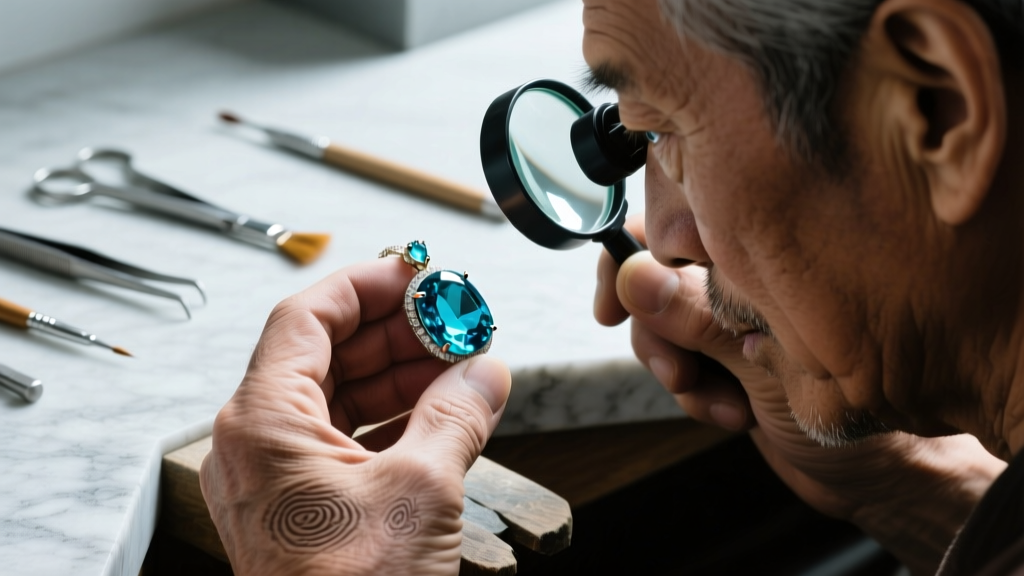
Aquamarine is a doubly refractive (anisotropic) gemstone, meaning it exhibits dichroism. If you view the stone through a dichroscope—or even by looking through the table and then the pavilion facets with a 10x jeweler's loupe—you should see two slightly different shades of blue or blue-green. Synthetic spinel, a common mid-century substitute, is singly refractive (isotropic) and will show no color change from any angle.
Evaluating Inclusions and the 'Rain' Effect
According to the Gemological Institute of America (GIA), natural aquamarine often contains liquid inclusions that resemble 'rain' or long, hollow tubes running parallel to the c-axis of the crystal. While high-quality Edwardian stones were selected for their eye-cleanliness, magnification will usually reveal these telltale growth structures. Synthetic spinel will instead show curved striae or gas bubbles, while blue topaz may exhibit cleavage planes and two-phase inclusions.
Specific Gravity and Refractive Index
If you have access to gemological tools, measure the Refractive Index (RI) and Specific Gravity (SG).
- Aquamarine (Beryl): RI 1.577–1.583 | SG 2.72
- Blue Topaz: RI 1.609–1.627 | SG 3.53 (Noticeably heavier in the hand)
- Synthetic Spinel: RI 1.727 | SG 3.60
Step 2: Metallurgical and Hallmark Analysis
An authentic antique aquamarine necklace will show signs of age consistent with its purported era. Examine the clasp, the jump rings, and the back of the pendant mounting.
Wear Patterns: Genuine antiques will have microscopic scratches on the metal that follow random, multi-directional patterns. Modern reproductions that have been artificially 'antiqued' or tumbled will show uniform, parallel scratching or an unnatural darkening in the crevices (oxidation) that looks painted on.
Hallmarks: British pieces from the Victorian and Edwardian eras will feature strict assay marks, such as the crown for gold, the anchor for Birmingham, and a date letter. American pieces from the early 20th century might simply be stamped '14K' or 'Plat'. Use a digital microscope at 40x magnification to check if the stamp is struck cleanly into the metal or if it looks laser-etched (a sign of modern forgery).
Step 3: Evaluating Chain Weaves and Clasp Mechanics
The findings (clasps and chains) are often the most reliable indicators of a necklace's true age. Modern lobster clasps and spring rings with soldered loops did not exist in the 19th or early 20th centuries.
| Clasp Type | Era of Prominence | Authentication Notes |
|---|---|---|
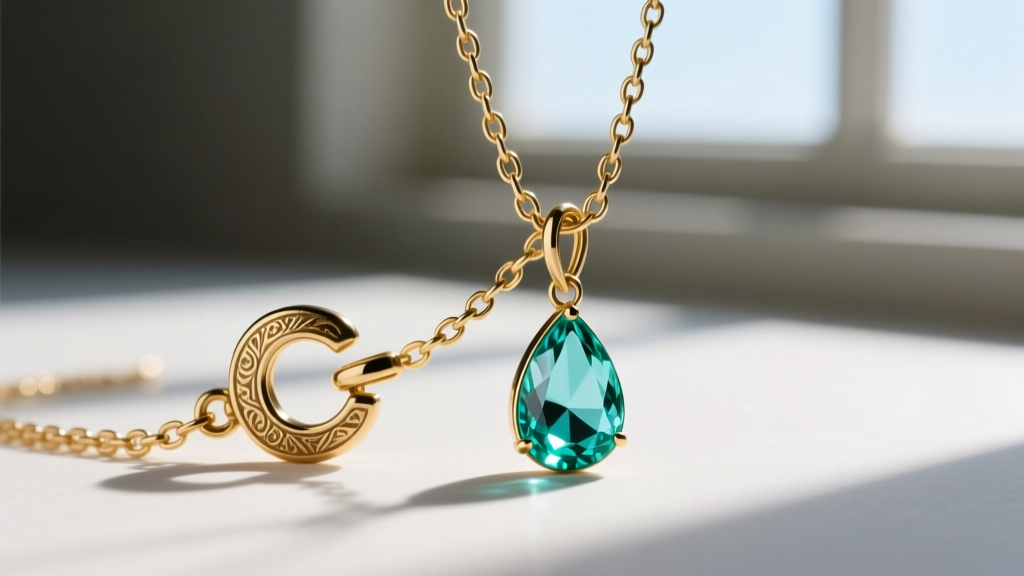
| C-Clasp (Open) | Pre-1900 (Victorian) | Relies on tension; pin extends past the 'C'. Rare on necklaces, more common on brooches. |
| Barrel / Tube Clasp | 1900–1930 | Screws or pushes together. Often found on delicate Edwardian platinum chains. |
| Early Spring Ring | 1915–1940 | Lacks the modern 'lip' or tab for pulling back the lever; requires a fingernail to open. |
| Lobster Clasp | 1970s–Present | If present on an 'antique' piece, the chain or clasp has been replaced, reducing historical value. |
Step 4: Assessing Condition and Restoration Needs
When evaluating an antique aquamarine necklace for purchase or insurance purposes, condition dictates the price. Aquamarine ranks 7.5 to 8 on the Mohs hardness scale, making it durable for daily wear, but it possesses distinct cleavage and can be brittle.
Prong Integrity
Examine the prongs holding the aquamarine. In antique pieces, prongs were often hand-fabricated and can wear thin over a century of use. If the prongs are flat against the girdle of the stone, the necklace requires immediate retipping by a master jeweler. Factor the cost of retipping (typically $75–$150 per stone) into your valuation.
Safe Cleaning Protocols
Never place an antique aquamarine necklace in an ultrasonic cleaner. If the stone has internal liquid inclusions or if the jeweler used fracture-filling techniques (common in older stones to mask surface-reaching cracks), the high-frequency vibrations and heat of an ultrasonic bath can shatter the gem. Furthermore, ultrasonic waves can loosen the delicate antique solder joints on the chain.
Expert Cleaning Method: Soak the necklace in a bowl of lukewarm distilled water with two drops of pH-neutral dish soap for 10 minutes. Gently agitate the water. Use a baby-soft toothbrush to lightly sweep the back of the setting (the pavilion) where skin oils and lotions accumulate. Rinse with distilled water and pat dry with a lint-free microfiber cloth.
Step 5: Valuation and Appraisal Metrics
Valuing an antique aquamarine necklace is not simply a matter of weighing the gold and estimating the carat weight of the stone. The Lang Antiques University emphasizes that historical provenance, maker's marks, and original condition carry significant premiums in the estate market.
A standard mid-century aquamarine pendant might sell for $400 to $800 based purely on its materials. However, a documented Art Deco aquamarine necklace by a renowned house like Cartier, Boucheron, or Marcus & Co. can command anywhere from $15,000 to over $100,000 at auction. Always seek a certified appraisal from a Graduate Gemologist (GG) who specializes in antique and period jewelry, ensuring they evaluate the piece based on its 'replacement value for an equivalent antique' rather than its raw scrap and wholesale gem value.
Final Thoughts on Sourcing
Acquiring an antique aquamarine necklace is an exercise in historical preservation. By meticulously checking the gemological properties, analyzing the metallurgy, and understanding the mechanical findings of the era, you protect yourself from costly misrepresentations. Whether it is an intricate Edwardian lavaliere or a bold Art Deco sautoir, a properly authenticated piece will remain a breathtaking, icy-blue treasure for generations to come.


