Vintage Green Glass Bead Necklace: 2026 Trend Analysis
Discover how to authenticate, price, and style the vintage green glass bead necklace in 2026. Expert tips on Vaseline glass, Czech beads, and layering.

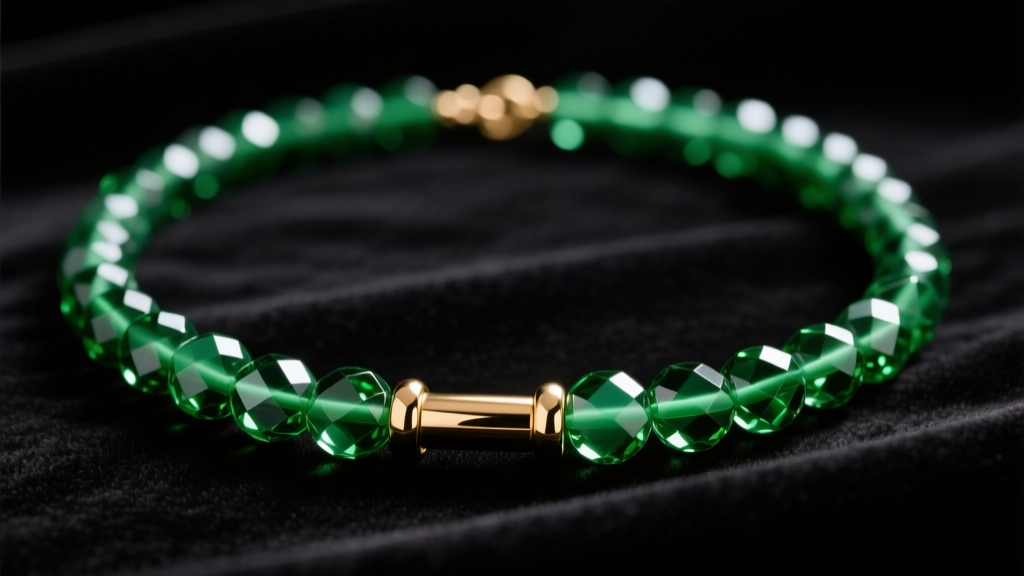
In the landscape of 2026 jewelry trends, the minimalist gold chain has officially taken a backseat to heritage maximalism. At the forefront of this shift is the vintage green glass bead necklace, a category that bridges the gap between historical artifact and modern statement piece. Collectors and stylists alike are gravitating toward the rich, translucent depths of mid-century Czech molded glass, Depression-era Vaseline glass, and intricate Murano sommosso beads. However, navigating the secondary market requires a sharp eye for authentication, an understanding of historical stringing methods, and a strategic approach to styling. This comprehensive guide breaks down the exact material grades, market values, and styling frameworks you need to master this trend.
The 2026 Resurgence: Why Green Glass is Dominating
The current fashion cycle has embraced 'eclectic heritage,' a style movement that prioritizes pieces with tangible history and unique optical properties. Green glass beads offer a specific visual weight that modern synthetic resins and mass-produced acrylics simply cannot replicate. The light refraction through hand-pressed vintage glass creates a multi-dimensional glow, particularly in emerald, chartreuse, and olive hues. According to market analysts at Collectors Weekly, search volume for vintage glass jewelry has surged by over 40% since late 2024, driven by a consumer desire for sustainable, one-of-a-kind accessories that anchor a curated wardrobe.
Authentication Framework: Vaseline, Czech, and Murano Glass
Not all vintage green glass bead necklaces are created equal. The market is currently flooded with modern reproductions from overseas manufacturers attempting to mimic mid-century aesthetics. To build a genuine collection, you must understand the distinct material signatures of the three primary categories.
The UV Light Test for Uranium Glass
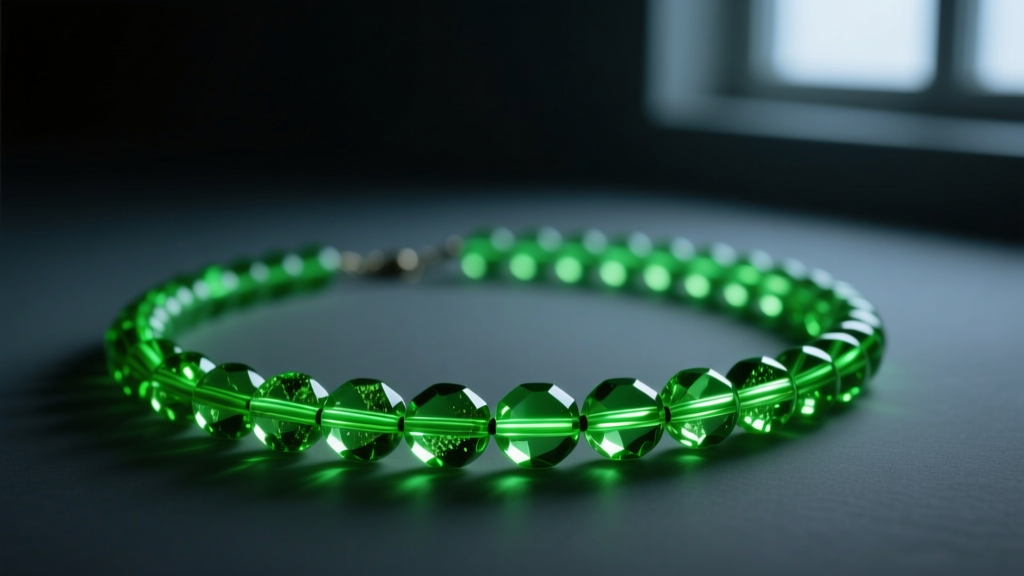
Vaseline glass, highly prized for its pale, yellowish-green hue, contains approximately 2% uranium dioxide by weight. To authenticate these pieces, you must use a 365nm UV blacklight. Avoid 395nm flashlights, as the excess purple light washes out the fluorescence. Under a true 365nm wavelength, authentic uranium glass will emit a blinding, neon-green glow. Modern green glass reproductions, which rely on iron or copper oxides for color, will remain dark or show a dull, muddy reflection under UV light.
Identifying Czech Molded Beads
Originating primarily from the Jablonec nad Nisou region, vintage Czech glass beads (circa 1920s-1960s) are renowned for their intricate molded shapes, such as melon, saucer, and teardrop cuts. Authentic vintage Czech beads often feature a faint, tactile seam line where the two-part mold met. Furthermore, look for specific vintage finishes: the 'Picasso' finish (a mottled, earthy brown-and-green glaze) and the 'Aurora Borealis' (AB) coating. Note that the AB coating was invented in 1955 in collaboration with Swarovski; therefore, any Czech bead necklace claiming to be from the 1930s with an AB finish is either misdated or has been restrung with later beads.
Market Pricing & Value Tiers
Understanding the financial landscape is critical for both buyers and sellers. The value of a vintage green glass bead necklace is dictated by the rarity of the glass, the condition of the beads (checking for 'flea bites' or edge chips), and the originality of the hardware. Below is the 2026 market pricing matrix for authenticated pieces in excellent, wearable condition.
| Glass Type & Origin | Era | Clasp Type | Average 2026 Market Price |
|---|---|---|---|
| Vaseline / Uranium Glass (USA) | 1920s - 1930s | Push-in Barrel | $85 - $160 |
| Molded Melon Beads (Czech) | 1940s - 1950s | Spring Ring | $45 - $95 |
| Sommosso / Gold Leaf (Murano) | 1960s - 1970s | Hook & Eye | $220 - $480 |
| Faceted Emerald (Japanese Toh) | 1980s | Lobster Claw | $30 - $60 |
Stringing & Hardware: Spotting True Vintage vs. Retro
The stringing material and hardware are the most reliable indicators of a necklace's true age and structural integrity. Pre-1950s vintage green glass bead necklaces were predominantly strung on heavy silk thread. While historically accurate, silk degrades, stretches, and rots when exposed to moisture and skin oils. If you purchase a piece on original silk, it is a ticking time bomb; the thread will eventually snap, sending valuable beads across the floor.
For wearable vintage pieces, professional restringing is mandatory. Experts recommend using a 0.018-inch or 0.024-inch braided stainless steel wire (such as Soft Flex) coated in nylon. This provides the drape of silk with the tensile strength of steel. The wire should be finished with 2mm sterling silver crimp beads and a wire guardian to protect the loop from friction. As for hardware, look for push-in barrel clasps (which rely on friction rather than threads) on 1920s pieces, and early spring ring clasps on 1940s pieces. Lobster claws are a dead giveaway of a modern reproduction or a later replacement.
2026 Styling Matrix: Necklines & Color Theory
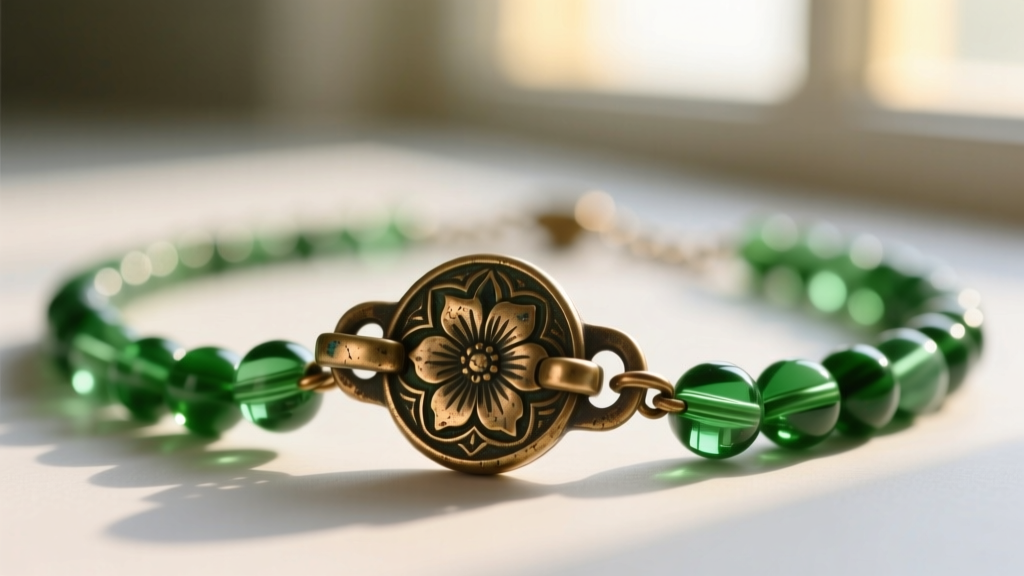
Styling a vintage green glass bead necklace requires an understanding of color theory and proportion. Green is a versatile secondary color, but its undertones dictate its ideal pairings. Emerald and forest green beads possess cool, blue undertones, while chartreuse and Vaseline glass lean warm and yellow. Here is the definitive 2026 styling framework for integrating these pieces into your wardrobe:
- The Camel & Chartreuse Pairing: A single-strand, 18-inch Vaseline glass necklace provides a striking, warm contrast against a structured camel-hair blazer or a mustard silk blouse. The yellow undertones in the glass harmonize with earthy autumn textiles.
- The Emerald & Navy Anchor: Deep green Czech molded beads (20-inch length) layered over a crisp, navy blue collared shirt creates a sophisticated, preppy-meets-heritage aesthetic. The cool undertones of the glass complement the navy without clashing.
- Texture Layering: To modernize a vintage glass piece, avoid pairing it with other glass or plastic beads. Instead, layer a 16-inch vintage green glass choker with a 20-inch 14k gold-fill cable chain and a 24-inch strand of freshwater baroque pearls. The mix of organic pearl, warm gold, and vitreous glass creates a rich, multi-sensory visual texture.
- Neckline Matching: Graduated bead necklaces (where beads are largest at the center and taper toward the clasp) perfectly frame a deep V-neckline. Conversely, uniform, chunky saucer beads sit best against a high boatneck or a simple crewneck t-shirt, acting as the sole focal point of the outfit.
Care & Preservation Protocols
While glass is inherently stable and non-porous, the finishes and structural components of a vintage green glass bead necklace require specific care. Never use ultrasonic cleaners or harsh chemical dips, as these will strip the delicate Picasso or AB coatings from Czech beads and degrade the patina on antique brass clasps.
'The beauty of vintage glass lies in its microscopic imperfections and historical finishes. Treat these pieces as you would fine art, not costume jewelry. A simple wipe with a damp microfiber cloth and a drop of pH-neutral dish soap is all that is required to remove skin oils and restore brilliance.' — Archival Jewelry Conservation Guidelines, Victoria and Albert Museum.
Store your necklaces flat in acid-free tissue paper or unbleached cotton pouches. Hanging heavy glass bead necklaces for long periods can place undue stress on the stringing wire and clasps, leading to metal fatigue and eventual failure. By understanding the material history, market value, and proper care of these extraordinary pieces, you can confidently navigate the 2026 vintage jewelry market and build a collection that is both historically significant and sartorially stunning.


