How to Clean, Restore, and Care for Sea Shell Necklaces
Learn how to safely clean, restore, and store your sea shell necklaces. Expert tips on avoiding chemical damage and preserving natural luster.

The Delicate Chemistry of Sea Shells
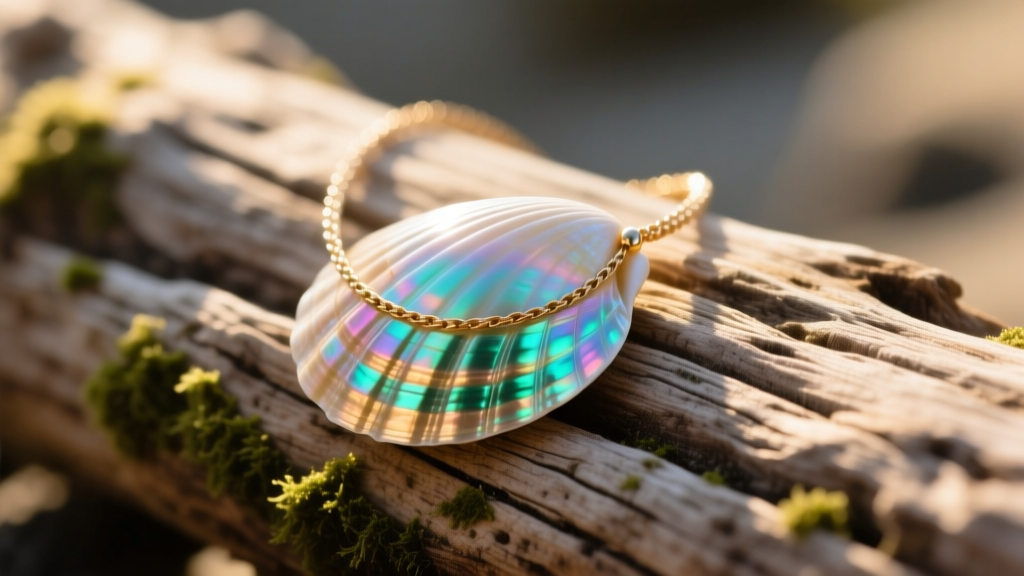
To properly care for sea shell necklaces, you must first understand their microscopic structure. Unlike faceted gemstones or forged metals, shells are organic-inorganic composites. They are primarily composed of calcium carbonate (CaCO3) held together by a flexible protein matrix called conchiolin. This unique biological architecture gives sea shells their breathtaking iridescence and structural resilience, but it also makes them highly vulnerable to environmental hazards.
On the Mohs scale of mineral hardness, most sea shells—whether puka, cowrie, abalone, or conch—rank between 2.5 and 3.5. This means they can be easily scratched by everyday dust, which often contains quartz particles (Mohs 7.0). Furthermore, calcium carbonate is highly reactive to acids. Any substance with a pH below 5.5, including human sweat, perfumes, and common household cleaners, will slowly etch the surface of the shell, destroying its natural luster and leaving a dull, chalky residue. Understanding this chemical sensitivity is the foundation of effective shell maintenance.
Step-by-Step Cleaning Protocol for Sea Shell Necklaces
When your sea shell necklace accumulates body oils, sunscreen, or environmental dust, it requires a gentle, highly controlled cleaning process. Never submerge your necklace for extended periods, as water can seep into the microscopic pores of the shell and degrade the conchiolin protein matrix over time.
What You Need
- Distilled water (never use tap water, as chlorine and fluoride can cause long-term chemical reactions)
- A neutral pH (7.0) liquid dish soap, such as original Dawn
- An extra-soft baby toothbrush or a dedicated makeup blending sponge
- A clean, lint-free microfiber cloth
- Food-grade mineral oil or pure jojoba oil
The Washing Technique
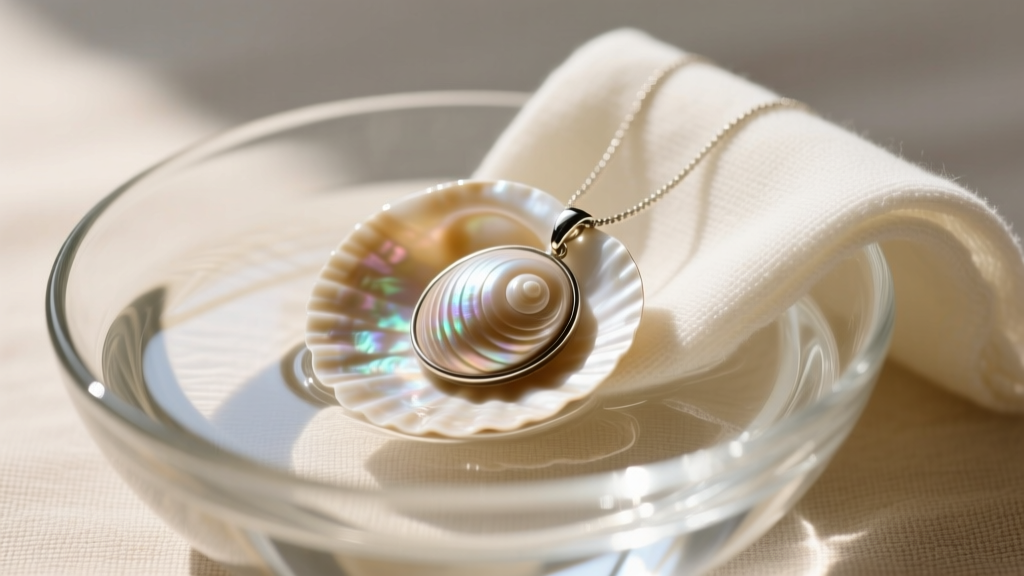
Begin by mixing two cups of room-temperature distilled water with exactly one drop of neutral dish soap. Dip your microfiber cloth into the solution and wring it out until it is only slightly damp. Gently wipe the surface of each individual shell, paying special attention to the crevices near the drill holes where sebum and dead skin cells accumulate. If the shells have deep natural ridges, use the damp, extra-soft baby toothbrush to lightly agitate the debris. Never scrub; let the bristles do the work. Once clean, immediately dry the shells with a separate, completely dry microfiber cloth to prevent water spotting.
The "Never-Do" List: Chemical and Mechanical Hazards
In 2026, the market is still flooded with "universal" jewelry cleaning solutions that are catastrophic for organic materials. To protect your sea shell necklaces, you must strictly avoid the following hazards. The Gemological Institute of America (GIA) explicitly warns against using harsh chemicals on calcium carbonate-based organics like pearls and shells, as the damage is often irreversible.
| Hazard | Mechanism of Damage | Visible Result |
|---|---|---|
| Ultrasonic Cleaners | High-frequency cavitation bubbles implode against the shell, shattering the delicate conchiolin protein matrix. | Micro-fractures, internal cracking, and complete structural failure. |
| Silver Dip (Thiourea) | Thiourea-based tarnish removers are highly acidic and toxic to organic compounds. | Immediate etching, chalky white discoloration, and loss of iridescence. |
| Steam Cleaners | Sudden thermal shock and high heat dehydrate the shell, causing the protein matrix to denature. | Warping, peeling of the nacreous layer, and severe brittleness. |
| Ammonia & Bleach | Strong alkalines and oxidizers break down the calcium carbonate bonds. | Pitting, surface dissolution, and permanent dullness. |
Restoring Luster and Hydrating the Conchiolin Matrix
Over time, exposure to air and skin acids can dehydrate the conchiolin within the shell, leading to a dull, lifeless appearance. To restore the vibrant, glossy finish of your sea shell necklaces, you must rehydrate the organic matrix using the correct lipids.
The best option is pure, cold-pressed jojoba oil. Unlike olive oil or coconut oil, which are triglycerides that will eventually oxidize, turn rancid, and emit a foul odor, jojoba oil is a liquid wax ester. It closely mimics the natural sebum produced by human skin and will not spoil. Food-grade mineral oil is a safe, inert alternative. To apply, place a single drop of oil on a microfiber cloth and buff it into the shell using small, circular motions. Allow the oil to penetrate for 15 minutes, then buff away any excess with a clean, dry cloth. This process should be performed once every six months, or more frequently if you live in an arid climate.
Handling Metal Hardware Without Damaging the Shell
Sea shell necklaces are frequently paired with sterling silver, brass, or gold-filled chains. The challenge arises when the metal hardware tarnishes, but the shell cannot withstand standard metal polishes. Never apply silver polish, baking soda paste, or aluminum foil tarnish-removal baths to a necklace while the shell is attached. The mild abrasives in polishes will scratch the shell's surface, and the chemical baths will eat through the calcium carbonate.
Instead, use a targeted approach. Wrap the sea shell pendant tightly in a soft cloth or plastic wrap to protect it. Then, use a treated silver polishing cloth (which contains microscopic jeweler's rouge) to gently rub only the metal chain and bail. If the chain is heavily oxidized, remove the shell pendant entirely from the chain before utilizing any liquid metal cleaners. The Canadian Conservation Institute emphasizes that isolating organic components from inorganic chemical treatments is paramount in artifact and jewelry preservation.
Long-Term Storage Strategies
How you store your sea shell necklaces is just as critical as how you clean them. Improper storage can lead to dehydration, scratching, and chemical degradation from off-gassing materials.
- Avoid Plastic Bags: Never store sea shells in sealed polyethylene or PVC plastic bags. These plastics can trap moisture, leading to mold growth on the conchiolin, or off-gas volatile organic compounds (VOCs) that react with the shell's surface.
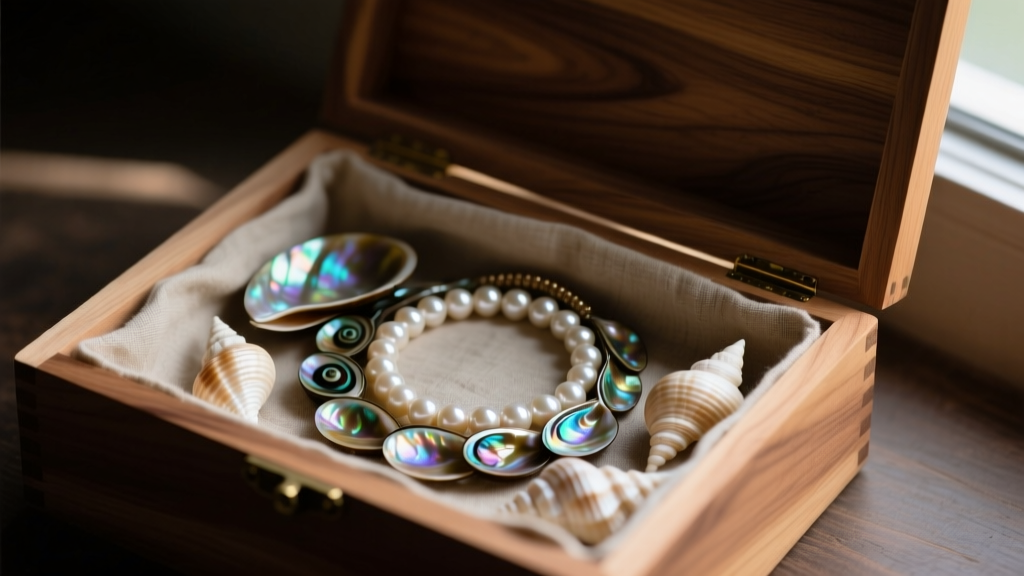
- Use Breathable Fabrics: Store your necklaces in unbleached cotton pouches or wrap them in acid-free tissue paper. This allows the shells to "breathe" while protecting them from abrasive dust.
- Control the Climate: Keep your jewelry box in a climate-controlled room. Avoid attics, basements, or bathrooms where extreme fluctuations in humidity and temperature can cause the shells to expand and contract, leading to stress fractures.
- Isolate from Harder Gems: Because shells rank at a mere 2.5 to 3.5 on the Mohs scale, they must be stored separately from diamonds, sapphires, quartz, and even metal jewelry to prevent severe scratching.
Expert Troubleshooting and FAQs
Q: My sea shell pendant has developed a chalky white spot. Can it be fixed?
A: A chalky white spot is usually a sign of acid etching, often caused by a drop of perfume, hairspray, or prolonged contact with acidic sweat. While you cannot reverse the chemical loss of calcium carbonate, you can sometimes minimize the visual contrast by gently buffing the area with a tiny amount of jojoba oil and a soft cloth. For severe etching, a professional lapidary may need to lightly re-polish the surface.
By respecting the organic nature of sea shells and adhering to these strict, science-backed maintenance protocols, your sea shell necklaces will retain their oceanic beauty and structural integrity for decades to come. Treat them not as mere accessories, but as delicate biological artifacts that require mindful stewardship.


