Multi Color Stone Necklace: Cleaning & Repair Guide
Learn how to clean, restring, and troubleshoot common damage in your multi color stone necklace with expert gemological and jewelry repair tips.

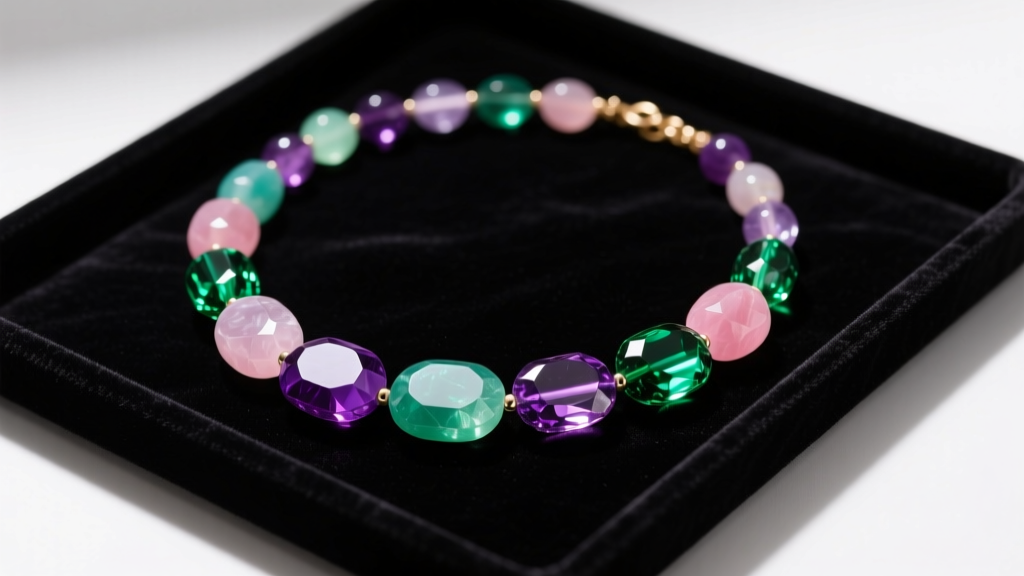
Owning a multi color stone necklace is like wearing a curated art gallery around your neck. From the deep greens of emerald and peridot to the vibrant purples of amethyst and the fiery oranges of carnelian, these pieces offer unparalleled versatility. However, combining multiple gemstone species into a single strand introduces a complex web of gemological vulnerabilities. What works for cleaning a sapphire might completely destroy a turquoise bead sitting right next to it.
In this comprehensive troubleshooting guide, we break down the exact failure modes of multi-gemstone jewelry and provide actionable, bench-level repair and maintenance strategies to keep your necklace pristine in 2026 and beyond.
The Gemological Minefield of Multi-Stone Jewelry
The primary challenge of any multi color stone necklace is the variance in Mohs hardness and porosity among the beads. When beads of different hardness levels rub against each other throughout the day, the harder stones act as an abrasive against the softer ones.
For example, a necklace featuring both quartz (Mohs 7) and opal (Mohs 5.5-6.5) will eventually result in the quartz scratching the opal's delicate surface, leading to permanent dullness. Furthermore, stones like lapis lazuli and turquoise are highly porous. They readily absorb skin oils, perfumes, and lotions, which can cause irreversible discoloration. According to the Gemological Institute of America (GIA), understanding the specific chemical and physical properties of each gem in your strand is the first step in preventing catastrophic damage.
The Knotting Solution
If your necklace features soft or easily scratched stones, the ultimate preventative measure is traditional silk knotting. By placing a hand-tied knot between every single bead, you eliminate gem-on-gem friction. If your current piece is unknotted and you notice micro-scratches forming on the softer beads, take it to a professional bench jeweler for a complete restringing with knotting.
Troubleshooting Cloudy, Dull, or Discolored Stones
When a multi color stone necklace loses its luster, the instinct is often to reach for a commercial jewelry dip or an ultrasonic cleaner. Never use an ultrasonic cleaner on a multi-stone piece. The high-frequency vibrations can shatter heavily included stones like emeralds, fracture opals, and strip the dye from color-enhanced agates or howlite.
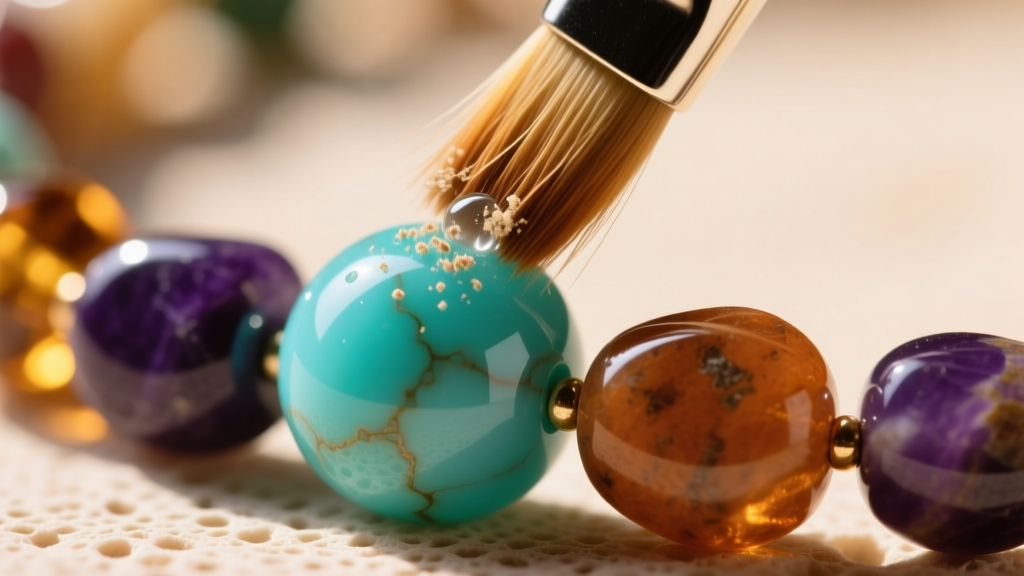
Instead, you must adopt a segmented cleaning approach based on the most vulnerable stone in the strand. Here is a troubleshooting matrix for safe cleaning:
| Stone Type (Examples) | Mohs Hardness | Porosity & Sensitivity | Safe Cleaning Method |
|---|---|---|---|
| Quartz, Amethyst, Citrine, Topaz | 7 - 8 | Low porosity; heat sensitive | Warm water, mild dish soap, soft brush |
| Turquoise, Lapis Lazuli, Malachite | 3.5 - 6 | Highly porous; acid sensitive | Dry microfiber cloth only; no liquids |
| Opal, Pearl, Coral, Amber | 2.5 - 6.5 | Organic/Hydrous; chemical sensitive | Damp cloth wipe; never submerge |
| Emerald, Tourmaline, Garnet | 6.5 - 7.5 | Moderate; inclusion prone | Lukewarm water, no harsh detergents |
Expert Tip: If your multi color stone necklace contains a mix of porous and non-porous stones, you must clean them individually using a localized approach. Dip a cotton swab in a mild soap solution and carefully clean the harder stones, avoiding contact with the porous beads. The GIA Gem Encyclopedia provides detailed profiles on specific gem sensitivities if you are unsure of your necklace's exact composition.
Fixing Broken Strings, Snaps, and Fraying
A snapped necklace is a jeweler's most common repair request. The failure usually occurs at the clasp loop or the center of the strand due to material fatigue. Troubleshooting the break requires identifying the original stringing material and upgrading it if necessary.
Upgrading Your Stringing Material
If your necklace was strung on traditional silk or nylon and broke due to sweat degradation or stretching, consider upgrading to modern beading wire. For a heavy multi color stone necklace featuring dense materials like jasper, agate, or glass, a 49-strand stainless steel beading wire (0.018" or 0.024" gauge) coated in nylon is the industry standard for durability. Brands like Soft Flex or Beadalon offer kink-resistant wires that drape beautifully while supporting significant weight.
However, if your necklace features delicate pearls or soft organic gems mixed with colored stones, wire will eventually drill through the bead holes due to friction. In these cases, you must use Griffin Natural Silk (Size 2 or 3) or synthetic alternatives like PowerPro braided thread, ensuring a knot is tied between every bead to distribute the tension.
Securing the Crimps
If the wire snapped right at the clasp, the crimp bead likely failed. When restringing, use a crimping plier to fold the crimp tube into a neat 'U' shape, then compress it into a tight bead. Always add a wire guardian (French wire) at the clasp loop to prevent the metal clasp from sawing through the nylon coating of your beading wire over time.
Solving Clasp Slippage and Tarnish Issues
Multi-gemstone necklaces are often heavy, which puts immense strain on standard findings. A common complaint is the lobster clasp slipping open or the spring ring failing to close completely.
- Upgrade the Clasp: Swap out hollow, lightweight lobster clasps for solid gold or platinum-filled triggers. For heavy statement pieces, a magnetic clasp with a secondary safety chain provides the best security without requiring frustrating dexterity to fasten.
- Troubleshooting Tarnish: If your necklace features sterling silver spacers or findings interspersed with the colored stones, they will inevitably tarnish from sulfur exposure in the air. Use a treated silver polishing cloth to gently wipe the metal findings. Do not use liquid silver dips, as the chemicals will seep into the porous gemstones and cause permanent staining.
- Storage Protocol: Store your necklace flat in an anti-tarnish ziplock bag with a 3M anti-tarnish strip. Never hang a heavy multi-stone necklace, as the constant gravitational pull will stretch the stringing material prematurely.
When to Seek Professional Bench Repair
While basic cleaning and minor clasp swaps can be managed at home, certain troubleshooting scenarios require a master jeweler's bench. You should seek professional intervention if you notice:
- Chipped or Fractured Facets: If a hard impact chips one of the faceted stones (like a tourmaline or garnet), a lapidary artist may be able to recut and repolish the stone to remove the chip, though this will slightly reduce its carat weight.
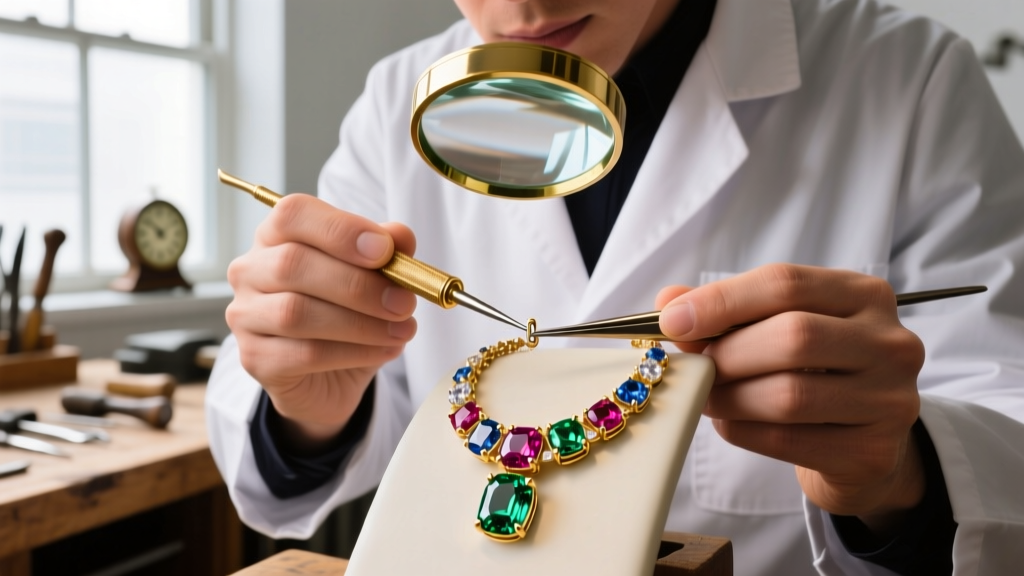
- Loose Bezel or Prong Settings: If your multi color stone necklace features 'station' stones set in metal bezels or prongs along a chain, use a loupe to inspect the metal. If the metal has pulled away from the girdle of the stone, a jeweler must use a pusher or burnisher to tighten the setting before the stone falls out and is lost.
- Drilled Hole Enlargement: If the holes in your soft stones have become jagged or enlarged from wire friction, a professional can ream the beads smoothly and insert protective metal eyelets or tube linings to prevent further degradation.
By understanding the unique material science behind your jewelry, you can troubleshoot issues before they become permanent. Treat your multi color stone necklace not just as an accessory, but as a complex assembly of geological wonders that require precise, tailored care.


