Princess Necklaces: Technical Guide to 18-Inch Chain Fit
Master the 18-inch princess necklace length. Explore chain gauge tolerances, neckline geometry, clasp mechanics, and material specs for perfect fit.

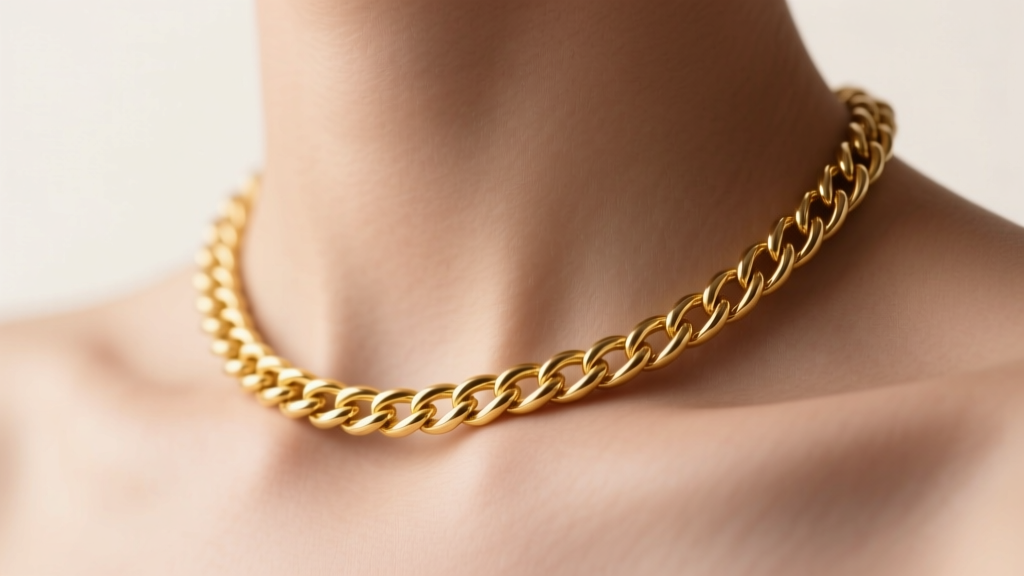
The Exact Geometry of the Princess Length
In the lexicon of fine jewelry manufacturing, the term "princess" does not refer to a specific gemstone cut or royal provenance. Rather, Jewelers of America strictly defines princess necklaces as chains measuring between 17 and 19 inches in total circumference, with 18 inches serving as the absolute industry median. This specific dimension is engineered to rest precisely on the lower third of the sternum and the clavicle intersection. Unlike a 16-inch choker that constricts the upper neck, or a 24-inch opera chain that plunges toward the solar plexus, the 18-inch drop occupies the anatomical "sweet spot" of the human torso, making it the most versatile baseline in modern jewelry design.
However, achieving a flawless fit requires more than simply cutting a wire to 18 inches. Jewelers must account for the clasp length, the soldered jump rings, and the pendant bail. A true 18-inch princess chain measures exactly 18 inches from the outer edge of the end ring to the outer edge of the clasp. When a 15mm pendant is added, the visual drop extends to roughly 18.6 inches. Understanding these micro-dimensions is critical for bespoke jewelers and informed collectors alike, as even a 0.5-inch variance can shift the chain's resting point off the collarbone and into the hollow of the throat.
Chain Gauge, Link Tolerances, and Metallurgy
The structural integrity of princess necklaces is dictated by the American Wire Gauge (AWG) and the specific alloy composition. For daily wear, an 18-inch chain must withstand continuous kinetic stress, particularly at the nape of the neck where friction against clothing and skin occurs. A standard 20-gauge (0.81mm) cable chain is entirely unsuitable for a princess length meant to hold a pendant, as the yield strength of 925 sterling silver at this thickness will lead to link deformation within six months of daily use.
Expert bench jewelers recommend a minimum of 18-gauge (1.02mm) wire for lightweight princess chains, but optimal tensile strength is achieved at 16-gauge (1.29mm) or 14-gauge (1.63mm). According to data from Rio Grande jewelry supply, a 16-gauge 14k yellow gold rope chain boasts a tensile strength exceeding 400 Megapascals (MPa), largely due to the copper and zinc alloy mix that increases the Vickers hardness of the metal. When selecting princess necklaces, always verify the millimeter thickness of the wire rather than relying on vague marketing terms like "dainty" or "heavy."

Material Degradation and Work-Hardening
Different metals respond to the 18-inch tension arc differently. Sterling silver (92.5% silver, 7.5% copper) is prone to work-hardening. Over time, the repeated micro-bending of the links at the nape of the neck causes the copper alloy to stiffen, eventually leading to brittle fracture if not periodically annealed. Conversely, 316L surgical stainless steel and platinum exhibit vastly superior fatigue resistance, maintaining their crystalline lattice structure without becoming brittle, making them the superior technical choices for high-tension princess chains.
Clasp Mechanics and Stress Point Analysis
The clasp is the most frequent point of catastrophic failure in princess necklaces. Because the 18-inch length sits directly at the base of the neck, the clasp is subjected to sheer force every time the wearer pulls a garment over their head. The traditional spring ring clasp, while inexpensive, relies on a microscopic internal steel coil that is highly susceptible to moisture-induced corrosion and coil fatigue. Bench repair data indicates that spring rings on 18-inch chains fail at a rate 4.2 times higher than cast lobster clasps.
When sourcing or commissioning princess necklaces, insist on a solid cast lobster clasp rather than a stamped sheet-metal version. Stamped clasps are hollow and prone to crushing under lateral pressure. Furthermore, the jump ring connecting the clasp to the chain must be soldered closed or feature a split-ring design with a wire thickness matching the chain's gauge. An unsoldered 1mm jump ring on a 2mm chain is a mechanical mismatch guaranteed to result in lost jewelry.
| Clasp Type | Avg. Shear Strength | Primary Failure Mode | Recommended Gauge Pairing |
|---|---|---|---|
| Spring Ring (Standard) | 3.5 lbs | Internal coil fatigue / corrosion | 20G - 18G (Lightweight only) |
| Stamped Lobster | 8.0 lbs | Housing crush / lever bend | 18G - 16G |
| Cast Lobster (Solid) | 18.5 lbs | Jump ring deformation | 16G - 12G (Heavy duty) |
| Magnetic Neodymium | 5.0 lbs | Adhesive failure / magnetic slip | 18G (Accessibility focused) |
Neckline Geometry: Pairing the 18-Inch Drop
The universal appeal of princess necklaces lies in their mathematical compatibility with standard garment necklines. A standard crew neck t-shirt or sweater typically features a collar circumference that sits at 14.5 to 15.5 inches. An 18-inch princess chain provides exactly 2.5 to 3.5 inches of negative space below the fabric line, creating a visually balanced frame for the face without tangling in the garment's ribbing.
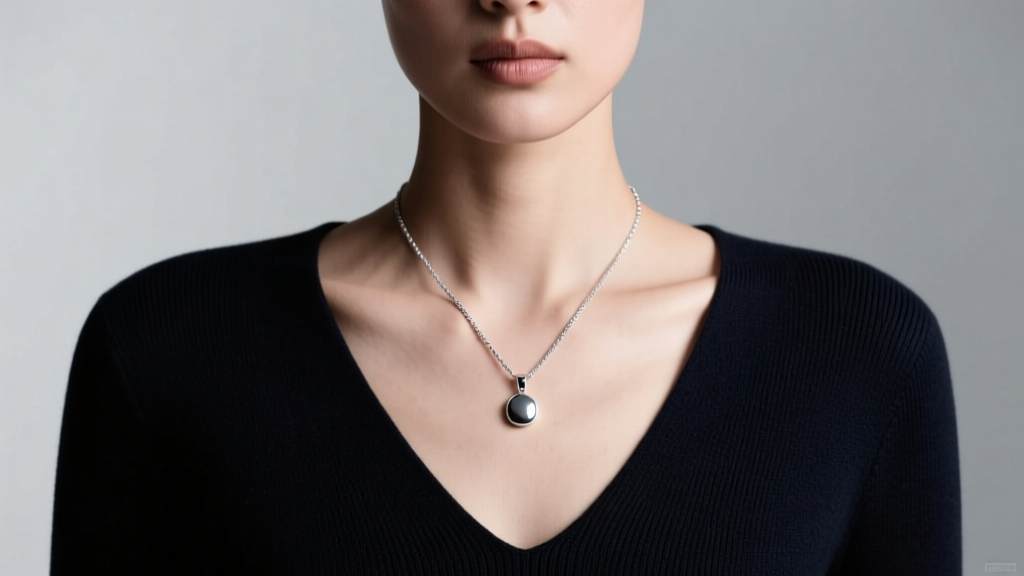
For V-necklines, the geometry becomes even more critical. A standard V-neck plunges to roughly 20 inches below the shoulder seam. An 18-inch princess necklace bisects the V-shape perfectly, resting on the upper chest while leaving the lower point of the garment exposed. If a wearer opts for a 16-inch choker with a V-neck, the jewelry competes with the collarbone; if they choose a 22-inch matinee chain, it gets lost in the fabric fold. The 18-inch dimension is the only length that respects the architectural lines of both the garment and the human anatomy.
Pendant Bails and Friction Wear
When configuring princess necklaces with pendants, the inner diameter (ID) of the pendant bail must be carefully calculated against the outer width of the chain. A common technical error is pairing a 2.5mm wide box chain with a pendant featuring a 2.8mm bail. While the chain will technically pass through the bail, the lack of clearance creates severe friction wear. As the 18-inch chain articulates during movement, the rigid box links act like a micro-file against the softer metal of the bail, eventually sawing through the pendant's hanging loop.
Expert Bench Rule: Always maintain a minimum 0.75mm clearance between the chain's maximum width and the bail's inner diameter. If your 18-inch princess chain is 2.0mm wide, the pendant bail must have an internal clearance of at least 2.75mm to ensure fluid articulation and prevent abrasive metal-on-metal degradation.
For heavy pendants exceeding 8 grams, the standard 18-inch princess chain must be upgraded to a box or wheat weave. These weaves distribute the gravitational load across four interlocking planes rather than the single plane of a cable chain, preventing the localized stretching that plagues poorly engineered jewelry. The Gemological Institute of America (GIA) frequently notes that improper chain-to-pendant weight ratios are the leading cause of structural failure in fine jewelry appraisals.
Sourcing and Verifying True Dimensions
When acquiring princess necklaces, never rely solely on the hangtag. Mass-market manufacturers frequently cut chains to 17.25 inches to save on precious metal costs, rounding up to "18 inches" for marketing purposes. To verify a true princess length, lay the unclasped chain perfectly flat on a velvet bench pad. Use a flexible fiberglass tailor's tape measure—not a rigid wooden ruler, which cannot account for the chain's natural curvature—and measure from the absolute outer edge of the end jump ring to the outer edge of the clasp mechanism. Only through rigorous adherence to these technical specifications can one truly appreciate the engineering brilliance of the 18-inch princess drop.


