Wreath Necklace Buying Guide: Metals, Motifs & Fit (2026)
Discover how to choose the perfect wreath necklace in 2026. Compare metals, motifs, chain lengths, and pricing in our expert botanical jewelry buying guide.

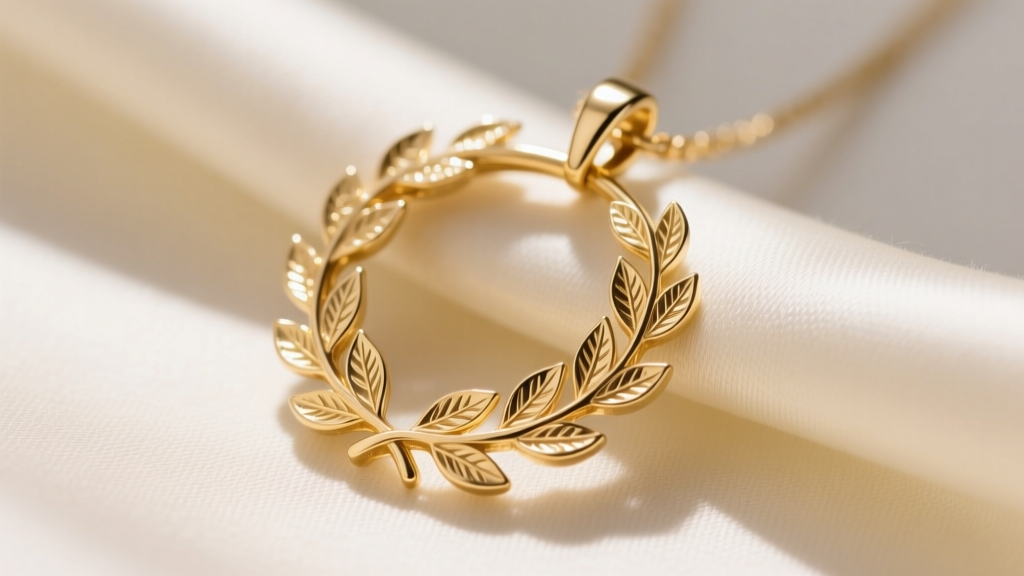
The Anatomy of a Wreath Necklace: Beyond the Basic Circle
The wreath necklace has evolved significantly by 2026, moving far beyond simple circular pendants into highly detailed botanical, architectural, and geometric statements. Whether you are drawn to the classical symbolism of a laurel wreath or the romantic intricacy of a floral crown, buying the right piece requires understanding structural integrity, metallurgy, and motif scaling. A poorly constructed wreath pendant will snag on clothing, lose its enamel, or snap at the bail. This guide breaks down exactly what to look for when investing in a wreath necklace, ensuring your piece survives daily wear while maintaining its aesthetic brilliance.
Motif Variations: Laurel, Floral, and Geometric
The silhouette of your wreath dictates both its styling versatility and its manufacturing complexity. Laurel wreaths feature asymmetrical, overlapping leaf patterns that require deep relief casting to look authentic; avoid flat, stamped laurel designs as they appear cheap and catch lint. Floral wreaths often incorporate gemstones or enamel, requiring secure prong or bezel settings for accent stones. Geometric wreaths (like interlocking circles or Art Deco halos) rely on precise laser welding and high-polish finishing to reflect light. When evaluating the motif, check the negative space. High-quality wreath pendants feature fully pierced negative space (the gaps between leaves or petals), whereas budget versions use a solid metal backing with a superficial textured overlay.
Metallurgy & Material Grades: What Survives Daily Wear?
The intricate crevices of a wreath design are prime traps for skin oils, lotions, and environmental pollutants. Choosing the right metal is critical to prevent irreversible tarnishing or structural weakening. According to the Gemological Institute of America (GIA), alloy composition drastically affects a metal's hardness and color retention.
- Sterling Silver (925): Prone to sulfide tarnishing, especially in the deep grooves of leaf motifs. Only buy silver wreaths if they feature a thick rhodium flash plating to delay oxidation.
- Gold Vermeil: The Federal Trade Commission (FTC) mandates that true vermeil must have a minimum of 2.5 microns of gold over a sterling silver base. Anything less is mere 'flash plating' and will wear off the high-friction edges of the wreath within months.
- 14k Solid Gold (58.5% Au): The gold standard for daily-wear botanical jewelry. The alloy mix (often copper and zinc) provides the tensile strength needed to keep delicate leaf tips from bending or snapping.
- 18k Solid Gold (75% Au): Offers a richer, warmer yellow hue but is noticeably softer. Best reserved for occasional-wear statement wreaths or pieces where the design lacks protruding, snag-prone elements.
| Material | Composition | Tarnish Risk | Avg. Price Range | Best For |
|---|---|---|---|---|
| Sterling Silver | 92.5% Ag, 7.5% Cu | High | $45 - $120 | Occasional, trend-focused wear |
| Gold Vermeil | 2.5µm+ 14k/18k over 925 Ag | Medium | $90 - $250 | Buyers wanting gold aesthetics on a budget |
| 14k Solid Gold | 58.5% Au, alloyed | None | $350 - $800 | Daily heirloom wear, active lifestyles |
| Platinum | 95% Pt, 5% Ru/Ir | None | $900 - $2,000+ | Diamond-set or heavy luxury wreaths |
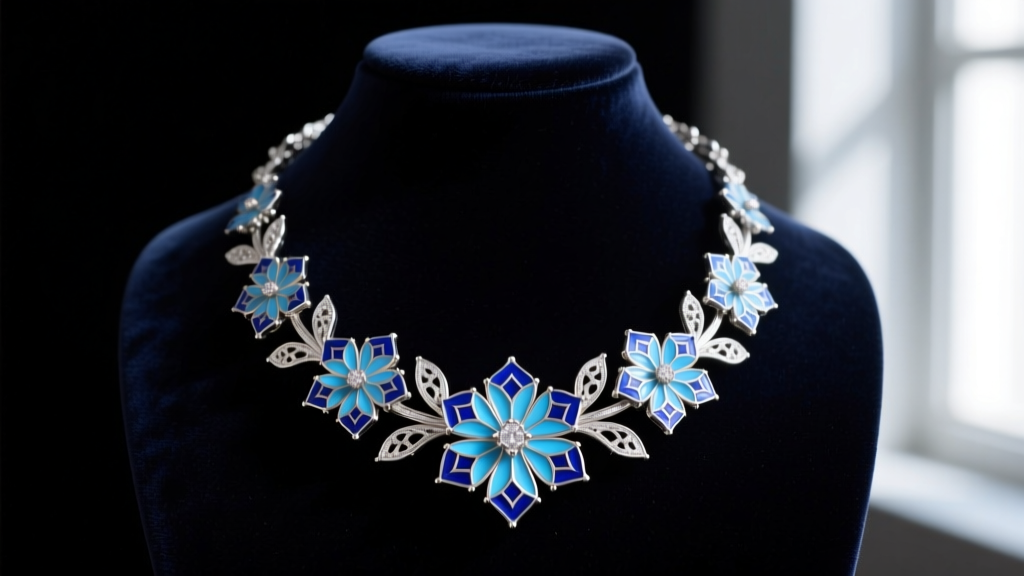
Enamel and Gemstone Accents: Spotting Quality
Many floral and vintage-inspired wreath necklaces utilize enamel for vibrant color. It is vital to distinguish between vitreous (guilloché) enamel and cold enamel (epoxy resin). Vitreous enamel is glass fused to metal at high temperatures; it is brilliant, scratch-resistant, and will not yellow over time. Cold enamel is essentially painted resin. It is softer, prone to chipping if the necklace is dropped, and degrades under UV exposure. If a product description simply says 'enamel' without specifying vitreous or guilloché, assume it is resin. For gemstone accents, look for bezel settings rather than glue-set stones, as the circular tension of a wreath frame can easily pop glued stones during temperature fluctuations.
Sizing, Chains, and Clasp Mechanics
The hardware supporting your wreath pendant is just as important as the pendant itself. A common failure point in botanical necklaces is the bail (the loop connecting the pendant to the chain).
The Bail and Jump Ring Failure Points
Avoid pendants attached via thin, unsoldered jump rings (under 0.6mm wire gauge). The friction of the chain sliding back and forth will eventually saw through a thin jump ring, resulting in a lost pendant. Instead, look for hidden bails or soldered oval bails that are cast as a single piece with the wreath or laser-welded securely. For the chain itself, a 1.0mm to 1.2mm cable or rolo chain provides the necessary structural support without visually overpowering a 15mm-25mm wreath pendant. Always opt for a lobster clasp over a spring ring clasp; spring rings frequently fail to close completely and can easily slip off the neck.
Styling Framework: Necklines and Layering
The circular geometry of a wreath necklace requires strategic pairing with clothing necklines to avoid visual clutter.
- V-Necklines: Pair with a 16-inch to 18-inch chain. The V-shape of the neckline naturally frames the circular wreath, drawing the eye directly to the pendant. Laurel wreaths with a slight downward taper work exceptionally well here.
- Scoop and Crew Necks: Opt for a shorter 14-inch to 16-inch choker-style chain or a collar where the wreath acts as the centerpiece. Ensure the pendant sits at least one inch below the fabric line to prevent friction damage to the metal or enamel.
- Turtlenecks and High Collars: Scale up. Use a 24-inch to 30-inch chain with a larger statement wreath (30mm+). The solid fabric backdrop highlights the negative space and intricate cutouts of the wreath design.
- Layering: When layering a wreath pendant, anchor it with a simple, unadorned chain (like a 20-inch box chain) and a smaller, solid geometric pendant (like a 5mm gold disc) on a 16-inch chain to create depth without competing motifs.

Price Tiers & Where to Invest
Understanding market pricing prevents overpaying for inferior manufacturing. Fashion Tier ($20 - $60): Typically made from brass or zinc alloy with flash plating. Avoid these if you have nickel sensitivities, as the base metals often contain nickel and will cause contact dermatitis once the plating wears off the high-friction edges. Mid-Tier ($150 - $400): The sweet spot for 10k or 14k solid gold vermeil and solid 10k gold pieces. You will find excellent craftsmanship, soldered bails, and genuine vitreous enamel in this bracket from specialized boutique jewelers. Fine Jewelry Tier ($800+): Reserved for 18k gold or platinum wreaths featuring pavé diamond halos or high-end sapphire accents. At this level, demand hand-finished prongs and a certificate of authenticity for the gemstones.
Final Verdict: Choosing Your Wreath
A wreath necklace is a timeless investment that bridges classical antiquity and modern minimalism. By prioritizing fully pierced negative space, verifying the 2.5-micron vermeil standard or opting for 14k solid gold, and insisting on soldered bail mechanics, you will secure a piece that endures both physically and stylistically. Measure your neckline pairings carefully, respect the metallurgy, and your wreath necklace will remain a staple of your jewelry rotation for decades to come.


