Crafting the Perfect Purple Statement Necklace: A Technical Guide
Discover the technical anatomy of a purple statement necklace. Explore gemstone grades, dye detection, metal pairings, and structural clasp mechanics.

The Gemstone Matrix: Natural vs. Treated Purple Stones
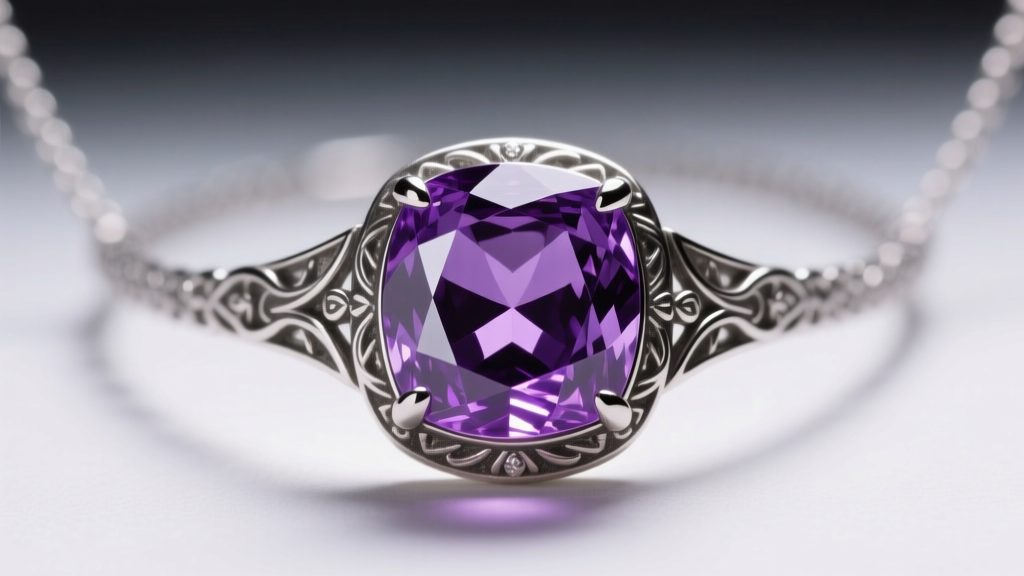
When evaluating a purple statement necklace, the centerpiece dictates the structural and metallurgical requirements of the entire piece. Unlike delicate everyday chains, statement pieces carry significant mass, requiring a deep understanding of lapidary science and jewelry engineering. The color purple in gemstones spans a vast spectrum, from the cool, pleochroic violets of tanzanite to the deep, warm burgundies of Siberian amethyst. Understanding the atomic and structural properties of these stones is the first step in designing or purchasing a high-caliber piece.
Amethyst: Color Zoning and Heat Signatures
Amethyst (crystalline quartz) remains the most accessible purple gemstone, but high-end statement pieces demand specific color grades. The most prized designation is the 'Siberian' color grade, characterized by a deep primary purple with secondary red and blue flashes under incandescent lighting. According to the GIA Amethyst Guide, color zoning is common in natural amethyst, manifesting as angular bands of varying saturation. In large cabochons or fantasy cuts used for statement pendants, lapidaries must orient the stone to mask these zones. While much of the commercial amethyst on the market is heat-treated to remove brownish modifiers, stones exhibiting the deepest, most saturated purples are typically unheated, preserving their natural color integrity.
Tanzanite: Pleochroism and Cleavage Risks
Tanzanite is a variety of the mineral zoisite and is famous for its strong trichroism, meaning it displays blue, violet, and burgundy colors when viewed from different crystallographic axes. For a tanzanite purple statement necklace, the stone must be cut to maximize the violet-purple face-up color. However, tanzanite possesses perfect cleavage in one direction, making it highly susceptible to chipping if subjected to uneven pressure. The GIA Tanzanite Guide notes that bezel settings are generally discouraged for large tanzanite stones; instead, V-prong settings at the corners of emerald or pear cuts are mandatory to distribute mechanical stress and prevent catastrophic cleavage fractures during the setting process.
Opaque Alternatives: Sugilite and Charoite
For those seeking an avant-garde aesthetic, sugilite and charoite offer striking, opaque purple alternatives. Sugilite ranges from a pale lilac to a deep, grape-jelly purple, often featuring black or brown matrix inclusions. Charoite, sourced exclusively from the Sakha Republic in Russia, features a swirling, fibrous structure with a pearly luster. As detailed in the Mindat Charoite Mineral Data, charoite frequently contains black aegirine needles and orange tinaksite inclusions. These differential hardness inclusions (aegirine is Mohs 6, charoite is Mohs 5-6) create microscopic pitting during the polishing process, meaning collectors should expect a slightly textured surface rather than a mirror finish on large charoite cabochons.
| Gemstone | Mohs Hardness | Cleavage / Tenacity | Common Treatments | Ultrasonic Safe? |
|---|---|---|---|---|
| Amethyst | 7.0 | None / Brittle | Heat (rare for deep purple) | Yes (with caveats) |
| Tanzanite | 6.5 - 7.0 | Perfect / Brittle | Heat (almost universal) | No (Thermal Shock Risk) |
| Sugilite | 6.0 - 6.5 | None / Tough | Resin Impregnation | No (Chemical Risk) |
| Charoite | 5.0 - 6.0 | Good / Brittle | None | No (Fracture Risk) |
Structural Engineering: Supporting Heavy Centerpieces
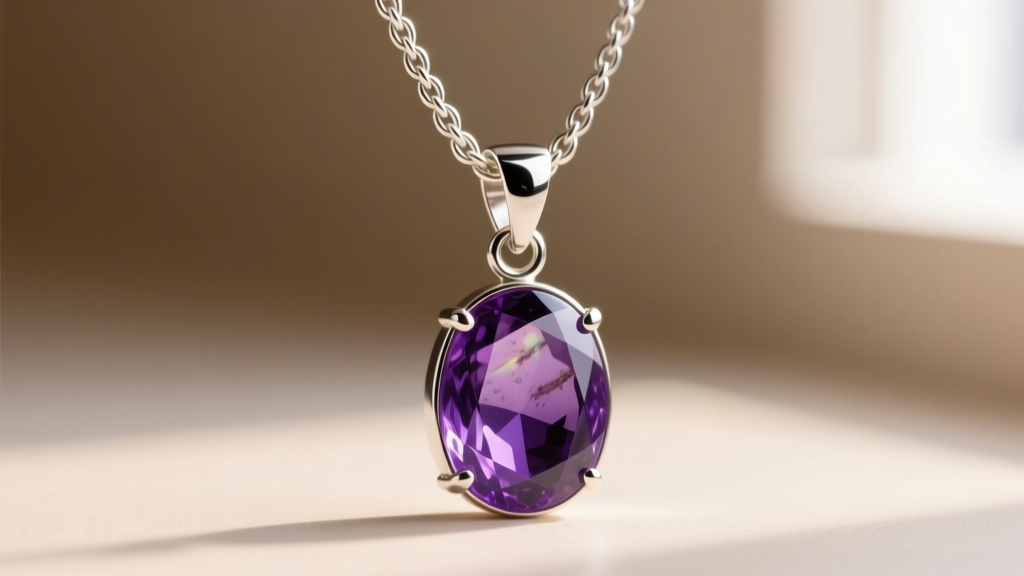
A true statement necklace often features a centerpiece weighing between 50 and 150 grams. Suspending this mass requires rigorous attention to chain gauge, bail mechanics, and clasp engineering. The most common failure point in heavy necklaces is the bail—the finding that connects the pendant to the chain. Glued or friction-fit bails will inevitably fail under dynamic loads (such as the wearer bending over or moving quickly). For pieces exceeding 80 grams, a soldered, double-ring sterling silver or 14k gold bail is non-negotiable. The interior diameter of the bail must also accommodate the chain thickness without creating a pinch point that accelerates metal fatigue.
Chain Gauge and Weave Selection
The chain must possess a high tensile strength and resist kinking. Snake chains and omega chains are entirely unsuitable for heavy pendants; their interlocking plate structures cannot handle asymmetric torsion and will permanently kink under the pendulum effect of a heavy stone. Instead, opt for a 3.0mm to 4.0mm wheat (spiga) chain or a solid rolo chain. Wheat chains distribute the load across multiple interwoven links, providing exceptional tensile strength while maintaining a fluid drape that complements the neckline. If using a box chain, ensure the links are soldered rather than hollow-stamped, as hollow links will crush under the concentrated weight of a large pendant.
Clasp Mechanics and Failure Points
Standard lobster clasps and spring rings are engineered for lightweight chains and lack the internal spring tension required to secure a 100-gram necklace securely. The mechanical failure rate of a standard 12mm lobster clasp under sudden dynamic stress is unacceptably high for statement jewelry. The industry standard for heavy pieces is the box clasp (also known as a tongue-and-groove clasp) equipped with a figure-8 safety catch. The safety catch acts as a redundant mechanical lock; if the primary tongue dislodges due to lateral pressure, the figure-8 wire prevents the necklace from parting. For modern alternatives, neodymium magnetic clasps with integrated locking sleeves and secondary safety chains offer both security and ease of use for wearers with limited dexterity.
Metallurgy and Color Theory: Pairing Metals with Purple
The metallic setting and chain alloy profoundly influence the perceived saturation and undertone of purple gemstones. Color theory in jewelry metallurgy relies on the reflectance properties of the alloy. 14k Rose Gold, which contains approximately 22% copper, emits a warm, reddish reflectance. When paired with a Siberian amethyst, the copper alloys amplify the stone's secondary red flashes, creating a rich, velvety appearance. Conversely, pairing rose gold with a cool-toned lilac amethyst can muddy the stone's clarity, making it appear slightly gray.
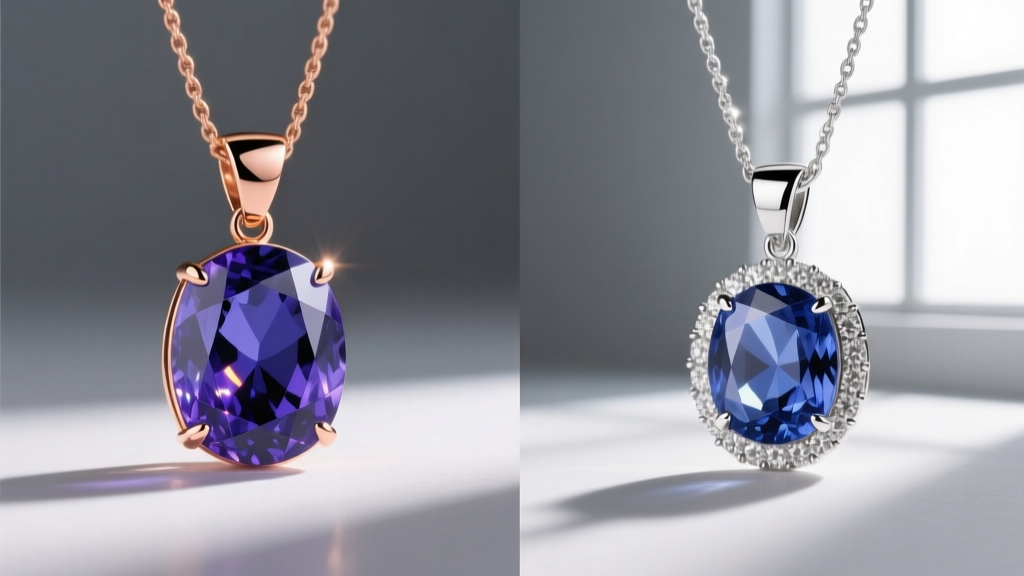
For cool-toned purple stones like tanzanite or light lavender chalcedony, rhodium-plated 14k White Gold or oxidized Sterling Silver are superior choices. Rhodium provides a highly reflective, neutral white surface that maximizes the stone's brilliance without introducing competing color frequencies. Oxidized silver, where the recessed areas of the metal are intentionally darkened using liver of sulfur, creates a high-contrast backdrop that makes the vibrant purple of sugilite or charoite appear more saturated and three-dimensional. The dark matrix of the oxidized silver mimics the natural inclusions found within the stones, creating a cohesive, organic aesthetic.
Maintenance and Ultrasonic Cleaning Risks
Maintaining a purple statement necklace requires abandoning the convenience of ultrasonic cleaners. While ultrasonic waves are safe for unfractured diamonds and sapphires, they are notoriously destructive for many purple gemstones. Tanzanite is highly sensitive to thermal shock and the high-frequency vibrations of an ultrasonic bath can exploit microscopic internal fissures, causing the stone to shatter or cleave entirely. Similarly, sugilite is frequently stabilized with clear resins to improve its polish and durability; ultrasonic cavitation can strip this resin, leaving the stone porous and dull.
The correct maintenance protocol involves a manual, chemical-free approach. Use a lukewarm solution of distilled water and a few drops of pH-neutral dish soap. Submerge the piece for no more than three minutes to avoid prolonged water exposure to any porous matrix inclusions. Agitate gently with a soft-bristled, untreated goat-hair brush, paying special attention to the back of the cabochon where skin oils and lotions accumulate. Dry the piece immediately with a microfiber cloth, and use a low-pressure compressed air canister to blow moisture out from beneath the setting prongs and inside the chain links to prevent long-term oxidation and galvanic corrosion.
Final Considerations for the Collector
Investing in a high-quality purple statement necklace is an exercise in balancing aesthetic impact with structural integrity. By scrutinizing the gemstone's treatment history, demanding soldered bails and heavy-gauge wheat chains, and matching the metal alloy to the stone's specific pleochroic properties, you ensure the piece remains both visually stunning and mechanically sound for decades. Always request a loupe inspection of the bail solder joints and prong tension before finalizing a purchase, as these hidden engineering details are the true markers of master craftsmanship in statement jewelry.


