Black and Gold Statement Necklace: Material Guide 2026
Explore the metallurgy, gemology, and structural engineering behind a black and gold statement necklace in our 2026 material guide.

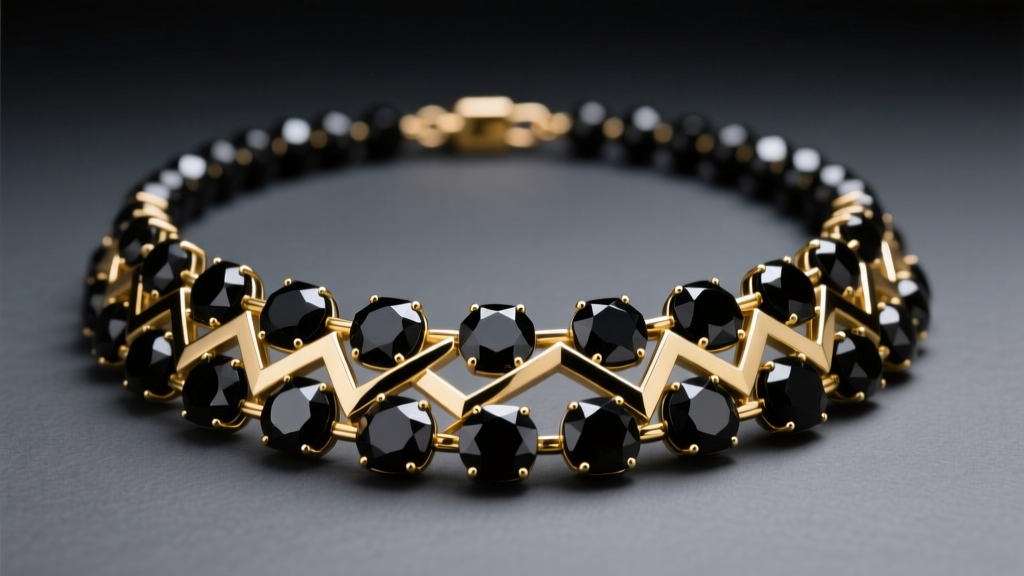
The juxtaposition of light-absorbing black and light-reflecting gold creates one of the most commanding aesthetics in modern jewelry. A well-crafted black and gold statement necklace is not merely an accessory; it is an exercise in structural engineering, material science, and visual weight distribution. As we move through 2026, the market has shifted away from lightweight, mass-produced costume pieces toward substantial, heirloom-quality garments that demand a deep understanding of metallurgy and gemology.
Whether you are evaluating a piece for your personal collection or designing a new line, understanding the specific material properties, failure modes, and structural requirements of these necklaces is critical. This guide breaks down the exact specifications that separate a fragile novelty from a lasting sartorial investment.
The Metallurgy of Gold: Solid, Vermeil, and PVD
The "gold" component of a statement necklace must endure significant tensile stress, especially when supporting heavy black gemstones or enamel work. The choice of gold alloy dictates both the drape and the longevity of the piece.
14k vs. 18k Solid Gold
While 18k gold (75% pure gold) offers a richer, warmer hue, it is relatively soft, registering around 125 on the Vickers hardness scale (HV). For a heavy black and gold statement necklace featuring large geometric links or heavy stone settings, 14k gold (58.5% pure gold) is often the superior structural choice. The higher concentration of copper, silver, and zinc alloys increases the hardness to approximately 140 HV, providing the necessary rigidity to prevent link distortion under the weight of a 100-gram pendant.
Gold Vermeil and FTC Standards
If you are opting for vermeil rather than solid gold, you must verify the plating thickness. According to the Federal Trade Commission (FTC), true gold vermeil requires a sterling silver base plated with a minimum of 2.5 microns of gold. Many commercial brands use "gold plated" brass, which typically features less than 0.5 microns of gold and will wear through to the base metal within months of high-friction use. For statement pieces that rest against the collarbone, always demand a minimum of 3.0 microns to ensure longevity.
PVD Coated Titanium and Steel
Physical Vapor Deposition (PVD) has revolutionized the 2026 market for avant-garde statement jewelry. PVD gold coatings over surgical-grade stainless steel or titanium offer a scratch resistance up to 10 times greater than traditional electroplating. While it lacks the intrinsic melt value of solid gold, PVD is virtually impervious to the acidic pH of human sweat, making it ideal for heavy, skin-flush statement collars.
Engineering the Black: Gemstones vs. Alloys vs. Enamel
The "black" elements provide the contrast and visual gravity of the necklace. The material chosen here affects the piece's weight, fragility, and light refraction.
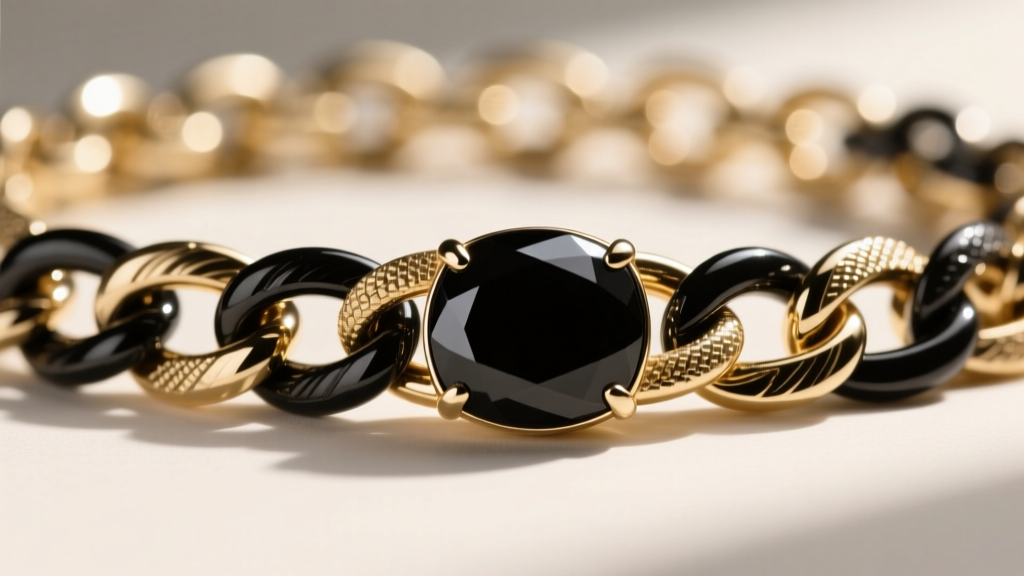
Natural Black Gemstones: Spinel vs. Onyx
Not all black stones are created equal. Black onyx is the most common choice, but it is important to note that almost all commercial black onyx is actually gray agate that has been treated with heat and carbon dyes. It sits at a 6.5 to 7 on the Mohs hardness scale, making it susceptible to scratching if stored improperly. According to the GIA Onyx Profile, its vitreous luster is attractive but somewhat flat.
For superior optical performance, high-end jewelers utilize black spinel. As detailed by the Gemological Institute of America (GIA), natural black spinel ranks at an 8 on the Mohs scale and possesses a higher refractive index, giving it a sharp, mirror-like luster that rivals black diamonds at a fraction of the cost. A statement necklace utilizing faceted black spinel will catch ambient light far more effectively than opaque onyx.
Black Rhodium and Ruthenium Plating
To achieve a black metal aesthetic, jewelers often plate gold or silver with black rhodium or ruthenium. These platinum-group metals provide a striking, gunmetal-black finish. However, they are surface treatments. On a statement necklace, black rhodium applied to the high points of a textured gold link will inevitably wear away within one to two years of daily use, revealing the bright gold beneath. This "patina of wear" is acceptable in some design circles, but it must be understood as a deliberate material failure mode.
Guilloché and Champlevé Enamel
For a deep, glass-like black, fired vitreous enamel is unmatched. Champlevé enamel involves carving troughs into the gold base and fusing glass powder at 1,400°F. While the color is permanent and UV-resistant, enamel is essentially glass and will shatter if the heavy statement necklace is dropped onto a hard tile surface.
| Black Material | Mohs Hardness | Weight Profile | Primary Failure Mode | Relative Cost |
|---|---|---|---|---|
| Black Spinel | 8.0 | Moderate | Chipping at girdle | High |
| Dyed Black Onyx | 6.5 - 7.0 | Moderate | Surface scratching | Low |
| Black Rhodium | N/A (Plating) | N/A | Friction wear-off | Medium |
| Vitreous Enamel | 5.0 - 6.0 | Light | Impact shattering | High |
Load-Bearing Mechanics: Chain Gauges and Clasps
A true statement necklace typically weighs between 60 and 150 grams. Standard jewelry chains (0.8mm to 1.0mm) will catastrophically fail under this load, snapping at the soldered jump rings. When evaluating a black and gold statement necklace, you must inspect the chain gauge and clasp mechanics.
- Chain Thickness: The chain must be a minimum of 1.5mm to 2.5mm in diameter. Box chains and rope chains offer the best structural integrity due to their interlocking geometry, which distributes tensile stress across multiple contact points rather than a single weak link.
- Jump Rings: All connections, especially the one holding the central pendant, must use soldered jump rings. Open jump rings will pull apart under the pendulum effect of a heavy black onyx or spinel drop.
- Clasp Engineering: Standard 10mm lobster clasps are insufficient. Look for oversized 18mm lobster clasps with heavy-duty internal springs, or a mechanical toggle clasp where the T-bar is at least 20% wider than the inner diameter of the receiving ring to prevent accidental slip-through.
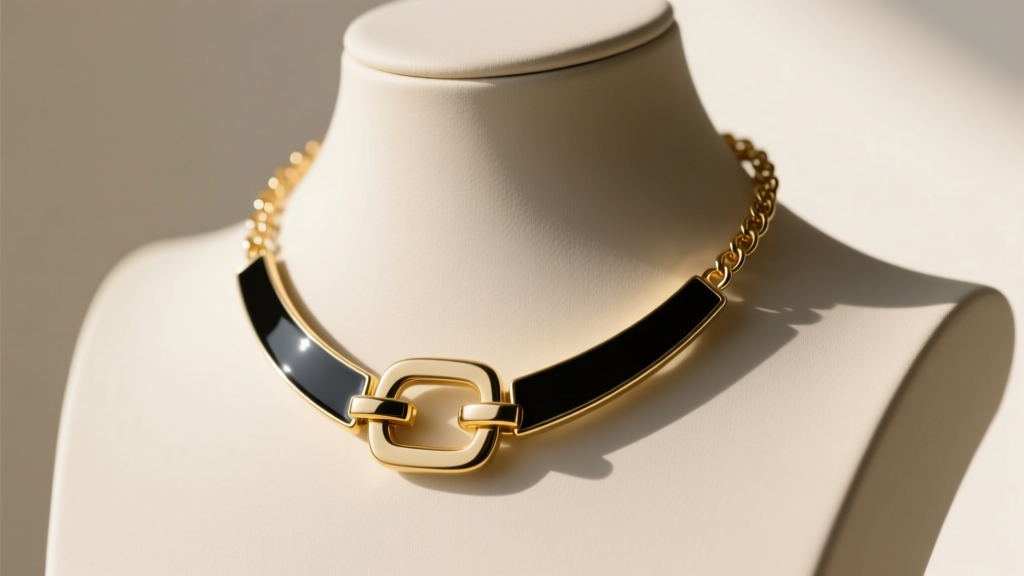
Common Failure Modes and Maintenance Protocols
Understanding how a piece degrades allows you to maintain it properly. The most common failure in mixed-metal and mixed-material statement jewelry is galvanic corrosion and chemical degradation.
If a necklace features black rhodium plating adjacent to bare sterling silver or copper-heavy 14k gold, exposure to high humidity and sulfur in the air can cause the base metals to tarnish, which then bleeds onto the rhodium, creating a dull, muddy appearance. To prevent this, store the necklace in an airtight polyethylene bag with an activated charcoal or silver sulfide scavenging strip.
Furthermore, if your black and gold statement necklace features porous stones like dyed onyx, avoid ultrasonic cleaners. The high-frequency vibrations can cause the dye to leach out, and the heat from the water can fracture internal stress points within the stone. Always clean these pieces with a soft, lint-free microfiber cloth and a mild, pH-neutral soap solution.
2026 Market Pricing and Value Benchmarks
The price of a black and gold statement necklace varies wildly based on material authenticity. Use these benchmarks to assess value in the current market:
- Fashion / Costume Tier ($80 - $250): Features brass or stainless steel bases with PVD gold coating and black enamel or black glass stones. Excellent for trend-driven styling but lacks intrinsic value.
- Demi-Fine / Vermeil Tier ($300 - $800): Sterling silver base with 3.0-micron 18k gold vermeil, featuring genuine black onyx or black spinel accents. The sweet spot for accessible luxury and substantial weight.
- Fine / Heirloom Tier ($2,500 - $10,000+): Solid 14k or 18k gold structural links, paired with high-grade natural black spinel, black diamonds, or intricate guilloché enamel work. These pieces retain melt value and appreciate as artisanal collectibles.
By prioritizing structural integrity, verified material grades, and superior gemological choices, you can secure a black and gold statement necklace that serves as a commanding, enduring cornerstone of your jewelry wardrobe for decades to come.


