Extra Long Pearl Necklace Value Guide: Is It Worth It in 2026?
Discover how to evaluate an extra long pearl necklace in 2026. We break down pricing tiers, luster grades, knotting quality, and true investment value.

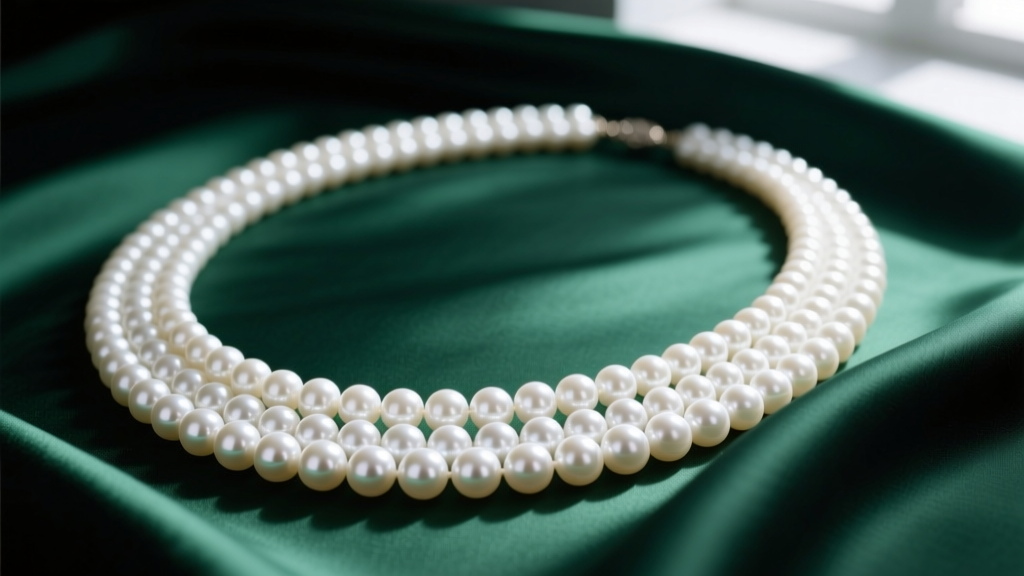
When evaluating fine jewelry, few pieces command the presence and versatility of an extra long pearl necklace. Often classified as 'opera' (28 to 34 inches) or 'rope' (45 to 60+ inches) lengths, these dramatic strands require a massive inventory of matched pearls, making their pricing structures complex. In 2026, the market has shifted dramatically with the rise of high-grade nucleated freshwater pearls, disrupting traditional saltwater pricing models. But how do you determine if a $400 strand is a steal or a trap, and when is a $12,000 rope genuinely worth the investment?
This comprehensive value assessment breaks down the exact material grades, construction metrics, and pricing tiers you need to know before purchasing an extra long pearl necklace. Whether you are looking for a vintage-inspired opera length or a modern 60-inch rope to layer, understanding the anatomy of value will protect your wallet and elevate your collection.
Defining the Extra Long Pearl Necklace
To accurately assess value, we must first establish the industry standards for length. The American Gem Society categorizes pearl lengths into distinct tiers. While a standard princess necklace sits at 18 inches, extra long necklaces fall into two primary categories:
- Opera Length (28–34 inches): Falls below the bust line. Requires roughly 90 to 110 pearls (assuming an 8mm diameter). This length is highly sought after for formal wear and can be doubled into a choker with a specialized shortener clasp.
- Rope Length (45–60+ inches): Falls at the waist or lower. Requires 140 to 190+ pearls. This is the most expensive tier to produce due to the sheer volume of pearls required and the immense difficulty in matching luster and overtone across such a large strand.
The fundamental rule of pearl valuation is that matching difficulty increases exponentially with length. Finding 150 pearls with identical luster, surface cleanliness, and body color is significantly harder than finding 40, which is why rope lengths carry a premium multiplier over standard chokers.
The 2026 Value Matrix: Material Grades & Pricing Tiers
Not all pearls are created equal. The origin and cultivation method dictate the baseline value of your necklace. Below is the current market pricing matrix for extra long strands (specifically 60-inch rope lengths with 8mm to 9mm pearls).
| Pearl Type | Cultivation Method | Luster Grade | Price Range (60-inch Rope) | Value Proposition |
|---|---|---|---|---|
| Edison Freshwater | Bead-nucleated | Excellent to Good | $800 – $2,500 | Best ROI. Offers saltwater-like luster and roundness at a fraction of the cost. |
| Traditional Freshwater | Tissue-nucleated | Good to Fair | $250 – $700 | Budget-friendly, but often exhibits 'chalky' luster and off-round shapes. |
| Akoya (Saltwater) | Bead-nucleated | Excellent (Mirror) | $8,000 – $18,000 | Unmatched sharp luster, but extremely rare and heavy in 60-inch lengths. |
| Tahitian (Saltwater) | Bead-nucleated | Excellent to Good | $12,000 – $35,000+ | Exotic dark colors with peacock overtones. A true luxury investment piece. |
For the budget-conscious buyer in 2026, Edison pearls represent the ultimate value hack. Because they are bead-nucleated (like saltwater pearls), they achieve near-perfect roundness and deep, mirror-like luster, bypassing the historical limitations of rice-shaped freshwater pearls.
Construction Metrics: Knotting, Thread, and Clasps
A common failure mode in budget extra long pearl necklaces is structural collapse. A 60-inch strand of 9mm pearls can weigh upwards of 70 grams. This constant downward pull creates immense tension on the stringing material and the clasp. When assessing value, you must inspect the hardware and knotting technique.
The Knotting Standard
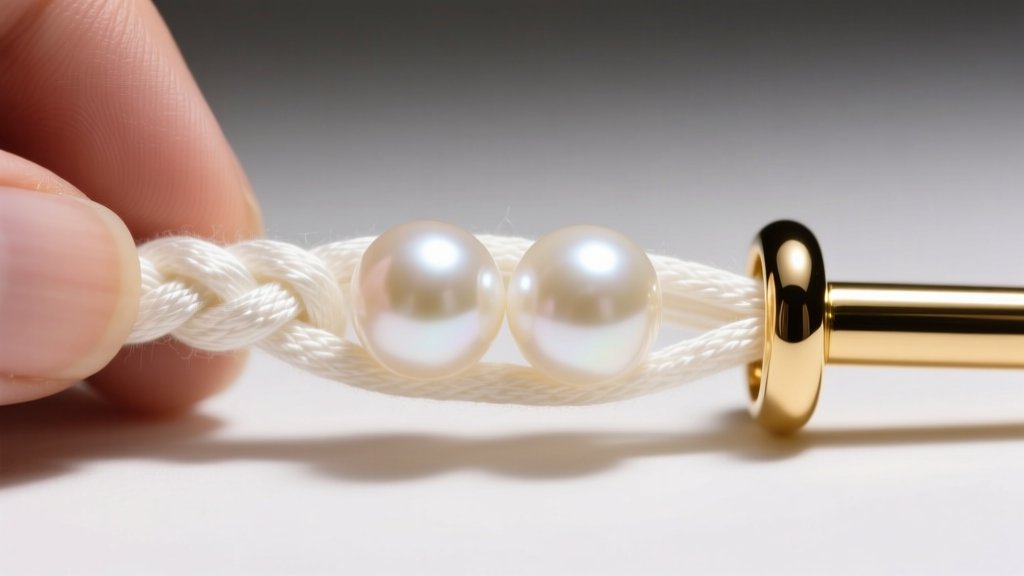
Every high-value pearl necklace must be individually hand-knotted. Knots serve two purposes: they prevent catastrophic loss if the strand snaps (you only lose one pearl, not 150), and they prevent the pearls from rubbing against each other, which destroys nacre over time.
- Premium Standard: Hand-knotted on 100% silk thread (e.g., Griffin silk). Silk has a natural 'give' that drapes beautifully and holds knots securely. Expect to pay a $150–$300 labor premium for this.
- Budget Red Flag: Machine-strung on nylon or polyester wire without knots, or 'French-knotted' only at the clasp. Nylon stretches over time, leaving unsightly gaps between the pearls, and a single break will send your entire investment scattering across the floor.
Clasp Hardware and French Wire
Never accept a base-metal or sterling silver clasp on a strand valued over $1,000. The weight of an extra long necklace will quickly wear down soft silver, leading to clasp failure. Demand 14k or 18k gold (yellow, white, or rose) or platinum. Furthermore, inspect the area where the thread meets the clasp. High-end jewelers use French wire (a tiny coil of fine gold or silver) to protect the silk thread from fraying against the metal clasp ring. If the silk is looped directly through the metal, walk away.
Evaluating Luster and Surface Quality on Long Strands
The Gemological Institute of America (GIA) identifies luster as the most critical quality factor in pearl valuation. Luster refers to the sharpness and intensity of light reflected from the pearl's surface and the layers of nacre just beneath it.

When examining an extra long pearl necklace, do not just look at the pearls near the clasp. Unscrupulous sellers will place the highest-grade pearls at the front (the 'graduated' or 'center-matched' section) and hide dull, blemished pearls near the nape of the neck or the back of the rope.
The Windowpane Test: Hold the necklace near a window or a distinct light source. An 'Excellent' grade pearl will reflect a sharp, crisp image of the window frame, almost like a mirror. A 'Fair' or 'Poor' grade pearl will reflect a blurry, hazy, or chalky image. Because a 60-inch rope wraps around the neck and drapes down the torso, low-luster pearls will be highly visible from all angles, severely diminishing the necklace's aesthetic value.
Surface Blemishes and Nacre Thickness
Surface cleanliness is graded on a scale from 'Clean' to 'Heavily Blemished'. In extra long strands, finding 150 perfectly clean pearls is nearly impossible without entering the $50,000+ tier. 'Slightly Blemished' is the industry standard for high-value ropes, provided the blemishes (tiny pits, bumps, or wrinkles) are not visible from a conversational distance. However, you must ensure the nacre is thick. Thin-nacre pearls (common in cheap, mass-produced Akoyas) will eventually peel or crack, especially at the drill holes where friction is highest.
Styling ROI: Maximizing Cost-Per-Wear
One of the strongest arguments for investing in an extra long pearl necklace is its unparalleled styling versatility, which drastically improves its cost-per-wear ratio compared to a rigid 16-inch choker. A 60-inch rope can be styled in at least four distinct ways:
- The Single Cascade: Worn long and loose over a turtleneck or deep V-neck gown for a sleek, elongating silhouette.
- The Double Wrap: Looped twice to create a layered 30-inch opera and a shorter choker effect simultaneously.
- The Lariat Knot: Tied in a loose overhand knot at the sternum, creating a modern, asymmetrical Y-necklace look.
- The Brooch Pin: Gathered at the shoulder or hip and secured with a vintage brooch for high-fashion editorial styling.
This versatility means an extra long pearl necklace functions as four separate pieces of jewelry in one, justifying a higher initial budget allocation.
The Investment Verdict: Which Tier Offers the Best ROI?
If your budget is under $1,000, the highest value lies in premium Edison freshwater pearls (8mm–9mm). You will achieve the visual impact, weight, and luster of a much more expensive saltwater strand, provided you verify that the strand is hand-knotted on silk with a 14k gold clasp. Avoid traditional tissue-nucleated freshwater ropes in this length, as the lack of roundness and chalky luster becomes painfully obvious over 60 inches.
If your budget exceeds $8,000 and you are seeking a generational heirloom, a hand-matched Akoya or Tahitian rope is a masterclass in luxury. The sharp, mirror-like luster of top-tier Akoya or the mesmerizing peacock overtones of Tahitian pearls cannot be perfectly replicated by freshwater alternatives. However, ensure you purchase from a specialist who provides a detailed dossier on nacre thickness and matching criteria.
Ultimately, the true value of an extra long pearl necklace is not just in its materials, but in its structural integrity and visual harmony. By prioritizing hand-knotting, secure gold hardware, and consistent luster over sheer size, you will secure a breathtaking piece that retains its elegance—and its value—for decades to come.


