Troubleshooting Your Trendy Cross Necklace: Fixes & Care
Learn how to troubleshoot common issues with your trendy cross necklace, from fixing tarnished plating and tangled chains to replacing weak clasps.


The Anatomy of a Trendy Cross Necklace Failure
The trendy cross necklace has cemented its place as a cornerstone of modern jewelry layering. From minimalist, micro-pavé diamond crosses to chunky, gothic-inspired oxidized silver pieces, the versatility of the cross pendant is unmatched in 2026. However, the mass production required to meet the soaring demand for these stylish pieces often results in structural vulnerabilities. Fast-fashion jewelry manufacturers frequently cut corners on clasp tension, jump ring gauges, and plating thickness, leaving consumers frustrated when their favorite accessories fail after just a few months of wear.
As jewelry repair specialists, we see a predictable pattern of wear and tear. Whether your chain is hopelessly knotted, the gold vermeil is rubbing off to reveal a brass underbelly, or the micro-stones are popping out of their settings, understanding the metallurgical and mechanical failure points of your jewelry is the first step toward fixing it. Below, we break down the four most common problems plaguing trendy cross necklaces and provide actionable, professional-grade solutions to restore them.
Issue 1: Rapid Tarnishing and 'Green Skin' Syndrome
Nothing ruins the aesthetic of a chic gold cross pendant faster than a dull, grayish-green tarnish or a ring of green oxidation left on your collarbone. This issue is almost exclusively tied to the base metal and the plating method used by the manufacturer. According to the Gemological Institute of America (GIA), human sweat contains chlorides, salts, and varying pH levels that aggressively react with copper and brass—the most common base metals in affordable trendy jewelry.
If your necklace is turning your skin green, you are dealing with a copper-alloy base that has lost its protective topcoat. Many budget brands use 'flash plating,' which applies a microscopic layer of gold (often less than 0.1 microns). This wears away in weeks. In contrast, high-quality PVD (Physical Vapor Deposition) coatings bond at a molecular level and measure 2 to 3 microns thick, offering vastly superior tarnish resistance.
| Base Metal | Plating Type | Failure Mode | Troubleshooting Fix |
|---|---|---|---|
| Brass | Flash Gold (0.1μm) | Green oxidation, rapid wear | Replate via electroplating; apply clear nail polish as a temporary barrier. |
| Sterling Silver | Rhodium Flash | Black sulfide tarnish | Use a silver polishing cloth; store with anti-tarnish silica strips. |
| Stainless Steel | PVD Gold (2.0μm) | Extremely slow fading | Clean with mild dish soap; avoid chlorine exposure to preserve PVD bond. |
To halt active tarnishing on a brass-based trendy cross necklace, you must strip the remaining oxidized layer using a gentle jeweler's rouge, then seal the metal. For a quick, non-permanent fix, painting the back of the pendant with a thin layer of clear polyurethane or specialized jewelry shield will create a physical barrier between the copper and your skin's moisture.
Issue 2: Micro-Link Chain Tangling

Trendy cross necklaces often feature delicate chains—such as 1.2mm box chains or micro-rope chains—to keep the focus on the pendant. Unfortunately, these thin links are highly susceptible to knotting, especially when layered with other necklaces of similar lengths. Rope chains, with their twisted, interlocking loops, are the worst offenders because they easily catch on the microscopic pores of your skin or the fibers of your clothing.
When a micro-chain knots, pulling on it will only tighten the loop, potentially warping the soft metal links beyond repair. Instead of brute force, use a chemical lubricant and a precision tool. Lay the tangled necklace flat on a hard, non-porous surface like a glass tablet or a ceramic plate. Apply a single drop of mineral oil or unscented baby oil directly to the knot. Using a 0.5mm beading needle or a standard sewing pin, gently work the tip into the center of the knot to loosen the tension. The oil reduces the friction coefficient between the metal links, allowing them to slide apart without stretching the wire.
Once untangled, wash the chain in a solution of warm water and a few drops of phosphate-free dish soap to remove the oil residue, which can otherwise attract dust and grime over time.
Issue 3: Jump Ring Separation and Clasp Fatigue
The most common point of catastrophic failure on any pendant necklace is the jump ring—the small circular wire loop that connects the chain to the clasp or the pendant bail. Many trendy cross necklaces are assembled using machine-stamped jump rings that are not soldered shut. Over time, the lateral tension of putting on and taking off the necklace causes the jump ring to twist open, resulting in a lost pendant.
Furthermore, the spring rings commonly used on budget necklaces suffer from internal spring fatigue. The tiny coil inside the clasp loses its tension, causing the clasp to fail to close securely. According to industry standards detailed by suppliers like Rio Grande, upgrading your hardware is a permanent solution to this mechanical flaw.
The Hardware Upgrade Protocol
- Replace the Jump Ring: Swap the factory 22-gauge jump ring for a thicker 18-gauge or 20-gauge split ring or soldered jump ring. An 18-gauge wire is roughly 1.02mm thick, providing enough tensile strength to withstand daily pulling without warping.
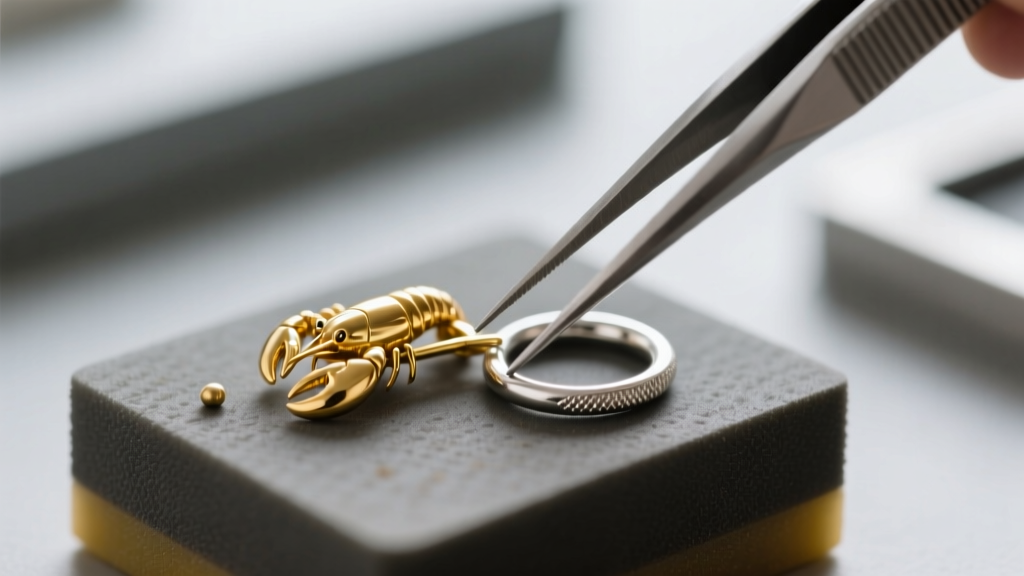
- Upgrade the Clasp: Discard the spring ring. Install a 5mm or 7mm lobster clasp. Lobster claws utilize a sturdier lever mechanism and a heavier internal spring, drastically reducing the chance of accidental unhooking.
- Work Hardening: If you are closing your own jump rings with flat-nose pliers, ensure you twist them laterally (side-to-side) rather than pulling them apart outward, which weakens the metal's crystalline structure.
Issue 4: Micro-Pavé Stone Loss
Embellished cross necklaces featuring micro-pavé cubic zirconia or lab-grown diamonds are incredibly popular, but they present a unique troubleshooting challenge. In micro-pavé settings, stones as small as 1.0mm to 1.5mm are held in place by microscopic beads of metal pushed up from the base, or by ultra-thin prongs. Because these crosses are often worn as statement pieces that catch on sweater threads, scarf fringes, and hair, the prongs are easily bent backward, releasing the stones.
If you notice a missing stone, do not continue wearing the necklace. The empty setting creates a jagged edge that will inevitably catch on fabric and loosen the adjacent stones, leading to a cascading failure of the pavé work.
"Micro-pavé requires a jeweler's microscope and specialized beading tools to repair. Attempting to bend a 0.3mm prong back over a 1mm stone with household tweezers will almost certainly scratch the metal or crack the gemstone's girdle." - Master Bench Jeweler
For a temporary at-home fix to protect the empty setting until you can visit a professional, apply a minuscule dot of museum wax or clear jeweler's epoxy over the empty hole to smooth the surface and prevent snagging. For a permanent fix, a jeweler will need to re-tip the worn prongs using a laser welder, which applies heat without risking thermal shock to the surrounding gemstones.
Preventative Maintenance Framework
Troubleshooting is only half the battle; implementing a rigorous care routine will extend the lifespan of your trendy cross necklace by years. The Jewelers of America organization recommends a structured approach to jewelry maintenance that adapts to your daily lifestyle.
- The 'Last On, First Off' Rule: Always put your necklace on after applying perfumes, lotions, and hairsprays. The alcohols and aerosolized oils in these products accelerate the degradation of both PVD coatings and rhodium flashes.
- Friction Management: When layering your cross necklace, ensure there is at least a 1.5-inch difference in length between it and the adjacent chain. This prevents the metal links from grinding against each other, which acts like a micro-file and strips away plating.
- Proper Storage Architecture: Never toss your necklace into a communal jewelry box. Hang the cross pendant from a dedicated jewelry tree or lay it flat in a segmented, anti-tarnish velvet tray. Leaving the clasp unhooked while in storage prevents the chain from accidentally knotting when moved.
- Monthly Ultrasonic Caution: While ultrasonic cleaners are excellent for solid gold and platinum, never use them on plated trendy crosses or pavé settings. The high-frequency vibrations can shatter the microscopic prongs and cause the plating to peel off in sheets.
By understanding the mechanical and chemical realities of how your jewelry is constructed, you can transition from reacting to broken accessories to proactively maintaining them. A trendy cross necklace is an investment in your personal style; treating it with technical precision ensures it remains a staple in your wardrobe for years to come.


