Georg Jensen Silver Necklace Vintage: A Gifting & Occasion Guide
Discover how to gift a Georg Jensen silver necklace vintage piece. Learn to identify hallmarks, choose the right designer era, and match occasions.

The Allure of Gifting Vintage Georg Jensen
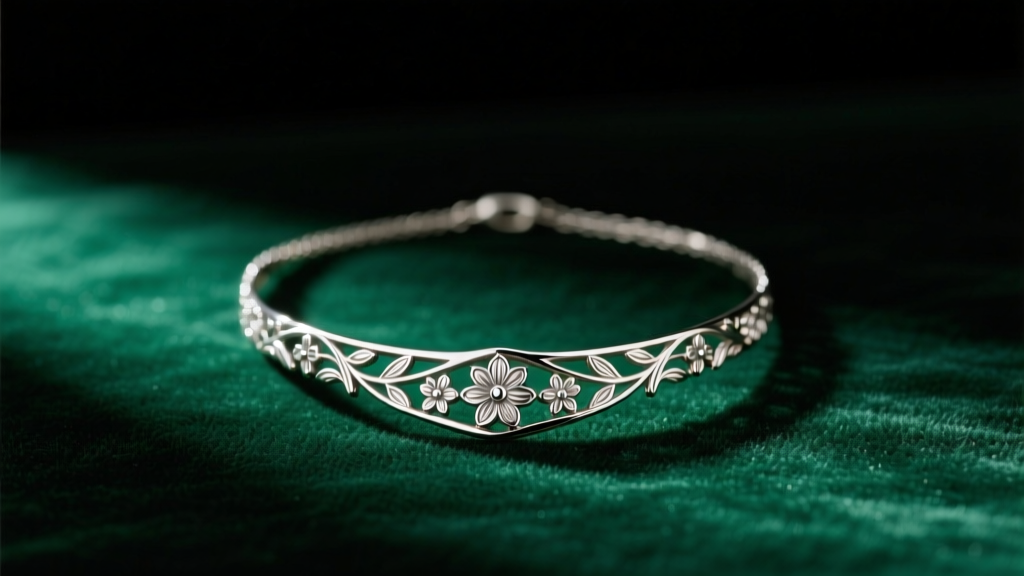
In the 2026 vintage jewelry market, Scandinavian mid-century and Art Nouveau pieces have cemented their status as both wearable art and alternative investments. Gifting a Georg Jensen silver necklace vintage piece is not merely about presenting a beautiful accessory; it is about bestowing a fragment of Danish design history. Founded in Copenhagen in 1904, the House of Georg Jensen revolutionized silversmithing by merging masterful craftsmanship with organic, nature-inspired, and later, fiercely modernist aesthetics. Whether you are celebrating a milestone anniversary, a significant graduation, or a major career achievement, a vintage Jensen piece carries an emotional and historical weight that contemporary mass-produced jewelry simply cannot replicate. However, navigating the secondary market requires a keen eye for hallmarks, designer eras, and condition nuances. This guide provides the actionable expertise needed to select, authenticate, and gift the perfect vintage Jensen necklace.
Decoding the Hallmarks: 830S vs. 925S Silver
Before purchasing any vintage piece, understanding the silver purity stamps is critical for both valuation and authenticity. According to the Lang Antiques University, the evolution of Jensen's silver standards directly correlates with the era and origin of the piece.
- 830S (The Danish Standard): Prior to the widespread international adoption of sterling, Denmark's national silver standard was 830 parts per thousand (83% pure silver). Vintage pieces stamped '830S' are typically older, domestically produced Danish pieces. Collectors highly prize 830S silver for its slightly warmer, softer luster and its historical authenticity. Because it contains slightly more copper alloy than sterling, it is marginally more resistant to deep dents but can develop a rich, complex patina over time.
- 925S (Sterling Standard): As Jensen expanded globally, particularly post-WWII, the brand transitioned to the international 925S sterling standard to satisfy export markets. Pieces marked '925S' are generally mid-to-late 20th century. They offer a brighter, whiter metallic reflection and are the standard for iconic mid-century modernist designs.
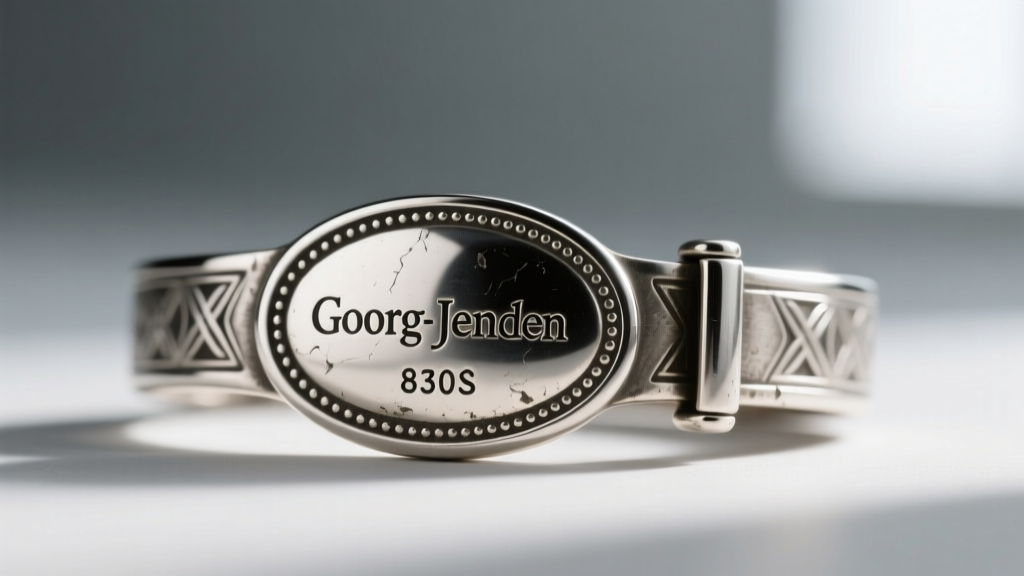
Alongside the purity stamp, look for the maker's mark. Early pieces feature the 'GI' script or the 'three crowns' mark, while mid-century pieces typically display the 'GEORG JENSEN' stamp enclosed in a dotted oval, accompanied by 'DENMARK' and a specific design number (e.g., '104').
Matching the Designer Era to the Recipient
Georg Jensen collaborated with some of the most influential silversmiths and designers of the 20th century. Matching the specific designer's aesthetic to the recipient's personal style is the key to a successful gift.
Art Nouveau & Early Organic (1904–1930s)
For the romantic, nature-loving recipient, early Jensen pieces are unparalleled. Characterized by intricate grape clusters, blooming magnolias, and intertwined vines, these necklaces often feature cabochon gemstones like lapis lazuli, malachite, or coral. They are heavy, sculptural, and serve as statement pieces. Expect to pay between $1,500 and $5,000+ for authenticated early pendants on original chains.
Mid-Century Modernism (1950s–1970s)
This is the golden era for Jensen collectors. Designers like Henning Koppel and Vivianna Torun Bulow-Hube stripped away ornamentation, focusing on fluid, ergonomic, and biomorphic forms. Koppel's 'Design 104' and '105' link necklaces resemble abstract vertebrae or water droplets, while Torun's 'Mobius' (Design 204) offers an infinite, continuous loop. These pieces are perfect for the minimalist, the architect, or the modern professional. Prices typically range from $800 to $2,500 depending on the weight and rarity of the link configuration.
Late 20th Century Sculptural (1980s–1990s)
Designers like Allan Scharff and Arno Malinowski introduced sharper geometries, kinetic elements, and mixed media. Malinowski is famous for his 'Japonica' series, which combines oxidized silver with intricate gold inlay and vibrant vitreous enamel. These pieces suit the eclectic collector who appreciates mixed metals and narrative-driven art jewelry.
Occasion Matching: When to Gift Which Piece
To ensure your gift resonates with the specific milestone, consult this occasion-matching framework:
| Occasion | Recommended Designer / Style | Aesthetic Vibe | Estimated Budget (2026) |
|---|---|---|---|
| 25th Silver Anniversary | Henning Koppel (e.g., Design 104) | Fluid, enduring, modernist elegance | $1,200 - $2,200 |
| Milestone Graduation | Vivianna Torun Bulow-Hube (Mobius) | Intellectual, continuous, empowering | $900 - $1,800 |
| Heirloom Birthday (40th/50th) | Early Art Nouveau (Grape/Magnolia) | Romantic, historical, opulent | $2,000 - $4,500+ |
| Career Achievement | Arno Malinowski (Enamel Inlay) | Artistic, detailed, unique | $600 - $1,400 |
Authentication & Condition Checklist for Buyers
The vintage market is unfortunately rife with counterfeit stamps and 'franken-chains' (where authentic pendants are attached to non-original, mass-produced chains). When inspecting a Georg Jensen silver necklace vintage listing or viewing it in person, run through this strict condition checklist:
- Verify the Clasp Mechanism: Original Jensen clasps are engineering marvels. Look for the integrated box clasp or the specific fold-over hook mechanisms used in the 1960s. If the clasp is a modern lobster claw stamped '925' without the dotted oval, the chain has likely been replaced.
- Check Solder Joints: Examine the links under a 10x jeweler's loupe. Mid-century link necklaces should have seamless, invisible soldering. Visible, sloppy blobs of silver indicate poor aftermarket repairs that compromise the structural integrity and value.
- Assess the Patina: Do not buy a vintage piece that has been aggressively machine-polished. The deep, dark oxidation in the crevices of a Koppel or Torun design is intentional; it provides the contrast that gives the silver its three-dimensional sculptural quality. A piece that is blindingly white has been stripped of its historical character.
- Confirm Design Numbers: Cross-reference the stamped design number with the official Georg Jensen Heritage Archives or reputable auction house catalogs to ensure the pendant and chain were originally conceived as a single unit.
Sizing, Layering, and Care Instructions
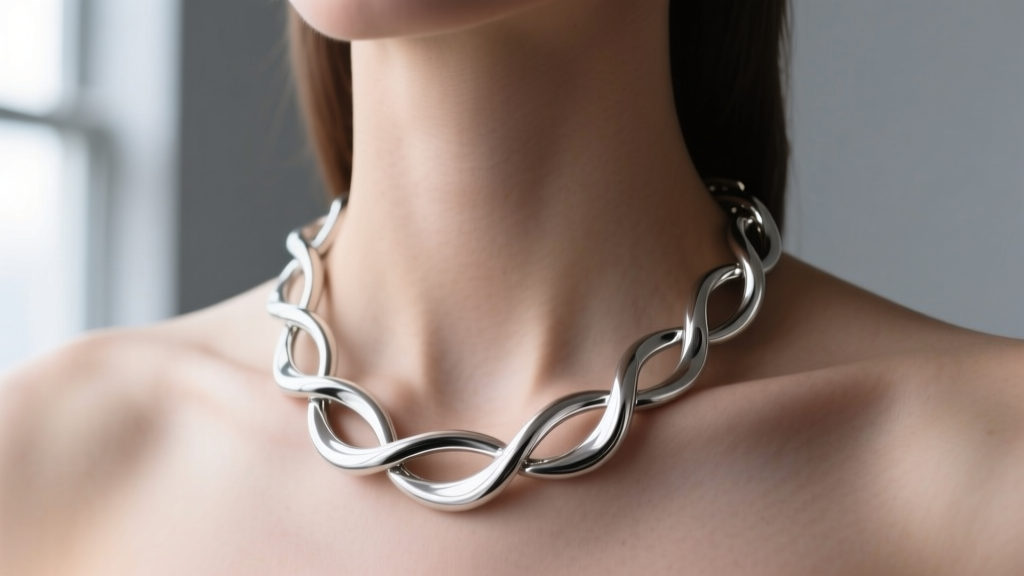
Vintage Jensen necklaces often come in shorter, mid-century lengths (typically 16 to 17.5 inches), designed to sit gracefully at the base of the throat. In 2026, the styling trend leans toward juxtaposing these heavy, organic silver pieces with delicate, modern 18k yellow gold chains to create a mixed-metal, multi-texture aesthetic. If the recipient prefers a longer drape, consult a specialized vintage jeweler who can source period-correct Jensen extension links rather than adding a generic modern chain.
Expert Care Tip: Never use liquid silver dips or abrasive chemical baths on vintage Georg Jensen pieces. These chemicals strip the intentional factory-applied oxidation and can permanently damage porous gemstones like coral or lapis lazuli often found in early designs. Instead, gift the recipient a high-quality impregnated polishing cloth (such as a Godards or Town Talk cloth) and instruct them to gently buff only the high points of the metal, leaving the dark recesses untouched to preserve the sculptural depth.
By understanding the nuances of silver standards, designer histories, and structural authentication, you elevate your gift from a simple transaction to a deeply considered curation of design history. A vintage Georg Jensen necklace is a timeless testament to artistry, guaranteed to be cherished and passed down for generations to come.


