Queens Necklace Mumbai: The Beginner's Royal Jewelry Guide
Discover the Queens necklace style in Mumbai. Learn to shop for authentic multi-strand pearl and Polki Maharani necklaces in Zaveri Bazaar.

Beyond the Skyline: Defining the Royal Jewelry Aesthetic
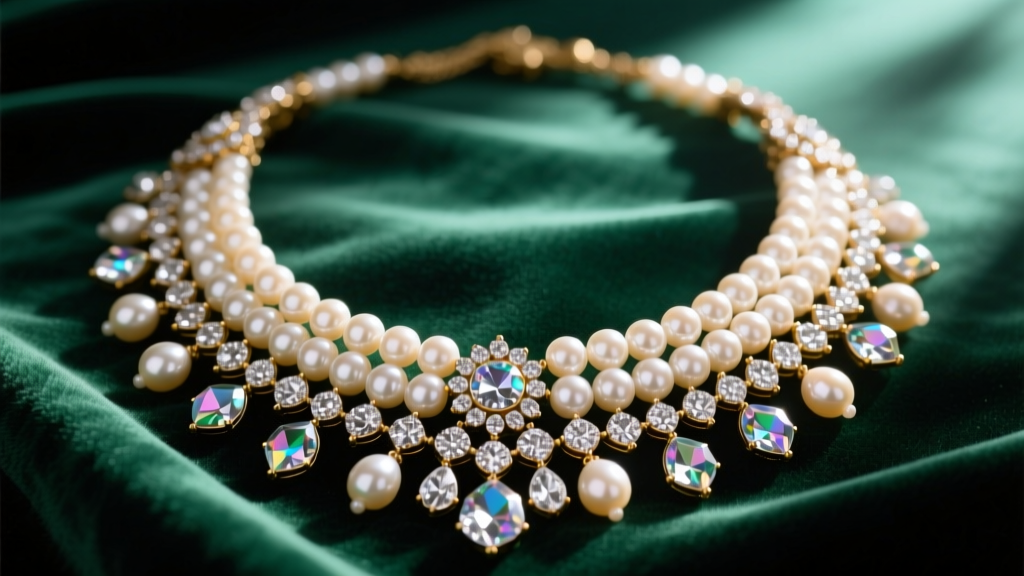
While millions of tourists know the 'Queens Necklace' as the glittering, curved skyline of Mumbai’s Marine Drive at night, in the exclusive world of high Indian jewelry, this phrase evokes a completely different kind of opulence. When collectors and brides search for a Queens necklace Mumbai market piece, they are hunting for the heritage Maharani-style collar: a multi-strand masterpiece of uncut diamonds, gold foil, and natural pearls that drapes heavily across the collarbone.
Historically reserved for Indian royalty, these multi-layered necklaces—often called Satlada (seven-strand) or Pachlada (five-strand)—are experiencing a massive resurgence in 2026. Modern buyers are seeking out heritage revival pieces that blend Mughal-era craftsmanship with contemporary wearability. If you are a beginner stepping into Mumbai’s legendary jewelry districts, understanding the anatomy, materials, and market dynamics of these royal collars is essential before you invest.
The Anatomy of a Maharani Collar
A true royal multi-strand necklace is not merely a collection of beads; it is an architectural feat of jewelry design. The structure relies on a central, heavily embellished pendant (the guluband or choker base) from which multiple strands of pearls or gemstones cascade.
- The Choker Base: Typically sits flush against the neck (14 to 15 inches). This is where the most intricate Kundan setting and Meenakari (enamel) work is displayed.
- The Cascading Strands: Ranging from 3 to 9 individual strings, each strand is progressively longer, creating a bib-like silhouette that rests on the upper chest.
- The Clasp Mechanism: Heritage pieces traditionally use braided silk drawstrings (dori) rather than metal clasps, allowing the heavy necklace to be adjusted to the exact millimeter for different necklines and blouse cuts.
Deconstructing the Materials: Polki, Kundan, and Pearls
To shop intelligently in Mumbai, you must understand the terminology. Many beginners mistakenly use 'Kundan' to describe the glass or stones used in the jewelry. According to historical archives like the Metropolitan Museum of Art's Mughal collection, Kundan actually refers to the highly purified 24-karat gold foil used to secure the stones into their mounts.
Polki vs. Kundan-Set Alternatives
Polki refers to uncut, naturally occurring diamonds that are polished but not faceted. They offer a soft, romantic glow rather than the sharp sparkle of modern cut diamonds. In Mumbai's Zaveri Bazaar, you will also find 'Kundan' pieces where the Polki is replaced with glass, quartz, or synthetic cubic zirconia to lower the price point. Always ask the jeweler explicitly: 'Is this real Polki or Kundan-set glass?'
The Pearl Factor: Basra vs. South Sea
The soul of a Queens necklace lies in its pearls. Heritage pieces utilize Basra pearls from the Persian Gulf, known for their slightly irregular shapes and deep, warm luster. Because natural Basra pearls are exceedingly rare and heavily regulated, most high-end 2026 replicas use premium Cultured South Sea pearls (ranging from 9mm to 14mm in diameter). The Gemological Institute of America (GIA) notes that South Sea pearls offer a thick nacre and satiny luster that beautifully mimics the antique royal aesthetic while providing structural durability for heavy multi-strand stringing.
Navigating Mumbai’s Jewelry Hubs: Where to Buy
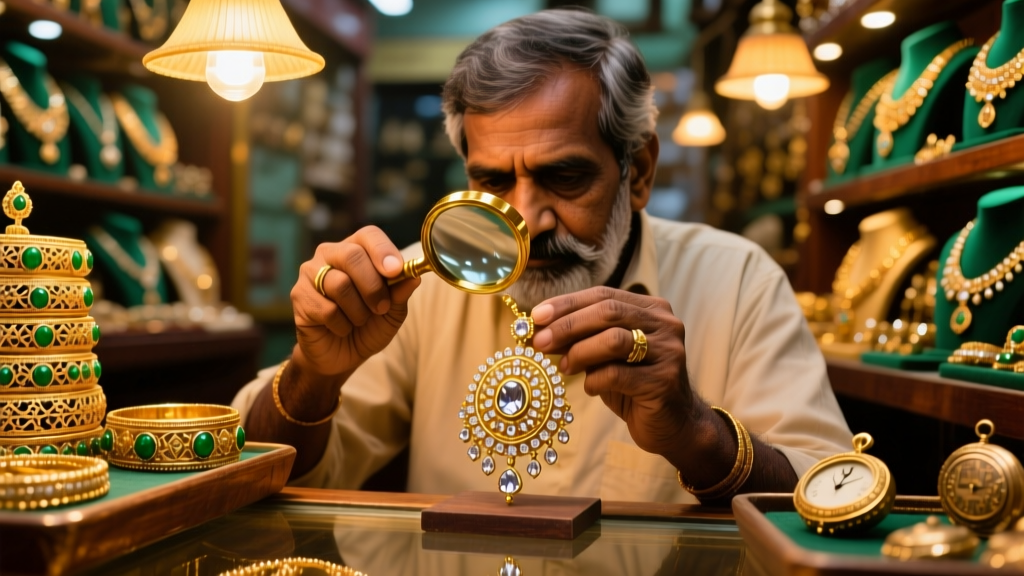
Mumbai is the undisputed diamond and gold capital of India, but the shopping experience varies wildly depending on your budget and expertise. Here is a strategic breakdown of where to source your multi-strand royal necklace.
| Shopping District | Best For | Price Range (INR / USD) | Beginner Vibe Check |
|---|---|---|---|
| Zaveri Bazaar | Authentic Polki, Basra Pearls, Custom Bespoke Orders | ₹3,00,000 – ₹50,00,000+ ($3,500 - $60,000+) | Chaotic, wholesale-focused. Bring a trusted local guide or gemologist. |
| Bhuleshwar | Traditional Kundan, Meenakari, Wedding Sets | ₹80,000 – ₹5,00,000 ($950 - $6,000) | Highly traditional. Excellent for intricate enamel work on the reverse side. |
| Kala Ghoda / Bandra Boutiques | Contemporary Heritage Revivals, Lightweight Polki | ₹1,50,000 – ₹15,00,000 ($1,800 - $18,000) | Curated, air-conditioned, fixed-price. Ideal for first-time luxury buyers. |
A Beginner’s Checklist for Authenticity & Pricing
When investing tens of thousands of dollars in a multi-strand collar, you must verify the materials. Do not rely solely on visual inspection. Use this actionable checklist when negotiating in Mumbai:
- Demand the BIS Hallmark: While the 24k gold foil (Kundan) cannot be hallmarked due to its purity and fragility, the structural base of the pendant and the clasps should be made of 18k or 22k gold. Ensure these structural parts carry the official Bureau of Indian Standards (BIS) hallmark laser-engraved.
- Inspect the Lac (Lakha) Backing: Authentic Kundan setting uses natural tree resin (lac) to hold the gold foil and stones in place. If you see a white, chalky residue or synthetic glue seeping out from under the stones, it is a mass-produced factory piece, not a handcrafted heritage item.
- Check the Meenakari Reverse: Turn the necklace over. High-quality royal collars feature Meenakari (enameling) on the back to protect the gold and add a pop of color (usually red, green, or white) against the skin. The enamel should be smooth, glass-like, and free of pitting.
- Pearl Drill Hole Inspection: Use a jeweler's loupe to look at the drill holes of the pearls. Natural and high-quality cultured pearls will have clean, sharp drill holes. Flaking or chipping around the hole indicates thin-nacre imitation pearls.
How to Style a Heavy Royal Collar in 2026
The biggest mistake beginners make with multi-strand Maharani necklaces is letting the piece overpower their entire silhouette. Because these necklaces are visually heavy and physically weighty (often ranging from 120 to 250 grams), they require strategic styling.
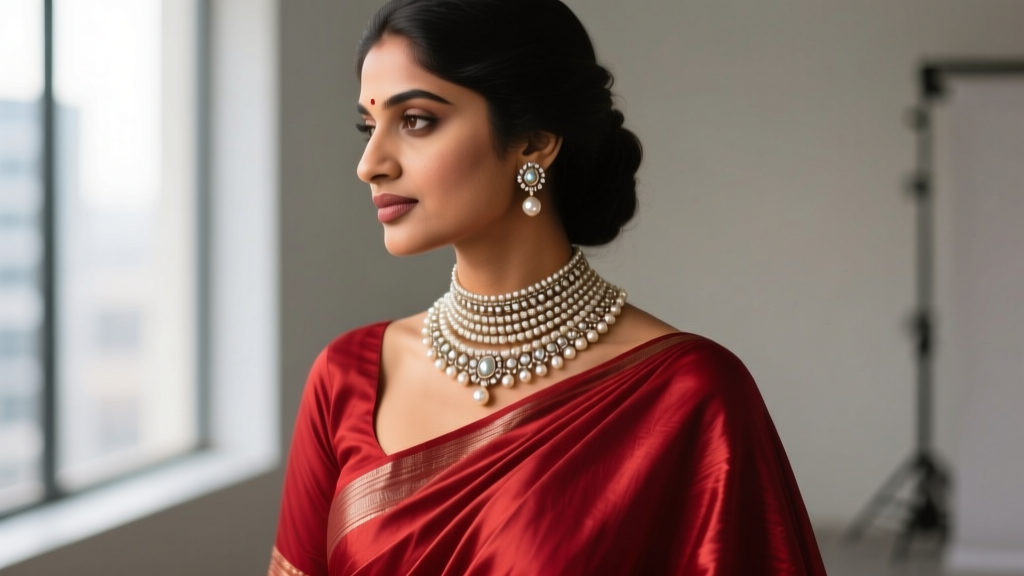
- The Neckline Rule: Opt for deep sweetheart or scoop necklines on your blouse or gown. High collars, halter tops, or heavy embellished necklines will clash with the intricate pendant and cause the pearl strands to snag on fabric threads.
- The Earring Balance: Skip the heavy chandbalis or long jhumkas. Instead, pair your Queens necklace with simple Polki studs or small pearl drops. Let the collar be the undisputed focal point.
- Layering with Chokers: In 2026, the trend is to wear the multi-strand collar slightly loose, allowing the lowest strand to rest on the sternum, while pairing it with a thin, flexible gold choker or hansli worn tightly above it to frame the face.
Crucial Care and Storage Protocols
Organic materials like pearls and natural lac resin are highly sensitive to Mumbai's humid, coastal climate. Never store your multi-strand necklace in an airtight plastic bag; pearls require moisture from the air to prevent cracking and yellowing. Instead, wrap the piece in a soft, unbleached muslin cloth and store it flat in a wooden jewelry box. Never hang a multi-strand pearl necklace, as the immense weight of the stones will stretch and eventually snap the silk stringing over time. Have the strands professionally re-knotted by a jeweler in Zaveri Bazaar every 3 to 4 years if worn frequently.
Final Thoughts
Investing in a Queens necklace in Mumbai is about more than acquiring a piece of jewelry; it is about wearing a piece of living history. By understanding the distinction between Polki and glass, recognizing the value of South Sea and Basra pearls, and navigating the bustling lanes of Zaveri Bazaar with confidence, you can secure a royal heirloom that will outlast passing trends. Take your time, drink the chai offered by the jewelers, and appreciate the centuries-old craftsmanship resting in your hands.