How Much Does a Pearl Necklace Cost? A Complete Buyer Guide
Discover how much a pearl necklace costs. We break down pricing by pearl type, size, luster, and origin to help you buy with confidence.
The Short Answer: Pearl Necklace Price Ranges
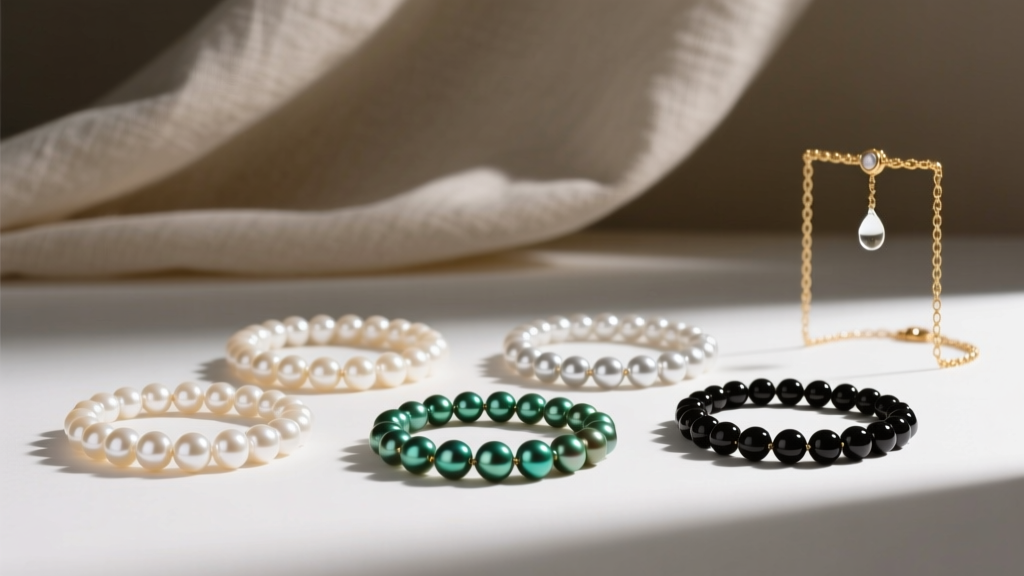
If you are asking, "how much does a pearl necklace cost?", the short answer is that prices range from as little as $50 for basic freshwater strands to over $100,000 for gem-grade South Sea pearls. The vast majority of buyers spend between $300 and $1,500 for a high-quality, classic strand. However, because the pearl market lacks a single, universally standardized grading system like the 4Cs used for diamonds, pricing can feel incredibly opaque to beginners.
To help you navigate the market in 2026, we have broken down the exact price brackets you can expect based on the four primary pearl types cultivated today.
| Pearl Type | Typical Price Range (16-18 Inch Strand) | Best For |
|---|---|---|
| Freshwater | $50 - $600 | Everyday wear, budget-conscious buyers |
| Akoya | $300 - $3,500+ | Classic bridal jewelry, formal events |
| Tahitian | $500 - $5,000+ | Bold fashion statements, unique color lovers |
| South Sea | $1,000 - $100,000+ | Luxury investments, heirloom collectors |
The 4 Main Types of Pearls and Their Costs
The species of oyster or mussel used, combined with the geographic region of cultivation, is the single largest driver of a pearl necklace's base cost. According to the Gemological Institute of America (GIA), cultured pearls are divided into four main commercial categories.
Freshwater Pearls (The Budget-Friendly Choice)
Cultivated primarily in China using the Hyriopsis mussel, freshwater pearls are the most abundant and affordable. A single mussel can produce up to 30 pearls at a time. Because they are typically tissue-nucleated (meaning they are solid nacre without a bead core), they are incredibly durable but often lack the perfect roundness and mirror-like luster of saltwater varieties. Expect to pay $50 to $200 for a standard commercial strand, and up to $600 for premium, round, high-luster "Edison" or metallic freshwater pearls.
Akoya Pearls (The Classic Round Standard)
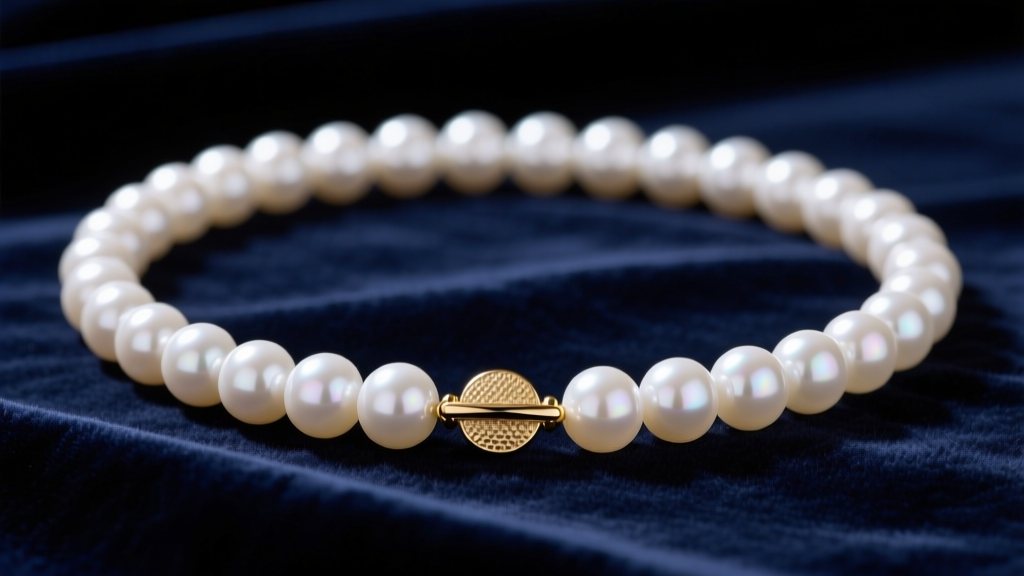
When you picture a traditional, perfectly round white pearl necklace, you are picturing Akoya pearls. Grown in the Pinctada fucata martensii oyster in Japan and Vietnam, Akoyas are bead-nucleated, resulting in superior spherical shapes and sharp, mirror-like luster. A standard 7mm to 8mm Akoya necklace typically costs between $400 and $1,500. Strands with flawless surfaces and ultra-high "Hanadama" luster certifications can easily exceed $3,500.
Tahitian Pearls (The Dark & Exotic Option)
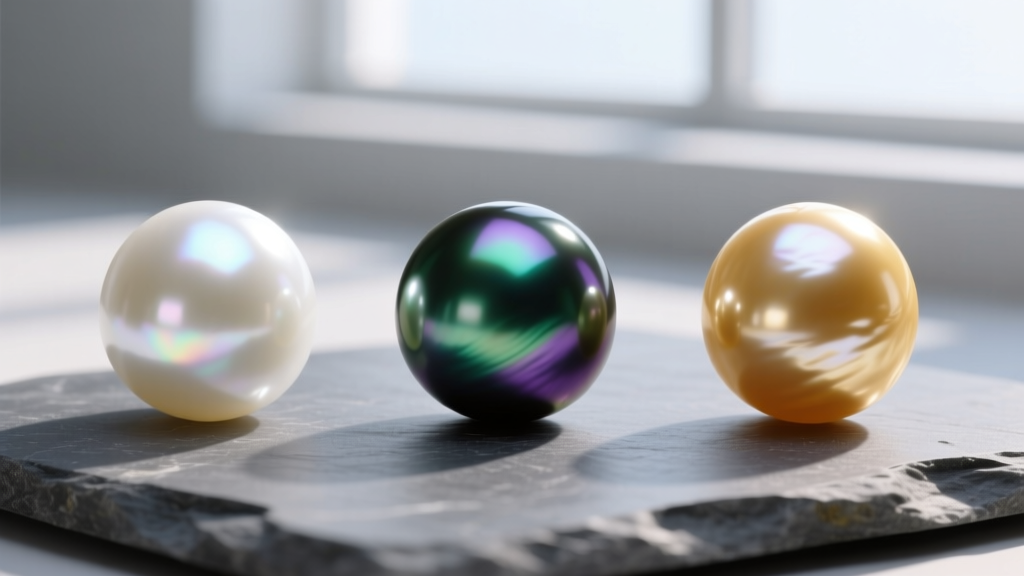
Produced by the black-lipped Pinctada margaritifera oyster in French Polynesia, Tahitian pearls are famous for their dark body colors and vibrant overtones like peacock green, eggplant purple, and silver. Because the oysters are larger and the cultivation process takes two to three years, they are significantly rarer. A graduated or uniform Tahitian necklace usually starts around $800 for smaller (8-9mm) stones with visible blemishes, climbing to $5,000 or more for large (11mm+), clean, peacock-green strands.
South Sea Pearls (The Luxury Investment)
The undisputed kings of the pearl world, South Sea pearls are cultivated in the massive Pinctada maxima oyster across Australia, Indonesia, and the Philippines. They boast the thickest nacre and a luxurious, satiny luster. White and golden South Sea pearls are exceptionally rare, as each oyster can only produce one pearl at a time and is highly susceptible to disease. A high-quality 10mm to 12mm white South Sea necklace will cost between $3,000 and $15,000, while matched strands of deep golden South Sea pearls can fetch upwards of $80,000 at auction.
The 5 Value Factors That Dictate Pearl Pricing
Within any specific pearl type, the price fluctuates wildly based on five distinct quality factors. The GIA Pearl Value Factors framework is the industry standard for evaluating these traits:
- Luster: The most critical factor. High luster means you can see your reflection clearly on the pearl's surface. Poor luster looks chalky or dull. High-luster strands command a 50% to 200% premium over low-luster equivalents.
- Surface Quality: Pearls are organic and rarely perfect. "Clean" pearls with no visible spots, bumps, or abrasions are exponentially rarer and more expensive than heavily blemished ones.
- Shape: Perfectly round pearls are the most valuable in saltwater varieties. Symmetrical drops or ovals are next, while baroque (asymmetrical) shapes are the most affordable.
- Size: Measured in millimeters. For Akoya, the price jumps dramatically at the 8mm mark. For South Sea, the jump occurs at 13mm. Every additional millimeter can increase the strand's value by 20% to 50%.
- Nacre Thickness: Crucial for bead-nucleated saltwater pearls. If the nacre is too thin (under 0.4mm for Akoya), the pearl will peel or crack over time, destroying its value.
Expert Insight on Grading: Unlike diamonds, there is no universal grading system for pearls. Retailers often use the A-AAAA scale for Akoya and Freshwater pearls, and the A-D scale for Tahitian and South Sea pearls. Always ask the jeweler to define their specific grading parameters before purchasing.
Freshwater vs. Saltwater: Why the Massive Price Gap?
Beginners often wonder why a freshwater pearl necklace costs $100 while a visually similar Akoya necklace costs $1,000. The price gap comes down to cultivation economics and yield.
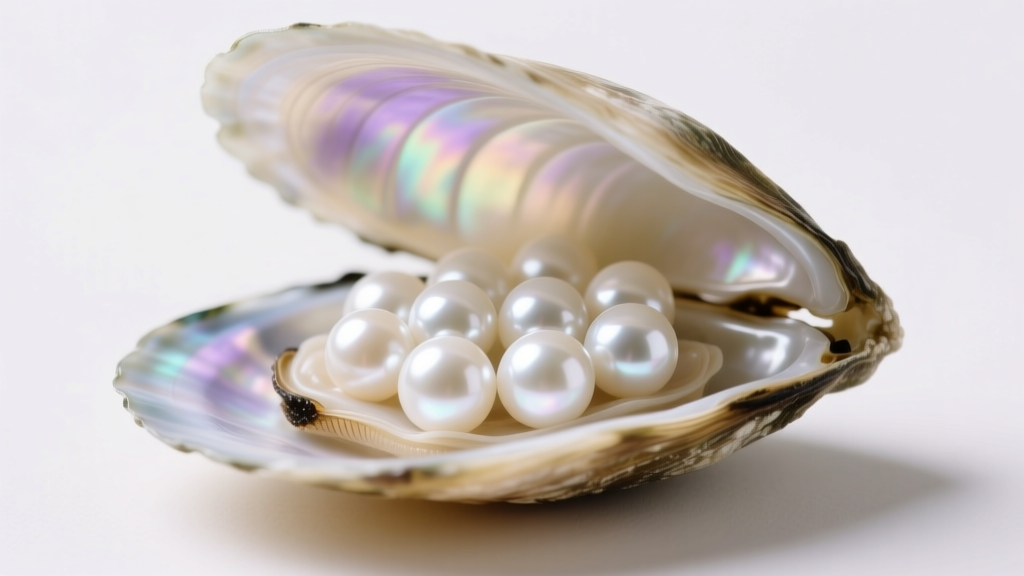
Freshwater mussels are hardy, can survive in varied water conditions, and yield up to 30 pearls per harvest. Furthermore, they are tissue-nucleated, meaning a technician simply inserts a tiny piece of mantle tissue, and the mussel forms a pearl sac around it. This process is fast, highly successful, and results in a pearl that is 100% solid nacre.
Saltwater oysters, conversely, are delicate and require pristine ocean environments. They are bead-nucleated, meaning a perfectly round shell bead is surgically implanted alongside a piece of tissue. The oyster coats the bead in nacre. The mortality rate for saltwater oysters is high, they typically yield only one or two pearls, and the harvest takes much longer. This scarcity and high overhead cost are directly passed on to the consumer.
Hidden Costs: Clasps, Stringing, and Brand Markups
When budgeting for a pearl necklace, the pearls themselves are only part of the equation. You must also account for the stringing and hardware.
- Hand-Knotting: High-end pearl strands are hand-knotted on silk thread between every single pearl. This prevents the pearls from rubbing together (which damages the nacre) and ensures you only lose one pearl if the strand snaps. Expect to pay an extra $50 to $150 for professional silk re-stringing.
- Clasp Material: A strand of $2,000 Akoya pearls should never be finished with a cheap brass clasp. Look for 14k or 18k gold, or platinum clasps. Diamond-accented clasps can add $200 to $800 to the final retail price.
- Designer Premiums: Buying a pearl necklace from a heritage brand like Mikimoto or Tiffany & Co. will incur a massive brand premium. You are paying for the curation, the packaging, and the name. A Mikimoto strand can cost 3 to 5 times more than an identically graded strand from a specialized online pearl retailer.
How to Spot Overpriced or Fake Pearls
As pearl pricing rises, the market has seen an influx of shell pearls (crushed shell powder coated in lacquer) and high-end glass imitations. To ensure you are paying a fair price for genuine cultured pearls, use these troubleshooting methods:
- The Tooth Test: Gently rub the pearl against the biting edge of your front tooth. A real pearl will feel slightly gritty or sandy due to the microscopic crystalline structure of the nacre. A fake pearl will feel perfectly smooth like glass.
- Drill Hole Inspection: Use a jeweler's loupe to examine the drill hole. Real pearls will show a sharp, clean edge where the nacre meets the hole. Fakes often show peeling paint, rounded edges, or a clear glass core beneath a thin coating.
- Temperature Check: Real pearls feel cool to the touch and take a few seconds to warm up against your skin. Plastic or resin fakes will feel room temperature immediately.
Final Verdict: Which Pearl Necklace Should You Buy?
Ultimately, how much you should spend on a pearl necklace depends entirely on your lifestyle and intentions. If you want a durable, trendy piece for daily office wear, a $150 high-luster freshwater strand is an unbeatable value. If you are shopping for a bridal heirloom or a milestone anniversary, investing $800 to $1,500 in an AAA-grade Akoya necklace provides that iconic, mirror-like reflection that defines classic pearl jewelry. For the collector seeking rare, organic luxury, a $4,000+ Tahitian or South Sea strand is a wearable asset that retains its breathtaking appeal for generations.


