Quince Pearl Necklace Review: Material & Luster Comparison
Is the Quince pearl necklace worth it? We break down freshwater vs. Akoya pearls, chain metals, luster grades, and long-term durability.

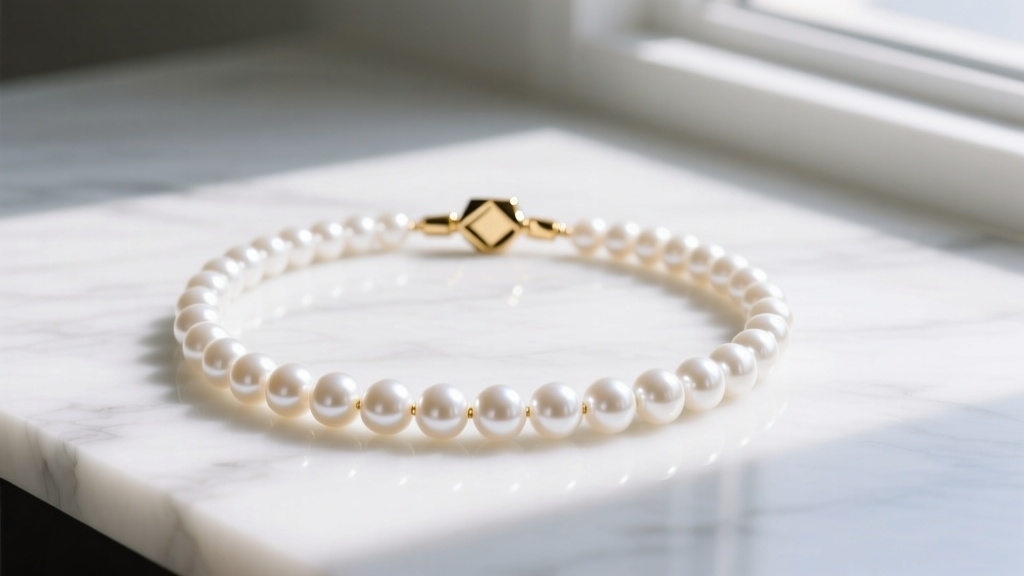
The Anatomy of a Quince Pearl Necklace
When evaluating the direct-to-consumer jewelry market in 2026, the quince pearl necklace stands out as a primary case study in transparent pricing versus traditional retail markups. By bypassing wholesale distributors and retail storefronts, Quince offers pearl jewelry at a fraction of legacy brand prices. However, a lower price point naturally invites scrutiny regarding material integrity, gemological grading, and long-term wearability. To understand what you are actually wearing, we must deconstruct the necklace into its three core material components: the pearls themselves, the metal chain or stringing medium, and the clasp hardware.
Unlike fashion jewelry brands that rely on synthetic coatings or plastic cores, Quince utilizes genuine cultured pearls. Yet, the term 'cultured' encompasses a vast spectrum of biological and geological properties. The performance, luster, and lifespan of your necklace depend entirely on whether you select their freshwater or saltwater options, as well as the specific metallurgy of the accompanying chain. This guide provides a deep-dive material comparison to help you make an informed, science-backed purchasing decision.
Pearl Material Breakdown: Freshwater vs. Akoya
The most critical decision when purchasing a quince pearl necklace is choosing between freshwater and Akoya saltwater pearls. While both are genuine cultured pearls, their internal structures and optical properties differ drastically due to their distinct nucleation processes. According to the Gemological Institute of America (GIA), the nucleation method dictates the pearl's nacre thickness, which in turn determines its durability and optical depth.
Quince’s freshwater pearls are tissue-nucleated. A microscopic piece of mantle tissue from a donor mussel is inserted into the host mussel. Because no solid bead is used, the resulting pearl is composed of 100% solid nacre (crystalline aragonite platelets bound by the organic protein conchiolin). This makes freshwater pearls incredibly resistant to chipping and peeling. Even if the surface is deeply scratched, the underlying material remains identical.
Conversely, Quince’s Akoya pearls are bead-nucleated. A perfectly round mother-of-pearl bead is implanted alongside a piece of mantle tissue. The mussel secretes nacre over this bead. While this process yields a perfectly spherical shape and a sharp, mirror-like luster, the nacre layer is typically only 0.3mm to 0.5mm thick. If this thin layer wears away from friction or chemical exposure, the dull shell bead beneath will be exposed, rendering the pearl structurally compromised.
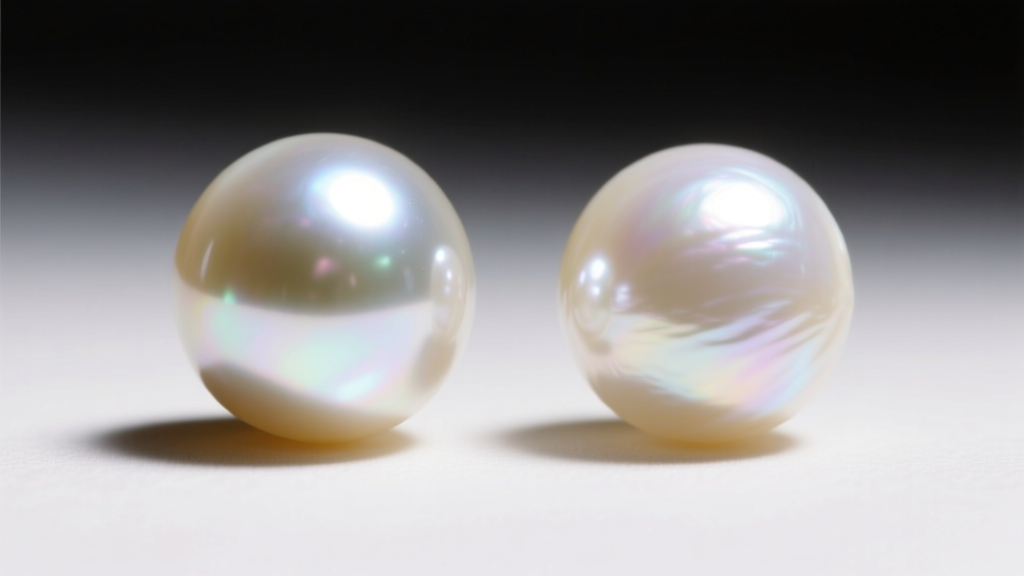
Nacre Thickness and Luster Grading
Luster is the most important quality factor in pearl valuation, as noted in the GIA Pearl Quality Factors guidelines. Akoya pearls possess a high-contrast, mirror-like luster due to the tight, uniform layering of nacre over a rigid spherical core. Freshwater pearls, while historically known for lower luster, have seen massive genetic and environmental improvements by 2026. Quince’s AAA-grade freshwater pearls now exhibit a bright, satiny luster that rivals lower-grade Akoya, though it remains slightly softer and more diffused.
| Material Feature | Quince Freshwater (AAA) | Quince Akoya | Faux (Mallorca/Glass) |
|---|---|---|---|
| Nucleation Method | Tissue-Nucleated | Bead-Nucleated | None (Painted Glass) |
| Nacre Composition | 100% Solid Nacre | 0.3mm - 0.5mm Nacre | 0% (Synthetic Coating) |
| Luster Profile | Bright, Satiny, Diffused | Sharp, Mirror-Like, High Contrast | Flat, Uniform, Artificial |
| Surface Durability | High (Will not peel) | Moderate (Can peel if nacre wears) | Low (Coating chips easily) |
| Average Price Range | $50 - $120 | $150 - $350 | $20 - $60 |
Chain Metallurgy: Vermeil vs. Solid 14k Gold
If you opt for a pendant-style quince pearl necklace rather than a traditional knotted strand, the metallurgy of the chain becomes a primary point of failure. Quince typically offers chains in 14k gold vermeil or solid 14k gold. Understanding the difference is vital for managing your expectations regarding tarnish and skin reactivity.
Gold vermeil is not simple gold plating. The Federal Trade Commission Jewelry Guides strictly defines vermeil as a sterling silver (925) base coated with a minimum of 2.5 microns of 10k or higher gold. Quince adheres to this standard, using 14k gold over sterling silver. While 2.5 microns is substantially thicker than standard flash plating (which is often less than 0.5 microns), it is still a surface layer. The primary failure mode for vermeil chains occurs at high-friction areas: the lobster clasp mechanism, the jump rings, and the links that rest against the collarbone. Over 12 to 24 months of daily wear, the gold layer will inevitably wear thin, exposing the underlying sterling silver, which will then oxidize and tarnish when exposed to sulfur in the air and human sweat.
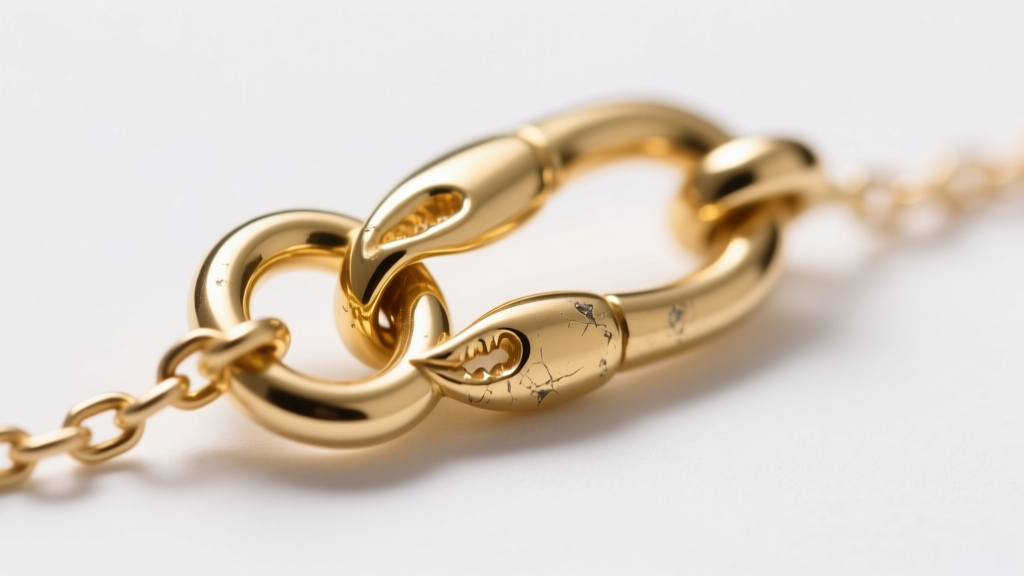
Solid 14k gold, on the other hand, is a homogenous alloy consisting of 58.5% pure gold mixed with copper, silver, and zinc to increase tensile strength. Because the gold is distributed throughout the entire cross-section of the wire, a solid 14k chain will never 'rub off' or expose a base metal. It is highly resistant to tarnish and hypoallergenic, making it the only viable choice for a pearl pendant intended for daily, never-take-off wear. If your budget allows, always upgrade the chain to solid 14k gold, even if it means selecting a slightly smaller freshwater pearl pendant to offset the cost.
Stringing Mechanics and Failure Modes
For traditional knotted pearl strands, the stringing material is just as critical as the pearls. Quince utilizes traditional 100% silk thread for their knotted necklaces, typically in Size E or F thickness, depending on the pearl drill hole diameter (usually 0.8mm to 1.0mm). Silk is the industry standard because it is soft, flexible, and drapes beautifully, allowing the necklace to conform to the neckline without kinking.
However, silk is an organic protein fiber, making it highly susceptible to biological and chemical degradation. The most common failure mode for a knotted quince pearl necklace is the stretching and eventual rotting of the silk thread. This is accelerated by three factors:
- Perspiration and pH Levels: Human sweat is slightly acidic. Over time, the acid breaks down the protein structure of the silk, causing it to become brittle and lose its tensile strength.
- Cosmetic Exposure: Perfumes, hairsprays, and lotions contain alcohols and volatile organic compounds (VOCs) that degrade silk fibers and can also etch the delicate aragonite surface of the pearls themselves.
- Gravity and Tension: Heavier pearls (9.0mm and above) place constant tension on the wet or stretched silk, leading to visible gaps between the knots and the pearls.
To mitigate these failure modes, you must wipe your Quince pearl strand with a soft, damp microfiber cloth after every wear to remove acidic oils. Furthermore, plan to have the necklace professionally re-knotted every 18 to 24 months if worn weekly. If you prefer a zero-maintenance alternative, look for pearl strands strung on stainless steel micro-wire (such as Beadalon), though these will have a stiffer drape and lack the traditional knotting between each pearl.
Final Verdict: Which Option Should You Choose?
The quince pearl necklace is a triumph of material accessibility, but it requires a strategic approach to purchasing based on your specific wear habits. If you are buying a necklace for occasional, formal, or office wear where it will be taken off at the end of the day, the AAA Freshwater Pearl strand on a 14k Vermeil chain (or knotted silk) offers the best value. The solid nacre of the freshwater pearl ensures it will survive minor bumps and friction, while the vermeil chain will remain pristine under low-friction, occasional-use conditions.
However, if you are seeking a 'signature' piece that you intend to wear daily, in all weather conditions, and without meticulous maintenance, you must upgrade the materials. Opt for a Freshwater Pearl pendant on a Solid 14k Gold chain. The solid gold eliminates the risk of galvanic corrosion and vermeil wear, while the 100% nacre freshwater pearl guarantees that the gem will never peel or expose a bead core, even after a decade of continuous wear. By matching the material properties to your lifestyle, you ensure that your investment remains structurally sound and optically brilliant for years to come.


