How to Clean a Golden Beaded Necklace Without Damage
Learn how to clean a golden beaded necklace safely. Expert tips on washing gold-plated, vermeil, and solid gold beads without damaging the finish.

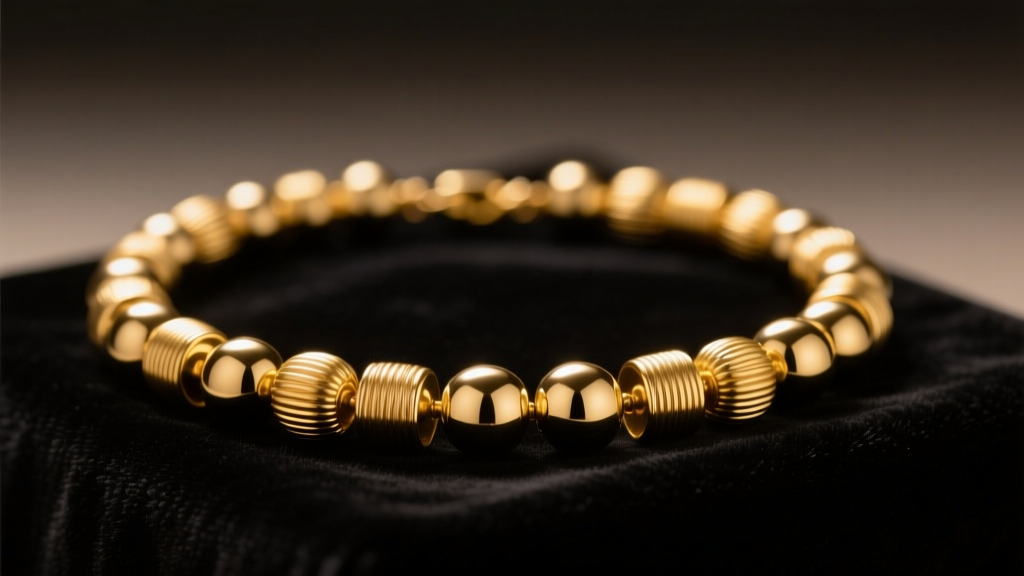
A golden beaded necklace is a staple of versatile jewelry design, offering warmth, elegance, and a touch of luxury to any neckline. However, the term 'golden' encompasses a wide spectrum of materials—from delicate gold-plated brass and gold vermeil to durable gold-filled beads and solid 14k gold. Because the structural integrity and surface treatments of these beads vary drastically, applying a one-size-fits-all cleaning approach is a recipe for irreversible damage. Using the wrong chemical solvent or mechanical agitation can strip electroplated layers, cause galvanic corrosion, or degrade the threading material holding your piece together.
In this comprehensive guide, we break down the exact metallurgy of golden beads, provide material-specific cleaning protocols, and share professional storage techniques to ensure your necklace retains its luster for decades.
Identifying Your Golden Bead Material
Before reaching for any cleaning solution, you must identify the exact composition of your beads. The Gemological Institute of America (GIA) emphasizes that gold jewelry care is entirely dependent on the karat weight and the presence of alloying metals or base cores. A bead that looks identical to the naked eye could be solid gold or a microscopic layer of gold over reactive brass.
| Material Type | Base Core | Gold Layer Thickness | Cleaning Risk | Recommended Method |
|---|---|---|---|---|
| Gold-Plated | Brass or Copper | 0.5 to 1.0 microns | High | Dry microfiber only |
| Gold Vermeil | Sterling Silver | Minimum 2.5 microns | Medium | Mild soap, no soaking |
| Gold-Filled (14k GF) | Jeweler's Brass | 5% of total weight (approx. 25+ microns) | Low | Mild soap, gentle brushing |
| Solid Gold (14k/18k) | None (Alloyed) | Solid throughout | Very Low | Ammonia-based or ultrasonic |
| Gold-Foil Glass | Glass with 22k gold foil interior | N/A (Encased) | Medium | Damp cloth, avoid hot water |
The Daily Wear and Storage Protocol
Preventative maintenance is always superior to corrective cleaning. The primary enemies of golden beads are human sebum, cosmetic lotions, and atmospheric sulfur. When sebum and sweat accumulate in the crevices of beaded jewelry, the lactic acid and salts accelerate the oxidation of the base metals beneath the gold layer.
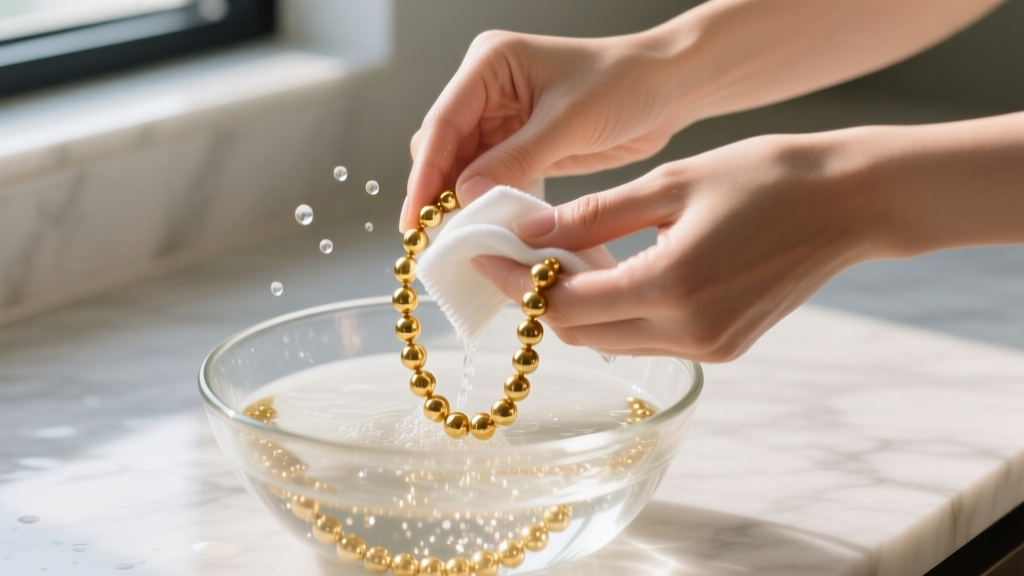
According to Jewelers of America, proper storage is just as critical as cleaning. Never store your golden beaded necklace in a humid bathroom or a cardboard box, as cardboard off-gases sulfur compounds that cause rapid tarnishing. Instead, store the necklace flat or hung in an airtight polyethylene ziplock bag alongside a 3M anti-tarnish strip and a small silica gel desiccant packet to control ambient moisture.
Step-by-Step Cleaning Methods by Material
1. Gold-Plated and Gold-Foil Beads
Gold-plated beads possess an incredibly thin layer of gold applied via electroplating. Submerging these beads in water, especially hard tap water, can cause mineral deposits to bond to the surface or seep into the bead holes, triggering internal brass oxidation (often seen as green or black weeping from the drill holes).
- Step 1: Use a dry, ultra-fine microfiber jewelry cloth to gently buff the surface of each bead. This removes daily oils without risking moisture damage.
- Step 2: For stubborn grime, slightly dampen a cotton swab with distilled water (never tap water) and a drop of pH-neutral dish soap, carefully swabbing the crevices.
- Step 3: Immediately dry with a separate microfiber cloth. Never air-dry plated beads.
2. Gold Vermeil and Gold-Filled Beads
Because vermeil uses a sterling silver base and gold-filled beads possess a much thicker mechanical bond of gold, they can withstand gentle wet cleaning. However, you must protect the threading material. If your necklace is strung on silk thread, submerging it will cause the silk to stretch, rot, and eventually snap. If it is strung on 49-strand nylon-coated stainless steel beading wire (such as 0.015-inch Soft Flex), it is safe to wash.
- Step 1: Mix three drops of pH-neutral dish detergent (like Dawn) into a bowl of lukewarm distilled water.
- Step 2: Dip a soft-bristled baby toothbrush into the solution and gently sweep across the beads, paying special attention to the areas around the drill holes where dirt accumulates.
- Step 3: Rinse quickly under a gentle stream of distilled water.
- Step 4: Pat dry with a lint-free cloth and lay flat on a towel to ensure all moisture evaporates from the stringing holes.
3. Solid Gold Beads
Solid 14k or 18k gold beads are highly durable and will not flake or peel. They can safely be cleaned using commercial jewelry dips or ultrasonic cleaners operating at 40kHz, provided the beads do not contain porous gemstone inlays (like turquoise or pearls) which would be shattered by ultrasonic cavitation.
Troubleshooting Common Issues
Flaking or Peeling Gold: If your golden beads are flaking, the piece is likely gold-plated over a poorly prepared brass core, or it has suffered galvanic corrosion. Unfortunately, this cannot be cleaned or polished away. The only remedy is professional re-plating by a master jeweler.
Dark Tarnish in Crevices: For gold-filled or vermeil beads with dark tarnish trapped in textured crevices, avoid silver dip liquids. These liquids contain thiourea, which is highly toxic and can leave a microscopically rough surface on the gold, making it tarnish faster in the future. Stick to mechanical agitation with a soft brush and mild soap.
Stretched or Sagging Necklace: If the necklace feels loose or the beads are sliding, the internal stringing material has failed. Take the piece to a professional to be restrung using 0.018-inch 49-strand beading wire with a secure crimp bead and wire protector at the clasp.
Chemicals to Absolutely Avoid
To preserve the metallurgical integrity of your golden beaded necklace, keep it far away from the following household substances:
- Bleach (Sodium Hypochlorite): Will instantly dissolve the gold layer and pit the base metal beneath.
- Baking Soda Paste: Baking soda has a Mohs hardness of around 2.5, which is soft, but when rubbed against gold (Mohs 2.5-3), it acts as an abrasive that will create micro-scratches, dulling the mirror finish of the beads.
- Toothpaste: Contains silica abrasives designed to strip enamel; it will strip gold plating just as effectively.
- Isopropyl Alcohol: While safe for solid gold, alcohol can degrade the protective clear-coats sometimes applied to lower-end gold-plated beads and will dry out any organic beads (like wood or coral) mixed into the design.
By understanding the specific material composition of your golden beaded necklace and adhering to these targeted maintenance protocols, you can preserve its radiant finish and structural integrity for a lifetime of wear.


